
If you’ve ever watched Wicked, one question probably crossed your mind: why is Glinda’s dress blue in Wicked? Fans have debated this costume choice for years because every detail in the musical carries symbolic meaning. Glinda’s iconic blue gown isn’t just beautiful—it reflects her personality, social status, emotional journey, and the visual storytelling that makes Wicked unforgettable.
Understanding why is Glinda’s dress blue in Wicked requires looking at costume design, color psychology, Oz mythology, stage lighting, character development, and even audience perception. Costume designers rarely choose colors randomly, especially in award-winning Broadway productions.
Throughout the musical, Glinda evolves from a popular, self-centered student into a compassionate leader. Her blue dresses help communicate that transformation without the audience even realizing it. Every shade, sparkle, and silhouette contributes to the story.
This guide explores every possible reason behind Glinda’s famous blue dress, including symbolism, theatrical design decisions, historical influences, and comparisons with Elphaba’s costumes.
The Importance of Costume Design in Wicked
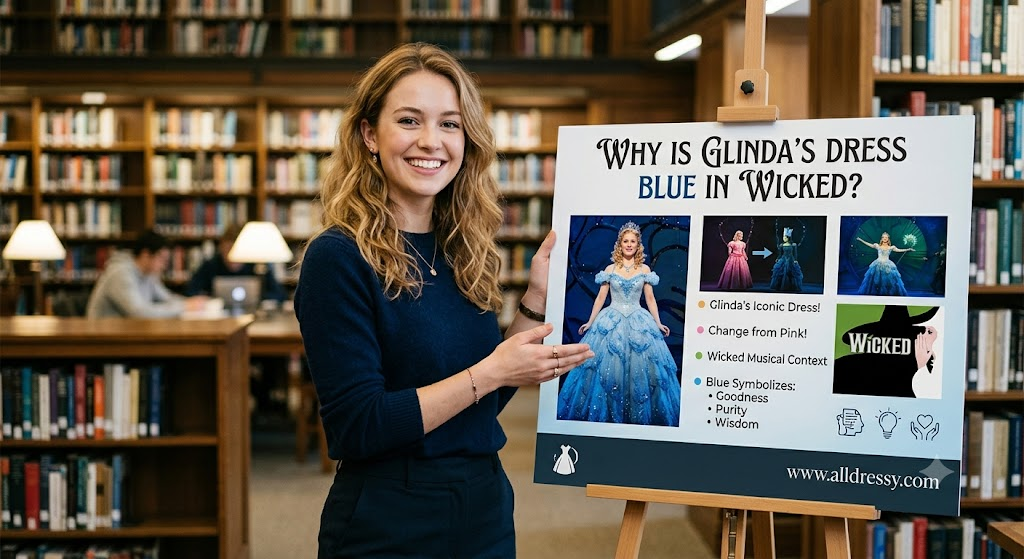
Before understanding why Glinda wears blue, it’s important to understand how costumes work in Wicked.
Costumes are storytelling tools.
They communicate:
- Personality
- Social class
- Emotional growth
- Relationships
- Character contrasts
- Power
- Magic
- Identity
Unlike movies, Broadway audiences often sit far from the stage. Costume colors immediately identify characters and their emotional states.
Every major character has a carefully selected color palette.
For example:
- Elphaba → Black, dark green, charcoal
- Glinda → Blue, pink, white, silver
- Madame Morrible → Rich jewel tones
- The Wizard → Earth tones
The audience subconsciously associates these colors with each character.
Why Is Glinda’s Dress Blue in Wicked? The Short Answer
The primary reason Glinda’s dress is blue is symbolism.
Blue represents:
- Kindness
- Grace
- Nobility
- Calmness
- Purity
- Hope
- Wisdom
- Trust
- Leadership
As Glinda matures throughout the story, these qualities become increasingly important.
Her costumes visually prepare the audience for her transformation into the Good Witch.
Blue Represents Goodness
One of the strongest explanations for why is Glinda’s dress blue in Wicked is the association between blue and goodness.
In Western storytelling, blue often symbolizes:
- Justice
- Peace
- Protection
- Loyalty
- Virtue
Since Glinda eventually becomes Glinda the Good, blue naturally reinforces that identity.
Unlike darker colors associated with mystery or rebellion, blue immediately creates feelings of comfort and safety.
Blue Creates a Strong Contrast with Elphaba
One of Wicked’s biggest themes is contrast.
Glinda and Elphaba begin as complete opposites.
Glinda wears:
- Bright colors
- Sparkles
- Elegant fabrics
- Soft silhouettes
Elphaba wears:
- Black
- Green
- Structured clothing
- Practical garments
The visual contrast instantly tells the audience that these characters come from different worlds.
Blue helps separate Glinda from Elphaba while still looking magical.
Color Psychology Behind Glinda’s Blue Dress
Color psychology plays an enormous role in costume design.
Blue often evokes feelings of:
- Security
- Trust
- Intelligence
- Calm
- Peacefulness
- Reliability
- Stability
These emotions fit Glinda’s eventual role as Oz’s respected public figure.
Even before her character fully develops, the audience subconsciously associates her with these qualities.
Blue Suggests Royal Elegance
Glinda behaves almost like royalty.
She enters scenes with confidence.
She commands attention.
She enjoys admiration.
Historically, blue has been linked with:
- Aristocracy
- Wealth
- Luxury
- Prestige
In earlier centuries, blue dye was expensive, making it a symbol of status.
The costume subtly reflects Glinda’s privileged upbringing.
The Evolution of Glinda’s Costume Colors
Glinda doesn’t wear exactly the same shade of blue throughout every performance.
Different productions feature variations such as:
- Ice blue
- Sky blue
- Powder blue
- Aqua
- Silver-blue
Each version represents different aspects of her journey.
Lighter shades suggest innocence.
Deeper shades imply maturity.
More sparkling fabrics emphasize glamour.
The Influence of The Wizard of Oz
Many costume choices reference the original Oz universe.
Although the classic 1939 film is most famous for Glinda’s pink gown, Wicked creates its own visual identity.
Blue allows the production to:
- Differentiate itself
- Modernize the character
- Expand Glinda’s personality
- Build a unique Broadway aesthetic
The result feels familiar while remaining original.
Why Blue Works Better Than Pink for Wicked
Many people ask why Glinda isn’t always dressed in pink.
Pink symbolizes:
- Romance
- Innocence
- Sweetness
Blue offers much greater emotional range.
It can represent:
- Leadership
- Compassion
- Wisdom
- Authority
- Hope
As Glinda grows, blue becomes a more versatile storytelling color.
Costume Designers Think Beyond Beauty
Every Broadway costume balances several practical needs.
Designers consider:
- Lighting
- Fabric movement
- Visibility
- Stage effects
- Character identity
Blue performs exceptionally well under theatrical lighting.
It reflects light beautifully while maintaining elegant depth.
Blue Enhances Stage Lighting
Stage lighting dramatically changes fabric colors.
Blue fabrics:
- Glow under cool lighting
- Reflect crystals effectively
- Create magical highlights
- Photograph beautifully
The costume appears almost enchanted during musical numbers.
Swarovski Crystals and Sparkle Effects
Many Glinda costumes feature:
- Rhinestones
- Crystal embellishments
- Sequins
- Metallic embroidery
Blue fabrics enhance these reflective elements.
The sparkling effect reinforces Glinda’s magical image.
Blue Symbolizes Emotional Growth
At the beginning of Wicked, Glinda focuses mainly on popularity.
Later she develops:
- Empathy
- Responsibility
- Courage
- Compassion
Blue mirrors this emotional progression.
Rather than appearing childish, she gradually looks dignified and mature.
The Symbolism of Light Blue
Light blue often represents:
- Innocence
- Fresh beginnings
- Youth
- Optimism
Early in the musical these qualities define Glinda perfectly.
She is cheerful, energetic, and somewhat naïve.
The Symbolism of Deeper Blue
As Glinda changes, richer shades suggest:
- Wisdom
- Authority
- Leadership
- Confidence
Costume designers may subtly shift tones to match her development.
The Good Witch Identity
Eventually Glinda becomes known as the Good Witch.
Blue reinforces qualities audiences expect from a heroic figure:
- Protection
- Fairness
- Kindness
- Stability
The audience instinctively trusts someone dressed in calming colors.
Costume Color Helps Audience Recognition
Large theaters require immediate visual identification.
A recognizable blue silhouette allows audiences to spot Glinda instantly.
This is especially useful during:
- Ensemble scenes
- Large dance numbers
- Fast costume transitions
Fabric Choices Enhance the Blue Color
The shade alone isn’t enough.
Designers carefully select luxurious fabrics such as:
- Organza
- Silk
- Satin
- Tulle
- Chiffon
These materials create movement that reinforces Glinda’s graceful personality.
Flowing fabrics also make magical entrances more dramatic.
Blue Reflects Optimism
Glinda consistently encourages hope.
Even during difficult moments, she projects optimism.
Blue often symbolizes:
- Positive thinking
- Emotional balance
- Inner peace
These traits become central to her character.
Why Fans Love Glinda’s Blue Dress
The costume has become one of Broadway’s most recognizable looks.
Fans appreciate it because it combines:
- Elegance
- Fantasy
- Royal aesthetics
- Timeless beauty
- Strong symbolism
Its memorable design has inspired countless stage recreations, themed events, and cosplay interpretations.
Costume Details That Reinforce the Blue Theme
Beyond the fabric color, Glinda’s costume often includes:
- Crystal accents
- Layered skirts
- Shimmering overlays
- Delicate embroidery
- Structured bodices
- Floating sleeves
- Glittering embellishments
Together, these details create a celestial, fairy-tale appearance that supports the blue color palette.
Blue and the Theme of Balance
One of the central messages of Wicked is that people are more complex than labels like “good” and “evil.”
Blue helps communicate balance rather than perfection.
Glinda makes mistakes, learns from them, and grows into a wiser person. Her costume reflects this nuanced journey by emphasizing calmness, responsibility, and hope instead of portraying flawless goodness.
Comparing Glinda’s Blue Dress with Elphaba’s Wardrobe
The contrast between Glinda and Elphaba becomes even more meaningful when viewed side by side.
| Glinda | Elphaba |
|---|---|
| Blue | Black and green |
| Sparkling fabrics | Matte textures |
| Flowing silhouettes | Structured garments |
| Glamorous appearance | Practical style |
| Bright palette | Dark palette |
| Public admiration | Social isolation |
These visual differences reinforce the story’s themes while also highlighting how each character challenges first impressions.
Does Every Wicked Production Use the Same Blue Dress?
Not exactly.
Different productions around the world adapt Glinda’s costumes while preserving the recognizable blue identity.
Changes may include:
- Different shades of blue
- Updated embellishments
- New embroidery patterns
- Altered skirt volume
- Modified sleeve designs
- Revised bodice details
Even with these adjustments, the essential symbolism remains consistent.
What the Blue Dress Represents by the End of Wicked
By the musical’s conclusion, Glinda’s blue dress symbolizes far more than fashion.
It represents:
- Personal growth
- Compassion
- Leadership
- Responsibility
- Hope for Oz
- Public trust
- Inner strength
- Wisdom gained through experience
Instead of serving as simple stage clothing, the dress becomes a visual summary of Glinda’s entire character arc. Audiences remember it not only because of its beauty but because it quietly reflects the transformation that unfolds throughout the story.
For anyone wondering why is Glinda’s dress blue in Wicked, the answer lies in the thoughtful combination of symbolism, color psychology, theatrical practicality, character development, and visual storytelling. Every shade of blue contributes to portraying Glinda as a character who evolves from popularity and privilege into empathy, courage, and compassionate leadership, making her iconic gown one of the most meaningful costume designs in modern musical theater.
FAQs
Why is Glinda’s dress blue in Wicked?
Glinda’s blue dress symbolizes goodness, grace, wisdom, and hope. Costume designers use blue to reflect her journey from a popular student to the Good Witch, while also creating a visual contrast with Elphaba’s darker wardrobe.
Is Glinda’s blue dress the same in every Wicked production?
No. While blue remains the signature color, different Broadway, touring, and international productions may use different shades, fabrics, embellishments, and design details. However, the symbolic meaning of the dress stays consistent.
Why isn’t Glinda’s dress always pink?
Although many people associate Glinda with pink because of The Wizard of Oz film, Wicked uses blue in several iconic costumes to give the character a fresh visual identity. Blue better represents her growth, leadership, and emotional maturity throughout the story.
Does Glinda wear only blue in Wicked?
No. Glinda wears several costumes throughout the musical, including white, pink, and other pastel shades. However, her blue dresses are among the most recognizable because they emphasize her magical and noble qualities.
What does the color blue symbolize in theater costumes?
In theater, blue often represents trust, peace, intelligence, loyalty, calmness, and wisdom. These qualities align perfectly with Glinda’s development into the Good Witch.
How does Glinda’s blue dress contrast with Elphaba’s costumes?
Glinda’s flowing blue gowns symbolize light, optimism, and elegance, while Elphaba’s darker green and black outfits represent individuality, mystery, and resilience. The contrast reinforces the musical’s central theme that appearances can be misleading.
Does Glinda’s dress have hidden symbolism?
Yes. Beyond its beautiful appearance, the dress reflects Glinda’s emotional transformation, social status, compassion, and eventual leadership. Every design element—from the color and silhouette to the sparkling embellishments—supports the story being told on stage.
Why do fans love Glinda’s blue dress?
Fans admire the dress because it combines fantasy, elegance, and meaningful symbolism. Its sparkling fabrics, graceful silhouette, and timeless design have made it one of the most iconic costumes in modern musical theater.
Conclusion
The answer to why is Glinda’s dress blue in Wicked goes far beyond aesthetics. The color blue was carefully chosen to communicate kindness, hope, wisdom, trust, and personal growth while distinguishing Glinda from Elphaba’s darker visual style. Combined with luxurious fabrics, shimmering embellishments, and elegant silhouettes, the blue dress becomes a powerful storytelling tool that reflects Glinda’s evolution into the Good Witch. Rather than being just a beautiful costume, it serves as a visual symbol of her character arc, making it one of the most memorable and meaningful designs in Broadway history.