
If you are wondering what is a dress coat, you are looking into one of the most elegant and historically significant pieces in outerwear fashion. A dress coat is a formal or semi-formal outer garment designed to be worn over suits, dresses, or formal attire, typically for special Best Fashion Nova Dresses for Pregnantoccasions, professional events, ceremonies, or colder weather situations where maintaining a polished appearance is essential.
Understanding what is a dress coat is important because it is not just a functional layer for warmth—it is a statement piece that enhances the overall outfit. Unlike casual jackets or everyday winter coats, a dress coat is structured, tailored, and designed to complement formal clothing rather than hide it.
A dress coat usually features clean lines, refined tailoring, premium fabrics, and a sophisticated silhouette that elevates the wearer’s appearance. Whether worn by men over suits or by women over dresses and gowns, it plays a crucial role in completing formal outfits with elegance and authority.
This comprehensive guide explains everything you need to know about dress coats, including their definition, history, types, materials, styling rules, seasonal uses, differences from other coats, and how to wear them for various occasions.
What Is a Dress Coat? Understanding the Core Definition
To fully understand what is a dress coat, we need to break it down simply.
A dress coat is:
- A tailored outerwear garment
- Designed for formal or semi-formal wear
- Worn over suits, tuxedos, or elegant dresses
- Made with structured, refined fabrics
- Created to enhance appearance, not just provide warmth
Unlike casual jackets, dress coats focus heavily on silhouette, elegance, and proportional balance.
The goal is to maintain a polished and sophisticated look even when outerwear is needed.
What Is a Dress Coat in Fashion History?
Dress coats have a long and influential history in fashion, especially in Western formal wear traditions.
Early Formal Outerwear
In the 18th and 19th centuries, coats were a central part of men’s formal attire. They were:
- Long and structured
- Tailored to fit closely
- Made from wool and heavy fabrics
- Often worn in aristocratic and professional settings
Women’s formal outerwear also began evolving during this period.
Victorian and Edwardian Eras
Dress coats became more refined and symbolic of status.
Key features included:
- Long lengths
- High-quality wool fabrics
- Tailored waistlines
- Decorative buttons and collars
They were worn for social events, travel, and formal occasions.
20th Century Evolution
As fashion modernized, dress coats became more simplified but retained elegance.
Changes included:
- Lighter construction
- More variety in cuts
- Greater comfort and mobility
Modern Fashion Era
Today, dress coats are essential in:
- Business fashion
- Wedding attire
- Winter formal wear
- Luxury fashion collections
- Evening outfits
They are now designed for both style and practicality.
What Is a Dress Coat Structure and Design?
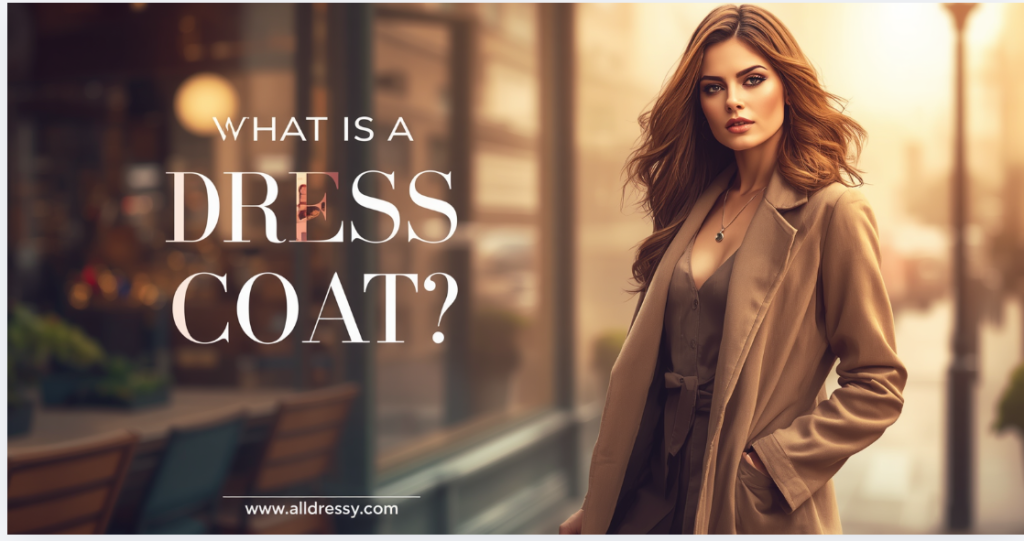
The structure of a dress coat is what sets it apart from casual outerwear.
Tailored Silhouette
A dress coat is carefully shaped to follow the body’s natural lines.
Features include:
- Defined shoulders
- Structured waistline
- Clean vertical lines
- Balanced proportions
Length Variations
Dress coats come in different lengths:
- Short (hip-length)
- Mid-length (thigh-length)
- Long (knee-length or below)
Longer coats are typically more formal.
Closure Styles
Common closures include:
- Single-breasted buttons
- Double-breasted designs
- Hidden fasteners
- Belted styles
Each style creates a different level of formality.
Collar and Lapel Design
Collars play a key role in elegance:
- Notched lapels (classic)
- Peak lapels (formal)
- Shawl collars (evening wear)
- Stand collars (modern minimalism)
What Is a Dress Coat Made Of? Best Fabrics Explained
Fabric choice determines both appearance and function.
Wool Dress Coats
Wool is the most traditional fabric.
Benefits include:
- Warmth
- Durability
- Structured appearance
- Timeless elegance
Wool coats are ideal for winter formal wear.
Cashmere Dress Coats
Cashmere adds luxury and softness.
Features:
- Lightweight warmth
- Smooth texture
- Premium appearance
Often used in high-end fashion.
Tweed Dress Coats
Tweed offers a textured, classic look.
Advantages:
- Durable
- Stylish
- Traditional aesthetic
Cotton Blends
Used for lighter dress coats.
Benefits:
- Breathable
- Comfortable
- Suitable for mild weather
Polyester Blends
Modern synthetic blends offer practicality.
Advantages:
- Wrinkle-resistant
- Affordable
- Easy maintenance
Velvet Dress Coats
Velvet is used for evening and luxury wear.
Features:
- Rich texture
- Formal appearance
- Ideal for special events
What Is a Dress Coat for Men?
Men’s dress coats are designed to complement suits and formal attire.
Overcoats for Suits
The most common type.
Features:
- Long length
- Tailored fit
- Neutral colors like black, navy, gray
Worn over business suits and tuxedos.
Chesterfield Coat
A classic formal coat.
Characteristics:
- Velvet collar options
- Single-breasted design
- Elegant silhouette
Peacoats (Formal Adaptation)
A shorter but structured option.
Best for:
- Business casual
- Semi-formal outfits
Double-Breasted Dress Coats
These offer:
- Stronger structure
- More formal appearance
- Military-inspired styling
What Is a Dress Coat for Women?
Women’s dress coats combine elegance with versatility.
Long Wool Dress Coats
Ideal for formal wear.
Features:
- Fitted waist
- Flowing silhouette
- Elegant tailoring
Belted Dress Coats
These emphasize the waist.
Benefits:
- Feminine shape
- Adjustable fit
- Stylish appearance
Cape Coats
A fashionable alternative.
Features:
- Dramatic silhouette
- Shoulder coverage
- Elegant movement
Trench Dress Coats
Suitable for transitional seasons.
Characteristics:
- Lightweight
- Structured design
- Belted waist
What Is a Dress Coat Used For?
Dress coats serve both functional and aesthetic purposes.
Formal Events
Used for:
- Weddings
- Gala events
- Ceremonies
- Evening functions
Business Wear
Ideal for:
- Corporate meetings
- Professional environments
- Business travel
Seasonal Protection
Provides warmth during:
- Winter
- Fall
- Cold climates
Fashion Styling
Used as a statement piece in modern outfits.
What Is a Dress Coat Styling Guide?
Styling a dress coat depends on occasion and outfit coordination.
Men’s Styling Tips
Pair dress coats with:
- Suits
- Dress shirts
- Ties
- Leather shoes
Maintain neutral color harmony.
Women’s Styling Tips
Combine with:
- Dresses
- Formal skirts
- Heels or boots
- Elegant accessories
Accessories for Dress Coats
Accessories enhance the overall look.
Common choices include:
- Scarves
- Gloves
- Brooches
- Leather handbags
- Watches
What Is a Dress Coat Compared to Other Coats?
Understanding differences helps clarify its role.
Dress Coat vs Overcoat
- Dress coat: formal, tailored
- Overcoat: general outerwear
Dress Coat vs Trench Coat
- Dress coat: winter/formal focus
- Trench coat: lightweight and rain protection
Dress Coat vs Peacoat
- Dress coat: longer and more formal
- Peacoat: shorter and more casual
Dress Coat vs Jacket
- Dress coat: structured outer layer
- Jacket: casual or semi-casual wear
What Is a Dress Coat in Seasonal Fashion?
Winter Dress Coats
Made from:
- Wool
- Cashmere
- Heavy blends
Focus on warmth and elegance.
Spring Dress Coats
Lighter fabrics and softer colors dominate.
Autumn Dress Coats
Earth tones and textured materials are popular.
Summer Dress Coats
Rare but lightweight versions exist for cooler evenings.
What Is a Dress Coat in Modern Fashion Trends?
Modern fashion has redefined the dress coat with innovation.
Minimalist Dress Coats
Clean cuts and neutral colors.
Oversized Dress Coats
Relaxed tailoring for contemporary style.
Statement Dress Coats
Bold colors and unique silhouettes.
Sustainable Dress Coats
Made from eco-friendly materials.
Luxury Designer Dress Coats
High-end craftsmanship and premium fabrics.
What Is a Dress Coat and Its Importance in Fashion
The dress coat remains one of the most important garments in formal and semi-formal wardrobes. It represents sophistication, structure, and elegance while serving a practical purpose in colder weather.
Its ability to transform simple outfits into refined looks makes it a timeless fashion essential. Whether worn over a suit, dress, or evening outfit, a dress coat completes the look with authority and style.
By understanding what is a dress coat, you gain insight into a garment that blends tradition, function, and modern elegance in a way few other fashion pieces can achieve.
FAQs About What Is a Dress Coat
What is a dress coat in simple words?
A dress coat is a formal or semi-formal outerwear garment worn over suits, dresses, or elegant outfits. It is designed to look polished and stylish while also providing warmth and structure.
What is the difference between a dress coat and a regular coat?
A dress coat is more tailored, structured, and formal than a regular coat. Regular coats are often casual or practical, while dress coats are designed to complement formal outfits and enhance appearance.
When should you wear a dress coat?
A dress coat is typically worn during formal occasions such as weddings, business meetings, evening events, ceremonies, and during cold weather when dressing formally is required.
What fabrics are used in dress coats?
Common fabrics include wool, cashmere, tweed, velvet, cotton blends, and polyester blends. Wool and cashmere are the most popular for formal winter dress coats.
Can women wear dress coats with dresses?
Yes, women often wear dress coats over dresses for formal events, weddings, and evening outings. Belted or tailored styles are especially popular because they enhance the silhouette.
Are dress coats only for winter?
No, while dress coats are most common in winter, lighter versions made from breathable fabrics can be worn in spring and fall as well.
What colors are best for a dress coat?
Popular colors include black, navy, gray, camel, beige, and dark brown. These shades are versatile and match most formal outfits easily.
Can a dress coat be worn casually?
Yes, some modern dress coats can be styled casually with jeans or simple outfits, but traditionally they are meant for formal or polished looks.
What shoes go with a dress coat?
For men, leather dress shoes like Oxfords or Derbies are ideal. For women, heels, boots, or elegant flats pair well with dress coats depending on the occasion.
Is a trench coat the same as a dress coat?
No, a trench coat is lighter and more weather-focused, often used for rain protection. A dress coat is more structured and designed specifically for formal or elegant styling.
Do dress coats go out of style?
No, dress coats are considered timeless fashion pieces. While designs may change over time, the core concept of a structured formal coat remains always in style.
Conclusion
Understanding what is a dress coat reveals why this garment remains a cornerstone of formal fashion across generations. A dress coat is more than just outerwear—it is a structured, elegant, and purposeful piece designed to elevate any outfit while providing warmth and refinement.
From classic wool overcoats to modern tailored designs, dress coats continue to evolve while maintaining their core identity of sophistication. They play a vital role in both men’s and women’s wardrobes, especially for formal events, professional settings, and winter fashion.
One of the key strengths of a dress coat is its versatility. It can be worn over suits, dresses, gowns, or smart casual outfits, instantly enhancing the overall appearance. With the right fabric, color, and fit, a dress coat can transform a simple outfit into a polished and stylish ensemble suitable for almost any occasion.
Ultimately, the dress coat represents a perfect blend of tradition, function, and fashion. It stands as a timeless investment piece that not only protects against the weather but also expresses elegance, confidence, and refined style in every setting.