
Choosing how to pick bridesmaid dresses is one of the most exciting—and sometimes challenging—parts of wedding planning. Bridesmaid dresses should complement your wedding theme, flatter different body types, coordinate with the bride’s gown, and keep your bridal party comfortable throughout the celebration. The right dresses help create beautiful wedding photos while ensuring your bridesmaids feel confident and appreciated.
Today’s weddings offer more flexibility than ever before. Instead of requiring every bridesmaid to wear an identical dress, many couples embrace mix-and-match styles, varied necklines, different sleeve lengths, and personalized fits while maintaining a cohesive overall look. This approach allows each bridesmaid to wear a dress that suits her body shape and personal style without sacrificing the wedding’s aesthetic.
This complete guide explains how to pick bridesmaid dresses from start to finish. You’ll learn how to establish a budget, coordinate with your wedding theme, choose flattering colors, select fabrics, accommodate different body types, plan for seasonal weather, coordinate accessories, and avoid common mistakes that can complicate the decision-making process.
Why Choosing the Right Bridesmaid Dresses Matters
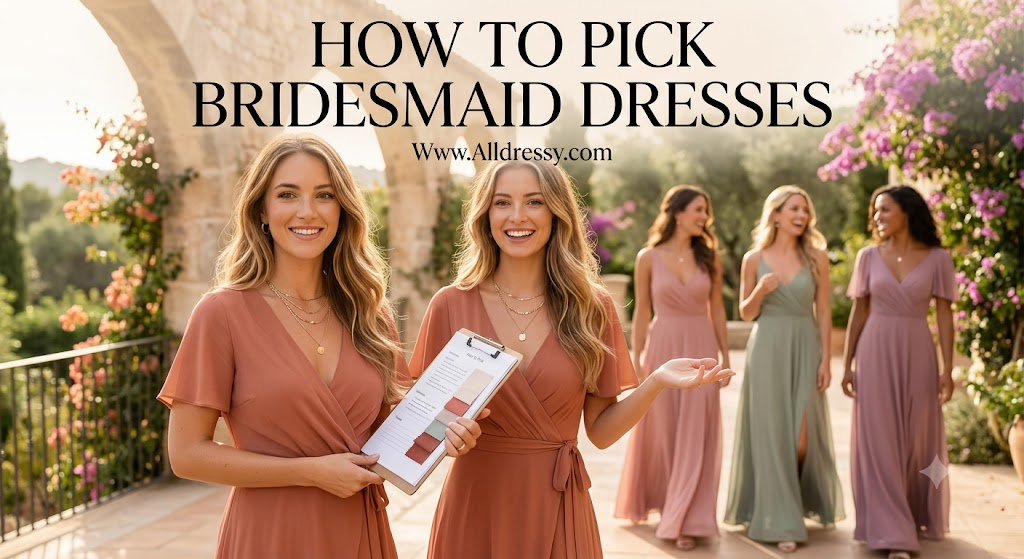
Bridesmaid dresses are more than matching outfits.
They help:
- Create a cohesive wedding design
- Complement the bridal gown
- Enhance wedding photography
- Reflect the wedding theme
- Improve guest impressions
- Help bridesmaids feel confident
- Provide comfort throughout the event
- Create timeless memories
Well-chosen dresses contribute significantly to the overall success of the wedding.
Start With Your Wedding Vision
Before shopping, define the overall look of your wedding.
Consider:
- Formal or casual
- Indoor or outdoor
- Modern or traditional
- Romantic or minimalist
- Rustic or elegant
- Beach or ballroom
- Vintage or contemporary
Your wedding style influences nearly every dress decision.
Set a Realistic Budget
One of the first steps in how to pick bridesmaid dresses is determining a realistic budget.
Consider costs such as:
- Dress purchase
- Alterations
- Shoes
- Jewelry
- Undergarments
- Hair accessories
- Shipping
- Cleaning after the wedding
Being transparent about costs helps avoid misunderstandings.
Decide Who Pays
Every wedding handles expenses differently.
Common approaches include:
- Bridesmaids purchase their own dresses.
- The couple covers all dress expenses.
- Costs are shared.
- Family members contribute.
Discuss expectations early to avoid surprises.
Consider the Wedding Season
Weather greatly affects comfort.
Spring Weddings
Ideal fabrics:
- Chiffon
- Crepe
- Lightweight satin
Summer Weddings
Choose breathable materials like:
- Chiffon
- Cotton blends
- Lightweight jersey
Fall Weddings
Popular fabrics include:
- Velvet
- Satin
- Stretch crepe
Winter Weddings
Warmer choices include:
- Velvet
- Heavy satin
- Long-sleeved styles
Seasonal planning keeps bridesmaids comfortable.
Match the Wedding Venue
Venue influences dress selection.
Examples:
Beach Wedding
Choose:
- Lightweight fabrics
- Flowing silhouettes
- Flat sandals
Garden Wedding
Select:
- Floral-inspired colors
- Soft fabrics
- Comfortable lengths
Ballroom Wedding
Elegant options include:
- Floor-length gowns
- Satin
- Sequins
- Formal silhouettes
Barn Wedding
Popular choices:
- Chiffon
- Earth tones
- Rustic styling
Coordinate With the Bridal Gown
Bridesmaid dresses should complement—not compete with—the bride’s dress.
Pay attention to:
- Fabric texture
- Dress formality
- Color harmony
- Overall elegance
The bridal gown should remain the visual focal point.
Choose a Color Palette
Color selection is one of the biggest decisions.
Popular color families include:
Neutral shades:
- Champagne
- Taupe
- Beige
Soft colors:
- Blush
- Dusty blue
- Sage green
- Lavender
Bold colors:
- Emerald
- Burgundy
- Navy
- Plum
Classic colors:
- Black
- Navy
- Forest green
Choose colors that complement your venue and season.
Consider Skin Tones
Different colors flatter different complexions.
Universal shades often include:
- Emerald green
- Navy blue
- Burgundy
- Dusty rose
- Teal
Avoid choosing colors that wash out members of your bridal party.
Think About Different Body Types
One dress style rarely flatters everyone equally.
Common body shapes include:
- Pear
- Apple
- Hourglass
- Rectangle
- Petite
- Tall
- Plus size
Flexible styling improves confidence.
Choose Flattering Silhouettes
Popular silhouettes include:
A-Line
Universally flattering.
Empire Waist
Comfortable and elegant.
Fit-and-Flare
Highlights curves.
Column
Modern and streamlined.
Wrap Dress
Adjustable and versatile.
Different silhouettes suit different figures.
Decide on Dress Length
Options include:
Mini dresses
Suitable for casual weddings.
Tea-length dresses
Ideal for semi-formal celebrations.
Midi dresses
Elegant and versatile.
Floor-length gowns
Perfect for formal weddings.
Length should match your wedding’s formality.
Select Necklines Carefully
Neckline options include:
- V-neck
- Sweetheart
- Scoop neck
- High neckline
- Halter
- Off-the-shoulder
- Square neckline
Offering multiple neckline options creates comfort without sacrificing coordination.
Choose Sleeve Styles
Sleeve options include:
- Sleeveless
- Cap sleeves
- Flutter sleeves
- Short sleeves
- Three-quarter sleeves
- Long sleeves
Season and venue often influence this decision.
Mix-and-Match Bridesmaid Dresses
Modern weddings increasingly embrace variety.
Mix-and-match can include:
- Different necklines
- Different sleeves
- Same color
- Different fabrics
- Similar silhouettes
The overall palette remains coordinated.
Select Comfortable Fabrics
Comfort matters because bridesmaids wear the dresses for many hours.
Popular fabrics:
- Chiffon
- Satin
- Velvet
- Crepe
- Jersey
- Tulle
- Lace
Avoid fabrics that wrinkle excessively or feel uncomfortable in the expected weather.
Consider Movement and Comfort
Bridesmaids spend much of the day standing, walking, dancing, and sitting.
Look for dresses that allow:
- Easy walking
- Comfortable sitting
- Dancing
- Climbing stairs
- Outdoor movement
Comfort contributes to a more enjoyable experience.
Think About Alterations
Most dresses require some tailoring.
Common alterations include:
- Hem adjustments
- Strap shortening
- Waist fitting
- Bust adjustments
- Sleeve modifications
Budget for these costs in advance.
Plan for Different Heights
Bridal parties often include women of varying heights.
Floor-length gowns typically require hemming.
Allow sufficient time before the wedding for alterations.
Coordinate Shoes
Choose footwear that complements both comfort and style.
Popular choices:
- Block heels
- Pumps
- Flats
- Sandals
- Wedges
Outdoor weddings often benefit from wider heels.
Select Jewelry Carefully
Jewelry should enhance the dresses without overwhelming them.
Simple choices include:
- Pearl earrings
- Delicate necklaces
- Tennis bracelets
- Minimal rings
Coordinate metals for a polished appearance.
Match Hair Accessories
Hair accessories help complete the look.
Popular options:
- Hair pins
- Floral combs
- Headbands
- Small clips
- Pearl accents
Keep accessories consistent with the wedding theme.
Consider Weather Conditions
Outdoor weddings require flexibility.
Prepare for:
- Heat
- Wind
- Rain
- Cold evenings
Provide shawls or wraps if necessary.
Schedule Dress Shopping Early
Begin shopping several months before the wedding.
This allows time for:
- Ordering
- Shipping
- Alterations
- Final fittings
Avoid last-minute stress.
Encourage Honest Feedback
Your bridesmaids will appreciate being included.
Ask for input regarding:
- Comfort
- Fit
- Fabric
- Color
- Neckline
Listening to feedback often results in better choices for everyone.
Balance Style and Budget
Beautiful dresses do not have to be the most expensive.
Focus on:
- Quality construction
- Comfortable fabrics
- Timeless designs
- Practicality
Affordable dresses can still look elegant.
Think Beyond the Wedding Day
Many bridesmaids appreciate dresses they can wear again.
Choose versatile designs that work for:
- Formal dinners
- Holiday parties
- Charity events
- Family celebrations
- Other weddings
A reusable dress provides greater value.
Coordinate With the Wedding Color Scheme
The bridesmaid dresses should harmonize with other wedding details, including:
- Floral arrangements
- Table linens
- Invitations
- Ceremony décor
- Reception decorations
A coordinated color palette creates a polished and visually appealing celebration.
Dress for the Ceremony and Reception
Consider whether one dress will work comfortably for both parts of the day.
Bridesmaids should be able to:
- Walk comfortably during the ceremony.
- Sit through dinner.
- Dance during the reception.
- Move easily for photographs.
Balancing elegance with practicality ensures the dresses remain comfortable from morning preparations through the final dance.
Create a Consistent Look Without Uniformity
Modern bridal parties often look best when coordinated rather than identical.
You can create consistency by choosing:
- The same color in different dress styles.
- The same fabric with varying necklines.
- Similar silhouettes in complementary shades.
- Matching accessories with personalized dresses.
This approach allows each bridesmaid to feel confident while maintaining a unified bridal party appearance.
Plan Dress Storage Before the Wedding
After purchasing the dresses:
- Hang them on sturdy padded hangers.
- Use breathable garment bags.
- Store them in a cool, dry location.
- Avoid direct sunlight.
- Steam wrinkles shortly before the wedding rather than weeks in advance.
Proper storage helps preserve the dresses until the big day.
Common Mistakes to Avoid
Many wedding planners encounter preventable challenges when selecting bridesmaid dresses.
Avoid these common mistakes:
- Waiting too long to order dresses.
- Ignoring bridesmaids’ comfort.
- Choosing fabrics unsuitable for the season.
- Forgetting to budget for alterations.
- Selecting a color that doesn’t complement the wedding palette.
- Overlooking different body shapes and sizes.
- Choosing trendy styles that may quickly look dated.
- Failing to communicate expectations clearly.
- Prioritizing appearance over wearability.
Avoiding these issues leads to a smoother planning process and happier bridesmaids.
Professional Tips for Picking Bridesmaid Dresses
Experienced wedding planners recommend keeping the process organized and flexible.
Follow these expert tips:
- Start shopping early to allow plenty of time for ordering and alterations.
- Select colors before choosing individual dress styles.
- Prioritize comfort alongside appearance.
- Consider the season, venue, and wedding theme together.
- Encourage bridesmaids to share honest feedback about fit.
- Keep accessories simple to let the dresses shine.
- Choose timeless styles that will look beautiful in photographs for years to come.
- Focus on creating a cohesive bridal party rather than requiring identical outfits.
Frequently Asked Questions (FAQs)
How do I pick bridesmaid dresses that flatter everyone?
Choose universally flattering silhouettes such as A-line or wrap dresses, and consider allowing different necklines or sleeve styles in the same color and fabric. This mix-and-match approach lets each bridesmaid select a style that suits her body shape while maintaining a coordinated bridal party look.
When should I start shopping for bridesmaid dresses?
It’s best to begin shopping at least six to nine months before your wedding. This gives enough time for selecting dresses, placing orders, handling shipping delays, scheduling alterations, and completing final fittings before the wedding day.
Should all bridesmaids wear the same dress?
Not necessarily. While matching dresses create a classic look, many modern weddings feature mix-and-match bridesmaid dresses. Bridesmaids can wear different styles, necklines, or sleeve lengths in the same color palette to create a cohesive yet personalized appearance.
How do I choose the right bridesmaid dress color?
Select a color that complements your wedding theme, season, venue, and bridal gown. Neutral shades, soft pastels, jewel tones, and classic colors like navy or emerald are popular choices because they photograph well and flatter a variety of skin tones.
Who usually pays for the bridesmaid dresses?
Payment arrangements vary depending on the wedding. In many weddings, bridesmaids purchase their own dresses, while in others the couple or family covers the cost. It’s important to discuss expectations early so everyone understands the budget and responsibilities.
What fabric is best for bridesmaid dresses?
The best fabric depends on the season and wedding style. Chiffon is lightweight and ideal for spring and summer, satin offers a formal and elegant appearance, velvet works well for fall and winter weddings, and crepe provides a modern look with comfortable movement.
How do I accommodate bridesmaids with different body types?
Choose flexible styles that work for multiple body shapes, such as A-line or empire waist dresses. Allowing bridesmaids to select different necklines, sleeve options, or silhouettes within the same color family helps everyone feel comfortable and confident.
Should bridesmaid dresses match the wedding theme?
Yes. Bridesmaid dresses should coordinate with the overall wedding style, venue, and color palette. Whether you’re planning a beach wedding, rustic celebration, elegant ballroom reception, or garden ceremony, the dresses should complement the atmosphere rather than compete with it.
What accessories should bridesmaids wear?
Simple accessories usually work best. Pearl earrings, delicate necklaces, subtle bracelets, and elegant hair accessories can enhance the overall look without overpowering the dresses. Coordinating shoe colors and jewelry metals also creates a polished appearance.
What are the biggest mistakes to avoid when picking bridesmaid dresses?
Common mistakes include waiting too long to order dresses, ignoring the comfort of your bridesmaids, choosing styles that don’t suit different body types, forgetting to budget for alterations, selecting fabrics that don’t fit the season, and failing to communicate expectations clearly throughout the planning process.
Conclusion
Knowing how to pick bridesmaid dresses is about balancing style, comfort, budget, and practicality while creating a cohesive look that complements your wedding vision. Thoughtful choices in color, fabric, silhouette, and fit help ensure your bridal party looks elegant and feels comfortable throughout the celebration.
By considering your wedding theme, venue, season, and the individual preferences of your bridesmaids, you can choose dresses that flatter different body types and create beautiful, timeless wedding photographs. Allowing flexibility with styles while maintaining a coordinated color palette is an increasingly popular approach that keeps everyone feeling confident.
With early planning, open communication, and attention to detail, selecting bridesmaid dresses becomes a more enjoyable and organized part of the wedding planning process. The result is a bridal party that not only looks stunning but also feels comfortable and celebrated on one of the most memorable days of your life.