
Learning how to organize a nursery dresser is one of the smartest ways to create a functional, stress-free space for both parents and babies. A well-organized nursery dresser keeps diapers, clothing, blankets, swaddles, socks, bibs, burp cloths, grooming supplies, and other baby essentials within easy reach, making daily routines faster and more efficient.
During the first year, you’ll access your nursery dresser dozens of times every day. Whether you’re changing diapers, dressing your baby, or putting away clean laundry, an organized dresser saves time and reduces unnecessary frustration—especially during late-night feedings and diaper changes.
Many parents simply fold clothes into drawers without a system. However, professional nursery organizers recommend dividing storage by clothing size, category, and frequency of use. This method not only maximizes drawer space but also helps you quickly find exactly what you need.
This complete guide explains how to organize a nursery dresser using practical storage techniques, drawer layouts, space-saving ideas, folding methods, labeling systems, seasonal organization strategies, and long-term maintenance tips to create a nursery that remains organized as your baby grows.
Why Learning How to Organize a Nursery Dresser Is Important
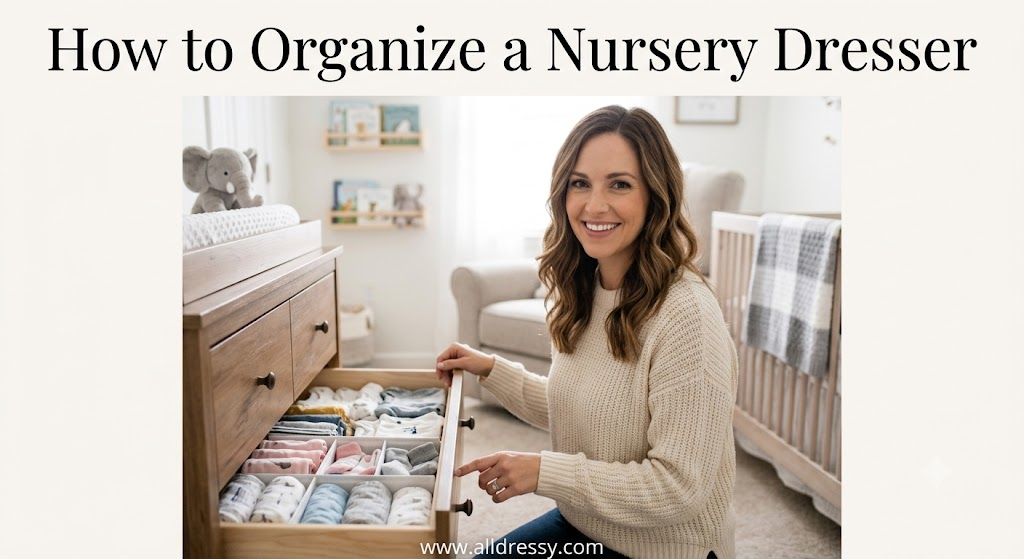
A properly organized nursery dresser offers many advantages.
Benefits include:
- Faster diaper changes
- Easier outfit selection
- Less clutter
- Better use of drawer space
- Faster laundry organization
- Reduced stress
- Easier inventory tracking
- Improved nursery appearance
- Better daily routines
An organized dresser makes caring for your baby more efficient.
Choose the Right Nursery Dresser
Before organizing, consider whether your dresser meets your family’s needs.
Important features include:
- Deep drawers
- Smooth drawer slides
- Sturdy construction
- Safety anchors
- Soft-close drawers
- Wide top surface
- Easy-to-clean finish
Many parents also choose a dresser that doubles as a changing table to maximize functionality.
Empty the Entire Dresser First
The best way to organize is to start with a blank slate.
Remove:
- Clothing
- Blankets
- Diapers
- Toys
- Accessories
- Medical supplies
- Keepsakes
Cleaning out the dresser allows you to create a logical storage system from the beginning.
Clean Every Drawer Thoroughly
Before putting anything back, clean the interior.
Use:
- Mild soap and water
- Baby-safe cleaning solution
- Soft microfiber cloth
Allow every drawer to dry completely before organizing.
Sort Every Baby Item Into Categories
Group similar items together.
Examples include:
- Onesies
- Sleepers
- Pajamas
- Pants
- Shirts
- Socks
- Hats
- Bibs
- Burp cloths
- Swaddles
- Blankets
- Diapers
- Wipes
- Towels
Sorting first makes organization much easier.
Organize by Clothing Size
Babies grow quickly.
Separate clothing by size.
Examples:
- Newborn
- 0–3 months
- 3–6 months
- 6–9 months
- 9–12 months
Store future sizes in lower drawers or labeled bins.
Keep Everyday Essentials in the Top Drawer
The top drawer should contain items used most often.
Examples:
- Diapers
- Wipes
- Onesies
- Socks
- Bibs
- Burp cloths
Quick access improves diaper-changing efficiency.
Dedicate One Drawer to Diaper Supplies
Organize diapering essentials together.
Include:
- Diapers
- Wipes
- Diaper cream
- Changing pad covers
- Disposable bags
- Extra changing cloths
Use small containers to separate products.
Store Sleepwear Together
Nighttime routines become easier when sleep items remain in one location.
Store:
- Pajamas
- Sleep sacks
- Swaddles
- Sleep gowns
Keep enough outfits for several nights.
Organize Socks and Mittens
Small baby items disappear easily.
Use:
- Drawer dividers
- Small bins
- Fabric organizers
Separate:
- Socks
- Mittens
- Booties
Everything stays visible.
Fold Baby Clothes Vertically
Vertical folding saves space.
Benefits:
- Better visibility
- Easier access
- Fewer wrinkles
- Faster outfit selection
Instead of stacking clothing, stand folded garments upright.
Use Drawer Dividers
Drawer dividers create dedicated storage sections.
Separate:
- Onesies
- Pants
- Shirts
- Socks
- Hats
- Bibs
Dividers prevent clothing from mixing together.
Use Storage Bins Inside Drawers
Small fabric bins improve organization.
Store:
- Hair accessories
- Pacifiers
- Teething toys
- Nail clippers
- Thermometers
- Grooming supplies
Bins make tiny items easier to locate.
Create Outfit Bundles
Save time by grouping complete outfits together.
Each bundle may include:
- Onesie
- Pants
- Socks
- Bib
Morning dressing becomes much faster.
Store Blankets Separately
Blankets take considerable drawer space.
Dedicate one drawer to:
- Receiving blankets
- Swaddles
- Muslin blankets
- Fleece blankets
Fold uniformly for maximum storage.
Reserve a Drawer for Feeding Essentials
Feeding supplies can also be organized inside the dresser if space allows.
Include:
- Bibs
- Burp cloths
- Nursing covers
- Bottle cloths
- Silicone feeding accessories
Grouping related items streamlines feeding routines.
Organize Seasonal Clothing
Separate clothing by season.
Examples:
Summer:
- Shorts
- Rompers
- Lightweight hats
Winter:
- Sweaters
- Jackets
- Warm socks
- Mittens
Store off-season clothing in labeled containers.
Rotate Clothes as Your Baby Grows
Babies outgrow clothing quickly.
Every month:
- Remove clothes that no longer fit.
- Move larger sizes forward.
- Donate or store unused clothing.
Regular rotation keeps drawers functional.
Label Every Drawer
Labels help everyone maintain the system.
Possible labels:
- Onesies
- Sleepwear
- Pants
- Accessories
- Diapers
- Blankets
Simple labels improve long-term organization.
Keep Emergency Supplies Nearby
Reserve a small section for emergencies.
Store:
- Thermometer
- Infant medicine (if recommended and stored safely)
- Nasal aspirator
- Nail clippers
- Brush
- Comb
Keep these items organized but out of your baby’s reach.
Maximize the Top of the Dresser
The dresser top can serve multiple purposes.
Common items include:
- Changing pad
- Diaper caddy
- Wipes dispenser
- Lotion
- Hand sanitizer
- Small lamp
Avoid overcrowding the surface.
Install a Changing Station
Many nursery dressers double as changing tables.
Include:
- Waterproof changing pad
- Safety strap
- Diaper organizer
- Storage basket
Keep frequently used supplies within arm’s reach.
Use Drawer Liners
Drawer liners offer several benefits.
They help:
- Protect drawer interiors
- Reduce slipping
- Keep drawers cleaner
- Add a decorative touch
Choose non-toxic, easy-to-clean materials suitable for nursery use.
Store Keepsakes Separately
Special items deserve their own storage space.
Examples include:
- Hospital bracelet
- First outfit
- Baby announcement
- Special blankets
- Family heirlooms
Keeping sentimental items separate prevents accidental loss or damage.
Create a Laundry Rotation System
Avoid overfilled drawers by maintaining a consistent laundry routine.
After washing:
- Fold clothes immediately.
- Return them to their designated drawer.
- Remove clothing that no longer fits.
- Restock diaper supplies if needed.
A regular routine keeps the dresser organized with minimal effort.
Keep Extra Supplies in Lower Drawers
Lower drawers are ideal for less frequently used items.
Store:
- Extra diapers
- Bulk wipes
- Spare blankets
- Seasonal clothing
- Larger clothing sizes
- Backup changing pad covers
This keeps daily essentials easily accessible while maximizing storage.
Use Color-Coded Storage Bins
Color coding helps identify categories quickly.
For example:
- Blue for sleepwear
- Green for diapers
- Yellow for feeding supplies
- Pink for accessories
- Gray for blankets
Consistent colors make organization intuitive for all caregivers.
Organize Baby Accessories
Small accessories can easily become cluttered.
Separate items such as:
- Headbands
- Hair bows
- Hats
- Sunglasses
- Soft shoes
- Bib clips
Small compartment organizers prevent these items from becoming mixed together.
Make the Nursery Dresser Safe
Organization should always include safety.
Safety recommendations include:
- Anchor the dresser securely to the wall.
- Avoid placing heavy objects on top.
- Keep medicines and sharp grooming tools out of reach.
- Check drawer slides regularly.
- Never allow a child to climb on open drawers.
A safe nursery is just as important as an organized one.
Maintain Your Organization System
Even the best organization system requires regular maintenance.
Every few weeks:
- Refold clothing.
- Remove outgrown items.
- Restock diapers and wipes.
- Clean drawer interiors.
- Rearrange categories if your baby’s needs have changed.
Small maintenance sessions prevent clutter from building up.
Common Mistakes to Avoid
Many nursery dressers become disorganized because of a few common habits.
Avoid these mistakes:
- Overfilling drawers
- Mixing multiple clothing sizes
- Stacking clothes horizontally
- Ignoring labels
- Storing too many items on the dresser top
- Forgetting to rotate seasonal clothing
- Leaving tiny accessories loose
- Failing to remove outgrown clothes regularly
Avoiding these problems helps your organization system remain effective over time.
Professional Tips for Organizing a Nursery Dresser
Professional organizers recommend focusing on accessibility and simplicity.
Follow these expert tips:
- Keep everyday essentials in the easiest-to-reach drawers.
- Fold clothing vertically for maximum visibility.
- Use drawer dividers to create clear categories.
- Store clothing by both type and size.
- Label drawers for consistency.
- Reserve lower drawers for backup supplies.
- Refresh the organization system every month.
- Keep only the current clothing size in primary drawers.
- Leave a little empty space in each drawer for easier access.
A simple, easy-to-maintain system is far more practical than one that is overly complicated.
Sample Nursery Dresser Organization Layout
Here’s an example of an efficient drawer arrangement:
Top Drawer
- Diapers
- Wipes
- Onesies
- Socks
- Bibs
- Burp cloths
Second Drawer
- Everyday outfits
- Pants
- Shirts
- Pajamas
Third Drawer
- Blankets
- Swaddles
- Sleep sacks
- Towels
Bottom Drawer
- Larger clothing sizes
- Seasonal clothing
- Extra diapers
- Backup supplies
This layout keeps the most frequently used items close at hand while making excellent use of every drawer.
Long-Term Organization as Your Baby Grows
Your nursery dresser should evolve as your child develops.
As your baby becomes a toddler, adjust the organization system by replacing newborn essentials with larger clothing, training pants, toddler pajamas, and age-appropriate accessories. Continue reviewing drawer contents every few months to remove items that are no longer needed and create space for new essentials.
An adaptable organization system ensures that your nursery dresser remains practical, clutter-free, and easy to use throughout every stage of your child’s early years
Frequently Asked Questions (FAQs)
How do I organize a nursery dresser efficiently?
To organize a nursery dresser efficiently, start by emptying all the drawers and sorting baby items into categories such as onesies, sleepers, pants, socks, bibs, blankets, and diapers. Use drawer dividers or storage bins to separate each category, fold clothes vertically to save space, and keep frequently used items in the top drawers for easy access.
What should go in the top drawer of a nursery dresser?
The top drawer should contain the items you use most often throughout the day. These typically include diapers, wipes, onesies, burp cloths, bibs, socks, and a few everyday outfits. Keeping essentials in the top drawer makes diaper changes and dressing your baby quicker and more convenient.
How should I fold baby clothes in a nursery dresser?
Vertical folding is one of the best methods for organizing baby clothes. Fold each item into a compact rectangle and stand it upright inside the drawer. This allows you to see every piece at a glance, prevents messy stacks, and makes it easier to remove one item without disturbing the rest.
Should I organize baby clothes by size or type?
For the best results, organize clothing by both size and type. Keep the current clothing size in the main drawers while storing larger sizes in lower drawers or labeled storage bins. Within each size, separate clothing into categories such as onesies, pajamas, pants, shirts, and accessories.
Are drawer dividers necessary for a nursery dresser?
Drawer dividers are highly recommended because they keep clothing and accessories neatly separated. They prevent small items like socks, mittens, hats, and bibs from becoming mixed together and help maintain an organized system over time.
What baby items should not be stored in a nursery dresser?
Avoid storing medications, cleaning products, batteries, sharp grooming tools, and other potentially hazardous items inside a nursery dresser if they could become accessible to a child. These items should be stored safely in a secure cabinet or another designated location.
How often should I reorganize a nursery dresser?
It’s a good idea to review and reorganize your nursery dresser every four to six weeks. Babies grow quickly, so regular organization allows you to remove outgrown clothing, rotate seasonal outfits, restock diapers and wipes, and keep the drawers neat and functional.
Can a nursery dresser also be used as a changing table?
Yes. Many parents place a secure changing pad on top of the nursery dresser to create a convenient changing station. This setup keeps diapers, wipes, and clean clothing within easy reach while making efficient use of nursery space.
How can I maximize storage space in a nursery dresser?
You can maximize storage by folding clothes vertically, using drawer dividers, adding fabric storage bins, organizing items by category, storing only the current clothing size in the main drawers, and keeping extra supplies or seasonal clothing in the lower drawers.
What are the most common mistakes when organizing a nursery dresser?
Common mistakes include overfilling drawers, mixing different clothing sizes, stacking clothes horizontally, failing to rotate outgrown clothing, storing too many items on top of the dresser, neglecting drawer labels, and allowing small accessories to become disorganized. A simple, consistent organization system helps prevent these issues.
Conclusion
Learning how to organize a nursery dresser helps create a clean, functional, and stress-free space that supports your daily routine with your baby. A thoughtfully organized dresser keeps clothing, diapers, blankets, and essential supplies neatly arranged, making diaper changes, dressing, and laundry much faster and more efficient.
By sorting items into categories, organizing clothes by size, using drawer dividers and storage bins, folding garments vertically, and regularly rotating outgrown clothing, you can make the most of every drawer while keeping everything easy to find. Maintaining a simple organization system also reduces clutter and saves valuable time during busy days and nighttime care.
As your baby grows, your storage needs will naturally change. Reviewing and updating your nursery dresser regularly ensures it continues to meet your family’s needs, providing an organized, accessible, and practical storage solution from the newborn stage through the toddler years.