
Learning how to move a heavy dresser is essential if you’re rearranging furniture, moving into a new home, remodeling a bedroom, or placing furniture into storage. Heavy dressers are often made from solid hardwood, engineered wood, or metal, making them one of the most difficult pieces of furniture to move safely. Without proper planning, lifting techniques, and moving equipment, you risk personal injury, damaged furniture, scratched floors, broken walls, and expensive repairs.
Many homeowners underestimate just how heavy a dresser becomes when it is filled with clothing, books, electronics, or other personal belongings. Even an empty dresser can weigh hundreds of pounds depending on its size and construction. Fortunately, professional movers rely on preparation and equipment rather than strength alone.
This comprehensive guide explains how to move a heavy dresser using proven techniques that minimize risk and maximize efficiency. You’ll learn how to prepare the dresser, reduce its weight, choose the right moving tools, protect your home, navigate stairs, load a moving truck, transport the dresser safely, and avoid the common mistakes that cause damage during a move.
Why Learning How to Move a Heavy Dresser Is Important
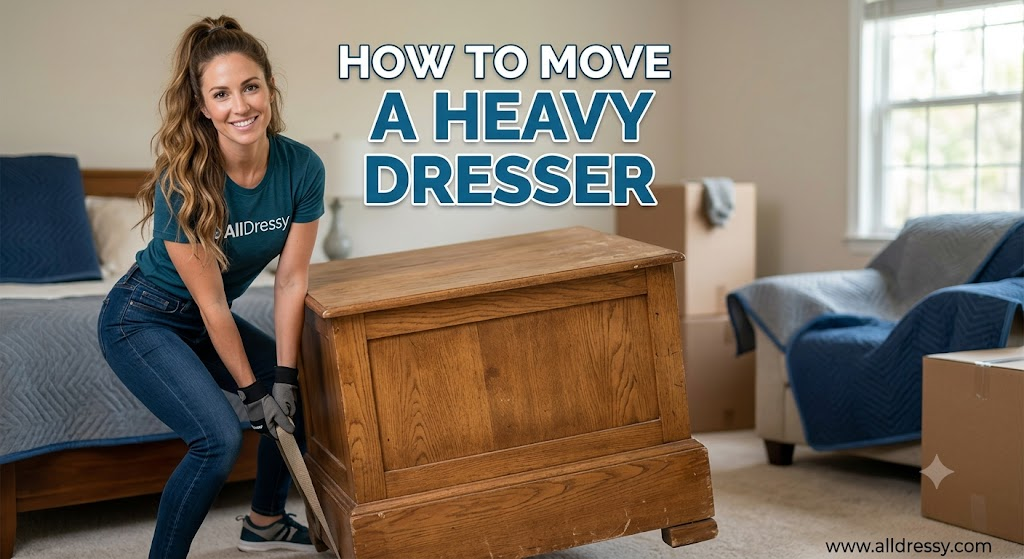
Using the proper moving methods offers several advantages.
Benefits include:
- Preventing back and shoulder injuries
- Protecting hardwood, tile, and laminate floors
- Avoiding scratches on walls and door frames
- Reducing the risk of tipping accidents
- Preventing broken drawers and hardware
- Protecting valuable furniture finishes
- Saving money on repairs
- Making the moving process faster
- Increasing overall safety
Proper preparation is far more important than physical strength.
Understand the Type of Heavy Dresser You’re Moving
Not all dressers are built the same way.
Common dresser styles include:
- Standard bedroom dresser
- Double dresser
- Tall chest of drawers
- Triple dresser
- Antique dresser
- Dresser with attached mirror
- Solid oak dresser
- Pine dresser
- MDF dresser
- Metal storage dresser
Each style has different weight distribution and handling requirements.
Estimate the Weight Before Moving
Knowing the approximate weight helps determine the safest moving strategy.
Typical weight ranges:
- Small dresser: 50–100 pounds
- Medium dresser: 100–180 pounds
- Large dresser: 180–300 pounds
- Solid hardwood dresser: 250–450 pounds
- Antique hardwood dresser: Often over 400 pounds
Never attempt to lift a dresser beyond your physical ability.
Gather the Right Moving Equipment
Professional movers depend on specialized tools instead of brute strength.
Recommended equipment:
- Furniture dolly
- Appliance dolly
- Furniture sliders
- Shoulder lifting straps
- Moving blankets
- Stretch wrap
- Ratchet straps
- Packing tape
- Work gloves
- Non-slip shoes
- Screwdriver
- Allen wrench
- Bubble wrap
- Foam corner protectors
- Plastic bags for hardware
Having the right equipment greatly reduces effort and improves safety.
Empty Every Drawer Completely
One of the easiest ways to reduce the weight is by removing all contents.
Take out:
- Clothing
- Shoes
- Blankets
- Books
- Jewelry
- Electronics
- Documents
- Decorations
An empty dresser is significantly easier to move.
Remove the Drawers
Whenever possible, remove every drawer before lifting.
Benefits include:
- Less overall weight
- Easier handling
- Reduced stress on drawer slides
- Better balance
- Lower chance of drawers opening unexpectedly
Label the drawers if they vary in size.
Remove the Mirror and Other Detachable Parts
Many dressers include attached mirrors or decorative components.
Remove:
- Mirrors
- Shelves
- Knobs
- Handles
- Decorative trim
- Legs (if removable)
Wrap each piece separately for protection.
Protect the Dresser Before Moving
Furniture finishes can be damaged during transport.
Use:
- Moving blankets
- Thick quilts
- Foam padding
- Bubble wrap for delicate areas
Secure protective coverings with stretch wrap instead of adhesive tape to prevent finish damage.
Measure Every Doorway and Hallway
Before moving, measure:
- Dresser height
- Dresser width
- Dresser depth
- Doorways
- Hallways
- Staircases
- Elevator openings
- Vehicle doors
Planning the route helps avoid getting stuck in tight spaces.
Clear the Entire Moving Path
Remove anything that could create an obstacle.
Clear away:
- Rugs
- Shoes
- Chairs
- Lamps
- Extension cords
- Toys
- Decorations
- Plants
A clean path allows smoother movement.
Wear Proper Safety Gear
Choose clothing designed for lifting.
Recommended:
- Closed-toe shoes
- Work gloves
- Comfortable clothing
- Non-slip footwear
Avoid sandals or loose-fitting clothing.
Learn Proper Lifting Technique
Correct posture helps prevent injuries.
Always:
- Bend your knees.
- Keep your back straight.
- Hold the dresser close to your body.
- Lift with your legs.
- Avoid twisting your spine.
Poor lifting technique is a leading cause of moving injuries.
Never Drag a Heavy Dresser
Dragging directly across floors can damage both the furniture and your home.
Potential damage includes:
- Scratched hardwood
- Cracked tile
- Torn carpet
- Broken dresser legs
Instead, use moving equipment.
Use Furniture Sliders
Furniture sliders are ideal for moving dressers across floors.
Steps:
- Lift one corner slightly.
- Position a slider underneath.
- Repeat for each corner.
- Push slowly to the destination.
Choose sliders appropriate for hardwood or carpet.
Using a Furniture Dolly
A furniture dolly makes transporting heavy dressers much easier.
Steps:
- Tilt the dresser carefully.
- Position the dolly underneath.
- Center the weight.
- Secure with straps if necessary.
- Roll slowly.
Avoid sudden turns.
Using an Appliance Dolly
Tall and narrow dressers often move better with an appliance dolly.
Secure the dresser using built-in straps.
Tilt only enough to balance the load.
Keep constant control.
Moving Across Hardwood Floors
Protect hardwood by using:
- Felt sliders
- Furniture dollies
- Protective blankets
- Foam pads
Never drag bare furniture legs across wood flooring.
Moving Across Carpet
Carpet increases friction.
Helpful tools include:
- Plastic furniture sliders
- Four-wheel dollies
- Shoulder lifting straps
These reduce the force required.
How to Move Around Tight Corners
Large dressers rarely pass straight through narrow corners.
Try:
- Rotating slightly
- Tilting diagonally
- Removing mirrors
- Removing handles
- Removing legs
Move slowly and deliberately.
Protect Walls and Door Frames
Large furniture often bumps into surrounding surfaces.
Use:
- Foam corner guards
- Thick blankets
- Cardboard protectors
Proceed carefully around sharp turns.
Moving a Heavy Dresser Upstairs
Stairs present one of the biggest challenges.
Best practices:
- Empty every drawer.
- Remove detachable parts.
- Use an appliance dolly whenever possible.
- Move one step at a time.
- Rest frequently if needed.
If the dresser feels unsafe, stop and get assistance.
Moving a Heavy Dresser Downstairs
Descending stairs requires even greater control.
Keep the heavier portion of the dresser lower while maintaining a secure grip.
Avoid rushing.
Never allow gravity to control the movement.
Loading a Heavy Dresser Into a Moving Truck
Proper loading protects the dresser during transportation.
Place it:
- Upright
- Against the truck wall
- On a level surface
Secure it using ratchet straps to prevent shifting.
Transporting a Heavy Dresser in a Pickup Truck
When using a pickup truck:
- Wrap the dresser completely.
- Protect against rain.
- Use multiple ratchet straps.
- Avoid stacking heavy items on top.
Drive carefully over bumps.
Unloading the Dresser
Unload using the same caution used during loading.
Move slowly.
Avoid sudden drops.
Inspect the dresser before bringing it inside.
Reassemble the Dresser
After transportation:
- Reattach mirrors.
- Install drawers.
- Tighten screws.
- Check drawer operation.
- Replace hardware.
Ensure everything functions properly before use.
Clean the Dresser After the Move
Dust and debris often accumulate during transportation.
Use:
- Microfiber cloth
- Mild wood cleaner
- Soft polishing cloth
Avoid abrasive cleaning chemicals.
Moving an Antique Heavy Dresser
Antique dressers require additional protection.
Recommendations:
- Remove delicate hardware.
- Wrap every surface thoroughly.
- Lift by the main frame rather than decorative trim.
- Keep the dresser upright whenever possible.
- Avoid exposing it to moisture or extreme temperatures.
Older furniture may contain fragile joints that require careful handling.
How Weather Affects Moving Heavy Furniture
Outdoor conditions can impact both the moving process and the condition of your dresser.
If moving in rain:
- Cover the dresser with waterproof moving blankets or plastic sheeting.
- Dry it immediately after unloading.
If moving in extreme heat:
- Avoid leaving wooden furniture inside a hot vehicle for extended periods.
If moving during winter:
- Allow the dresser to gradually adjust to room temperature before cleaning or polishing.
Proper weather protection helps preserve the finish and structural integrity of the furniture.
Organize Hardware During the Move
Small parts are easy to lose during transportation.
Store removed items such as:
- Screws
- Bolts
- Handles
- Knobs
- Mirror brackets
- Furniture feet
Place them in labeled resealable bags and keep them inside a drawer or clearly marked moving box for easy reassembly.
Common Mistakes to Avoid
Many moving accidents happen because of preventable mistakes.
Avoid:
- Leaving drawers full
- Lifting beyond your physical limits
- Dragging across hardwood floors
- Forgetting to measure doorways
- Skipping protective blankets
- Using poor lifting posture
- Failing to secure the dresser in the moving truck
- Rushing around stairs
- Ignoring weather conditions
Preparation greatly reduces the chance of damage.
Safety Tips for Moving Heavy Dressers
Keep safety as your top priority throughout the move.
Remember to:
- Warm up your muscles before lifting.
- Wear gloves with a strong grip.
- Keep children and pets away from the moving area.
- Stay hydrated during long moves.
- Take frequent breaks when necessary.
- Never place your hands beneath a suspended dresser.
- Stop immediately if the dresser begins to tip or becomes unstable.
Protecting yourself is more important than finishing the move quickly.
Professional Tips for Moving a Heavy Dresser Like Experienced Movers
Professional movers rely on planning, teamwork, and proper equipment rather than strength alone.
Use these expert techniques:
- Measure every doorway and hallway before starting.
- Remove all drawers and detachable parts.
- Protect every finished surface with moving blankets.
- Use furniture sliders or dollies whenever possible.
- Keep the dresser upright during transport.
- Secure it tightly inside the moving vehicle.
- Move slowly through tight spaces and around corners.
- Inspect the dresser after unloading for loose hardware or damage.
Frequently Asked Questions (FAQs)
How do you move a heavy dresser safely?
To move a heavy dresser safely, empty all the drawers, remove any detachable parts such as mirrors or handles, wrap the dresser with moving blankets, and use furniture sliders or a furniture dolly whenever possible. Lift with your legs instead of your back, keep the dresser balanced, and move slowly to avoid injuries or damage.
Can one person move a heavy dresser?
Yes, one person can move a heavy dresser if it is within their physical capability and the proper moving equipment is available. Furniture sliders, appliance dollies, and moving straps make the task much easier. However, for extremely heavy dressers or moves involving stairs, it is safer to get assistance.
Should I empty the drawers before moving a dresser?
Yes. Emptying the drawers significantly reduces the overall weight of the dresser and prevents drawers from sliding open during the move. It also reduces stress on the frame and drawer slides, making the dresser easier to control.
What is the best way to move a heavy dresser across hardwood floors?
The safest method is to place felt furniture sliders beneath each leg or corner of the dresser. These sliders allow the dresser to glide smoothly across hardwood floors without scratching the surface. A furniture dolly is another excellent option for longer moves.
Can I drag a heavy dresser across the floor?
Dragging a heavy dresser directly across the floor is not recommended. It can scratch hardwood, damage tile, tear carpet, and weaken the furniture’s legs or frame. Using moving equipment such as sliders or a dolly is a much safer alternative.
How do I move a heavy dresser upstairs?
Moving a heavy dresser upstairs requires careful planning. Remove all drawers and detachable parts to reduce the weight, use an appliance dolly designed for stairs if available, and move one step at a time while maintaining full control of the dresser. If the dresser is too heavy, ask for assistance rather than attempting the move alone.
How should I protect a dresser during transportation?
Wrap the dresser with thick moving blankets or padded furniture covers and secure them using stretch wrap. Remove mirrors and fragile components, protect corners with foam padding if necessary, and secure the dresser inside the moving vehicle using ratchet straps to prevent shifting.
What moving equipment is most useful for heavy dressers?
Helpful equipment includes furniture dollies, appliance dollies, furniture sliders, moving straps, moving blankets, stretch wrap, ratchet straps, work gloves, and foam corner protectors. These tools improve safety while reducing physical effort.
How do I move an antique heavy dresser?
An antique dresser should be handled with extra care. Remove any mirrors or decorative parts, wrap every surface with protective padding, avoid lifting by fragile trim or legs, and transport the dresser upright whenever possible to protect its structure and finish.
What are the most common mistakes when moving a heavy dresser?
Common mistakes include leaving items inside the drawers, dragging the dresser across the floor, skipping protective wrapping, failing to measure doorways, lifting with your back instead of your legs, rushing through tight spaces or stairs, and not securing the dresser properly inside the moving vehicle.
Conclusion
Learning how to move a heavy dresser correctly can help you protect both your furniture and your home while reducing the risk of personal injury. Heavy dressers require careful planning, the right moving equipment, and safe lifting techniques to ensure they are transported without damaging floors, walls, or the dresser itself.
By emptying the drawers, removing detachable parts, wrapping the dresser with protective materials, using furniture sliders or dollies, and planning your moving route in advance, you can complete the task more efficiently and with greater confidence. Taking your time and following proven moving practices also helps prevent many of the common problems that occur during furniture moves.
Whether you’re moving a dresser across a room, into a moving truck, or to a new home, proper preparation and patience are the keys to success. With the right approach, even a heavy dresser can be moved safely while preserving its appearance, functionality, and long-term durability.