
Knowing how to dress baby for sleep in winter can be challenging for parents, especially when temperatures drop at night. Babies cannot regulate their body temperature as effectively as older children and adults, so choosing appropriate sleepwear requires a balance between keeping them comfortably warm and preventing overheating.
The right winter sleep clothing depends on the temperature of the baby’s room, the baby’s age, the sleep environment, and the type of sleepwear being used. Instead of simply adding more blankets or layers, parents should focus on breathable clothing, a comfortable room temperature, and a safe sleep surface.
This comprehensive guide explains how to dress baby for sleep in winter, what layers babies may need, how to choose winter pajamas and sleep sacks, how to recognize overheating or being too cold, and which common winter sleepwear mistakes to avoid.
How to Dress Baby for Sleep in Winter
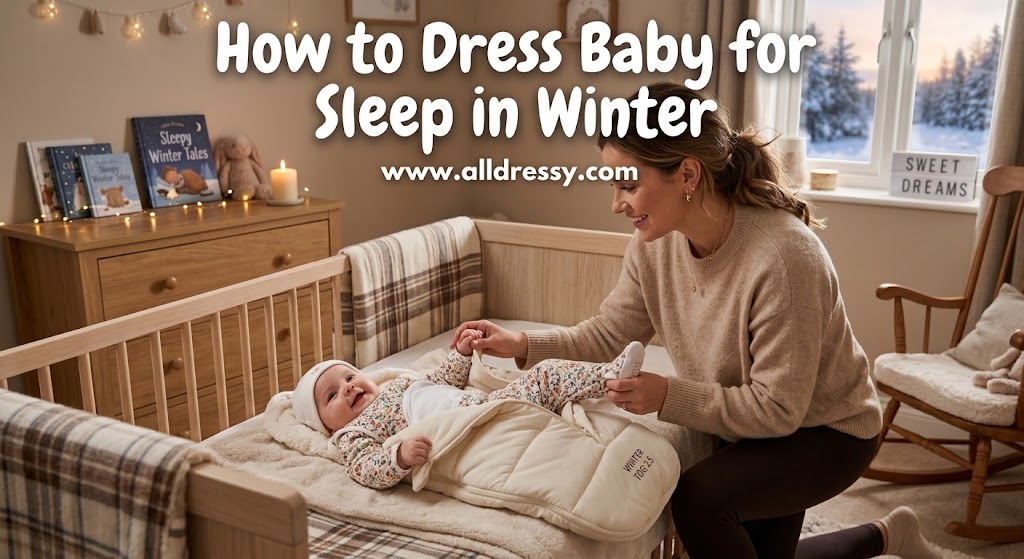
When learning how to dress baby for sleep in winter, think about layers rather than thick, bulky clothing. A baby may be comfortable wearing a fitted base layer underneath a suitable sleep garment.
A typical winter sleep outfit may include:
- A fitted cotton bodysuit
- Comfortable footed pajamas
- A properly sized sleep sack or wearable blanket when appropriate
- A diaper and normal clothing underneath
The exact combination should be adjusted according to the room temperature and the warmth of the sleepwear.
A baby’s chest, back, or tummy can provide a better indication of overall warmth than their hands and feet. Hands and feet may naturally feel cooler because circulation changes during sleep.
Why Choosing the Right Baby Sleepwear Matters in Winter
Winter weather can make parents want to bundle their baby in several layers. However, more clothing is not always safer or more comfortable.
Too many layers can cause overheating, sweating, and discomfort. On the other hand, clothing that is too light for a cold sleeping environment may leave the baby uncomfortable.
Good winter sleepwear should be:
- Comfortable
- Breathable
- Properly fitted
- Appropriate for the room temperature
- Suitable for the baby’s age
- Free from loose pieces that could interfere with safe sleep
The goal is comfortable warmth without excessive insulation.
How to Dress Baby for Sleep in Winter Based on Room Temperature
Room temperature is one of the most useful factors when deciding how to dress baby for sleep in winter.
Instead of dressing a baby according to the outdoor temperature alone, consider how warm or cool the actual sleeping room is. A cold evening outside does not necessarily mean the baby’s bedroom is equally cold.
For a moderately cool room, a fitted cotton bodysuit combined with suitable pajamas may be enough. In a colder room, parents may consider an appropriately rated wearable blanket or sleep sack.
The clothing should be adjusted gradually rather than adding many heavy layers at once.
Why Room Temperature Is More Important Than the Weather Outside
A baby sleeping in a heated bedroom may need significantly less clothing than a baby sleeping in an unheated room.
For this reason, parents should check the room rather than relying only on the weather forecast.
If heating is being used, make sure the room does not become excessively warm. If the room is naturally cold, choose appropriate layers and safe sleepwear rather than loose blankets.
How Many Layers Should a Baby Wear to Sleep in Winter?
There is no single number of layers that works for every baby and every room. The appropriate amount depends on:
- Room temperature
- Type of fabric
- Thickness of the sleepwear
- Whether a sleep sack is being used
- Baby’s age
- Individual comfort
A useful approach is to use breathable, lightweight layers that can be adjusted according to conditions.
For example, a baby might wear a cotton bodysuit under footed pajamas. If the room is colder, an appropriately sized wearable blanket may provide additional warmth.
Avoid automatically adding multiple thick layers simply because it is winter.
How to Choose Winter Baby Pajamas
Choosing suitable pajamas is an important part of understanding how to dress baby for sleep in winter.
Look for sleepwear made from comfortable, breathable materials. Cotton is commonly used because it is soft and comfortable against the skin.
Winter pajamas may come in several designs, including:
- Footed pajamas
- Long-sleeve pajamas
- Two-piece sleepwear for older children
- Fitted cotton sleepers
- Wearable sleep garments
For babies, fitted one-piece pajamas can be convenient because they stay in place and reduce the need for additional loose clothing.
Avoid Overly Bulky Pajamas
Very thick pajamas can make it difficult to determine how warm a baby actually is. Bulky clothing can also affect how a wearable sleep product fits.
Instead of choosing the thickest clothing available, select appropriate layers for the room conditions.
How to Use a Baby Sleep Sack in Winter
A sleep sack, sometimes called a wearable blanket, can be useful during colder months because it provides warmth without requiring a loose blanket around the baby.
Sleep sacks come in different thicknesses and materials. Some are designed for warmer weather, while others are made for cooler conditions.
When choosing one, consider:
- Room temperature
- Fabric thickness
- Size
- Baby’s age
- Manufacturer’s instructions
- Whether the baby’s head can remain outside the garment
The sleep sack should fit correctly around the neck and arm openings without being excessively loose.
What Is a TOG Rating?
Some baby sleepwear uses a TOG rating to describe thermal resistance. Higher TOG products generally provide more insulation.
Parents can use the manufacturer’s temperature guidance alongside the TOG rating rather than assuming that a higher number is always better.
A thick sleep sack may be inappropriate in a warm room, while a lightweight option may not provide enough warmth in a particularly cool environment.
How to Dress a Newborn for Sleep in Winter
Newborns require particularly careful attention because they are small and have limited ability to regulate body temperature.
When deciding how to dress baby for sleep in winter, newborn parents should prioritize safe sleep practices as well as warmth.
A newborn may wear a comfortable fitted layer and an appropriate sleep garment designed for newborns. Avoid loose bedding, oversized clothing, scarves, hats, or other items around the sleeping area.
Newborn sleepwear should always be properly sized. Clothing that is too large can create unnecessary safety concerns.
If a newborn seems unusually cold, unusually hot, sweaty, or otherwise uncomfortable, parents should reassess the room and clothing rather than simply adding another heavy layer.
How to Dress a Baby Under 6 Months for Winter Sleep
For younger babies, simple and predictable sleepwear is generally easier to manage.
A fitted cotton bodysuit with suitable pajamas may work in a moderately cool room. A properly sized wearable blanket can provide another layer of warmth when appropriate.
Parents should regularly check whether the baby feels comfortably warm rather than relying on cold hands or feet alone.
The baby’s chest or back can give a more useful indication of body warmth.
How to Dress an Older Baby for Winter Sleep
As babies grow, their sleepwear needs may change. Older babies may move around considerably during sleep, making wearable sleep garments convenient for maintaining warmth.
Parents should continue to choose clothing that allows comfortable movement without excessive bulk.
If the baby has started moving around independently, sleepwear should not restrict normal movement.
Should Babies Wear Hats While Sleeping in Winter?
Parents sometimes assume a baby needs a hat because the room feels cold. However, hats are generally not recommended for routine indoor sleep because they can contribute to overheating and may move over the baby’s face.
Instead of using a hat, focus on maintaining a comfortable room environment and selecting suitable sleep clothing.
The baby’s head should remain uncovered during sleep.
Should Babies Wear Socks to Bed in Winter?
Whether socks are necessary depends on the baby’s clothing.
If the baby is wearing properly fitted footed pajamas, separate socks may not be needed. If the sleepwear leaves the feet exposed, parents may consider suitable socks when appropriate.
Socks should fit comfortably without being excessively tight.
Cold feet alone do not necessarily mean that a baby needs several additional layers.
How to Tell If a Baby Is Too Hot at Night
One of the most important parts of understanding how to dress baby for sleep in winter is recognizing overheating.
Possible signs that a baby may be too warm include:
- Sweating
- Damp hair
- Hot chest or back
- Flushed skin
- Unusual restlessness
- Feeling excessively warm when touched
If a baby feels very hot, remove an unnecessary layer and reassess the room temperature.
Parents should not judge warmth solely by looking at the baby’s face or hands.
How to Tell If a Baby Is Too Cold at Night
Babies can also become uncomfortable if their sleeping environment is too cold.
A baby’s hands and feet can naturally feel cool, so they are not always the best indicator of overall body temperature.
Instead, check the chest, back, or tummy.
If the baby’s body feels unusually cool, consider whether the room is too cold or whether an appropriate additional layer is needed.
If there are concerns about a baby’s temperature or health, parents should seek advice from a healthcare professional.
The Importance of Breathable Fabrics
Fabric choice can make a significant difference in winter sleepwear.
Cotton and other breathable materials can provide comfortable layering without making the baby feel excessively hot.
Parents should be cautious with extremely heavy, poorly breathable fabrics that can trap too much heat.
Soft fabrics are also useful because babies have sensitive skin.
Check clothing regularly for rough seams, irritating labels, tight elastic, or other features that could cause discomfort.
How to Dress Baby for Sleep in Winter Without Using Blankets
Parents often use blankets to keep babies warm during winter. However, loose bedding can create safety concerns for young babies.
A properly fitted wearable blanket can be a practical alternative when appropriate.
Instead of putting a loose blanket over a baby, consider:
- Checking the room temperature.
- Choosing appropriate fitted sleepwear.
- Adding a suitable sleep sack if necessary.
- Checking the baby’s chest or back for comfortable warmth.
- Avoiding unnecessary layers.
This approach keeps the sleeping environment simpler and more predictable.
Winter Safe Sleep Environment for Babies
Clothing is only one part of winter sleep safety. The entire sleep environment matters.
A baby’s sleep space should have:
- A firm, flat sleep surface
- Properly fitted bedding
- No loose pillows
- No stuffed toys in the sleeping area
- No loose blankets around a young sleeping baby
- No hats during indoor sleep
- Appropriate room temperature
- Properly fitted sleepwear
Keeping the sleep area uncluttered helps reduce avoidable hazards.
How to Dress Baby for Sleep in a Cold House
Some homes become significantly colder at night, particularly when heating is limited.
If your house becomes cold during winter, avoid solving the problem by simply adding many layers of clothing.
Instead, consider the whole environment. If possible, maintain a comfortable room temperature and use suitable sleepwear.
A baby may need a fitted base layer, warm pajamas, and an appropriately rated sleep sack depending on the room conditions.
Parents should regularly reassess the baby’s comfort because indoor temperatures can change throughout the night.
How to Dress Baby for Sleep in Winter Without Overheating
The biggest mistake many parents make is assuming that a cold season automatically requires very thick clothing.
Overheating is also a concern.
A better strategy is to use several light, breathable choices rather than one extremely thick outfit.
For example:
Base layer: A comfortable cotton bodysuit.
Sleep layer: Fitted long-sleeve pajamas or a sleeper.
Additional layer: A suitable wearable blanket if needed.
The exact combination should be based on the actual room conditions.
Winter Sleepwear for Babies With Sensitive Skin
Some babies develop irritation when exposed to certain fabrics, detergents, or rough clothing.
For sensitive skin, consider:
- Soft breathable fabrics
- Fragrance-free laundry products when appropriate
- Smooth seams
- Comfortable waistbands
- Properly fitted clothing
- Avoiding excessive sweating
If a baby’s skin repeatedly develops a rash or irritation, discuss it with a pediatric healthcare professional.
Common Mistakes When Dressing Babies for Winter Sleep
Understanding common mistakes can make winter bedtime easier.
Using Too Many Layers
More layers do not automatically mean better warmth. Excessive clothing can cause overheating.
Putting a Hat on a Sleeping Baby
Indoor sleep generally does not require a hat. Keeping the head uncovered is an important part of a simple sleep environment.
Using Heavy Loose Blankets
Loose blankets can move around during sleep. Suitable sleepwear or wearable blankets may be preferable for maintaining warmth.
Ignoring Room Temperature
Outdoor weather does not tell you exactly how warm the baby’s sleeping environment is.
Choosing Oversized Sleepwear
Sleepwear should fit according to the manufacturer’s sizing recommendations.
Checking Only the Hands and Feet
Cool hands and feet can be normal. Check the baby’s chest, back, or tummy when assessing overall warmth.
How to Create a Winter Bedtime Routine
A consistent bedtime routine can make winter nights easier.
A simple routine might include:
- Changing the diaper.
- Dressing the baby in appropriate sleepwear.
- Checking the room temperature.
- Preparing the safe sleep space.
- Checking that the baby is comfortable but not overheated.
- Putting the baby down on the appropriate sleep surface.
Keeping the routine consistent can help parents remember the important safety checks each night.
How to Dress Baby for Sleep in Winter During Travel
Travel can make winter baby sleep more complicated because room temperatures may vary.
When staying somewhere unfamiliar, check the sleeping room before dressing the baby.
Pack several types of sleepwear so you can adapt to warmer or cooler conditions.
Useful items may include:
- Cotton bodysuits
- Fitted pajamas
- Appropriate sleep sacks
- Extra clean sleepwear
- Diapers
- Weather-appropriate clothing for outside
Avoid assuming that a hotel, relative’s house, or other location will have the same temperature as your home.
How to Dress Baby for Sleep in Winter When the Heater Is On
Heating can make a room warmer than expected.
If a heater is running, check the actual room conditions instead of automatically adding winter layers.
A baby may need lighter clothing than expected when the room is heated.
Do not place a baby’s sleep area directly beside a heater. The sleeping environment should remain comfortable and free from excessive heat sources.
What to Do If the Baby Sweats During Sleep
If you notice sweating, especially around the head, neck, chest, or back, reassess the baby’s clothing and room temperature.
Remove an unnecessary layer and allow the baby to cool gradually.
Avoid responding by immediately switching to extremely cold conditions. The goal is a comfortable, moderate environment.
If sweating is persistent or accompanied by other concerning symptoms, seek medical advice.
What to Do If the Baby Feels Cold
If the baby feels unusually cool, check the room temperature and the baby’s chest or back.
You may need to add an appropriate layer or adjust the room environment.
Avoid putting several thick blankets around the baby.
If the baby remains unusually cold or seems unwell, contact a healthcare professional for advice.
How to Dress Baby for Sleep in Winter: A Practical Checklist
Before bedtime, parents can use this quick checklist:
- Check the sleeping room.
- Choose breathable sleepwear.
- Use fitted clothing.
- Avoid excessive layers.
- Keep the baby’s head uncovered.
- Avoid loose items in the sleep area.
- Use a suitable sleep sack if appropriate.
- Check the baby’s chest or back for comfort.
- Watch for sweating or unusual warmth.
- Make adjustments when the room temperature changes.
This simple checklist can make winter bedtime more manageable.
Final Tips for Comfortable Winter Baby Sleep
Learning how to dress baby for sleep in winter is not about finding one perfect outfit for every night. It is about understanding the baby’s sleeping environment and making sensible adjustments.
Choose breathable, properly fitted clothing and avoid unnecessary bulk. A suitable sleep sack can provide warmth without relying on loose bedding. Keep the baby’s head uncovered during indoor sleep, and pay attention to signs of overheating as well as signs of being too cold.
Most importantly, remember that every baby’s environment is different. Room temperature, clothing thickness, fabric, and the baby’s individual comfort all influence what works best.
Parents should prioritize safe sleep practices while keeping the baby comfortably warm. When there is uncertainty about a baby’s temperature, unusual sweating, persistent coldness, or other health concerns, consulting a pediatric healthcare professional is the safest approach.
Frequently Asked Questions About How to Dress Baby for Sleep in Winter
1. How should I dress my baby for sleep in winter?
Dress your baby according to the temperature of the room rather than simply the outdoor weather. Choose comfortable, appropriate sleepwear and avoid excessive layers. A properly fitted baby sleeping bag can provide warmth without requiring loose blankets.
2. How many layers should a baby wear to sleep in winter?
A common guideline is to use about one more layer than an adult would comfortably wear in the same environment. However, the thickness of the clothing matters, so always consider the room temperature and the manufacturer’s instructions for sleepwear or sleeping bags.
3. What temperature should a baby’s room be in winter?
The NHS recommends a room temperature of approximately 16°C to 20°C (61°F to 68°F) for baby sleep. Using a room thermometer can help you make more consistent clothing decisions.
4. Should my baby wear a hat while sleeping in winter?
Babies generally should not wear hats indoors while sleeping. Keeping the baby’s head and face uncovered helps reduce the risk of overheating. A hat may be appropriate in specific medical circumstances, so follow advice from your baby’s healthcare professional when applicable.
5. How do I know if my baby is too hot at night?
Check the baby’s chest or the back of the neck rather than relying on their hands and feet. Signs of overheating can include sweating, hot skin, or a very warm chest. If your baby feels too warm, remove a layer and reassess the room temperature.
6. What should my baby wear under a winter sleep sack?
The appropriate clothing depends on the room temperature and the sleep sack’s warmth or tog rating. A suitable bodysuit or sleepsuit may be appropriate, but always follow the specific manufacturer’s instructions for the sleeping bag you are using.
7. Can babies sleep with blankets in winter?
For young babies, loose blankets can create a sleep-safety risk. A properly fitted sleep sack can be an alternative. If blankets are used, follow current safer-sleep guidance and avoid heavy or loose bedding around the baby.
8. Should I use a thick blanket if my baby’s hands are cold?
Not necessarily. Babies’ hands and feet can naturally feel cooler than their bodies. Instead of judging temperature from the hands alone, check the baby’s chest or neck and consider the room temperature before adding another layer.
9. Can a baby sleep near a heater during winter?
It is better to keep the baby’s sleep space away from direct heat sources such as radiators, heaters, and fires. Instead, maintain a comfortable room temperature and dress the baby appropriately for that environment.
10. What is the safest way to keep a baby warm at night?
Use suitable infant sleepwear appropriate for the room temperature, keep the baby’s head and face uncovered, and avoid overheating. A properly fitted wearable sleep bag can provide warmth without loose bedding. The baby should also sleep on a firm, flat surface on their back, with the sleep area kept clear of pillows, soft toys, and loose objects.
Conclusion
Understanding how to dress baby for sleep in winter is mainly about finding the right balance between warmth and safety. A baby does not necessarily need thick layers simply because the weather outside is cold. Instead, consider the actual bedroom temperature, the baby’s sleepwear, and the warmth rating of any sleeping bag being used.
Keep the baby’s head and face uncovered and avoid excessive clothing, heavy bedding, weighted sleep products, and direct heat sources. Check the baby’s chest or the back of the neck when you are concerned about temperature rather than relying only on cool hands or feet.
A comfortable room, properly fitting sleepwear, and a clear, firm sleep surface can help create an appropriate winter sleep environment. If your baby was premature, has a medical condition, or you are concerned about their temperature or health, seek individualized advice from a pediatrician or other qualified healthcare professional.