
Ranch is undisputedly one of the most beloved culinary staples on the table, celebrated for its perfect marriage of tangy buttermilk, rich oil bases, and a precise aromatic blend of garlic, onion, dill, and parsley. However, whether you are crafting a meticulous batch from scratch or adjusting a store-bought variety, achieving the ideal viscosity can be surprisingly tricky. A runny dressing slips right off crisp romaine leaves, pooling unappealingly at the bottom of the salad bowl and diluting the flavor experience.
Mastering how to thicken ranch salad dressing is not merely a matter of throwing arbitrary ingredients into a bowl; it requires a foundational understanding of food science, culinary emulsions, and ingredient synergy. The ideal restaurant-style consistency—one that clings beautifully to a forkful of greens or coats a fresh vegetable spear without dripping—can be achieved through several distinct methodologies. By strategically manipulating your dairy components, implementing cold-emulsion stabilization techniques, or introducing hydrocolloids and alternative binders, you can customize the texture of your ranch to suit any culinary application.
1. The Emulsion Baseline: Adjusting Primary Cream Components
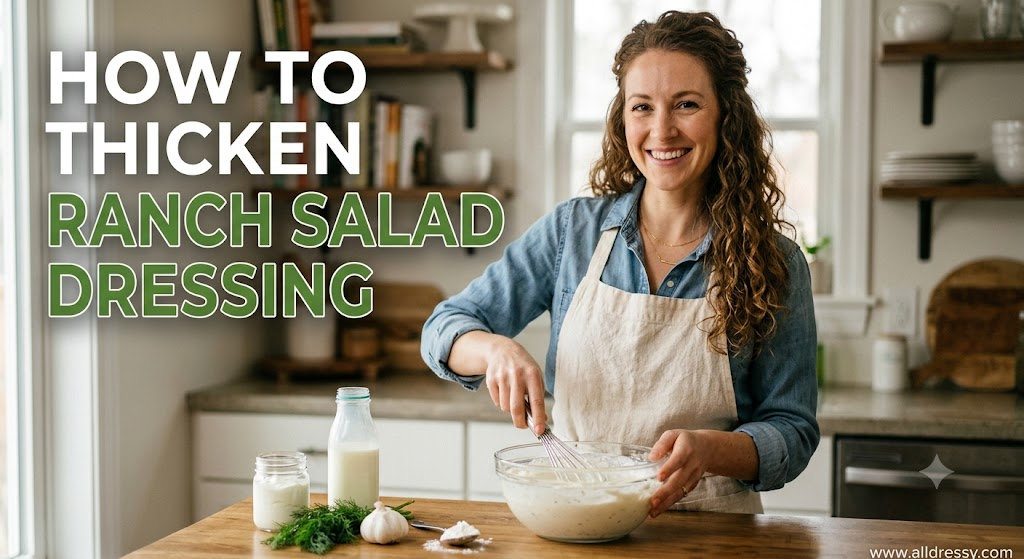
Before turning to specialty additives or stabilizers, the most logical and flavor-preserving approach to fixing a thin dressing is to alter your primary fat-to-liquid ratios. Ranch is fundamentally a temporary cold emulsion. The majority of its structural body comes from dense, suspended oil droplets provided by mayonnaise, which are surrounded and separated by the fluid water content of buttermilk.
Boosting the Mayonnaise Matrix
Mayonnaise functions as the structural scaffolding of a traditional ranch. If your dressing is watery, it usually implies that the ratio of liquid buttermilk to mayo is too high.
To fix this, begin by measuring out small, incremental portions of premium, full-fat mayonnaise—ideally one tablespoon at a time for every cup of dressing. When adding the extra mayo, avoid aggressive blending, which can sometimes shear the existing emulsion and thin it out further. Instead, use a wire balloon whisk to gently but thoroughly incorporate the thick mayonnaise back into the liquid stream. Full-fat commercial mayonnaise utilizes egg yolks as a natural source of lecithin, an excellent emulsifier that locks free-floating water molecules into place, thereby increasing overall thickness.
Replacing Liquid Dairy with Sour Cream or Crème Fraîche
Traditional commercial recipes rely heavily on fluid buttermilk for flavor and acidity. However, buttermilk contains a high water concentration that easily compromises the body of the dressing.
If you want to know how to thicken ranch salad dressing without losing that trademark tangy zip, substituting a portion of the liquid dairy with cultured sour cream or crème fraîche is highly effective. Sour cream has been fermented with lactic acid bacteria until it reaches a firm, spreadable state. Swapping out half of your intended buttermilk volume for full-fat sour cream introduces rich dairy solids and lactic acid structures that hold their shape. Crème fraîche, with its higher butterfat content (around 30% to 45%), delivers an even more luxurious, velvety mouthfeel and robust structural stability that will not separate over time.
Utilizing Strained Greek Yogurt or Labneh
For those seeking a sharper flavor profile or a boost in protein content, strained dairy products offer incredible thickening power. High-quality, plain Greek yogurt has undergone an extensive straining process to strip away the watery liquid whey, leaving behind a thick mass of concentrated dairy proteins.
When integrated into a runny ranch dressing, Greek yogurt absorbs ambient moisture and immediately binds the mixture together. For an even more dramatic transformation, labneh—a middle eastern strained yogurt cheese—can be used. Labneh possesses a texture close to cream cheese but retains a sharp, cultured acidity that complements the herbal notes of ranch perfectly.
2. Advanced Hydrocolloids: Commercial Science in the Home Kitchen
When you examine the ingredient label of your favorite high-end commercial pourable dressings, you will notice they rarely achieve their perfect, non-separating cling through dairy alone. They rely on hydrocolloids—substances that form a gel or thick network when combined with water. Bringing these food science tools into your kitchen offers highly predictable results.
The Precision of Xanthan Gum
Xanthan gum is an exceptionally powerful stabilizer produced through the fermentation of glucose or sucrose by the Xanthomonas campestris bacterium. It is highly valued because it functions as a “shear-thinning” agent. This means your ranch will remain beautifully thick and suspended while resting in a bottle, but will pour smoothly when shaken or agitated.
Step 1: Measure exactly 1/8 to 1/4 teaspoon of xanthan gum per two cups of runny ranch. Never eye-ball this ingredient.
Step 2: Do not drop the powder directly into the liquid bowl, or it will instantly seize into gelatinous clumps.
Step 3: Transfer your runny ranch into a blender. Turn the blender on a medium-low speed to create a vortex.
Step 4: Slowly sprinkle the xanthan gum directly into the center of the spinning vortex, ensuring immediate dispersion.
Step 5: Blend continuously for 30 to 45 seconds to fully hydrate the gum, then transfer to the refrigerator to set.
Incorporating Guar Gum
Similar to xanthan gum, guar gum is a natural carbohydrate extracted from the endosperm of guar beans. While xanthan gum performs optimally in highly acidic environments, guar gum is a stellar thickener for cold, dairy-heavy liquids like ranch. It works by expanding its molecular chain when exposed to water, trapping moisture within a complex web. Use it in the exact same microscopic quantities as xanthan gum, taking care to sift or blend it thoroughly to ensure a smooth, silky finish rather than a grainy, uneven texture.
3. Cold-Binding Binders and Modern Alternatives
If you prefer to avoid gums or altering your primary dairy ratios, several clean-label culinary binders can absorb excess water without requiring you to cook the dressing on a hot stove.
Dehydrated Buttermilk Powder Concentrates
One of the most common mistakes when making homemade ranch is trying to fix a runny batch by adding more dry ranch seasoning packet mix. This often ruins the flavor profile by making the dressing aggressively salty. Instead, use pure, unsalted dehydrated buttermilk powder.
By adding one to two tablespoons of pure buttermilk powder directly into a thin dressing, you introduce dry dairy solids, proteins, and milk sugars that immediately begin thirstily drawing out and absorbing the free water within the dressing. This allows you to retain an authentic, deep buttermilk flavor while naturally reducing the moisture content and increasing density.
Instant Mashed Potato Flakes
While it may sound unconventional, using dehydrated instant potato flakes is a secret industry trick used to modify the viscosity of soups, sauces, and cold pourable dressings without distorting their color or underlying savory properties.
Step 1: Take a tablespoon of plain, unflavored instant mashed potato flakes.
Step 2: Pulse them in a clean spice grinder or food processor until they form a microscopic, flour-like powder.
Step 3: Whisk the powdered flakes directly into your thin ranch salad dressing.
Step 4: Allow the mixture to sit undisturbed in the refrigerator for twenty minutes.
Step 5: The potato starch cells will fully expand, locking away excess liquid and yielding a remarkably creamy texture.
The Whipped Cottage Cheese Emulsion
Cottage cheese has experienced a culinary renaissance due to its incredible versatility when blended. If your ranch dressing is thoroughly liquid, adding half a cup of standard curd cottage cheese directly into a high-powered blender alongside your runny dressing can fix it. As the blender blades break down the curds, the proteins change into a perfectly smooth, glossy, ultra-thick cream that matches the visual appearance of premium mayo while keeping the overall flavor profile light, fresh, and savory.
4. Troubleshooting and Environmental Factors
Sometimes, learning how to thicken ranch salad dressing involves analyzing external factors like temperature, rest time, and preparation mechanics rather than just introducing new ingredients.
The Crucial Role of Cold Hydration Time
It is a common error to panic immediately after blending a fresh batch of ranch dressing because it looks thin or pourable. Freshly combined mayonnaise, buttermilk, and dry herbs need time to interact.
When dairy products are agitated in a blender or whisked vigorously, their fat molecules are temporarily disrupted. Placing your fresh ranch into an airtight glass jar and refrigerating it for a minimum of two to four hours is often all that is required. As the temperature drops, the fats within the mayonnaise and sour cream resolidify, and the dried herbs fully rehydrate, pulling ambient moisture into their cells and naturally tightening the dressing’s body.
The Mechanics of Vegetable Moisture Contamination
If you are adding fresh elements like minced garlic, grated onions, chopped scallions, or fresh dill directly into your ranch dressing, you might accidentally be introducing an excess amount of hidden water.
Vegetables are packed with cellular moisture. When you chop or grate onions and garlic, you rupture their cell walls, releasing a stream of watery juices that will quickly break down a thick ranch emulsion. To mitigate this risk, always thoroughly pat your fresh herbs completely dry with paper towels after washing them. If you are using fresh alliums like onions or cucumbers for a textured ranch variation, salt them lightly in a fine-mesh colander for fifteen minutes beforehand to draw out excess moisture, press them firmly to drain, and then fold them into your base.
Repairing an Over-Sheared or Broken Emulsion
If you run a food processor or a high-speed countertop blender for too long when mixing your ranch dressing, the friction generated by the spinning blades can heat the fats. This heat can cause the delicate oil-and-egg emulsion of the mayonnaise to snap and break, resulting in a separated, oily, water-thin liquid.
If this happens, you cannot fix it by simply adding more thickeners. You must rebuild the emulsion loop. To do this, crack a fresh room-temperature egg yolk into a clean mixing bowl. Slowly, in a microscopic stream, whisk your broken, runny ranch dressing into that fresh egg yolk drop by drop. The fresh lecithin in the yolk will catch the floating oils and fluids, anchoring them back together into a stable, ultra-thick, resilient cream structure.
Frequently Asked Questions
Why does my homemade ranch dressing turn out runny?
Homemade ranch usually turns out runny due to an incorrect ratio of liquid dairy to solid fat. Using fluid buttermilk without balancing it with enough full-fat mayonnaise or sour cream introduces too much water content. Additionally, over-blending the dressing in a high-speed blender can generate heat that thins the mayonnaise emulsion, while adding wet, freshly washed herbs can introduce hidden moisture that dilutes the mixture.
Will ranch dressing thicken up as it sits in the refrigerator?
Yes. Freshly mixed ranch dressing naturally tightens and thickens after resting in the refrigerator for two to four hours. Cold temperatures cause the milk fats and oils to firm up, while the dried herbs and spices slowly rehydrate, absorbing excess ambient liquid from the dressing base.
Can I use cornstarch or flour to thicken a cold salad dressing?
No, you should avoid using raw cornstarch or flour to thicken cold ranch dressing. These starches require heat (usually reaching a simmer around 175°F to 212°F) to activate their thickening properties and cook out the raw, chalky taste. Adding them directly to cold dairy will result in a grainy texture and an unappealing, pasty flavor.
How do I thicken store-bought ranch dressing without changing the flavor?
The most flavor-neutral way to thicken a commercial store-bought ranch is by adding a microscopic amount of xanthan gum (about 1/8 teaspoon per two cups of dressing) and blending it thoroughly. If you do not have xanthan gum, whisking in a tablespoon of unflavored dehydrated buttermilk powder or plain mashed potato flakes will absorb excess moisture without altering the intended flavor profile.
Does low-fat or skim milk work for making a thick ranch dressing?
No. Low-fat and skim milks lack the necessary fat solids and viscosity required to hold a stable emulsion. Using them will result in a watery dressing that quickly separates. For a thick texture, always opt for full-fat bases like whole-milk sour cream, heavy cream, or full-fat Greek yogurt.
Conclusion
Achieving the perfect, restaurant-quality consistency for your ranch dressing is a masterclass in balancing moisture and fat. Whether you prefer to keep it traditional by boosting your base with heavy dairy solids like sour cream and Greek yogurt, or you lean into modern food science using precise hydrocolloids like xanthan gum, you have total control over the final texture. By managing ingredient moisture, respecting the emulsion process, and giving the dressing adequate time to chill and settle, you can easily rescue any runny batch and ensure it clings beautifully to every leaf, wing, or vegetable it touches.