
The debate over why dress code is bad has grown significantly over the past decade. While schools, businesses, and organizations often introduce dress codes to promote professionalism, discipline, or equality, many people argue that these policies create more problems than they solve.
A strict dress code can limit personal expression, reinforce stereotypes, unfairly target certain groups, and even distract from the real purpose of education or work. Instead of encouraging respect and responsibility, overly restrictive clothing rules may damage confidence, reduce creativity, and create unnecessary conflict between authority figures and individuals.
Understanding why dress code is bad requires looking beyond clothing itself. Dress codes affect mental health, inclusion, diversity, self-expression, learning environments, workplace morale, and even economic equality. This article explores every major disadvantage of dress codes while explaining why many experts believe flexible appearance policies are often more effective.
Why Dress Code Is Bad for Personal Freedom
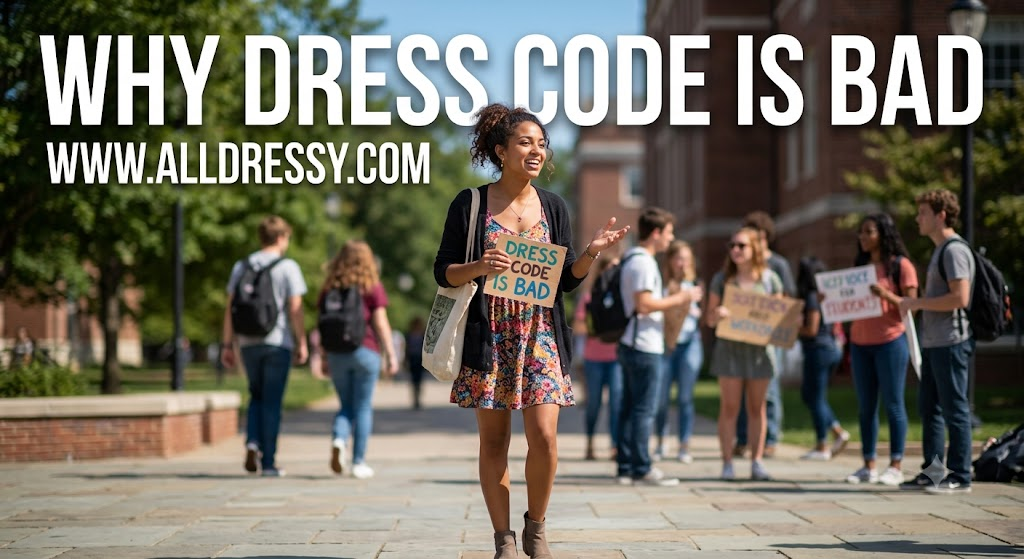
One of the biggest arguments about why dress code is bad is that it limits personal freedom.
Clothing is one of the easiest ways people express:
- Personality
- Culture
- Religion
- Creativity
- Confidence
- Identity
When organizations force everyone to dress similarly, they remove an important form of self-expression.
For many individuals, fashion represents:
- Artistic taste
- Personal values
- Lifestyle
- Individual uniqueness
A restrictive dress code tells people that conformity matters more than individuality.
Instead of encouraging authenticity, strict policies often pressure people to hide who they are.
Why Dress Code Is Bad for Students
Students spend thousands of hours in school.
A strict dress code can negatively affect:
- Confidence
- Motivation
- Self-esteem
- School satisfaction
Many students report feeling judged not because of their behavior or academic performance, but because of their clothing choices.
Education should focus on:
- Learning
- Critical thinking
- Creativity
- Problem-solving
Instead, schools sometimes spend valuable time enforcing clothing regulations.
Dress Codes Often Create Unnecessary Stress
Many students worry every morning about whether their outfit violates school policy.
Common concerns include:
- Shorts being too short
- Shirts being too tight
- Shoulder straps
- Hair color
- Jewelry
- Hats
- Hoodies
This daily stress distracts students from preparing for class.
Instead of thinking about math or science, students may spend their energy worrying about getting dress-coded.
Why Dress Code Is Bad Because It Targets Girls More Often
One of the most common criticisms involves gender inequality.
Many dress code policies contain far more rules for girls than boys.
Examples include restrictions on:
- Tank tops
- Leggings
- Crop tops
- Skirt length
- Dresses
- Makeup
- Bra straps
Meanwhile, boys often face fewer appearance restrictions.
This unequal enforcement creates frustration and can send harmful messages about responsibility.
Rather than teaching respect, some policies imply that girls must change their appearance because of others’ reactions.
Dress Codes Can Promote Body Shaming
Another reason why dress code is bad is its potential connection to body image issues.
The same outfit can appear different depending on:
- Height
- Weight
- Body shape
- Physical development
As a result:
A shirt considered acceptable on one student might be considered inappropriate on another.
This inconsistency can make students feel embarrassed about their bodies.
Body shaming contributes to:
- Anxiety
- Low confidence
- Poor self-esteem
- Negative body image
Why Dress Code Is Bad for Creativity
Creativity grows through freedom.
Fashion allows people to:
- Mix colors
- Experiment with styles
- Build confidence
- Express imagination
Strict dress codes reduce opportunities for creative thinking.
Although clothing seems unrelated to education or work, creative expression often supports:
- Innovation
- Confidence
- Communication
- Original thinking
Organizations that value creativity usually allow greater flexibility in appearance.
Dress Codes Can Reinforce Gender Stereotypes
Many traditional dress codes assume:
- Boys wear one type of clothing.
- Girls wear another.
Modern society recognizes that gender expression is more diverse.
Rigid appearance policies may unintentionally exclude individuals whose clothing choices do not match traditional expectations.
Inclusive environments generally benefit from flexible appearance standards.
Why Dress Code Is Bad for Cultural Diversity
People come from different backgrounds.
Traditional clothing varies around the world.
Examples include cultural garments worn for:
- Religious beliefs
- Family traditions
- National identity
- Ceremonies
Strict dress codes sometimes conflict with these traditions.
Inclusive policies should respect cultural diversity whenever safety allows.
Religious Expression Can Be Limited
Some people wear clothing because of their faith.
Examples include:
- Head coverings
- Religious jewelry
- Traditional garments
When dress codes prohibit these items without reasonable accommodations, individuals may feel excluded.
Respecting religious diversity helps create welcoming communities.
Dress Codes Can Increase Bullying
Ironically, dress codes intended to reduce bullying sometimes create new reasons for bullying.
Students who receive dress code violations may become embarrassed in front of classmates.
Public corrections can lead to:
- Teasing
- Humiliation
- Social isolation
Positive school culture depends more on teaching kindness than policing clothing.
Why Dress Code Is Bad for Economic Equality
Not every family can afford expensive clothing.
Strict dress codes sometimes require:
- Specific shoes
- Certain pants
- Particular brands
- Uniform pieces
Replacing clothing can become expensive.
Families with limited income may struggle to meet these expectations.
Flexible policies reduce unnecessary financial pressure.
Hidden Costs of Dress Code Policies
Parents may need to purchase:
- Multiple approved outfits
- Special footwear
- Replacement clothing
- Seasonal uniforms
- Approved jackets
These costs accumulate over time.
Lower-income households may experience additional stress.
Dress Codes Can Waste Learning Time
Teachers and administrators often spend significant time enforcing appearance rules.
This includes:
- Checking outfits
- Writing referrals
- Contacting parents
- Holding meetings
- Reviewing policy violations
Time spent enforcing clothing policies could instead support education.
Why Dress Code Is Bad Because It Creates Subjective Rules
Many policies include vague language such as:
- Appropriate
- Modest
- Distracting
- Professional
These words are open to interpretation.
Different staff members may enforce rules differently.
This inconsistency leads to confusion and frustration.
Students May Feel Singled Out
Receiving a dress code violation publicly can be embarrassing.
Students may experience:
- Shame
- Anxiety
- Anger
- Embarrassment
Negative emotional experiences can reduce engagement in school.
Dress Codes May Damage Trust
When students believe rules are unfair, trust between students and administrators decreases.
Respect grows when policies are:
- Clear
- Consistent
- Fair
- Inclusive
Strict enforcement without flexibility may harm relationships.
Why Dress Code Is Bad in the Workplace
Dress codes are not limited to schools.
Many workplaces require:
- Business attire
- Formal shoes
- Specific hairstyles
- Limited accessories
While professionalism matters, overly strict appearance policies can reduce employee satisfaction.
Workers often perform better when they feel comfortable.
Comfort Improves Productivity
Comfortable clothing allows employees to:
- Move easily
- Stay focused
- Reduce stress
- Improve concentration
Uncomfortable clothing may reduce productivity throughout the day.
Professionalism Is More Than Clothing
Professional behavior includes:
- Respect
- Communication
- Responsibility
- Teamwork
- Reliability
Clothing alone does not determine professionalism.
A highly skilled employee wearing business casual clothing may perform better than someone wearing formal attire with poor work habits.
Dress Codes Can Harm Employee Morale
Employees appreciate autonomy.
Allowing reasonable flexibility often increases:
- Job satisfaction
- Confidence
- Motivation
- Workplace happiness
Rigid appearance policies may create unnecessary frustration.
Why Dress Code Is Bad for Inclusion
Inclusive environments recognize that individuals have different:
- Cultures
- Religions
- Disabilities
- Identities
- Financial situations
Flexible dress policies make more people feel welcome.
Medical Needs May Conflict With Dress Codes
Some individuals need clothing accommodations because of:
- Skin conditions
- Mobility devices
- Medical equipment
- Sensory sensitivities
Strict appearance policies may unintentionally create barriers.
Reasonable flexibility supports accessibility.
Dress Codes Can Encourage Judgment Based on Appearance
People naturally form first impressions.
However, strict dress codes may unintentionally reinforce the idea that appearance matters more than:
- Intelligence
- Character
- Skills
- Kindness
- Leadership
Success should be measured by actions rather than clothing.
Why Dress Code Is Bad for Mental Health
Constant monitoring of appearance can contribute to:
- Anxiety
- Stress
- Reduced confidence
- Fear of embarrassment
Young people especially benefit from environments that emphasize growth rather than appearance.
Students Learn Better When They Feel Comfortable
Research in education often highlights the importance of psychological safety.
Students participate more when they feel accepted.
Comfortable clothing may contribute to:
- Better concentration
- Increased participation
- Improved confidence
- Greater classroom engagement
Strict Dress Codes May Ignore Modern Fashion Trends
Fashion evolves continuously.
Styles considered unusual today may become mainstream tomorrow.
Policies that fail to adapt may appear outdated.
Flexible guidelines allow organizations to remain current while maintaining reasonable standards.
Dress Codes Can Reduce Individual Identity
Identity develops through:
- Experiences
- Interests
- Creativity
- Appearance
Clothing contributes to self-identity.
Removing this choice may reduce opportunities for healthy self-expression.
Better Alternatives to Strict Dress Codes
Instead of banning large categories of clothing, organizations can create simpler guidelines focused on:
- Safety
- Respect
- Cleanliness
- Appropriate language on clothing
- Practical requirements for specific activities
This approach provides structure without unnecessary restrictions.
Encouraging Responsibility Instead of Control
Rather than controlling every clothing choice, schools and employers can teach:
- Respect
- Decision-making
- Professional judgment
- Personal responsibility
These life skills remain valuable long after graduation or employment.
Flexible Dress Policies Build Stronger Communities
Organizations with flexible appearance policies often encourage:
- Diversity
- Inclusion
- Creativity
- Confidence
- Mutual respect
People who feel accepted are generally more engaged and motivated.
Finding a Balance Between Freedom and Standards
The discussion about why dress code is bad does not mean every rule is unnecessary. Certain clothing requirements may be appropriate for safety, hygiene, or specific professional roles. However, policies work best when they are clear, applied fairly, and focused on legitimate needs rather than personal preferences or outdated norms.
A balanced approach respects individuality while maintaining an environment where everyone can learn or work effectively. By emphasizing behavior, respect, and responsibility over strict appearance rules, schools and workplaces can create spaces that are more inclusive, supportive, and productive for everyone.
Frequently Asked Questions (FAQs)
1. Why dress code is bad for students?
Many people believe why dress code is bad for students because it can limit self-expression, create unnecessary stress, and sometimes unfairly target certain groups. Strict dress codes may also take attention away from learning by focusing too much on clothing instead of academic performance.
2. Does a dress code improve student behavior?
There is no universal answer. Some schools report improvements in discipline, while others find little or no connection between dress codes and student behavior. Factors such as school culture, teaching quality, and student support often have a greater impact than clothing rules.
3. Why do people think dress codes are unfair?
Many people consider dress codes unfair because they can be inconsistently enforced, rely on subjective rules, and sometimes affect girls or certain cultural groups more than others. Unequal enforcement often leads to frustration and feelings of discrimination.
4. Can dress codes affect mental health?
Yes. Strict dress codes can contribute to anxiety, embarrassment, and lower self-esteem, especially if students or employees feel judged because of their appearance. A supportive environment that values people beyond their clothing can have a more positive effect on mental well-being.
5. Do dress codes violate freedom of expression?
Some people argue that overly restrictive dress codes limit personal expression by controlling hairstyles, clothing choices, accessories, and cultural or religious attire. Others believe reasonable dress codes are acceptable if they are necessary for safety or professionalism.
6. Why are dress codes criticized for gender bias?
Dress codes are often criticized because they may contain more restrictions for girls than boys or reinforce traditional gender expectations. Policies that apply equally to everyone and avoid gender-specific rules are generally viewed as more inclusive.
7. Can dress codes create financial challenges?
Yes. Families may need to purchase specific clothing, shoes, or uniforms that can be expensive. Flexible dress policies can reduce these costs and make it easier for people from different economic backgrounds to comply.
8. Are dress codes necessary in workplaces?
Some workplaces require dress codes for safety, customer interaction, or maintaining a professional image. However, many modern organizations have adopted business casual or flexible dress policies, recognizing that employee performance depends more on skills and professionalism than on clothing.
9. What are better alternatives to strict dress codes?
Instead of detailed clothing restrictions, schools and workplaces can focus on simple guidelines related to safety, cleanliness, respectful attire, and appropriate behavior. This approach provides structure while allowing greater personal freedom.
10. Why is the debate about why dress code is bad still important?
The discussion remains important because dress codes affect equality, inclusion, education, workplace culture, and individual rights. As society becomes more diverse, many institutions are re-evaluating appearance policies to ensure they are fair, respectful, and effective.
Conclusion
Understanding why dress code is bad involves looking beyond clothing and considering its broader effects on personal freedom, education, workplace satisfaction, and social equality. While dress codes are often introduced with positive intentions such as promoting discipline, professionalism, or safety, overly strict policies can unintentionally limit self-expression, increase stress, reinforce stereotypes, and create financial or emotional burdens.
The most effective approach is not necessarily eliminating all dress codes but designing policies that are fair, inclusive, and focused on genuine needs rather than outdated expectations. Schools and workplaces should prioritize respect, responsibility, and behavior while allowing reasonable freedom in personal appearance.
As attitudes toward diversity and individuality continue to evolve, flexible dress policies are becoming increasingly popular. By balancing professionalism with personal expression, organizations can create environments where people feel respected, confident, and motivated to perform at their best. This balanced approach benefits students, employees, and institutions alike while addressing many of the concerns raised in the ongoing discussion about why dress code is bad.