
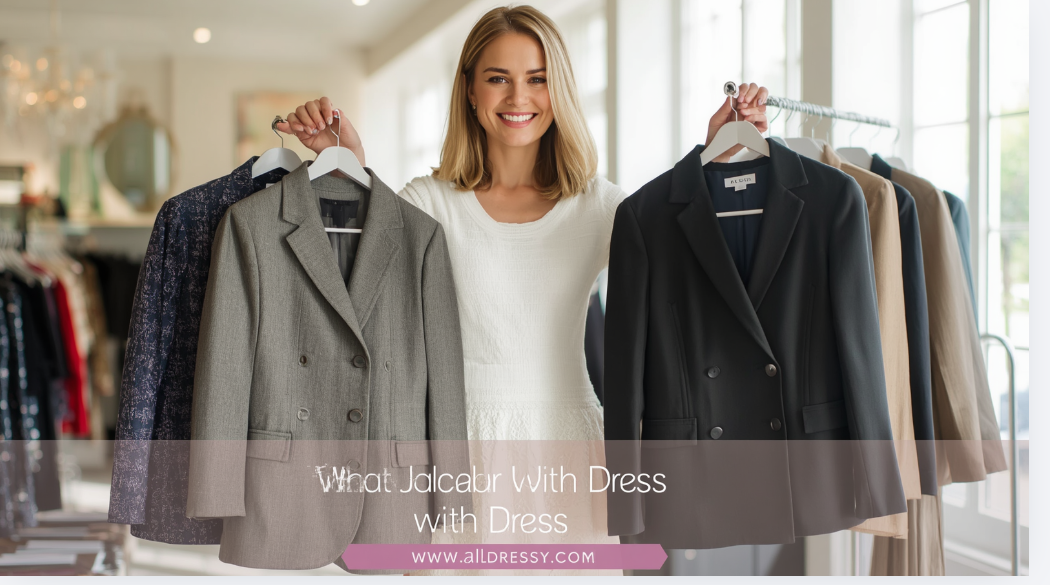
When deciding what jacket to wear with dress combinations, even the most stylish fashion enthusiasts can find themselves struggling to strike the right balance. A dress provides an instant, complete outfit, but adding an outer layer introduces complex questions of silhouette, texture contrast, hemline visual ratios, and occasion appropriateness.
Knowing what jacket to wear with dress silhouettes isn’t merely about staying warm—it is an architectural framework for elevating your personal style. The wrong jacket can visually cut your torso in half, swallow your natural waistline, or create jarring stylistic friction. Conversely, the perfect jacket acts as a frame, emphasizing your body’s visual proportions, balancing fabric weights, and seamlessly transforming a breezy summer sundress or formal evening gown into a year-round wardrobe staple.
To master this styling balance, you must look beyond basic color coordination. Understanding what jacket to wear with dress cuts requires mastering fundamental design principles: the Rule of Thirds in visual composition, texture blending (pairing hard materials with fluid fabrics), shoulder alignment, and hemline harmony.
Architectural Proportions: The Visual Rules of Pairing Jackets with Dresses
Before selecting a specific jacket style, you must understand the geometric relationship between an outer layer and the garment underneath. The most common mistake people make when evaluating what jacket to wear with dress ensembles is ignoring visual break points—where the hemline of the jacket hits relative to the waist, hips, and knees.
┌─────────────────────────────────────────────────────────────────────────┐
│                     THE RULE OF THIRDS IN STYLING                       │
└─────────────────────────────────────────────────────────────────────────┘
                                     │
           ┌─────────────────────────┴─────────────────────────┐
           ▼                                                   ▼
[ 1/3 Upper Body : 2/3 Lower Body ]             [ 2/3 Upper Body : 1/3 Lower Body ]
• Cropped jacket (hits at natural waist)        • Longline trench or dust coat
• Worn over midi or maxi dress                  • Worn over mini or sheath dress
• Accentuates waist; elongates legs             • Creates sleek vertical lines
1. The Rule of Thirds vs. The Golden Ratio
In visual art and fashion design, dividing a human frame into equal halves (a 1:1 ratio) creates a boxy, heavy silhouette. To create an aesthetically pleasing line, aim for a 1:2 proportion (or 1/3 to 2/3).
- The 1/3 Top + 2/3 Bottom Formula: A cropped jacket ending at your natural waistline represents one-third of your total visual height. When paired with a midi or maxi dress occupying the remaining two-thirds, it lengthens the appearance of your legs and highlights your midsection.
- The 2/3 Top + 1/3 Bottom Formula: A full-length trench coat or tailored duster coat covering two-thirds of your body over a shorter mini dress creates a long, continuous vertical line that slims and elongates your profile.
2. Hemline Hierarchy and Edge Alignment
When determining what jacket to wear with dress hemlines, pay close attention to where the two garments terminate relative to one another:
- The Flush Rule: If wearing a mid-length coat (like a peacoat or car coat), ensure the coat hem either sits at least 2–3 inches above the dress hemline or completely covers it. A dress peeking out by a single inch creates an unintentional, messy visual line.
- The Parallel Line Rule: Longline dusters or trench coats look best when worn completely open over fitted shift or sheath dresses, creating two parallel vertical lines down the front of your body that draw the eye up and down.
The Master Matrix: Matching Jacket Types to Specific Dress Styles
To remove the guesswork when deciding what jacket to wear with dress cuts, consult this comprehensive pairing matrix mapping jacket silhouettes to dress categories:
| Jacket Type | Best Suited Dress Styles | Primary Visual Effect | Ideal Occasion |
| Cropped Leather Moto | Flowy Chiffon, Floral Maxis, Slip Dresses | Adds structural edge; defines waist | Casual, Date Night, Concerts |
| Oversized Tailored Blazer | Bodycon, Fitted Sheath, Mini Dresses | Modern masculine/feminine contrast | Business Casual, Cocktail Events |
| Classic Denim Jacket | Tiered Sundresses, T-Shirt Dresses, Maxis | Relaxes dressy fabrics; casual everyday | Weekend Brunch, Daytime Travel |
| Belted Trench Coat | Midi Wrap Dresses, Shirt Dresses, Sweater Dresses | Sophisticated, rain-ready, tailored | Office Wear, Transitional Weather |
| Cropped Tweed / Bolero | A-Line Fit & Flare, Formal Cocktail Gowns | Elevates waistline; formal coverage | Weddings, Galas, Formals |
| Sporty Bomber Jacket | Knit Bodycon, Ribbed Midi, Slip Dresses | Athletic-leisure urban contrast | Streetwear, Casual Outings |
| Cropped Suede Jacket | Tiered Boho Maxis, Floral Wrap Dresses | Rich textural warmth and structure | Autumn Outings, Wine Tasting |
Deep Dive into Core Jacket Styles
1. The Leather Moto Jacket: Edgy Structure Meets Soft Femininity
When analyzing what jacket to wear with dress designs that feel overly delicate, romantic, or sheer, the leather motorcycle jacket is the ultimate tool for style contrast. The heavy hardware, asymmetrical zips, and rigid leather (or high-grade vegan leather) grounding soft, fluid fabrics like silk, tulle, chiffon, or satin create an appealing visual tension.
[ Leather Moto Jacket ]  +  [ Floral Silk Slip Dress ]
       (Hard Material)             (Soft Material)
              │                           │
              └─────────────┬─────────────┘
                            ▼
          [ Balanced Masculine / Feminine Aesthetic ]
- Fit Dynamics: Choose a moto jacket that hits precisely at your natural waist or higher. Ensure the shoulder seams align crisp and square on your acromion bone to keep your frame from looking slouchy.
- Styling Tip: Never button or zip a leather moto jacket completely over a flowy dress; wear it open or draped casually over your shoulders (“shoulder-robing”) to keep the center panel of your dress visible.
2. The Tailored Blazer: Professional Polish and Modern Contrast
The blazer is an essential layer when considering what jacket to wear with dress cuts for office settings, formal events, or fashion-forward street style. However, the blazer silhouette you choose fundamentally changes your body shape.
- The Oversized “Boyfriend” Blazer: Features broader shoulders, longer hemlines, and a straight vertical cut. This style works best over form-fitting base garments like sheath dresses, bodycons, or bias-cut slip dresses. The voluminous outer layer contrasts with the fitted silhouette underneath without hiding your shape.
- The Sculpted Contour Blazer: Incorporates darting, single-button closures, and structured waistlines. This is the ideal option over A-line dresses, flare skirts, or looser shift dresses, as it draws in the waist and reinforces a feminine hourglass figure.
3. The Denim Jacket: The Ultimate Casualizer
If a dress feels too formal, bright, or bare for a daytime outing, a denim jacket instantly brings it down to a approachable, casual level.
- Wash Considerations: Medium to light distress washes add a relaxed, bohemian vibe perfect for spring and summer cotton maxis. Dark indigo, black, or ecru denim jackets provide a cleaner, more structured look that pairs nicely with dark floral dresses, sweater dresses, or ribbed knits.
- Hemline Mechanics: Avoid mid-hip length, boxy denim jackets over wide-flaring dresses, as this adds bulk around your midsection. Instead, select a cropped denim jacket ending above the hip bones, or roll/scrunch the sleeves to your forearms to show off wrist space and slim the upper torso.
4. The Trench Coat: Timeless Elegance and Weather Protection
A lightweight trench coat provides a sophisticated layer when deciding what jacket to wear with dress styles during spring and autumn weather.
- Length Matching: Ideally, your trench coat should be 1 to 2 inches longer than your dress hemline, or significantly shorter (such as a knee-length trench over an ankle-length maxi).
- Belt Management: To prevent a bulky, unstructured look, tie the trench coat’s belt behind your back in a neat knot to taper the coat’s sides while keeping the front open to display your dress. When buttoned and belted closed, the trench acts as its own dress silhouette.
Fabric & Texture Engineering: Combining Weight, Drape, and Sheen
Beyond silhouette geometry, mastering what jacket to wear with dress combinations requires balancing physical fabrics. Mixing identical or clashing fabric weights creates visual errors. Follow these fundamental fabric combination rules:
┌─────────────────────────────────────────────────────────────────────────┐
│                     TEXTURAL BALANCE MATRIX                            │
└─────────────────────────────────────────────────────────────────────────┘
  DRESS FABRIC             RECOMMENDED JACKET FABRIC       PURPOSE / EFFECT
  ───────────────────────  ─────────────────────────────  ─────────────────
  Silk / Satin / Chiffon   Structured Leather / Tweed     Hard vs. Soft
  Heavy Wool / Knit        Sleek Leather / Crisp Cotton   Prevents Bulk
  Cotton / Linen           Sturdy Denim / Brushed Suede   Grounded Casual
  Velvet / Sequins         Minimal Wool / Tailored Matte  Prevents Overcrowding
1. Hard vs. Soft Fabric Juxtaposition
Pairing lightweight, ultra-feminine fabrics (silk, chiffon, organza, lace) with heavy, structured outerwear (grainy leather, wool tweed, heavy denim) prevents an outfit from feeling overly sweet or costumey. The rigid weave of the jacket anchors the fluid motion of the dress.
2. Managing Volume and Bulk
When styling bulky knit sweater dresses or heavy fleece items in winter, avoid unlined, stiff jackets that cling to the knit fiber. Instead, select lined coats—such as smooth wool-blend wrap coats or slick nylon longline puffers—that slide effortlessly over the knit without pulling or adding unnecessary volume.
Seasonal Adaptation Guide: Styling Jackets over Dresses Year-Round
Adapting your dress collection across changing seasons requires selecting outer layers that provide appropriate thermal insulation while preserving your outfit’s structure.
[ SEASONAL OUTERWEAR TRANSITION ]

  Spring ──► Lightweight Denim / Unlined Trench / Cotton Utility Jacket
  Summer ──► Cropped Linen Blazer / Sheer Bolero / Draped Kimono
  Autumn ──► Suede Moto / Leather Jacket / Tailored Wool Blazer
  Winter ──► Longline Belted Wool Coat / Faux Fur / Sleek Streamlined Puffer
1. Spring & Summer Layering
During warm seasons, jackets serve as lightweight coverage for cool evenings or air-conditioned indoor spaces.
- Key Pieces: Unlined linen blazers, cropped light-wash denim jackets, and lightweight utility shackets.
- Styling Strategy: Keep colors light (sand, stone, white, pastel washes) and push sleeves up to the elbows to maintain a breezy, summer-friendly aesthetic.
2. Autumn & Winter Layering
Cold-weather dressing demands layers that protect against low temperatures without swallowing your shape.
- Key Pieces: Heavy weight cropped leather, wool-blend peacoats, plush faux-fur coats, and tailored wrap coats.
- Styling Strategy: Pair dresses with opaque thermal tights and tall boots, selecting coats that extend past your dress hemline to block wind. Use belted wrap coats over sweater dresses to keep your waist clearly defined under thick layers.
Body Shape Optimization: Tailoring Outerwear to Your Silhouette
Understanding what jacket to wear with dress cuts for your specific body structure ensures your outfit highlights your favorite features.
┌─────────────────────────────────────────────────────────────────────────┐
│                     BODY SHAPE JACKET SOLUTIONS                         │
└─────────────────────────────────────────────────────────────────────────┘
                                     │
    ┌────────────────┬───────────────┴───────────────┬────────────────┐
    ▼                ▼                               ▼                ▼
[ Pear / A-Line ]  [ Hourglass ]                 [ Apple / Oval ]   [ Inverted Triangle ]
• Structured       • Belted or single-button      • Open longline    • Soft raglan sleeves
  padded shoulders   waist-seam jackets             dusters & blazers  • Peplum or flare hems
• Hits above hips  • Preserves waistline          • Elongates torso  • Balances broad top
1. A-Line & Pear Shapes (Wider Hips than Shoulders)
- Goal: Draw visual attention upward to balance your shoulder line with your hips.
- Best Jackets: Cropped jackets ending at your natural waist, jackets with structured shoulder pads, wide lapels, or epaulets. Avoid jackets that terminate precisely at the widest point of your hips.
2. Hourglass Shapes (Balanced Bust & Hips with Defined Waist)
- Goal: Preserve natural waist definition without adding boxy bulk.
- Best Jackets: Fitted blazers with single-button closures at the narrowest part of your waist, wrap-style jackets, and tailored leather jackets with back darting. Avoid boxy, unstructured oversized jackets that hide your midsection.
3. Apple & Oval Shapes (Weight Centered at Midsection)
- Goal: Create vertical visual lines that elongate your torso.
- Best Jackets: Longline open-front dusters, unbuttoned blazers with narrow lapels, and structured trench coats worn untied in front. Avoid cropped jackets that end directly across your midsection.
4. Inverted Triangle Shapes (Broad Shoulders, Narrower Hips)
- Goal: Soften upper-body structure and add gentle volume toward the hemline.
- Best Jackets: Collarless jackets, raglan-sleeve jackets, cardigan-style outerwear, or peplum jackets. Avoid heavy shoulder padding, double-breasted fronts, or wide peak lapels.
Frequently Asked Questions (FAQs)
What jacket should I wear with a maxi dress?
The two most flattering options for a maxi dress are a cropped jacket (such as a cropped denim or leather moto jacket) or a longline trench coat. A cropped jacket terminates at your natural waist, preventing the floor-length skirt from overpowering your frame and creating an ideal 1/3 to 2/3 visual proportion. A longline trench coat should sit flush with or slightly lower than the dress hemline to create a sleek, continuous vertical line.
How do I choose a jacket to wear with a dress for a formal wedding?
For formal weddings, cocktail parties, or black-tie events, select outerwear constructed from elevated fabrics that complement high-end dress materials:
- Structured Bouclé or Tweed Boleros: Ideal over A-line or fit-and-flare dresses.
- Cropped Faux-Fur Jackets: Perfect for cool-weather evening gowns and satin slip dresses.
- Tailored Tuxedo Blazers: An elegant, menswear-inspired option over fitted bodycon or column gowns.
- Rule of Thumb: Avoid overly casual fabrics like distressed denim, heavy canvas, or utility cotton.
Can you wear an oversized blazer over a dress without looking bulky?
Yes. To style an oversized blazer over a dress successfully, contrast the volume of the jacket with a form-fitting or streamlined base garment underneath, such as a knit bodycon dress, a sheath dress, or a bias-cut satin slip dress. Leave the blazer unbuttoned to reveal the body-conscious silhouette running down the center of your frame, or fasten a slender leather belt around the outside of the blazer at your natural waist to restore structure.
Should my coat be longer or shorter than my dress?
Your coat should follow one of two clear structural rules:
- Significantly Shorter (Cropped): The jacket ends at or above your natural waistline, leaving the entire lower two-thirds of the dress visible.
- Flush or Longer (Full Coverage): The coat extends 1 to 2 inches past the hemline of the dress, or sits completely flush with it.
- What to Avoid: Avoid mid-length jackets that allow only 1 to 3 inches of dress fabric to peek out from the bottom, as this creates a bisected visual line that makes the body appear shorter.
What jacket can I wear with a sweater dress in the winter?
For cold-weather styling over a bulky knit or ribbed sweater dress, choose outerwear with a smooth, lined interior to prevent fabric friction:
- Belted Wool Wrap Coats: Cinches over the heavy knit fabric to preserve your waist definition.
- Cropped Shearling or Suede Jackets: Adds rich structural texture while maintaining clear lower-body proportions.
- Streamlined Longline Puffers: Provides maximum thermal insulation over slim-fitting sweater dresses without adding bulk across the torso.
Conclusion
Mastering what jacket to wear with dress combinations transforms a simple one-piece garment into a versatile, year-round wardrobe anchor. Rather than viewing outerwear as an afterthought purely for warmth, approaching your jacket choice through the lens of structural proportions, fabric contrast, and body-shape optimization allows you to elevate any ensemble.
By applying core styling principles—such as leveraging the Rule of Thirds with cropped layers, balancing soft chiffon with structured leather, and ensuring proper hemline alignment—you eliminate the friction between casual and formal wear. Whether you are dressing down a silk maxi with a relaxed denim jacket for brunch or tailoring a sheath dress with a double-breasted blazer for the office, the right jacket provides the frame that completes your visual line.