
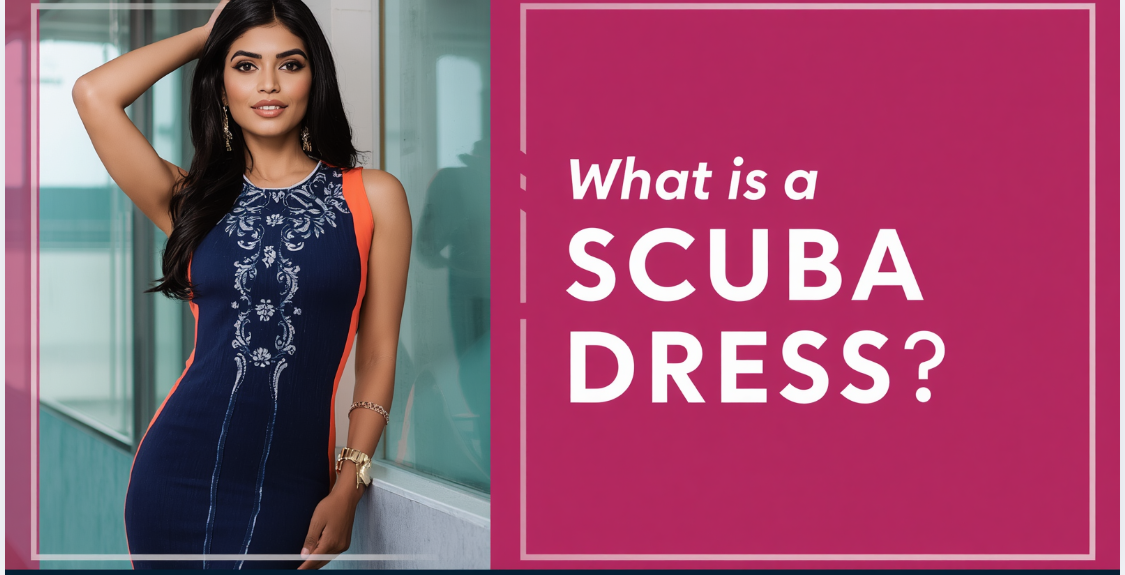
When exploring contemporary fashion trends, one term that frequently pops up in dress descriptions, runway reviews, and retail catalogs is the scuba dress. But what is a scuba dress, exactly? Despite what the nautical name might suggest, a scuba dress is not a piece of underwater diving gear, nor is it made from stiff, heavy rubber suits designed for deep-sea exploration. Instead, a scuba dress is a high-fashion, structured garment crafted from a specialized synthetic textile known as scuba fabric.
To understand what is a scuba dress in the realm of modern apparel, one must look at how fabric technology has transformed garment architecture. A scuba dress is defined by its unique combination of smooth, sleek aesthetics, structural firmness, and exceptional four-way stretch. It offers a smooth, body-sculpting silhouette that holds its shape effortlessly without requiring restrictive internal boning, heavy corsetry, or thick linings.
The origin of the scuba dress stems from designers searching for materials that could deliver clean, geometric shapes and smooth contours while maintaining the flexibility and comfort of modern knits. By adapting high-performance double-knit techniques, textile manufacturers created a smooth, spongy fabric that mimics the sleek appearance of neoprene while remaining flexible, lightweight, and suitable for everyday wear. Today, scuba dresses range from body-hugging bodycon dresses and tailored office sheaths to dramatic evening gowns with flared skirts and architectural peplums.
Textile Engineering: What Is a Scuba Dress Made Of?
To fully grasp what is a scuba dress, it is essential to examine the specific fiber composition and manufacturing process behind scuba fabric. Unlike traditional woven fabrics like cotton or silk, or single-knit fabrics like standard jersey, scuba fabric relies on precise synthetic engineering and specialized knitting machinery.
Material Composition
The vast majority of scuba dresses are constructed from a blend of synthetic microfibers:
- Polyester (80% to 95%): Serves as the structural backbone of the fabric. Polyester provides high tensile strength, resistance to shrinking and tearing, dimensional stability, and an exceptionally smooth surface finish. It also holds dye exceptionally well, allowing scuba dresses to feature vivid colors and sharp printed patterns.
- Spandex / Elastane / Lycra (5% to 20%): Injected into the knit structure to provide multidirectional stretch and recovery. This elastomeric component allows the dress to expand to fit the wearer’s curves and immediately snap back to its original dimensions without sagging or bagging.
- Nylon Blends (Optional): Higher-end scuba dresses may replace polyester with nylon microfibers. Nylon offers a silkier hand-feel, enhanced abrasion resistance, and a subtle sheen.
The Double-Knit Construction Process
The defining characteristic of scuba fabric is its double-knit construction. Traditional single-knit jersey fabrics are created using a single set of needles, resulting in a fabric with a distinct front (knit side) and back (purl side) that tends to curl at the edges.
Scuba fabric is manufactured on a specialized double-knit machine equipped with two sets of needles arranged in a V-bed formation or cylinder-and-dial configuration. This machinery interlocks two distinct layers of fine-gauge knit fabric simultaneously. The resulting textile features two smooth, identical faces with a fine layer of trapped air or micro-spaces between them.
This double-layered structure gives scuba fabric its signature characteristics:
- Micro-Sponginess: A gentle spring and bounce when compressed.
- Opacity: High density that prevents the fabric from becoming sheer, even when stretched over the body.
- Dimensional Stability: Superior weight and body that supports structural design elements without drooping.
| Fabric Metric | Scuba Fabric | Single Knit Jersey | Neoprene Rubber | Ponte de Roma |
| Knit Construction | Double-knit (Interlock) | Single-knit | Laminated foam core | Double-knit (Rib/Interlock blend) |
| Stretch Mechanism | 4-way high stretch | 2-way moderate stretch | Limited / Stiff stretch | 2-way or 4-way medium stretch |
| Thickness & Density | Medium to heavy, spongy | Light to medium | Very thick, dense, rigid | Medium, soft, flat |
| Breathability | Low to moderate | High | Non-breathable | Moderate |
| Edge Stability | Non-fraying | Curls at raw edges | Non-fraying | Non-fraying |
| Primary Use | Structured dresses, skirts | T-shirts, loungewear | Wetsuits, protective gear | Tailored pants, blazers, dresses |
Scuba vs. Neoprene vs. Scuba Crepe: Demystifying the Terminology
A common point of confusion among consumers asking what is a scuba dress is how scuba fabric differs from neoprene and other related textiles like scuba crepe. While these materials are frequently mentioned interchangeably in retail descriptions, they possess distinct chemical, physical, and aesthetic differences.
SCUBA FABRIC VARIATIONS & RELATED TEXTILES

├── Genuine Neoprene (Industrial / Water Use)
│   └── Polychloroprene synthetic rubber core + fabric lamination on both sides
│       └── High water insulation, rigid structure, zero breathability
│
├── Standard Scuba Fabric (Fashion Use)
│   └── 100% Textile double-knit (Polyester/Spandex) with no internal rubber core
│       └── Smooth, spongy surface on both sides, 4-way stretch, excellent recovery
│
└── Scuba Crepe (Textured Fashion Use)
    └── Double-knit base with a textured, crimped, or pebbled exterior layer
        └── Crepe finish on the outside, smooth comfortable interior against the skin
Scuba vs. Neoprene
True neoprene is a synthetic rubber called polychloroprene. In neoprene apparel, a sheet of foamed synthetic rubber is sandwiched and glued between two thin layers of nylon or polyester knit. This construction creates a completely air-impermeable barrier designed to trap heat and block water, making it perfect for surfing wetsuits and orthopedic braces. However, genuine neoprene is stiff, heavy, non-breathable, and uncomfortable for fashion garments worn over extended periods.
Scuba fabric was created explicitly to replicate the sleek, sculptural aesthetic of neoprene without using synthetic rubber. Scuba fabric contains no rubber foam inner core. It achieves its spongy feel and body purely through double-knit textile engineering. As a result, a scuba dress is significantly softer, lighter, more flexible, and far better suited for standard clothing than a true neoprene garment.
What Is Scuba Crepe?
As scuba dresses gained popularity, textile engineers introduced a variation known as scuba crepe.
While standard scuba fabric features a glass-smooth surface on both sides, scuba crepe combines the structural benefits of scuba double-knit construction with the sophisticated, textured appearance of traditional crepe fabric.
During the knitting process, high-twist filament yarns are used on the outer face of the fabric to create a subtle pebbled, crimped, or grain-like texture. Meanwhile, the inner face—which rests against the wearer’s skin—remains flat, silky, and smooth. A scuba crepe dress offers the same body-smoothing structure and wrinkle resistance as a standard scuba dress, but with a matte, textured finish that is often favored for professional attire and formal evening wear.
Key Features and Architectural Benefits of a Scuba Dress
Understanding what is a scuba dress requires evaluating why it has become a staple in designer lines and mass-market fashion collections. The unique physical properties of scuba fabric provide several functional advantages over traditional dress materials.
Core Architectural Benefits of Scuba Fabric
 ├── Structural Hold  ──► Maintains flared, architectural, and 3D shapes without boning
 ├── Smooth Silhouette ──► Hides undergarment lines and smooths skin contours
 ├── Wrinkle Recovery ──► Resists creasing during sitting, packing, or travel
 └── Clean Edges       ──► Does not fray when cut, allowing raw-edge hems and precise laser cuts
1. Built-In Body Sculpting and Contouring
One of the primary reasons women choose a scuba dress is its natural contouring ability. The combination of high spandex content and high-density double-knit construction creates a subtle compression effect.
A scuba dress acts as gentle, built-in shapewear. It smooths over skin textures, hides seam lines from undergarments, and provides gentle support across the midsection, hips, and back. Unlike thin jersey dresses that cling to every minor bump, a scuba dress glides over the body, creating a streamlined silhouette.
2. Architectural Shape Retention
Traditional soft fabrics like silk, rayon, or thin jersey rely on gravity to drape vertically along the body. Scuba fabric, however, possesses inherent structural integrity and “bounce.”
This allows fashion designers to create striking, three-dimensional dress architectures that hold their shape independently:
- Off-the-Shoulder Foldovers: Remain crisp and horizontal without sagging down the arm.
- Peplum Ruffles: Flare outward dramatically at the waist without drooping.
- Fit-and-Flare Skirts: Hold a voluminous, bell-like shape without requiring stiff tulle petticoats underneath.
- Structured Necklines: Stand up sharply around the collarbone or chest line.
3. Superior Wrinkle Resistance
Because polyester microfibers and spandex possess high elastic recovery, scuba dresses are virtually immune to wrinkling. You can sit at a desk for eight hours, travel on long flights, or pack a scuba dress inside a tightly compressed suitcase, and it will unroll ready to wear without requiring tedious ironing or steaming. This low-maintenance durability makes scuba dresses popular among frequent travelers and busy professionals.
4. Color Vibrancy and Print Fidelity
The polyester component of scuba fabric is exceptionally receptive to disperse dyes and digital sublimation printing. Sublimation printing uses heat to turn dye into a gas that fuses directly with the synthetic fibers. On scuba fabric’s tight double-knit weave, this yields ultra-sharp print resolution, vivid color saturation, and deep blacks that will not wash out or fade over time.
5. Clean-Cut and Non-Fraying Edges
Because scuba fabric is created through an interlocking double-knit technique, its cut edges do not unravel or fray easily. Designers frequently exploit this feature to craft scuba dresses with raw-edge hems, laser-cut geometric patterns, scalloped borders, and minimalist unlined edges that reduce bulk at the seams.
Style Guide: How to Wear and Style a Scuba Dress for Every Occasion
Knowing what is a scuba dress is only half the equation; knowing how to select and style one for different settings ensures you maximize its aesthetic potential. The structured yet stretchy nature of scuba fabric makes it adaptable to multiple dress codes.
SCUBA DRESS STYLING MATRIX

   Formal / Evening           Corporate / Office         Casual / Streetwear
   ────────────────           ──────────────────         ───────────────────
   • Floor-length Mermaid     • Fitted Sheath Dress      • T-Shirt Shift Dress
   • Sculpted Peplum          • Tailored Fit-and-Flare   • Athleisure Bodycon
   • Off-Shoulder Cocktail    • High-Neck Shift          • Hooded Sweatshirt Dress

   Styling Elements:          Styling Elements:          Styling Elements:
   - Stiletto heels           - Block heels or pumps     - Clean white sneakers
   - Metallic clutch          - Structured tote bag      - Crossbody bag
   - Statement jewelry        - Tailored blazer          - Denim or leather jacket
Formal, Evening, and Cocktail Settings
For black-tie galas, weddings, and evening cocktail parties, a scuba dress offers high-impact glamour. The fabric’s natural sheen and smooth surface give evening silhouettes an opulent, high-end feel.
- Sculpted Cocktail Dresses: Look for knee-length or midi bodycon styles featuring dramatic design elements like asymmetry, oversized shoulder ruffles, or structured sweetheart necklines.
- Mermaid and Trumpet Gowns: A floor-length scuba dress that fits snugly through the bodice and hips before flaring outward at the knee creates a stunning hourglass effect. The high elasticity ensures you can sit, walk, and dance comfortably despite the tight fit.
- Footwear and Accessories: Pair formal scuba gowns with sleek stiletto pumps or strappy metallic sandals. Because the fabric itself is clean and smooth, you can complement it with bold, crystalline jewelry, heavy cuff bracelets, or an embellished clutch bag.
Corporate and Professional Attire
The clean lines and non-clingy structure of scuba dresses make them suitable for modern professional environments.
- The Tailored Sheath Dress: A knee-length or midi-length scuba sheath dress in classic neutral tones—such as navy, black, camel, or deep burgundy—delivers a crisp, professional look. The fabric resists creasing throughout the workday, ensuring you look polished from morning meetings to after-work dinner events.
- Fit-and-Flare Work Dresses: A scuba dress with a fitted bodice and an A-line skirt offers modest coverage while retaining a flattering shape.
- Layering Considerations: Pair a professional scuba dress with a structured leather belt, pointed-toe pumps, and a tailored blazer or lightweight trench coat. Avoid wearing heavy, unlined wool cardigans over scuba dresses, as static electricity can cause thin knits to cling awkward against the synthetic surface of the dress.
Casual and Streetwear Looks
Scuba fabric has crossed over from high-fashion runways into casual everyday wear, drawing inspiration from contemporary athleisure trends.
- Minimalist Shift and T-Shirt Dresses: A loose or semi-fitted scuba shift dress provides an effortless, modern urban aesthetic. The fabric’s inherent body gives a simple T-shirt dress a clean, geometric silhouette instead of hanging limp.
- Athleisure Bodycon Styles: Look for sporty scuba dresses featuring exposed metal zippers, contrasting side stripes, or raglan sleeves.
- Casual Accessories: Balance the structured nature of a casual scuba dress by styling it down with clean white leather sneakers, a canvas tote, or a belt bag. Layering a denim jacket or a leather biker jacket over the dress adds textural contrast.
Seasonal Performance: When to Wear a Scuba Dress
While a scuba dress offers immense aesthetic versatility, its synthetic double-knit composition introduces clear climate advantages and limitations. Understanding these thermal characteristics will help you wear your dress comfortably year-round.
SEASONAL APPROPRIATENESS GUIDE

   SPRING / AUTUMN ──► Ideal Conditions
   │                   • Temperature ranges from 50°F to 72°F (10°C to 22°C)
   │                   • Provides comfortable insulation against light breezes
   │                   • Holds shape under transitional light jackets
   │
   WINTER          ──► Excellent with Layering
   │                   • Density blocks cold air and wind
   │                   • Pairs well with tights, boots, and heavy overcoats
   │
   SUMMER          ──► Caution Required
                       • High humidity and extreme heat trap body warmth
                       • Recommended only for climate-controlled indoor venues
                       • Choose lighter-weight, open-neckline scuba designs
Cool and Transitional Seasons (Autumn, Winter, Spring)
Scuba dresses perform best in cool-to-moderate weather conditions. The dense double-knit weave and trapped air pockets provide natural thermal insulation, effectively blocking cold drafts and wind. During winter events, a long-sleeved scuba dress paired with fleece-lined tights and tall boots offers exceptional warmth without requiring bulky wool layers.
Summer Considerations and Breathability
The primary drawback of standard scuba fabric is its limited air permeability. Because polyester microfibers are tightly interlocked in a double-layer structure, the fabric does not circulate air or transport moisture away from the body as efficiently as natural fibers like linen, silk, or lightweight cotton.
Wearing a thick, body-hugging scuba dress outdoors during a hot, humid summer afternoon can lead to heat retention and discomfort. If you plan to wear a scuba dress during warmer months:
- Opt for climate-controlled indoor events (such as air-conditioned evening galas, weddings, or indoor corporate functions).
- Choose dresses with open necklines, cap sleeves, sleeveless cuts, or shorter hem lengths to maximize natural airflow.
- Look for lightweight scuba blends or scuba crepe variants, which often feature a slightly lighter areal weight than heavy structural scuba fabrics.
Design and Silhouette Potential: Why Fashion Designers Favor Scuba Fabric
To fully answer what is a scuba dress, one must view the fabric through the eyes of pattern makers and fashion designers. Scuba fabric revolutionized mid-market and luxury dress construction by offering structural options previously available only through complex internal tailoring.
STRUCTURAL DESIGN POSSIBILITIES WITH SCUBA FABRIC

  [ Conventional Woven Garment ]                [ Scuba Fabric Garment ]
  ├── Requires interfacing                      ├── Inherent structural body
  ├── Requires internal boning                  ├── Natural compression hold
  ├── Requires multi-layer lining               ├── 100% Opaque single-layer
  ├── Edges must be hemmed/overlocked           ├── Can feature raw, laser-cut edges
  └── Prone to wrinkling & sagging              └── Wrinkle-proof elastic recovery
Eliminating the Need for Complex Under-Structures
In traditional garment construction, achieving architectural volume—such as a bell skirt, a stand-up collar, or a flared peplum—requires incorporating stiff interlinings, buckram, horsehair braid, or plastic boning. These additions increase manufacturing complexity, elevate production costs, and often make the garment stiff and uncomfortably restrictive for the wearer.
Scuba fabric eliminates the need for these internal supports. Its high intrinsic weight and springy recovery allow pattern makers to draft dramatic 3D shapes directly into the garment pattern pieces. The dress holds its intended volume purely through the physical properties of the knit itself.
Streamlining the Manufacturing Process
From an industrial garment production perspective, scuba fabric simplifies manufacturing:
- Lining Elimination: Because scuba fabric is thick, completely opaque, and exceptionally smooth on its interior face, manufacturers can skip adding separate polyester linings, reducing garment weight and assembly time.
- Raw-Edge Finishes: Designers can utilize laser-cutting tools to slice intricate lace-like motifs, geometric cutouts, or clean un-hemmed borders into scuba dresses without worrying about edge unraveling during wear or laundering.
- Dart Reduction: The multidirectional stretch of scuba fabric allows dresses to conform to body contours using fewer shaping darts and seam lines than non-stretch woven fabrics require.
Garment Care and Maintenance: How to Wash and Preserve Your Scuba Dress
Although scuba fabric is inherently durable and resilient, its synthetic chemical composition makes it vulnerable to specific care errors—most notably high heat exposure. Following correct laundering and storage protocols will preserve the elasticity, color brightness, and structural shape of your scuba dress for years.
SCUBA DRESS LAUNDERING PROCESS

  1. PREPARATION   ──► Turn dress inside out; zip up all closures.
  2. WASHING       ──► Machine wash on gentle cycle with cool/cold water. Use mild detergent.
  3. RINSING       ──► Avoid chlorine bleach and fabric softeners.
  4. DRYING        ──► Line dry or lay flat in shaded area. NEVER tumble dry on high heat.
  5. STEAMING      ──► Use garment steamer for wrinkles. Avoid direct hot irons.
Washing Protocols
- Water Temperature: Always wash scuba dresses in cold or cool water (maximum 30°C / 86°F). High temperature water degrades elastane fibers over time, causing the dress to lose its stretch recovery and form loose waves along seam lines.
- Cycle Selection: Use a gentle, delicate, or synthetic machine cycle with a slow spin speed to minimize friction. Placing the dress inside a mesh laundry bag provides extra protection against snagging from zippers or hooks on other clothes.
- Detergent Choices: Select a mild liquid detergent. Avoid applying harsh powdered detergents, chlorine bleach, or heavy fabric softeners. Fabric softeners leave a chemical coating on polyester microfibers that impairs their natural recovery and can cause a dull residue on smooth surfaces.
Drying and Thermal Protection
Heat is the absolute biggest enemy of scuba fabric. Synthetic polymers like polyester and spandex melt, warp, or glaze when exposed to high temperatures.
- Air Drying: Hang your scuba dress to dry naturally on a wide, padded hanger, or lay it flat on a mesh drying rack. Avoid hanging heavy, wet scuba dresses by thin wire hangers, as the weight of the water can stretch out the shoulder seams.
- Avoid the Tumble Dryer: Do not place a scuba dress inside a standard tumble dryer on medium or high heat. The hot air dryer drum can break down the internal spandex filaments, resulting in permanent loss of elasticity and bubbling on the fabric surface. If you must use a dryer, select an unheated air-only cycle.
Wrinkle Removal and Pressing Safety
While scuba dresses rarely wrinkle, minor creases can occur if the garment is compressed in storage for long periods.
- Garment Steamers (Best Method): A low-temperature garment steamer is the safest way to remove creases. Hold the steamer head an inch away from the surface and allow the gentle steam to relax the synthetic fibers.
- Ironing Precautions: If you must use a standard flat iron, set it to the lowest synthetic or nylon heat setting. Always place a cotton pressing cloth between the iron plate and the scuba dress. Direct contact between a hot metal iron and scuba fabric will cause the polyester fibers to melt instantly, leaving an unsightly shiny streak or permanently burning a hole through the dress.
Sewing and Manufacturing Insights: Working with Scuba Fabric
For home seamstresses, custom tailors, and fashion students learning what is a scuba dress, understanding how to handle scuba fabric on a sewing machine is crucial. While scuba is generally cooperative because it doesn’t slip or fray, its thickness and stretch present specific technical considerations.
TECHNICAL SEWING PARAMETERS FOR SCUBA FABRIC

  Parameters            Recommended Setting / Tool
  ───────────────────   ──────────────────────────────────────────
  Needle Type           Stretch or Ballpoint Needle (Size 80/12 or 90/14)
  Thread Choice         100% Polyester Thread (Sews with stretch)
  Stitch Selection      Narrow Zig-Zag, Stretch Stitch, or 4-Thread Serger
  Presser Foot          Teflon Foot, Roller Foot, or Walking Foot
  Seam Finishing        Raw Edges / Unfinished (Non-fraying nature)
Selecting the Right Needles and Thread
- Needle Geometry: Standard sharp needles (universal or denim needles) can pierce and sever the continuous synthetic microfilaments of scuba fabric, causing small runs or visible needle holes along the seamline. Always install a fresh Stretch Needle or Ballpoint Needle (size 80/12 or 90/14). Ballpoint needle tips slip smoothly between the knitted loops without damaging the elastic structure.
- Thread Type: Use high-quality 100% polyester thread. Avoid cotton thread, which lacks the inherent elasticity required to stretch along with the fabric and will break when the dress is pulled on or off over the body.
Stitch Configuration and Seam Mechanics
Because scuba fabric stretches multidirectionally, every seam stitched into the dress must accommodate movement without popping threads.
- Stretch Stitches: Use a narrow zig-zag stitch (width 0.5mm to 1.0mm, length 2.5mm), a lightning bolt stretch stitch, or a 4-thread overlock/serger stitch. These stitch structures allow seam lines to expand alongside the fabric.
- Managing Bulk at Seam Intersections: The thickness of double-knit scuba fabric can create dense intersections where multiple seams cross (such as underarms, waistbands, or necklines). To reduce bulk, trim and grade seam allowances down to 1/4 inch, press seams open using a pressing cloth and a wooden tailor’s clapper to set flat, and avoid adding extra facings or heavy linings wherever possible.
Frequently Asked Questions (FAQs)
What is a scuba dress made of?
A scuba dress is made from a double-knit synthetic fabric typically composed of polyester (80%–95%) blended with spandex or elastane (5%–20%). Higher-end variations may use nylon instead of polyester. Unlike genuine wetsuits, scuba dress fabric contains no neoprene or synthetic rubber layer; its signature spongy structure comes entirely from specialized double-knit textile engineering.
Is a scuba dress hot to wear?
Scuba fabric is a dense, synthetic double-knit material with lower breathability than natural fibers like cotton, linen, or silk. It provides natural thermal insulation, making it ideal for cool-to-moderate weather, indoor air-conditioned events, autumn, and winter. However, wearing a fitted, heavy scuba dress outdoors in high heat and humidity can feel warm.
Does a scuba dress shrink in the wash?
Scuba dresses generally do not shrink because polyester and spandex fibers have high dimensional stability. However, exposing scuba fabric to high water or dryer heat can permanently damage the elastane filaments, causing the dress to lose its shape, warp along seam lines, or form loose waves.
Can you iron a scuba dress?
It is best to avoid direct ironing. High iron heat can melt or glaze the synthetic polyester fibers, leaving permanent shiny marks. To remove creases, use a garment steamer on low heat. If you must iron, set your device to the lowest synthetic setting and always place a cotton pressing cloth between the iron and the fabric.
What is the difference between a scuba dress and a scuba crepe dress?
Standard scuba fabric has a glass-smooth, glossy finish on both sides. Scuba crepe retains the same spongy double-knit structure and high stretch on the inside, but features a textured, pebbled, or crimped surface on the outside, providing a matte, sophisticated appearance often favored for formal and corporate attire.
Is a scuba dress forgiving on different body types?
Yes. Because scuba fabric is thick, opaque, and highly elastic, it provides a gentle smoothing effect similar to mild shapewear. It glides over body contours without clinging to undergarment lines or minor skin imperfections, offering structural support that flatters a wide variety of body shapes.
Conclusion
Understanding what is a scuba dress reveals why this innovatively engineered garment has become a mainstay in contemporary fashion. By bridging the gap between high-performance textile engineering and architectural fashion design, scuba fabric offers structural shaping, four-way stretch, and vibrant aesthetic potential without sacrificing comfort. Whether tailored into a sleek corporate sheath, a dramatic evening gown, or a casual athleisure shift dress, the scuba dress delivers a smooth, wrinkle-proof, and body-sculpting fit. With simple, low-heat care, a well-crafted scuba dress remains a low-maintenance, high-impact staple capable of elevating any wardrobe across seasons.