
First impressions matter in the workplace, and the way you dress often communicates your professionalism before you even speak. If you’ve ever wondered what does dress professionally mean, the answer goes beyond simply wearing a suit or business attire. Dressing professionally means choosing clothing that is clean, appropriate, well-fitted, and suitable for your work environment while reflecting competence, confidence, and respect for colleagues, clients, and company culture.
Professional dress varies depending on the industry, company policies, and specific occasions. A corporate law office may expect formal business attire, while a technology startup may embrace business casual clothing. Understanding what does dress professionally mean helps you make informed wardrobe choices that enhance your credibility, support your career goals, and create a positive impression in every professional setting.
This comprehensive guide explains professional dress codes, workplace clothing standards, business formal and business casual attire, industry-specific expectations, grooming, accessories, seasonal outfits, common mistakes, and practical tips for building a polished professional wardrobe.
What Does Dress Professionally Mean?
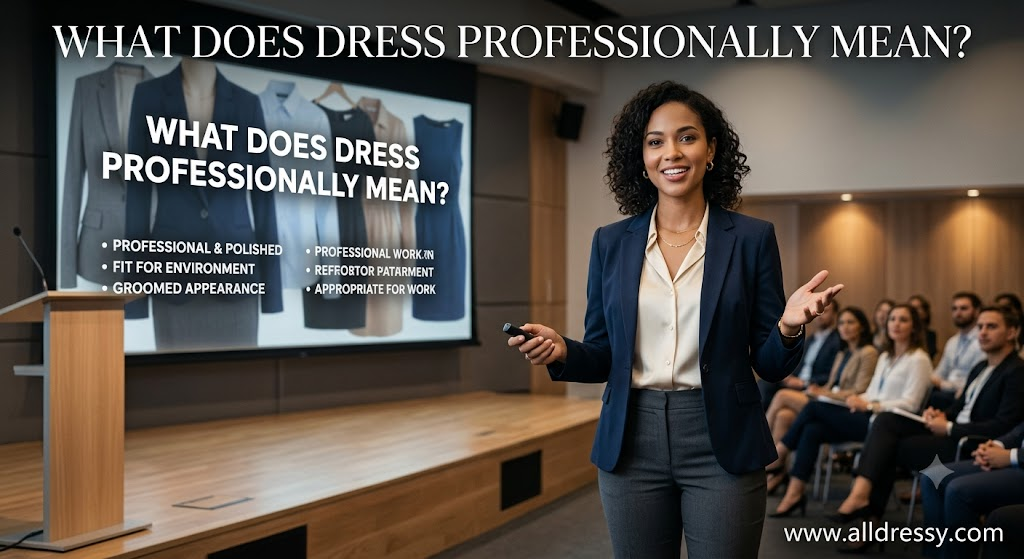
At its core, what does dress professionally mean refers to wearing clothing that is appropriate for your workplace, role, and professional responsibilities.
Professional dressing typically emphasizes:
- Clean clothing
- Proper fit
- Conservative styling
- Neat grooming
- Appropriate footwear
- Minimal distractions
- Confidence
- Respect for workplace standards
The goal is to project reliability, competence, and professionalism.
Why Professional Dress Matters
Your appearance can influence how others perceive you in a professional environment.
Benefits of dressing professionally include:
- Strong first impressions
- Increased confidence
- Enhanced credibility
- Greater workplace respect
- Positive client interactions
- Better networking opportunities
- Improved career image
Professional attire complements your skills by reinforcing a polished image.
The Purpose of Professional Clothing
Professional clothing serves several important purposes.
It helps:
- Represent your employer positively
- Build trust with clients
- Create consistency within the workplace
- Demonstrate attention to detail
- Support a respectful work environment
Appropriate clothing reflects professionalism rather than fashion alone.
Understanding Workplace Dress Codes
Most workplaces establish dress expectations to maintain a consistent professional image.
Common dress codes include:
- Business Formal
- Business Professional
- Business Casual
- Smart Casual
- Casual Workplace Attire
Knowing the difference helps you dress appropriately for your specific workplace.
Business Formal Attire
Business formal is the most traditional professional dress code.
Common examples include:
For Men
- Matching suit
- Dress shirt
- Conservative tie
- Leather dress shoes
- Dress socks
- Belt matching shoes
For Women
- Tailored pantsuit
- Skirt suit
- Conservative dress
- Closed-toe pumps or flats
- Minimal jewelry
Business formal is common in industries such as law, finance, and executive leadership.
Business Professional Attire
Business professional is slightly less formal but still polished.
Examples include:
Men
- Dress pants
- Button-down shirt
- Blazer
- Optional tie
- Leather shoes
Women
- Blouse
- Tailored trousers
- Pencil skirt
- Midi dress
- Blazer
This dress code balances professionalism with comfort.
Business Casual Attire
Business casual offers greater flexibility while maintaining a professional appearance.
Suitable clothing includes:
Men
- Chinos
- Dress pants
- Polo shirts
- Button-down shirts
- Loafers
Women
- Dress pants
- Blouses
- Cardigans
- Midi skirts
- Simple dresses
Business casual remains neat and polished without requiring a full suit.
Smart Casual in Professional Settings
Some workplaces encourage smart casual clothing.
Examples include:
- Blazer with jeans
- Knit sweater
- Dark denim
- Loafers
- Stylish flats
- Clean sneakers (where permitted)
Always consider company culture before choosing smart casual outfits.
Industry Differences in Professional Dress
Professional attire varies across industries.
Corporate Offices
Often require:
- Suits
- Dress shirts
- Formal shoes
Technology Companies
Typically allow:
- Business casual
- Polo shirts
- Clean sneakers
- Casual blazers
Healthcare
Professional clothing may include:
- Scrubs
- Lab coats
- Comfortable closed-toe shoes
Education
Teachers often wear:
- Blouses
- Dress pants
- Cardigans
- Comfortable professional shoes
Creative Industries
Employees may have greater flexibility while still maintaining a polished appearance.
Professional Clothing for Men
Essential wardrobe pieces include:
- White dress shirt
- Light blue dress shirt
- Navy blazer
- Charcoal suit
- Black dress shoes
- Brown dress shoes
- Dress trousers
- Leather belt
- Neutral ties
- Dress socks
These basics create numerous professional outfit combinations.
Professional Clothing for Women
Professional wardrobe essentials include:
- Tailored blazer
- Pencil skirt
- Dress trousers
- Midi dress
- Blouses
- Cardigans
- Closed-toe pumps
- Ballet flats
- Neutral handbag
- Professional outerwear
Choose timeless pieces that coordinate easily.
Choosing Professional Colors
Neutral colors dominate most professional wardrobes.
Popular choices include:
- Black
- Navy
- Gray
- White
- Beige
- Charcoal
- Cream
Accent colors may include:
- Burgundy
- Forest green
- Dusty blue
- Soft pink
Avoid excessively bright or distracting color combinations unless appropriate for your industry.
Fabrics That Look Professional
High-quality fabrics improve both appearance and durability.
Recommended materials include:
- Cotton
- Wool
- Linen blends
- Crepe
- Twill
- Gabardine
- Silk blends
- Quality polyester blends
Wrinkle-resistant fabrics are particularly useful for busy professionals.
Professional Footwear
Shoes should complement your outfit while remaining practical.
Men’s Options
- Oxford shoes
- Derby shoes
- Loafers
- Monk strap shoes
Women’s Options
- Pumps
- Block heels
- Ballet flats
- Loafers
- Closed-toe heels
Keep footwear clean and well-maintained.
Professional Accessories
Accessories should enhance your appearance without becoming distracting.
Examples include:
- Wristwatch
- Leather belt
- Simple necklace
- Stud earrings
- Briefcase
- Structured handbag
- Portfolio
Less is often more in professional environments.
Grooming and Personal Presentation
Professional appearance includes more than clothing.
Pay attention to:
- Clean hair
- Trimmed nails
- Good hygiene
- Neatly groomed facial hair
- Fresh breath
- Light fragrance, if any
Consistent grooming reinforces professionalism.
Dressing Professionally for Job Interviews
Interviews usually call for more formal attire than everyday office wear.
Recommended approach:
- Research the company’s culture.
- When unsure, dress one level more formally than the expected workplace attire.
- Ensure clothing is clean, pressed, and fits well.
- Choose conservative colors and accessories.
A polished appearance demonstrates preparation and respect for the opportunity.
Dressing Professionally for Remote Work
Even in remote roles, professional clothing can make a difference.
Consider:
- Solid-colored tops
- Collared shirts
- Blouses
- Blazers for important meetings
- Neat grooming
- Simple background-friendly colors
Looking professional during video calls helps maintain credibility.
Seasonal Professional Dressing
Spring
Choose:
- Lightweight blazers
- Cotton shirts
- Neutral trousers
- Loafers
Summer
Focus on breathable fabrics such as:
- Cotton
- Linen blends
- Lightweight wool
Avoid overly casual summer clothing like flip-flops or beachwear.
Autumn
Add:
- Sweaters
- Blazers
- Scarves
- Leather shoes
Rich seasonal colors work well.
Winter
Layer professionally with:
- Wool coats
- Cardigans
- Turtlenecks under blazers
- Dress boots where appropriate
Maintain warmth without sacrificing professionalism.
Professional Dress for Special Workplace Events
Conferences
Wear polished business attire that reflects your role and industry.
Client Meetings
Choose clothing that projects confidence and trustworthiness.
Presentations
Well-tailored clothing helps create a strong professional presence.
Networking Events
Dress slightly above the expected standard while remaining appropriate for the occasion.
Building a Professional Wardrobe
Start with versatile essentials.
Include:
- Navy blazer
- Black blazer
- White shirts
- Neutral blouses
- Tailored trousers
- Pencil skirt
- Dark suit
- Professional dress
- Leather shoes
- Classic handbag
These foundational pieces can be mixed and matched to create numerous outfits.
Common Professional Dress Mistakes
Wearing Wrinkled Clothing
Wrinkled garments can make even expensive outfits appear careless.
Choosing Clothes That Don’t Fit
Clothing that is too tight or too loose reduces your professional appearance.
Proper tailoring makes a significant difference.
Wearing Excessive Accessories
Too many bold accessories may distract from your professional image.
Keep jewelry simple and coordinated.
Ignoring Workplace Culture
A formal suit may feel out of place in a relaxed office, while casual clothing may be inappropriate in a corporate setting.
Observe your workplace and adapt accordingly.
Neglecting Shoes
Scuffed or dirty shoes can undermine an otherwise polished outfit.
Regular maintenance is essential.
Professional Dress and Personal Style
Dressing professionally doesn’t mean giving up your individuality.
You can express your personality through:
- Color accents
- Elegant accessories
- Fabric textures
- Modern tailoring
- Subtle patterns
Balance personal style with workplace expectations.
Benefits of Dressing Professionally
Choosing professional attire consistently offers long-term advantages.
These include:
- Greater self-confidence
- Positive first impressions
- Improved workplace relationships
- Enhanced credibility
- Stronger leadership presence
- Better networking opportunities
- Increased career readiness
Professional clothing often supports both personal and career growth.
Expert Tips for Dressing Professionally
If you’re learning what does dress professionally mean, focus on creating a wardrobe that is practical, polished, and appropriate for your career goals.
- Invest in timeless, high-quality basics instead of chasing every fashion trend.
- Prioritize fit—well-tailored clothing always looks more professional than expensive clothing with poor proportions.
- Keep your wardrobe coordinated using versatile neutral colors.
- Maintain your clothing by cleaning, ironing, and storing it properly.
- Remember that professionalism extends beyond clothing to include grooming, posture, and confident communication.
FAQs
What does dress professionally mean?
Dressing professionally means wearing clothing that is clean, appropriate, well-fitted, and suitable for your workplace or professional setting. It reflects competence, respect, and confidence while aligning with your company’s dress code and industry standards.
What is considered professional attire?
Professional attire typically includes:
For Men:
- Dress shirts
- Dress pants
- Suits or blazers
- Conservative ties (when appropriate)
- Leather dress shoes
For Women:
- Blouses
- Tailored trousers
- Pencil or midi skirts
- Professional dresses
- Blazers
- Closed-toe flats or heels
The exact outfit depends on the workplace dress code.
What is the difference between business formal and business casual?
Business Formal is the most professional dress code and usually includes suits, dress shirts, ties, formal dresses, and leather shoes.
Business Casual is more relaxed while remaining professional. It often includes chinos, dress pants, blouses, polo shirts, cardigans, loafers, or simple dresses without requiring a full suit.
Why is dressing professionally important?
Professional attire helps you:
- Create a positive first impression.
- Build credibility and trust.
- Show respect for colleagues and clients.
- Increase self-confidence.
- Support career growth.
- Reflect your professionalism and attention to detail.
A polished appearance often contributes to a stronger professional image.
Can I express my personal style while dressing professionally?
Yes. Professional clothing does not have to be boring. You can express your personality through:
- Elegant color choices
- Subtle patterns
- Stylish accessories
- Modern tailoring
- Quality fabrics
The key is maintaining a polished and workplace-appropriate appearance.
What colors are best for professional clothing?
Classic professional colors include:
- Black
- Navy
- Gray
- White
- Beige
- Charcoal
Accent colors such as burgundy, forest green, dusty blue, and soft pink can also add personality while maintaining a professional look.
What shoes are appropriate for professional attire?
Appropriate professional footwear includes:
For Men:
- Oxford shoes
- Derby shoes
- Loafers
- Monk strap shoes
For Women:
- Closed-toe pumps
- Ballet flats
- Loafers
- Block heels
- Professional ankle boots (where appropriate)
Shoes should always be clean and well-maintained.
How should I dress professionally for a job interview?
For most interviews, choose attire that is slightly more formal than the company’s everyday dress code. Wear clean, pressed clothing in neutral colors, well-polished shoes, and minimal accessories. A professional appearance demonstrates preparation, confidence, and respect for the opportunity.
Does professional dress include grooming?
Yes. Professional appearance includes more than clothing. Good grooming involves:
- Clean, neatly styled hair
- Good personal hygiene
- Trimmed nails
- Neatly groomed facial hair, if applicable
- Minimal fragrance
- Clean and polished shoes
Proper grooming completes a professional image.
Can professional dress vary by industry?
Absolutely. Different industries have different expectations. For example:
- Law and finance often require business formal attire.
- Corporate offices usually favor business professional clothing.
- Technology companies may allow business casual outfits.
- Creative industries often provide greater flexibility while still expecting employees to look polished and presentable.
Understanding your workplace culture helps you choose the most appropriate professional attire.
Conclusion
Understanding what does dress professionally mean is about more than simply following a dress code—it is about presenting yourself with confidence, credibility, and respect in every professional setting. Whether you work in a corporate office, a creative industry, healthcare, education, or a remote environment, professional attire helps communicate competence and reliability while supporting your personal brand. By choosing well-fitted clothing, maintaining good grooming, investing in timeless wardrobe essentials, and adapting your style to your workplace culture, you can create a polished appearance that leaves a lasting positive impression. Dressing professionally not only enhances how others perceive you but also boosts your confidence, helping you succeed throughout your career.