
Learning how to wear summer dresses in the winter is one of the easiest ways to make your wardrobe more versatile throughout the year. Instead of storing lightweight dresses away when temperatures drop, you can transform them into comfortable cold-weather outfits by adding strategic layers, warm accessories, tights, boots, sweaters, coats, and other seasonal pieces.
Summer dresses often feature lightweight fabrics, floral prints, bright colors, short sleeves, sleeveless silhouettes, and breathable designs. While these characteristics are perfect for warm weather, they do not mean the dresses can only be worn during summer. With thoughtful layering, many summer dresses can become stylish winter outfits.
The secret to how to wear summer dresses in the winter is creating warmth without losing the original character of the dress. You can layer a turtleneck underneath a slip dress, wear a chunky cardigan over a floral midi dress, add opaque tights, or finish a dress with a long wool coat and boots. These combinations allow you to enjoy your favorite dresses even when the weather becomes colder.
This guide explains practical and stylish ways to transition summer dresses into winter, including layering techniques, footwear choices, outerwear, accessories, color combinations, fabric considerations, and outfit formulas.
Why Learn How to Wear Summer Dresses in the Winter?
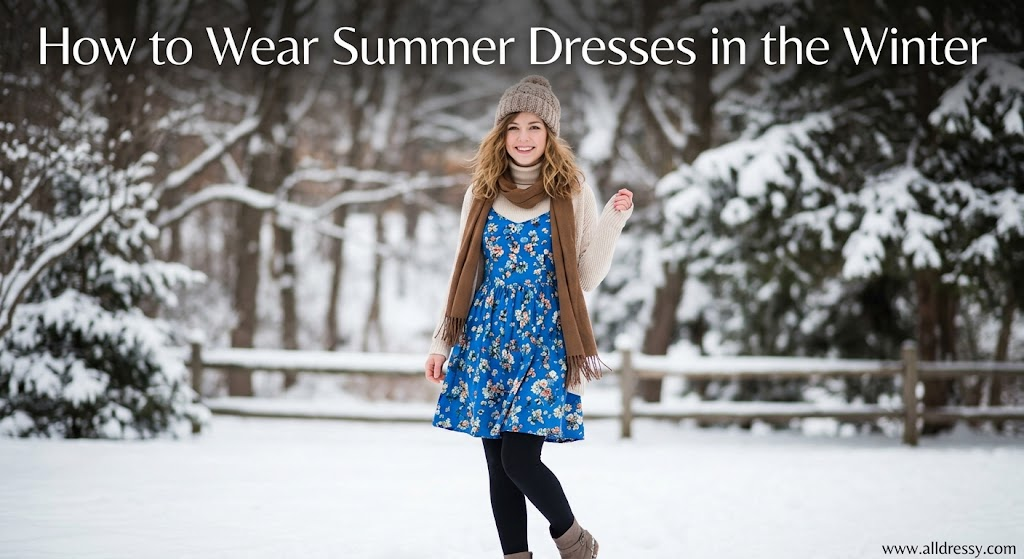
Seasonal wardrobe changes do not have to mean completely replacing your clothing collection. Learning how to wear summer dresses in the winter allows you to get more use from pieces you already own.
A lightweight dress can become the foundation of a layered winter outfit. Rather than treating it as a complete summer look, think of the dress as one component of a larger outfit.
Winter styling also creates interesting combinations. A floral dress that feels distinctly summery on its own can look completely different when combined with a dark cardigan, boots, tights, and a structured coat.
Some advantages include:
- Extending the life of your favorite dresses
- Creating more outfit combinations
- Making your wardrobe more versatile
- Adding color to darker winter wardrobes
- Experimenting with layers and textures
- Reducing the need to buy completely new outfits
- Creating transitional outfits for changing temperatures
The goal is not to make a summer dress look like a heavy winter garment. Instead, the goal is to balance its lightweight appearance with practical cold-weather layers.
Choose the Right Summer Dresses for Winter
Not every summer dress is equally easy to transition into winter. Some silhouettes and fabrics naturally lend themselves to layering.
Floral Midi Dresses
Floral midi dresses are particularly versatile because their longer length provides more coverage while leaving enough room to show boots and tights.
A floral midi dress can be worn with:
- Opaque tights
- Ankle boots
- A turtleneck underneath
- A cardigan
- A long coat
- A warm scarf
Dark floral prints are especially easy to incorporate into winter wardrobes, but bright floral dresses can also work when balanced with neutral layers.
Slip Dresses
Slip dresses are excellent layering pieces. Their relatively simple shape allows you to wear a fitted turtleneck, long-sleeve top, or thin sweater underneath.
Try:
Slip dress + turtleneck + tights + ankle boots + long coat
The combination creates a sophisticated layered appearance while adding warmth.
Shirt Dresses
Shirt dresses can be particularly practical because their button-front construction makes them easy to layer.
You can wear a fitted thermal or turtleneck underneath and add a sweater or cardigan over the top. Alternatively, wear the shirt dress open as an additional layer over a warm base outfit.
Maxi Dresses
Long summer dresses can work well in winter when paired with warm footwear and outerwear. Look for dresses that provide enough room for comfortable layers underneath.
A maxi dress can be paired with:
- Thermal leggings
- Warm socks
- Boots
- A cropped sweater
- A long cardigan
- A winter coat
Layer a Turtleneck Under Your Summer Dress
One of the most effective techniques for how to wear summer dresses in the winter is layering a thin turtleneck underneath the dress.
A lightweight fitted turtleneck can provide additional warmth without adding too much bulk.
This works especially well with:
- Slip dresses
- Sleeveless dresses
- Square-neck dresses
- Pinafore-style dresses
- Strappy dresses
For example, a black turtleneck under a floral dress can create a strong winter-ready combination. A cream or beige turtleneck can produce a softer appearance under darker dresses.
When layering underneath a dress, choose a relatively thin fabric so that the dress can sit naturally over it.
Wear a Sweater Over Your Summer Dress
Another easy technique is wearing a sweater over the dress. This can completely change the appearance of a lightweight summer dress.
A fitted dress can work with a slightly oversized sweater, while a looser dress may look better with a more structured knit.
For a simple winter outfit:
Summer dress + knit sweater + tights + ankle boots
You can also use a belt over the sweater if the outfit calls for additional definition, provided the combination remains comfortable.
Cropped sweaters can work particularly well with dresses because they allow some of the dress to remain visible while creating a layered appearance.
Add a Cardigan
Cardigans are among the most adaptable pieces for winterizing summer dresses.
A long cardigan can add warmth while maintaining a relaxed appearance. A shorter cardigan can create a more structured outfit.
Consider these combinations:
- Floral dress + neutral cardigan + boots
- Slip dress + chunky cardigan + tights
- Midi dress + buttoned cardigan + loafers
- Printed dress + long cardigan + ankle boots
The texture of the cardigan can also add visual interest. A chunky knit creates a cozy winter feeling, while a fine-knit cardigan produces a cleaner appearance.
Wear Tights with Summer Dresses in Winter
Tights are one of the simplest ways to make summer dresses more suitable for colder weather.
Opaque tights provide more coverage than sheer hosiery and work particularly well with winter footwear.
Black tights are versatile because they can coordinate with black boots, coats, handbags, and other accessories.
You can also experiment with:
- Charcoal
- Navy
- Brown
- Burgundy
- Dark green
If the dress has a pattern, consider repeating one of its darker colors in your tights or footwear.
For a simple dress, tights can also become a subtle statement element.
Choose the Right Winter Shoes
Footwear plays a major role in transforming a summer dress into a winter outfit.
Ankle Boots
Ankle boots are one of the easiest choices. They work with mini, midi, and many maxi dresses.
Black ankle boots provide a classic option, while brown boots can create a warmer, more relaxed appearance.
Knee-High Boots
Knee-high boots are useful when you want additional coverage. They work particularly well with midi and shorter dresses.
A midi dress with tights and knee-high boots creates a practical winter combination.
Chelsea Boots
Chelsea boots provide a casual yet polished appearance. They can work particularly well with shirt dresses, sweater layers, and simple floral dresses.
Weather-Appropriate Boots
If you live somewhere with snow, ice, or heavy rain, fashion should not be the only consideration. Choose footwear that provides appropriate traction, insulation, and weather protection.
The best winter outfit is one that keeps you comfortable and safe in the conditions you actually experience.
Add a Warm Coat
A summer dress can instantly become winter-appropriate when combined with a suitable coat.
Long Wool-Style Coat
A long structured coat can create an elegant appearance over a floral or midi dress.
Neutral shades such as black, camel, gray, navy, and brown are particularly versatile.
Puffer Jacket
For casual outfits, a puffer jacket can provide substantial warmth. It works particularly well with casual summer dresses, tights, and boots.
Trench Coat
A trench coat is useful during transitional winter weather when temperatures are cool but not extremely cold. Layer it over a dress, sweater, and tights for additional coverage.
Belted Coat
A belted coat can create a more structured appearance while providing another layer of warmth.
Choose outerwear based on the actual weather rather than simply matching the dress.
Use Thermal Layers Under Summer Dresses
For genuinely cold conditions, decorative layering may not provide enough warmth. Thermal base layers can be more practical.
A lightweight thermal top can be worn underneath a sleeveless or short-sleeve dress. Thermal leggings can also be worn beneath longer dresses.
Because thermal fabrics are designed to sit relatively close to the body, they can provide warmth without necessarily creating the bulk associated with multiple loose layers.
If your dress is very lightweight, choose thin layers that allow the fabric to fall naturally.
How to Wear Summer Dresses in the Winter with Leggings
Leggings can provide an additional layer under longer summer dresses.
They are particularly useful with:
- Maxi dresses
- Oversized dresses
- Sweater-style dresses
- Casual shirt dresses
For a simple casual outfit, try:
Printed summer dress + black leggings + ankle boots + cardigan
However, leggings may not work equally well with every dress. Consider the dress length and silhouette before adding them.
Style Summer Dresses with Scarves
A scarf can add both warmth and visual interest.
Chunky knitted scarves work well with casual winter outfits, while thinner scarves can create a more polished appearance.
If your dress contains several colors, choose a scarf that repeats one of them. With a simple neutral dress, you can introduce a seasonal accent through the scarf.
For example, a burgundy scarf can complement a dark floral dress, while a cream scarf can soften a black or navy outfit.
Avoid adding too many competing patterns if the dress already has a strong print.
Add Winter Accessories
Accessories can help bridge the gap between a summer dress and winter styling.
Useful options include:
- Knit scarves
- Gloves
- Beanies
- Berets
- Warm socks
- Structured handbags
- Winter hats
- Layered outerwear
A simple summer dress can feel much more seasonal when paired with a warm scarf, boots, coat, and winter bag.
Accessories also provide an opportunity to introduce texture. Wool-style, knitted, suede-like, and leather-inspired materials can contrast nicely with lightweight dress fabrics.
How to Wear Summer Dresses in the Winter for Work
Summer dresses can be adapted for professional settings by using polished layers.
For example:
Sleeveless dress + fitted turtleneck + tights + loafers + tailored coat
Another option is:
Midi dress + cardigan + opaque tights + ankle boots
Keep the colors relatively coordinated and choose simple accessories.
If your workplace has a specific dress code, follow those requirements first. A casual summer dress may need more structured layers to become appropriate for a professional environment.
How to Wear Summer Dresses in the Winter for Casual Outfits
Casual winter styling allows more freedom.
Try combining a floral summer dress with:
- Oversized cardigan
- Opaque tights
- Ankle boots
- Knit scarf
- Casual coat
You can also layer a denim-style or utility jacket underneath a larger coat for a multi-layered outfit when temperatures require it.
The important thing is to maintain comfortable proportions. Too many oversized pieces can make movement difficult, while too many tight layers may feel restrictive.
How to Wear Summer Dresses in the Winter for a Party
A summer dress can also work for winter parties.
For an evening event, consider a slip dress with:
- Sheer or opaque hosiery depending on the occasion
- Elegant boots or closed-toe shoes
- A fitted jacket
- A sophisticated coat
- Simple jewelry
If the dress has sequins, satin, lace, or another decorative feature, keep the winter layers relatively simple so they do not compete with the dress.
For a casual winter gathering, a printed dress with a cardigan and boots may be more appropriate.
Match Winter Colors with Summer Prints
One of the most effective ways to make a summer dress look seasonally appropriate is through color coordination.
Bright summer colors do not have to disappear during winter. Instead, balance them with deeper or neutral shades.
For example:
- Pink dress + charcoal coat
- Yellow floral dress + brown boots
- Blue dress + navy tights
- Green dress + black boots
- Red floral dress + dark brown coat
- Pastel dress + cream cardigan
You do not need every item to be dark simply because it is winter. A colorful dress can become a refreshing focal point when combined with appropriate seasonal accessories.
Use Texture to Make a Summer Dress Look Winter-Ready
Texture is one of the biggest differences between summer and winter wardrobes.
Summer dresses often feature smooth, lightweight, or breathable fabrics. Winter clothing tends to incorporate thicker textures such as knits, wool-style materials, fleece, and heavier woven fabrics.
Combining these textures can create balance.
For example:
Lightweight floral dress + chunky cardigan + opaque tights + leather-style boots
The contrast makes the dress feel intentional rather than out of season.
You can also use a textured coat, scarf, or bag to reinforce the winter aesthetic.
How to Layer Without Adding Too Much Bulk
Layering is useful, but excessive layering can become uncomfortable.
Start with a thin base layer rather than immediately adding several thick pieces.
A practical layering order is:
- Lightweight thermal or long-sleeve base
- Summer dress
- Cardigan or sweater if needed
- Coat or jacket
- Scarf and other accessories
If you are layering a sweater over the dress, consider whether you still need a cardigan underneath the coat. Sometimes removing one layer creates a more comfortable and visually balanced outfit.
Consider Dress Fabric When Layering
Fabric affects how successfully a summer dress can be worn in winter.
A thicker cotton-blend dress may be easier to winterize than an extremely delicate lightweight fabric.
Slip-style dresses can work beautifully over turtlenecks, while very sheer dresses may require additional layering underneath.
If the dress wrinkles easily, be careful when adding bulky layers. A smooth base layer may help the dress fall more naturally.
Winterize Different Dress Lengths
Mini Dresses
Pair mini dresses with tights, boots, sweaters, and long coats.
Midi Dresses
Midi dresses are among the easiest to transition because they work with boots, tights, cardigans, and coats.
Maxi Dresses
Maxi dresses can be worn with warm layers underneath and substantial outerwear. Make sure the hem does not drag through wet or snowy conditions.
Knee-Length Dresses
Knee-length dresses can be combined with opaque tights and knee-high or ankle boots for a classic winter outfit.
Common Mistakes When Wearing Summer Dresses in Winter
Avoiding a few common mistakes can make your winterized outfit much more successful.
Using Only Decorative Layers
A cardigan may look warm but may not provide enough protection in genuinely cold conditions. Use appropriate base layers and outerwear when needed.
Ignoring Footwear
Summer sandals can make a winter outfit impractical in cold or wet weather. Choose footwear appropriate for the conditions.
Combining Too Many Patterns
A printed dress, patterned tights, patterned scarf, and decorative coat can compete visually. Let one element act as the main pattern.
Choosing Uncomfortable Layers
If a dress becomes difficult to move in because of multiple layers, simplify the outfit.
Forgetting the Weather
An outfit that works for a cool autumn afternoon may not be suitable for freezing temperatures. Adapt your clothing to the actual conditions.
Easy Outfit Formulas for How to Wear Summer Dresses in the Winter
When you need a quick outfit, these formulas can simplify the process.
Classic Winter Formula
Summer midi dress + black tights + ankle boots + long coat
Cozy Formula
Summer dress + chunky cardigan + opaque tights + boots + scarf
Layered Formula
Slip dress + turtleneck + tights + ankle boots + structured coat
Casual Formula
Floral dress + leggings or tights + sweater + casual boots + puffer jacket
Professional Formula
Midi dress + fitted long-sleeve layer + tights + loafers or boots + tailored coat
Minimalist Formula
Simple summer dress + monochromatic tights + matching boots + neutral coat
These formulas can be adjusted according to temperature, dress style, and personal preference.
How to Transition a Summer Dress from Day to Evening in Winter
A summer dress can be adapted for different parts of the day.
For daytime, use a cardigan, practical boots, and a warm coat.
For evening, replace the casual cardigan with a fitted jacket, choose dressier footwear, and add understated accessories.
A simple change in outerwear and footwear can make the same dress suitable for different occasions.
How to Make Bright Summer Dresses Work in Winter
There is no need to restrict winter outfits to black, gray, and brown.
A bright dress can become a statement piece when combined with neutral winter layers.
For example, a bright pink dress can be balanced with a charcoal coat and black boots. A yellow dress can work with brown accessories, while a bright blue dress can be paired with navy or gray.
The principle is contrast and balance. Allow the dress to provide the color while keeping the surrounding pieces relatively understated.
How to Build a Winter Layering Wardrobe Around Summer Dresses
If you frequently want to wear summer dresses during colder months, a small collection of versatile winter layering pieces can make the process easier.
Consider having:
- A black turtleneck
- A neutral long-sleeve top
- Black opaque tights
- Neutral tights
- Ankle boots
- Knee-high boots
- A versatile cardigan
- A chunky sweater
- A long winter coat
- A neutral scarf
- A warm casual jacket
These pieces can work with numerous dresses rather than being limited to one outfit.
Practical Tips for Comfortable Winter Dress Styling
Comfort should remain part of the styling process.
Choose layers that allow normal movement, especially around the shoulders and arms. Make sure boots fit comfortably with the socks you plan to wear. Check that the dress hem does not interfere with footwear.
If you are spending significant time outdoors, prioritize appropriate insulation and weather protection over appearance alone.
You can also adjust your layers throughout the day. For example, a heavy coat may be useful outside but unnecessary indoors. Layering gives you the flexibility to adapt to changing temperatures.
Final Tips for How to Wear Summer Dresses in the Winter
The best way to master how to wear summer dresses in the winter is to think in terms of transformation rather than replacement. A summer dress does not have to remain a summer-only item. With the right supporting pieces, it can become the centerpiece of a practical winter wardrobe.
Start with the dress and identify what it needs: warmth underneath, warmth over it, or both. Add tights or leggings when appropriate, choose boots instead of summer footwear, and finish the outfit with a cardigan, sweater, coat, or scarf.
Pay attention to color and texture. A lightweight floral dress can look perfectly seasonal when paired with dark tights, a chunky knit, and boots. A slip dress can become an elegant winter outfit when layered over a thin turtleneck. Even a bright summer dress can work beautifully when surrounded by neutral winter pieces.
Most importantly, adapt the outfit to your actual climate and activity. Fashionable layering should still allow you to stay comfortable, move freely, and dress appropriately for the weather. With a thoughtful combination of base layers, hosiery, knitwear, footwear, accessories, and outerwear, your favorite summer dresses can remain useful well beyond the warm-weather season.
FAQs About How to Wear Summer Dresses in the Winter
1. Can you really wear summer dresses in the winter?
Yes. Many summer dresses can be worn in winter by adding warm layers such as turtlenecks, sweaters, cardigans, tights, boots, scarves, and coats. The key is choosing layers that provide warmth without making the outfit uncomfortable or overly bulky.
2. What should I wear under a summer dress in winter?
A fitted turtleneck, long-sleeve shirt, thermal top, or lightweight sweater can work well underneath a summer dress. Choose a thin layer when possible so the dress maintains its natural shape.
3. What kind of tights should I wear with a summer dress in winter?
Opaque tights are a versatile choice for colder weather because they provide more coverage than sheer hosiery. Black is particularly easy to coordinate, but charcoal, navy, brown, burgundy, and other dark shades can also work.
4. What shoes go best with summer dresses in winter?
Ankle boots, knee-high boots, Chelsea boots, and other weather-appropriate closed-toe footwear are excellent choices. Your footwear should complement the dress while also providing enough protection for the winter conditions where you live.
5. Can I wear a floral summer dress during winter?
Absolutely. Floral dresses can look very stylish in winter when paired with darker tights, boots, a cardigan or sweater, and a suitable coat. Dark floral prints are particularly easy to transition into cold-weather outfits.
6. How can I make a sleeveless summer dress warmer?
Layer a fitted turtleneck, thermal shirt, or long-sleeve top underneath the dress. You can then add tights, boots, and a warm coat for additional protection from the cold.
7. Can I wear a summer maxi dress in winter?
Yes. A maxi dress can be combined with warm tights or leggings, boots, a sweater or cardigan, and a winter coat. Make sure the dress length does not drag through wet or snowy conditions.
8. What coat should I wear over a summer dress in winter?
A long coat, wool-style coat, tailored coat, puffer jacket, or other weather-appropriate outerwear can work. Choose the coat according to the temperature and the formality of the dress.
9. How can I wear a summer slip dress in winter?
A slip dress is particularly easy to layer. Try wearing a fitted turtleneck underneath, adding tights and ankle boots, and finishing the outfit with a cardigan, jacket, or long coat.
10. How do I keep a winter outfit with a summer dress from looking bulky?
Use thin layers close to the body and add warmth strategically. A fitted thermal top, tights, streamlined boots, and one substantial outer layer can often provide warmth without requiring several bulky garments.
Conclusion
Learning how to wear summer dresses in the winter can make your wardrobe considerably more versatile. Instead of putting lightweight dresses away when temperatures fall, you can transform them with thoughtful layering, warm accessories, tights, boots, sweaters, cardigans, and coats.
The most important principle is to balance the lightweight character of a summer dress with practical winter pieces. A floral midi dress can become a cozy cold-weather outfit with opaque tights, ankle boots, a chunky cardigan, and a long coat. A sleeveless slip dress can be layered over a fitted turtleneck, while a bright summer dress can be balanced with neutral winter accessories.
Pay attention to the weather, fabric, proportions, colors, and textures when building your outfit. Most importantly, prioritize comfort and appropriate protection from the cold. With the right combinations, your favorite summer dresses can become versatile pieces that work across multiple seasons rather than being limited to warm-weather wear.