
The maxi dress represents one of the most liberating yet sophisticated silhouettes in the history of modern fashion. Sweeping from the shoulders all the way down to the top of the feet, its long, continuous column of fabric carries an inherent dramatic flair. It is a wardrobe workhorse that effortlessly transitions across seasons and dress codes, offering a complete look in a single piece.
However, because a maxi dress contains an immense amount of fabric, it introduces unique styling challenges. When styled without a clear understanding of human geometry, visual weight distribution, and fabric chemistry, an outfit that should project “main character” energy can easily look overwhelming, boxy, or accidentally unkempt. Learning how to wear a maxi dress like an elite fashion insider requires moving beyond basic recommendations. It demands an understanding of hemline architecture, layering metrics, body-shape calibration, and textile selection. This comprehensive style manual provides a step-by-step breakdown of how to choose, style, layer, and elevate your maxi dresses for any occasion.
Hemline Architecture: The Mathematical Science of the Perfect Drop
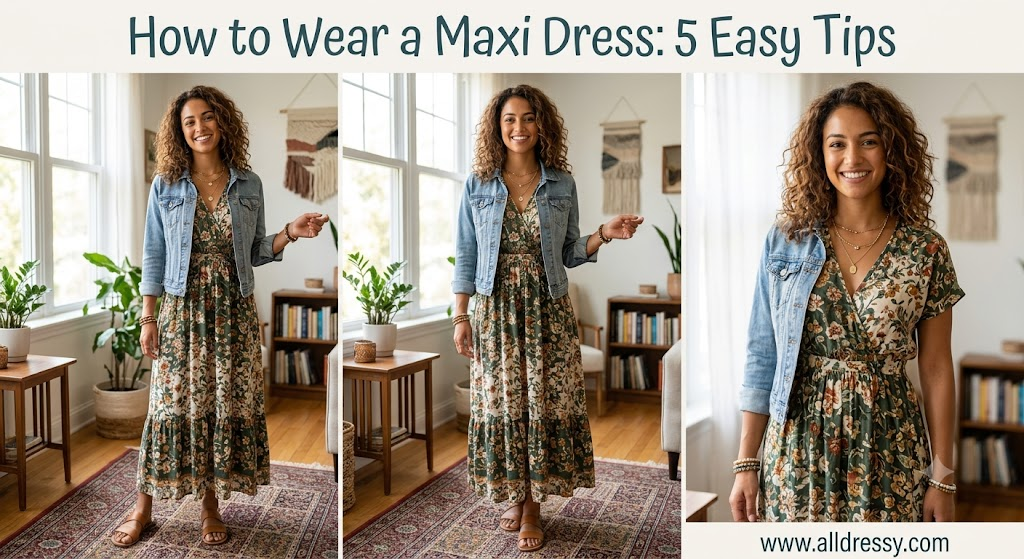
The difference between a maxi dress that looks like high-end tailoring and one that looks sloppy comes down to a matter of millimeters at the ankle. A maxi dress that is too short loses its dramatic appeal, while one that is too long puddles on the ground, damaging the fabric and ruining your silhouette.
The Hemline Drop Scale:
├── Too Short: Hits mid-calf or high ankle (Chops your height, looks shrunk)
├── PERFECT DROP: Skims 0.5 inches above the floor or grazes the foot arch
└── Too Long: Puddles, drags, or folds on the ground (Ruins fabric, trips the stride)
1. The Footwear Calibration Rule
When adjusting or shopping for a maxi dress, you must determine its target footwear in advance. A maxi dress hemmed to be worn with flat leather slides will pull awkwardly if you swap in a pair of three-inch espadrille wedges.
- The Flat Shoe Blueprint: For flat sandals, lifestyle sneakers, or loafers, the bottom hem should rest precisely half an inch above the floor when standing straight. This gives the illusion of a floor-sweeping gown while preventing the fabric from getting caught under your heels as you walk.
- The Elevated Heel Blueprint: When wearing heels, wedges, or platform boots, the hem of your maxi dress should fall exactly across the mid-point of your foot arch, exposing the toe box and a portion of the shoe sole. This prevents the dress from looking like a curtain while showcasing your footwear.
2. The Movement Test
Before clearing a maxi dress for a full day out, perform a rapid mobility check. Walk forward quickly, take a sharp turn, and sit down in a standard chair. If the front hem catches on your toes as you step forward, or if the skirt requires constant pulling when you stand up, the garment lacks the necessary structural movement. Look for maxis with side slits, asymmetrical hemlines, or tiered ruffles to naturally reduce fabric weight and improve your stride.
Proportional Tuning: Calibrating Maxi Silhouettes to Your Body Geometry
A common misconception is that full-length dresses overwhelm certain body shapes. In reality, a maxi dress creates a continuous vertical line that can make any frame look longer and leaner. The key is using structural details to balance your natural shape.
Body Type Silhouette Matrix:
┌──────────────────────────────┼──────────────────────────────┼──────────────────────────────┐
│          Pear Shape          │       Hourglass Shape        │         Apple Shape          │
├──────────────────────────────┼──────────────────────────────┼──────────────────────────────┤
│ • Focus: Draw eye upward     │ • Focus: Highlight the waist │ • Focus: Elongate the torso  │
│ • Top: Puff sleeves / Halters│ • Top: Fitted wrap bodices   │ • Top: Deep V-neck cuts      │
│ • Bottom: A-line drape       │ • Bottom: Contoured fluid    │ • Bottom: High empire waist  │
└──────────────────────────────┴──────────────────────────────┴──────────────────────────────┘
1. The Petite Framework: Creating the Illusion of Height
If you have a shorter frame, wearing a voluminous maxi dress can leave you looking swallowed by fabric.
- The Strategy: Avoid wide tiered skirts, heavy fabrics, and oversized, busy prints, which can cut your frame horizontally. Instead, opt for a column silhouette or a slim slip-style maxi dress in a solid color or micro-pattern.
- The Design Feature: Look for high-waisted designs or empire cuts that place the waistline directly below the bust. This extends the lower half of your outfit, making your legs look much longer. A high vertical thigh slit is also a fantastic detail, as it breaks up the wall of fabric and elongates your frame as you move.
2. The Rectangular Frame: Building Dynamic Dimensions
For athletic or straight silhouettes where the shoulders, waist, and hips are of a similar width, a maxi dress can be used to construct the visual illusion of curves.
- The Strategy: Look for horizontal tiers, ruffled necklines, or tiered skirts, which add volume and movement to your frame.
- The Design Feature: Lean heavily into cutout trends. Strategic side cutouts or crisscross back details visually pull the waist inward, breaking up the straight lines of your torso and creating an instant hourglass effect.
3. Balancing Curvy or Busty Proportions
If you carry weight in your midsection or have a larger bust, your styling goal is to create structure without adding unnecessary bulk.
- The Strategy: Avoid high, closed necklines like mock necks or halters, which can create a heavy, unstructured look. Instead, select deep V-necks, scoop necks, or sweetheart necklines to open up your chest and elongate your neck.
- The Design Feature: A true wrap maxi dress is your best style ally. The adjustable tie allows you to secure the dress at your narrowest point without clinging to your hips, turning the full-length dress into a beautifully balanced statement.
The Layering Matrix: Mastering the “Third-Piece Rule” with Long Dresses
A common pitfall when figuring out how to wear a maxi dress is adding outerwear that disrupts the long lines of the garment. Because a maxi dress is long, standard mid-thigh cardigans or hip-length jackets can clip your silhouette in half, making you look shorter and bulkier. To keep your proportions balanced, follow these precise layering formulas.
Outerwear Proportional Tuning:
    [Maxi Dress Column] + [Cropped Jacket (Finishes at Waist)] = High Waist Definition
    [Maxi Dress Column] + [Longline Trench (Finishes at Hem)]  = Sleek Vertical Streamline
    [Maxi Dress Column] + [Mid-Thigh Blazer (Unbelted)]        = Boxy, Disjointed Proportions ❌
1. The Cropped Jacket Formula
Your cropped jackets are a natural match for full-length maxi dresses. A jacket that finishes precisely at your natural waistline creates a clear visual boundary, drawing the eye upward and highlighting your waist without hiding the long skirt underneath.
- The Casual Companion: Pair a classic, distressed denim jacket with a cotton or jersey floral maxi dress. Roll the sleeves up slightly to expose your wrists, which instantly adds a relaxed, effortless energy to the look.
- The Structural Contrast: Pair a cropped black leather moto jacket over a fluid satin or silk slip maxi dress. The contrast between the rugged, heavy leather and the delicate, shiny satin creates a sophisticated look.
2. The Tailored Blazer Integration
Bringing a maxi dress into professional or smart-casual settings requires structural tailoring.
- The Oversized Approach: If you want to wear a modern, oversized blazer, keep the maxi dress underneath slim and close to the body, such as a bias-cut satin or knit column dress. Leave the blazer unbuttoned to let its sharp lines frame the continuous vertical strip of the dress down your core.
- The Cenched Approach: For a structured corporate look, layer a classic blazer over your maxi dress and place a leather belt around the outside of the blazer at your natural waist. This creates a beautifully tailored silhouette suitable for important business meetings.
3. The Seasonal Knit Overhaul
You can easily transform your maxi dress into a long skirt for colder weather by layering knitwear over the top.
- The Sweater-Tuck Hack: Pull a chunky, oversized knit crewneck sweater directly over your favorite maxi dress. To prevent the sweater from looking shapeless, put on a slim leather belt at your waist over the dress, then pull the sweater down and tuck its hem up and under the belt. This keeps the knit secure and yields a cozy, layered two-piece aesthetic.
Fabric Alchemy: Aligning Textiles with Environments
The material composition of your maxi dress determines how it hangs, how it breathes, and where it can be worn. Selecting the right fabric ensures your comfort and keeps your look appropriate for the setting.
| Fabric Material | Light Interaction | Best Structural Setting | Essential Performance Note |
| Cotton Poplin | Crisp / Matte | Structural Daywear / Casual Office | Holds architectural shapes like tiers and puff sleeves beautifully; requires steaming. |
| Silk / Heavy Satin | Lustrous / Liquid | Black-Tie Events / Evening Galas | Drapes elegantly along your curves; reflects low evening light beautifully. |
| Rayon Challis | Fluid / Soft | Tropical Resorts / Vacation Wear | Incredibly lightweight and moves beautifully in the breeze; highly breathable. |
| Ribbed Modal Knit | Matte / Body-Hugging | Airport Lounges / Weekend Errands | Provides exceptional stretch and comfort while maintaining a sleek, modern line. |
| Chiffon / Georgette | Translucent / Airy | Garden Weddings / Daytime Celebrations | Layered construction adds a romantic feel without adding physical weight. |
Footwear Curation: Setting the Tone of Your Silhouette
Because a maxi dress drops all the way to your feet, your shoes act as the foundation for the entire outfit. The right shoe choice anchors the long hemline and instantly establishes whether your look leans casual, sporty, or formal.
1. The Modern Lifestyle Sneaker
Pairing a maxi dress with low-profile leather lifestyle sneakers is an excellent way to balance chic style with everyday comfort.
- Styling Strategy: Choose a minimalist white leather low-top sneaker. Avoid bulky running shoes or tech-forward gym trainers, which can conflict with the fluid lines of a long dress. This pairing works beautifully with ribbed-knit or cotton-poplin maxi dresses for a fresh, city-brunch aesthetic.
2. The Western and Cowboy Boot Trend
For transition seasons, pairing Western or knee-high leather boots beneath a flowing maxi dress is a fantastic style configuration.
- Styling Strategy: Choose a bohemian, tiered, or floral print maxi dress with a front or side slit. As you walk, the slit opens to show off the structured leather of the boot. The rugged texture of a cowboy boot grounds the airy weight of the long skirt, creating a balanced look.
3. Minimalist Strappy Sandals and Mules
When dressing up for formal events, evening galas, or summer weddings, opt for minimal footwear that exposes the foot arch.
- Styling Strategy: A delicate, ankle-strap stiletto or a square-toe heeled mule extends your leg line cleanly. Choose metallic finishes like gold or silver to add a touch of shine beneath your hemline, letting the dress stand out as the centerpiece of your look.
The Accessorizing System: Balancing a Full-Length Canvas
When figuring out how to wear a maxi dress successfully, think of your accessories as the final elements that tie the whole look together. Because a maxi dress covers so much area, your accessories need to be chosen carefully so they don’t compete with the scale of the dress.
1. Neckline and Jewelry Coordination
- Deep V-Neck or Scoop Maxis: These necklines leave plenty of open space around your collarbone. Fill this area with a delicate pendant necklace or layered fine chains that mirror the downward angle of the neckline.
- High Neck, Halter, or Crewneck Maxis: These styles cover the chest completely, making necklaces look busy and unnecessary. Skip the necklace entirely and opt instead for bold statement earrings—like oversized gold hoops or sculptural drop earrings—to pull attention up toward your face and balance the long skirt.
2. Bag Proportions and Scale
An improperly sized handbag can throw off the balance of a full-length outfit.
- Avoid: Oversized, slouchy shoulder bags or gigantic totes, which can look messy when combined with the large volume of a maxi dress.
- Choose: Smaller, structured bags to provide a sharp geometric contrast. Use a sleek leather crossbody bag for casual daytime outings, a rigid top-handle box bag for the office, or a minimalist clutch for elegant evening events.
Frequently Asked Questions (FAQs)
What is the trick to wearing a maxi dress if you are very short without altering it?
If you are petite and your maxi dress is dragging on the ground, you can use the “knotting trick” to instantly lift the hemline. Gather a handful of fabric at the side of your calf or ankle and tie it into a secure, stylish side knot. This shortens the dress while creating an asymmetrical, draped detail that exposes a bit of leg and makes your footwear visible. Alternatively, you can cinch the dress with a sturdy leather belt at your natural waist and pull some of the fabric up over the belt to form a blouson effect, effectively shortening the hem by an inch or two.
Can a maxi dress be worn in an office with a formal dress code?
Yes, a maxi dress can absolutely be adapted for formal or business-casual work environments, provided you avoid casual holiday fabrics like jersey knit, crochet, or loud tropical prints. Choose a maxi dress made from structured cotton poplin, crisp linen-viscose blends, or heavy silk crepe in a solid neutral shade or muted pattern. To make it office-appropriate, layer a sharp, tailored blazer over top and cinch it with a premium leather belt at the waist. Complete the look with pointed-toe block heels or smart leather loafers.
What undergarments work best beneath a fluid or clingy maxi dress?
Because maxi dresses contain long columns of fabric that drape close to the legs as you walk, selecting the right base layer is essential. For jersey, silk, or satin maxi dresses, wear seamless, raw-edge underwear that matches your skin tone to prevent harsh panty lines. If the fabric is prone to static cling or turns sheer under direct sunlight, layer a lightweight anti-static half-slip or breathable shaping shorts beneath the skirt. This keeps the dress flowing naturally and ensures complete, opaque coverage.
How do I stop a maxi dress from stepping on the hem while walking up stairs?
Navigating stairs in an ankle-grazing or floor-length dress requires a slight adjustment to your movement. To prevent your shoes from catching the front hem and tripping you, gracefully lift the front skirt of the dress by a few inches using one hand as you ascend. Alternatively, selecting a maxi dress that features a front slit or an asymmetrical high-low hemline naturally solves this problem, as it leaves the path of your feet completely clear while preserving the sweeping length at the back.
Conclusion
Mastering how to wear a maxi dress is all about understanding the balance between long, flowing proportions and intentional structural details. Far from being a garment that overpowers your frame, an ankle-grazing silhouette offers an elegant, unbroken vertical line that can make any body shape look longer and more balanced. By paying close attention to the half-inch rule for hemlines, using cropped or longline layers via the “Third-Piece Rule,” and choosing the right footwear to anchor your look, you transform a simple summer staple into a versatile, year-round wardrobe cornerstone. Whether you are styling a breezy rayon dress with low-top sneakers for a weekend getaway or elevating a liquid satin column dress with metallic strappy sandals for a formal event, the maxi dress stands as a masterclass in effortless, high-impact dressing.