
The combination of a sharp dress shirt and a premium knit sweater is one of the most powerful sartorial formulas available. This layered ensemble balances corporate professionalism with approachable comfort. Yet, despite its apparent simplicity, this pairing is incredibly easy to execute poorly. When the hidden mechanics of fabric weight, collar alignment, and structural proportion are ignored, a look that should exude sophisticated confidence can quickly dissolve into a bulky, wrinkled, and restrictive mess.
Learning how to wear a dress shirt and sweater with modern elegance is an exercise in mastering textile tension and visual balance. True mastery involves moving beyond basic color matching to engineer an outfit from the inside out. This comprehensive guide covers the precise rules of fit, neckline harmony, color theory, and seasonal tailoring required to turn these two wardrobe essentials into a seamless, high-performance outfit for any setting.
The Hidden Foundation: Specifying the Dress Shirt Architecture
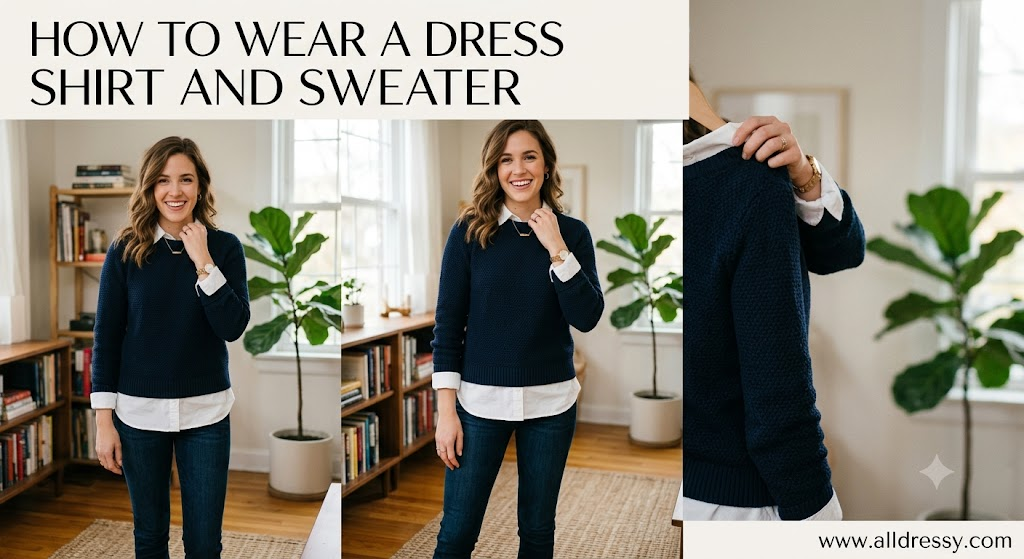
The ultimate success of your layered look depends entirely on the hidden foundation: the dress shirt. A sweater is a form-fitting, flexible knit that naturally molds to whatever is underneath it. If your dress shirt is poorly chosen or incorrectly fitted, the sweater will magnify every fold, excess inch of fabric, and bunch of cloth, creating an unflattering, lumpy silhouette.
1. Fabric Density and Weave Selection
When layering beneath a sweater, your dress shirt must be smooth, sleek, and relatively thin.
- Broadcloth and Poplin: These tightly woven, flat fabrics are the absolute gold standard for layering. They glide effortlessly against the interior of wool or cashmere without causing friction, static cling, or unnecessary bulk.
- Oxford Cloth (OCBD): The textured basketweave of an Oxford shirt is highly appropriate for smart-casual configurations. However, due to its heavier weight, it should only be paired with mid-weight or chunky sweaters rather than fine-gauge knits.
- Fabrics to Avoid: Completely eliminate heavy flannels, thick denim, and corduroy shirts from your under-sweater rotation. These materials choke the drape of the knitwear, lock in excessive body heat, and restrict your range of motion.
2. The Absolute Fit Mandate
A standard, ballooning “classic fit” dress shirt cannot be worn underneath a modern sweater. You must utilize a slim fit or tailored fit shirt that hugs your torso closely. Pay special attention to the armholes and sleeves. High-cut armholes and tapered sleeves prevent fabric from bunching up around your armpits and elbows, ensuring your silhouette remains clean and sharp.
Neckline Engineering: Matching Swaters to Shirt Collars
The point of intersection between your dress shirt collar and the neckline of your sweater dictates the formality and overall aesthetic of your outfit. If these two elements conflict, the entire look collapses.
Crew Neck Architecture:
    [Sweater Round Collar] ──> Locks Collar Points INSIDE ──> Clean, Streamlined Line
    (No Tie / Casual or Smart-Casual)

V-Neck Architecture:
    [Sweater V-Plunge] ────> Exposes Collar + Perfect Tie Frame ──> Elongates Neck
    (Tie Optional / Professional or Formal)
1. The Crew Neck Paradigm
The crew neck is characterized by its tight, round collar. Because of its closed nature, the rules for how to wear a dress shirt and sweater with a crew neck are exceptionally rigid.
- The Collar Rule: The collar points of your dress shirt must always remain tucked inside the neckline of the crew neck sweater. Allowing the collar wings to pop out over a round neck creates an untidy, unpolished look.
- Collar Types: Pair a crew neck with a button-down collar or a classic point collar. The buttons on an Oxford collar lock the points flat against your chest, preventing them from flipping up.
- The Tie Verdict: Avoid ties with a tight crew neck. The sweater hides 90% of the tie, leaving an awkward, choked knot peeking over the top that disrupts the clean lines around your throat.
2. The V-Neck Blueprint
The V-neck sweater is structurally engineered to showcase the upper chest, making it the premier choice for formal and business-professional settings.
- Framing the Tie: The plunging angular lines of a V-neck create a natural frame for a necktie. When wearing a tie, ensure the knot sits high and snug against the buttoned collar, and select a slim-to-medium tie width to avoid pushing the sweater fabric outward.
- Collar Alignment: Spread and semi-spread collars pair beautifully with V-necks. The wider stance of the collar wings fills out the negative space of the V-plunge perfectly. Unlike the crew neck, if your shirt collar points naturally rest slightly outside the V-line, it is stylistically acceptable, provided they lie flat.
3. The Quarter-Zip and Cardigan Adaptations
- The Quarter-Zip Pullover: A staple of modern casual office wear, the quarter-zip offers great versatility. When zipped down halfway, it mimics a V-neck, accommodating spread collars and ties. When zipped up, it creates a sleek, athletic mock-neck line. Always ensure the shirt collar points stay cleanly contained within the zip walls when it is partially closed.
- The Buttoned Cardigan: Operating visually like a waistcoat or vest, the cardigan allows the full length of the dress shirt’s button placket and tie to remain visible. It accommodates nearly any collar type—from a aggressive cutaway to a soft button-down—making it a highly flexible layering piece.
Fabric Dynamics: Weight Distribution and Friction Prevention
A major frustration when figuring out how to wear a dress shirt and sweater is the feeling of being physically trapped or overheated in your clothes. Managing the interaction between your garment weights resolves this issue.
| Layering Order | Ideal Material | Weight Profile | Primary Functional Role |
| Base Layer | 100% Pima Cotton Undershirt | Ultra-Lightweight | Moisture absorption; prevents sweat from staining the dress shirt. |
| Mid-Layer | Fine Poplin / Broadcloth Shirt | Lightweight | Provides crisp, tailored structure at the collar and sleeve cuffs. |
| Top Knit Layer | Merino Wool / Silk-Cashmere Blend | Fine-Gauge (Thinner) | Offers lightweight insulation and high-sheen elegance without bulk. |
| Alternative Outer | Chunky Lambswool / Cardigan | Heavyweight / Cable | Replaces a sport coat or blazer entirely for rugged, casual settings. |
The Golden Rule of Proportions: Thin to Thick
To maintain complete freedom of movement, your clothing layers must progressively increase in weight as you move outward from your skin. Your thinnest garment must sit closest to your body, while your heaviest knit occupies the exterior. Pairing a thick, heavy dress shirt with a hyper-thin, fine-gauge merino wool sweater compresses the shirt fabric underneath, causing immediate, visible wrinkling across your chest and back.
The Sleeve Pull Maneuver
To prevent the sleeves of your dress shirt from riding up into your forearms and bunching around your elbows when putting on a tight sweater, use this simple technique:
Before sliding your arms into the sweater sleeves, grip the edge of your dress shirt cuffs firmly inside the palms of your hands. Maintain this grip as you pull the sweater down your arms.
Once the sweater is in place, release your grip and adjust the cuffs so that exactly one-half inch of the dress shirt cuff extends past the sweater band. This subtle detail adds an intentional, tailored finish to your overall look.
Color Theory and Pattern Calibration for Layering
Layering allows you to create high-contrast color palettes and playful pattern interactions that a standalone shirt can never achieve. However, you must carefully balance your solids and graphics to avoid a chaotic look.
1. The Monochromatic Column (Tonal Elegance)
For a sleek, contemporary aesthetic, choose a dress shirt and sweater from the same color family but vary the shades and values. For example, pair a crisp sky-blue dress shirt with a deep navy-blue V-neck sweater. This approach creates an elongated, uninterrupted vertical line that makes the wearer look taller and leaner, while the subtle tonal shift adds rich depth.
2. High-Contrast Conservative Neutrals
When dressing for conservative corporate spaces or interviews, rely on timeless neutral pairings.
- The Classic Anchor: A crisp white dress shirt layered beneath a charcoal gray or heather-toned crew neck sweater.
- The Contrast Rule: When mixing neutrals, always ensure the shirt is lighter than the sweater overlay. A dark charcoal dress shirt paired beneath a light beige sweater looks disjointed and throws off your outfit’s visual balance.
3. Calibrating Patterns: The Single-Pattern Mandate
If you want to introduce graphics, stripes, or checks into your outfit, follow a strict rule: only one garment may feature a bold pattern.
[Sartorial Balance] ──> Option A: Patterned Shirt (Gingham) + Solid Sweater (Navy)
                    └── Option B: Solid Shirt (White) + Patterned Sweater (Fair Isle/Stripe)
If you pair a bold gingham check dress shirt with a textured, patterned argyle or Fair Isle sweater, the competing geometries will clash, creating a distracting and unpolished look. Instead, let a red-and-white micro-check dress shirt peek out from beneath a solid, matte-black crew neck, or use a pristine white shirt to ground a vibrant, textured knit.
The Tailoring Choice: To Tuck or Not to Tuck
The decision to tuck or untuck your dress shirt hem when wearing a sweater is a critical choice that instantly defines the formality of your outfit.
The Formal/Professional Mandate (Always Tucked)
If you are wearing a sweater-and-shirt combination to an office, a dinner date, a gallery opening, or a smart-casual event, your dress shirt must be tucked in completely. Allowing a long, curved dress shirt hem to tail out from beneath the straight waistband of a sweater creates a sloppy, unkempt appearance. If you struggle with your shirt shifting or billowing throughout the day, consider utilizing tailored shirt stays or garters to keep the fabric locked flat against your torso.
The Smart-Casual Compromise
You may only leave your shirt untucked if the dress shirt is specifically engineered with a shorter, flat-cut casual hem designed to sit mid-fly. When styled casually—such as an unbuttoned chambray shirt under a relaxed cardigan—letting a small amount of the shirt hem peek out uniformly can create a stylish, rugged weekend look.
Frequently Asked Questions (FAQs)
Should the collar points of my dress shirt be inside or outside the sweater?
For a crew neck sweater, the collar points must always stay tucked inside the neckline. Letting them flap out over a round collar looks untidy and disrupts the clean silhouette. For a V-neck sweater, the collar points can naturally rest inside or sit slightly on the outside of the V-line, provided they lie flat against the chest and do not curl upward.
How do I prevent my dress shirt from bunching and wrinkling under a tight sweater?
The key to avoiding unsightly lumps is choosing a slim or tailored-fit dress shirt with high-cut armholes. Classic-fit shirts have excess fabric that will instantly bunch up under a knit. Additionally, make sure the shirt fabric is a smooth, thin weave like poplin or broadcloth, which glides easily against the interior yarn of the sweater without creating friction or static cling.
Can I wear a polo shirt instead of a formal dress shirt under a sweater?
Yes, pairing a polo shirt with a sweater is an excellent smart-casual alternative, especially for spring or autumn. However, because polo collars are usually soft and unstructured, choose a sweater with a structured neckline—like a quarter-zip or a buttoned cardigan—so the polo collar doesn’t collapse completely flat under the weight of the knitwear.
Is it acceptable to wear short-sleeve dress shirts under a sweater?
While it may seem like an easy way to avoid sleeve bunching, wearing a short-sleeve shirt under a fine knit is generally discouraged. Without the structure of a long-sleeve cuff to anchor the sweater sleeve at the wrist, your bare forearms will rub directly against the wool or cashmere, which can cause itching and trap sweat oils. Furthermore, showing a half-inch of shirt cuff at the wrist adds a critical, tailored finish to the layered look.
Conclusion
Mastering the combination of a dress shirt and a sweater is the ultimate way to elevate your everyday style, offering a perfect blend of structure and comfort. By paying close attention to shirt fit, fabric weights, color harmony, and matching the right collar to the correct neckline, you can transform these two simple pieces into a sharp, unified outfit. Navigating this timeless styling formula with confidence ensures you remain effortlessly comfortable and perfectly put together, whether navigating a casual weekend or stepping into a high-stakes meeting.