
Learning how to reheat dressing in the oven is the best way to enjoy leftover dressing with the same delicious flavor and texture it had when it was freshly baked. Whether you prepared traditional bread dressing, cornbread dressing, sausage dressing, herb stuffing, or a homemade family recipe, reheating it correctly preserves moisture while creating a lightly crisp top.
Many people make the mistake of simply placing cold dressing into a hot oven, only to end up with dry, crumbly leftovers. Fortunately, a few simple techniques can keep your dressing soft inside while allowing the surface to become beautifully golden.
This comprehensive guide explains everything you need to know about how to reheat dressing in the oven, including preparation, ideal temperatures, reheating times, moisture tips, food safety, storage recommendations, troubleshooting, and methods for every type of dressing.
Why Reheating Dressing in the Oven Is the Best Method
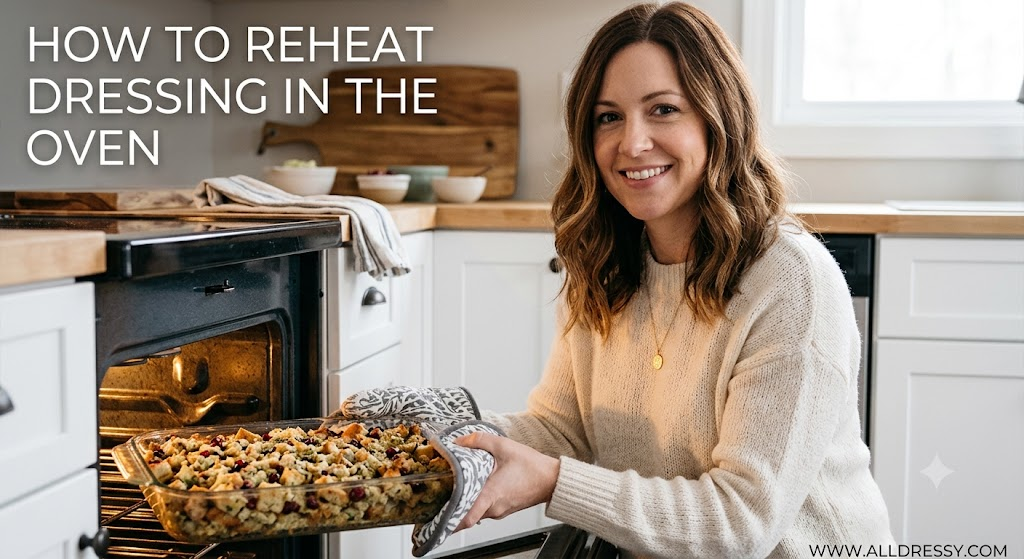
Although microwaves are convenient, ovens provide more even heating and maintain the original texture of baked dressing.
Benefits include:
- Even heating throughout the casserole
- Crispy golden top
- Moist interior
- Better flavor preservation
- No rubbery or soggy texture
- Perfect for both small and large portions
- Ideal for holiday leftovers
The oven closely recreates the conditions used during the original baking process, making it the preferred reheating method.
Understanding Different Types of Dressing
The type of dressing determines how much moisture you’ll need during reheating.
Common varieties include:
Traditional Bread Dressing
Made with cubed bread, herbs, onions, celery, butter, and broth.
Usually reheats very well with added broth.
Cornbread Dressing
Often richer and more delicate than bread stuffing.
Requires careful moisture control to prevent crumbling.
Sausage Dressing
Contains meat that should reach a safe internal temperature.
Generally remains moist because of rendered fat.
Oyster Dressing
Contains seafood and should be reheated thoroughly.
Avoid prolonged reheating.
Vegetable Dressing
Contains mushrooms, carrots, peppers, or spinach.
May require slightly less added liquid.
Gluten-Free Dressing
Can dry faster due to alternative bread ingredients.
Use extra broth when reheating.
Ingredients You May Need Before Reheating
Gather these items before beginning:
- Leftover dressing
- Baking dish
- Aluminum foil
- Turkey broth
- Chicken broth
- Vegetable broth
- Melted butter
- Cooking spray
- Instant-read thermometer
- Spoon
- Pastry brush
Should Dressing Be Reheated Straight From the Refrigerator?
Yes.
Cold dressing can safely go directly into a preheated oven.
However, allowing it to sit at room temperature for 15–20 minutes may reduce reheating time slightly.
Do not leave dressing at room temperature for more than two hours.
Best Oven Temperature for Reheating Dressing
The ideal temperature is:
350°F (175°C)
This temperature allows:
- Gentle heating
- Moist interior
- Crispy edges
- Even cooking
- Reduced drying
Higher temperatures can dry the dressing before the center becomes hot.
How to Reheat Dressing in the Oven Step by Step
Follow these steps for consistently delicious leftovers.
Step 1: Preheat the Oven
Preheat to:
350°F (175°C)
Allow the oven to fully reach temperature.
Step 2: Prepare the Baking Dish
Spread the dressing evenly inside an oven-safe dish.
Avoid packing it too tightly.
Step 3: Add Moisture
This is the secret to preventing dry dressing.
Add approximately:
- 2–4 tablespoons broth per cup of dressing
Distribute evenly.
If desired, drizzle melted butter over the surface.
Step 4: Cover with Foil
Loosely cover with aluminum foil.
The foil traps steam and keeps moisture inside.
Step 5: Bake
Bake covered for:
- Small portion: 20–25 minutes
- Medium casserole: 30–35 minutes
- Large casserole: 35–45 minutes
Step 6: Remove the Foil
For a crispy top:
Remove foil during the last 10–15 minutes.
Step 7: Check Internal Temperature
The center should reach:
165°F (74°C)
Use a food thermometer.
Step 8: Serve Immediately
Serve while hot for the best flavor and texture.
How Long Does Dressing Take to Reheat?
Approximate times:
| Portion Size | Time |
|---|---|
| Single serving | 20 minutes |
| Small casserole | 25 minutes |
| Medium casserole | 35 minutes |
| Large casserole | 45 minutes |
| Frozen dressing | 60–90 minutes |
Cooking times vary depending on thickness.
How Much Broth Should You Add?
A common mistake is adding either too much or too little liquid.
General guideline:
- Slightly dry dressing: 2 tablespoons per cup
- Very dry dressing: 4 tablespoons per cup
- Frozen dressing: 4 tablespoons per cup
Avoid pouring all the liquid into one spot.
Chicken Broth vs Turkey Broth
Either broth works well.
Chicken Broth
- Mild flavor
- Easy to find
- Great for everyday meals
Turkey Broth
- Rich holiday flavor
- Perfect for Thanksgiving leftovers
- Adds depth
Vegetable broth also works well.
Can Butter Improve Reheated Dressing?
Absolutely.
Butter:
- Adds richness
- Prevents dryness
- Encourages browning
- Improves flavor
Brush melted butter lightly across the top before baking.
Should You Stir the Dressing?
Usually no.
Leave it intact to preserve the original texture.
Only stir if the dressing appears unevenly dry.
How to Keep Dressing Moist
The biggest challenge is moisture retention.
Helpful techniques include:
- Cover with foil
- Add broth
- Avoid overheating
- Bake at moderate temperature
- Don’t overcook
- Keep tightly covered until serving
How to Get a Crispy Top
Many people enjoy crispy edges.
To achieve this:
- Remove foil during the final 10–15 minutes.
- Brush with melted butter.
- Increase heat slightly to 375°F for the last 5 minutes if desired.
- Watch closely to prevent burning.
Reheating Frozen Dressing in the Oven
Frozen dressing reheats beautifully.
From Frozen
- Preheat oven to 350°F.
- Place frozen dressing into a baking dish.
- Add broth.
- Cover tightly.
- Bake 60–90 minutes.
- Remove foil near the end.
- Verify the center reaches 165°F.
Should Frozen Dressing Be Thawed First?
Either method works.
Thawed
- Faster reheating
- More even heating
- Better texture
Frozen
- Convenient
- Safe
- Takes longer
If thawing, do so overnight in the refrigerator.
Reheating Individual Servings
For lunch-sized portions:
- Use a small baking dish.
- Add 1–2 tablespoons broth.
- Cover with foil.
- Bake for 20–25 minutes.
This method produces better texture than a microwave.
Common Mistakes When Reheating Dressing
Avoid these errors:
Using Too High a Temperature
High heat dries the edges before the center warms.
Skipping the Broth
Without moisture, dressing becomes crumbly.
Overcooking
Even moist dressing becomes dry if baked too long.
Forgetting the Foil
Foil traps steam and prevents moisture loss.
Not Checking Internal Temperature
Food safety matters, especially for meat-based dressings.
Food Safety Tips
Always reheat leftovers properly.
- Store leftovers within two hours of cooking.
- Refrigerate promptly.
- Keep refrigerated for up to four days.
- Freeze for longer storage.
- Reheat only the portion you plan to eat.
- Ensure an internal temperature of 165°F.
How to Store Leftover Dressing
Proper storage helps preserve flavor.
Refrigerator
Store in airtight containers.
Best used within:
3–4 days.
Freezer
Wrap tightly.
Freeze for:
2–3 months.
Label containers with the date.
Can Dressing Be Reheated More Than Once?
It is best to reheat dressing only once.
Repeated reheating can:
- Dry out the texture
- Reduce flavor
- Increase the risk of bacterial growth if not handled properly
Instead, divide leftovers into smaller portions and reheat only what you need.
Best Seasonings to Refresh Leftover Dressing
If the flavors seem muted after refrigeration, you can enhance them by adding:
- Fresh chopped parsley
- Sage
- Thyme
- Rosemary
- Black pepper
- Garlic powder
- Onion powder
- Melted butter
- A splash of fresh broth
Add herbs sparingly to maintain the original balance of flavors.
Can You Add Gravy While Reheating?
Yes. A small amount of gravy can help restore moisture and add richness.
For best results:
- Spread the dressing in an even layer.
- Spoon a thin layer of gravy over the top or around the edges.
- Cover with foil while reheating.
Avoid adding too much gravy, as it can make the dressing overly soft.
How to Tell When Dressing Is Fully Reheated
Look for these signs:
- The center is hot all the way through.
- Steam rises when the dish is uncovered.
- The internal temperature reaches 165°F (74°C).
- The edges are lightly browned.
- The top is crisp, but the inside remains moist.
Avoid judging doneness by appearance alone; using a food thermometer is the most reliable method.
Troubleshooting Common Problems
Dressing Is Too Dry
- Add more warm broth, one tablespoon at a time.
- Cover tightly with foil.
- Return to the oven for 5–10 minutes.
Dressing Is Too Wet
- Remove the foil.
- Continue baking for 10–15 minutes.
- Allow it to rest for 5 minutes before serving.
Top Is Browning Too Quickly
- Cover loosely with foil again.
- Lower the oven temperature slightly if necessary.
Center Is Still Cold
- Continue baking in 5-minute intervals.
- Check the temperature in the thickest part of the dish.
Tips for the Best Reheated Dressing Every Time
Follow these expert tips for consistently delicious results:
- Always preheat your oven before reheating.
- Use an oven-safe dish with an even layer of dressing.
- Add broth gradually instead of all at once.
- Cover with foil to trap moisture.
- Finish uncovered for a crisp top.
- Use butter for extra flavor and browning.
- Check the internal temperature before serving.
- Let the dressing rest for a few minutes after removing it from the oven to allow the moisture to redistribute.
- Reheat only the amount you plan to serve to preserve the quality of the remaining leftovers.
Here are SEO-optimized FAQs and a Conclusion for your article on “How to Reheat Dressing in the Oven.”
Frequently Asked Questions (FAQs)
1. How do you reheat dressing in the oven without drying it out?
The best way to reheat dressing in the oven without drying it out is to add a small amount of chicken, turkey, or vegetable broth before baking. Cover the dish tightly with aluminum foil and bake at 350°F (175°C) until the dressing reaches an internal temperature of 165°F (74°C). Remove the foil during the last 10 to 15 minutes if you prefer a crispy top.
2. What is the best oven temperature for reheating dressing?
The ideal temperature is 350°F (175°C). This moderate heat warms the dressing evenly while helping it retain moisture and develop a lightly crisp surface.
3. How long does it take to reheat dressing in the oven?
The reheating time depends on the portion size:
- Single serving: 20–25 minutes
- Small casserole: 25–30 minutes
- Medium casserole: 30–35 minutes
- Large casserole: 35–45 minutes
- Frozen dressing: 60–90 minutes
Always verify that the center reaches 165°F (74°C) before serving.
4. Should I cover dressing with foil while reheating?
Yes. Covering the baking dish with aluminum foil helps trap steam and prevents the dressing from becoming dry. If you want a golden, crispy top, remove the foil during the final 10 to 15 minutes of baking.
5. Can I reheat frozen dressing directly in the oven?
Yes. Frozen dressing can be reheated without thawing. Place it in an oven-safe dish, add a little broth, cover with foil, and bake at 350°F (175°C) for approximately 60 to 90 minutes, depending on its size and thickness.
6. How can I make leftover dressing taste fresh again?
Adding a small amount of broth, melted butter, or fresh herbs such as parsley, sage, rosemary, or thyme can restore moisture and refresh the flavor. Baking the dressing in the oven instead of using a microwave also helps maintain its original texture.
7. Can I use gravy instead of broth when reheating dressing?
Yes. A small amount of gravy can add moisture and enhance the flavor. However, use it sparingly to avoid making the dressing overly soft or soggy.
8. How do I know when dressing is fully reheated?
The dressing is ready when the center reaches an internal temperature of 165°F (74°C), steam rises from the middle, and the top is lightly browned while the inside remains moist.
9. How long can leftover dressing stay in the refrigerator?
Properly stored dressing can remain in the refrigerator for 3 to 4 days in an airtight container. For longer storage, freeze it for up to 2 to 3 months.
10. Can dressing be reheated more than once?
It is best to reheat only the amount you plan to eat. Repeated reheating can dry out the dressing and reduce its quality. Reheating leftovers only once also helps maintain food safety and flavor.
Conclusion
Knowing how to reheat dressing in the oven is the key to enjoying leftovers that taste almost as fresh as the day they were baked. By using the proper oven temperature, adding a little broth or butter, covering the dish with foil, and reheating until the internal temperature reaches 165°F (74°C), you can preserve both moisture and flavor while achieving a perfectly crisp top.
Whether you’re reheating traditional bread dressing, cornbread dressing, sausage dressing, or a favorite family recipe, the oven consistently delivers the best results. Taking a few extra minutes to reheat dressing properly prevents dryness, improves texture, and ensures every serving is warm, delicious, and safe to eat.
With the techniques and tips in this guide, you can confidently prepare leftover dressing for holiday meals, family dinners, or quick weekday lunches while maintaining the rich flavor and comforting texture everyone loves.