
If you’ve recently asked yourself, “how to preserve my wedding dress,” you’re already taking the first step toward protecting one of the most meaningful garments you’ll ever own. A wedding dress isn’t just another piece of clothing—it represents one of the most memorable days of your life. Whether you hope to pass it down to future generations, display it as a keepsake, or simply keep it in pristine condition, proper preservation is essential.
Many brides assume that placing the gown in a closet or garment bag is enough. Unfortunately, improper storage can lead to yellowing, permanent stains, fabric deterioration, mold, mildew, and insect damage. Learning how to preserve my wedding dress properly ensures your gown remains as beautiful decades from now as it was on your wedding day.
This detailed guide covers every aspect of wedding dress preservation, including cleaning, stain removal, storage methods, fabric care, environmental conditions, long-term maintenance, and common mistakes to avoid.
Why Wedding Dress Preservation Matters
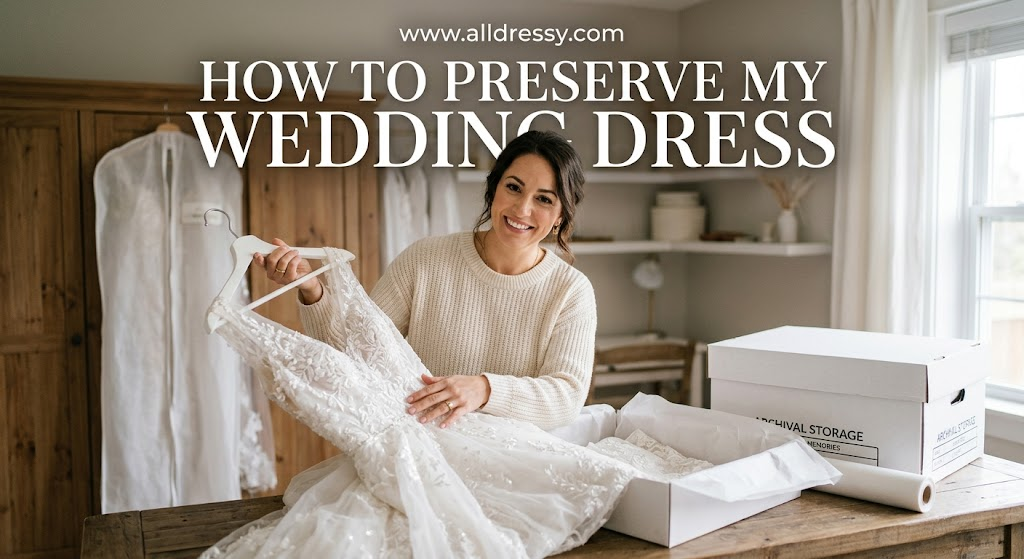
Wedding dresses are made from delicate materials that naturally age over time. Even if your dress appears clean after your wedding, invisible contaminants remain.
These include:
- Body oils
- Sweat
- Perfume
- Makeup residue
- Champagne
- Cake frosting
- Dirt
- Grass stains
- Dust
- Pollen
- Deodorant
- Sunscreen
Many of these stains are initially invisible. Months or years later they oxidize, creating yellow or brown discoloration that becomes increasingly difficult to remove.
Proper preservation prevents:
- Yellowing fabrics
- Oxidation stains
- Fabric weakening
- Mold growth
- Mildew
- Permanent creases
- Insect damage
- Dust accumulation
- Moisture damage
Clean Your Wedding Dress Before Preserving It
The first rule of how to preserve my wedding dress is simple:
Never store a dirty wedding dress.
Even tiny stains become permanent over time.
Cleaning should ideally occur within a few weeks after the wedding.
The sooner the dress is cleaned:
- Easier stain removal
- Less oxidation
- Better fabric protection
- Longer lifespan
Inspect the Entire Dress Carefully
Before preservation, inspect every inch of the gown.
Look closely at:
- Hemline
- Train
- Sleeves
- Underarms
- Bust
- Neckline
- Waist
- Lace
- Beading
- Buttons
- Zippers
- Interior lining
Check for:
- Loose beads
- Missing sequins
- Torn lace
- Broken hooks
- Loose stitching
- Pulled threads
- Hidden stains
Small repairs should be completed before long-term storage.
Understand Your Wedding Dress Fabric
Different fabrics require different preservation methods.
Satin
Satin wrinkles easily and can yellow if improperly stored.
Store flat whenever possible.
Silk
Silk is extremely delicate.
It is vulnerable to:
- Light damage
- Moisture
- Oils
- Acids
Silk requires acid-free preservation materials.
Tulle
Tulle crushes easily.
Avoid heavy folding.
Support layers carefully.
Chiffon
Chiffon snags easily.
Avoid rough surfaces during handling.
Organza
Organza is lightweight but prone to permanent creasing.
Store with tissue padding.
Lace
Lace requires gentle support to avoid stretching.
Avoid hanging for extended periods.
Crepe
Crepe develops stress lines if folded improperly.
Use soft folds with tissue between layers.
Should You Dry Clean the Wedding Dress?
Professional cleaning is recommended for most wedding gowns.
Wedding dress specialists understand how to clean:
- Silk
- Satin
- Lace
- Beading
- Sequins
- Embroidery
- Delicate trims
Avoid ordinary cleaners unfamiliar with bridal fabrics.
Why DIY Washing Can Be Risky
Many gowns contain:
- Hand-sewn embellishments
- Delicate lace
- Boning
- Corsets
- Horsehair braid
- Structured bodices
Improper washing can cause:
- Shrinking
- Fabric distortion
- Color fading
- Loose embellishments
Always read the care label before attempting home cleaning.
Remove Invisible Stains
Invisible stains become visible over time.
Common hidden stains include:
- Champagne
- White wine
- Sugar
- Sweat
- Perfume
- Makeup
- Body oils
Professional cleaning removes these contaminants before they oxidize.
Repair Damage Before Storage
Small damage becomes worse during storage.
Inspect for:
- Loose beads
- Torn lace
- Broken zippers
- Missing buttons
- Loose hems
- Detached appliqués
Repairing these issues beforehand prevents additional deterioration.
Choose Acid-Free Preservation Materials
Acid-free materials help protect delicate fabrics.
Use:
- Acid-free tissue paper
- Acid-free preservation boxes
- Acid-free storage materials
Avoid ordinary cardboard because acids transfer into fabric over time.
Use Acid-Free Tissue Paper Properly
Tissue paper serves several purposes.
It:
- Prevents wrinkles
- Cushions folds
- Reduces friction
- Protects embellishments
- Supports sleeves
- Supports bodice
- Protects lace
Place tissue between every folded layer.
Fold the Dress Correctly
Proper folding minimizes permanent creases.
General process:
- Lay the dress flat.
- Smooth wrinkles gently.
- Stuff sleeves with tissue.
- Cushion the bodice.
- Fold carefully.
- Place tissue between folds.
- Avoid sharp creases.
Should You Hang or Box the Dress?
For long-term preservation, boxing is usually safer.
Hanging for years can:
- Stretch straps
- Distort shoulders
- Damage seams
- Pull delicate fabrics
Preservation boxes distribute weight more evenly.
Select the Right Preservation Box
Choose a box that is:
- Acid-free
- Lignin-free
- Breathable
- Large enough for the gown
Avoid plastic bins for permanent storage.
Plastic traps moisture and increases mold risk.
Why Plastic Garment Bags Are a Bad Idea
Plastic bags trap humidity.
This encourages:
- Mold
- Mildew
- Odors
- Yellowing
Short-term transportation is acceptable, but not decades of storage.
Store the Dress in a Stable Environment
Temperature fluctuations accelerate fabric aging.
Ideal conditions include:
- Cool temperatures
- Low humidity
- Minimal light
- Stable environment
Avoid locations with frequent temperature changes.
Keep the Dress Away from Sunlight
UV rays damage fabrics.
Sun exposure causes:
- Yellowing
- Fading
- Fiber weakening
- Lace deterioration
Always store the gown in complete darkness whenever possible.
Avoid Damp Areas
Never store your wedding dress in:
- Basements
- Attics
- Garages
- Outdoor sheds
- Laundry rooms
These locations often experience:
- Humidity
- Heat
- Moisture
- Temperature swings
Maintain Proper Humidity Levels
High humidity encourages mold.
Low humidity can dry fragile fibers.
Balanced indoor humidity is best for long-term preservation.
Prevent Mold and Mildew
Moisture is the enemy of preservation.
Keep storage areas:
- Dry
- Ventilated
- Clean
Never store a dress that is even slightly damp.
Protect Against Insects
Natural fibers attract insects.
Common fabric pests include:
- Moths
- Carpet beetles
- Silverfish
Keep storage areas clean and inspect them periodically.
Avoid placing insect repellents directly on the dress.
Preserve Veils Separately
Wedding veils require their own storage.
Fold gently with acid-free tissue.
Store separately if heavily embellished.
Avoid placing heavy gowns on top of delicate veils.
Store Accessories Carefully
Preserve accessories individually.
Examples include:
- Gloves
- Belt
- Cape
- Overskirt
- Detachable sleeves
Wrap each item separately using acid-free tissue.
Handle the Dress with Clean Hands
Always wash and dry your hands before touching the gown.
Better yet, wear clean white cotton gloves.
This prevents:
- Oil transfer
- Dirt
- Fingerprints
- Makeup contamination
Avoid Frequent Handling
Repeated unfolding creates unnecessary stress.
Only inspect the gown occasionally.
Excessive handling increases:
- Wrinkles
- Dust exposure
- Fabric wear
Inspect the Dress Every Few Years
Long-term preservation doesn’t mean forgetting about it forever.
Every two to five years:
- Open the box
- Inspect fabric
- Look for discoloration
- Check for pests
- Replace tissue if necessary
- Refold using different fold lines
Changing fold positions helps prevent permanent creases.
Store in an Interior Closet
One of the safest places is an interior closet.
It offers:
- Stable temperature
- Low humidity
- Darkness
- Less environmental fluctuation
Avoid exterior walls where temperature changes are more dramatic.
Label the Preservation Box
Include:
- Wedding date
- Bride’s name
- Cleaning date
- Preservation date
Future generations will appreciate the documentation.
How Long Can a Wedding Dress Last?
With proper preservation, many gowns remain beautiful for:
- 20 years
- 30 years
- 50 years
- Even over 100 years
Longevity depends on:
- Fabric quality
- Cleaning
- Storage
- Environmental conditions
Common Wedding Dress Preservation Mistakes
Avoid these mistakes:
- Storing without cleaning
- Using plastic bags
- Using wire hangers
- Hanging long-term
- Storing in attics
- Storing in basements
- Exposing to sunlight
- Folding without tissue
- Using ordinary cardboard
- Ignoring hidden stains
Each mistake shortens the life of your gown.
Can You Preserve Colored Wedding Dresses?
Yes.
Colored gowns require the same careful treatment.
Special attention should be paid to preventing color fading by limiting exposure to sunlight and excessive heat.
Dark-colored embellishments should not remain pressed tightly against lighter fabrics for long periods, as color transfer may occur in humid conditions.
Preserving Dresses with Heavy Beading
Heavily embellished gowns require extra support.
Large beadwork adds significant weight.
When boxing the dress:
- Support heavy sections with tissue.
- Avoid placing excessive pressure on beaded areas.
- Prevent embellishments from rubbing against delicate fabrics.
Inspect beadwork before storage to ensure loose beads are repaired.
Preserving Vintage Wedding Dresses
Vintage gowns are often more fragile than modern dresses.
Older fabrics may have weakened fibers due to age.
When preserving a vintage gown:
- Handle it as little as possible.
- Use only acid-free materials.
- Avoid unnecessary folding.
- Keep it in a climate-controlled environment.
- Inspect periodically for signs of deterioration.
Extra care helps preserve historical and sentimental value.
Travel Tips Before Preservation
If you’re traveling after your wedding before preserving your gown:
- Keep the dress in a breathable garment bag.
- Avoid leaving it in a hot car.
- Hang it temporarily if necessary.
- Unpack it promptly after arriving home.
- Arrange cleaning before placing it into permanent storage.
Delaying preservation for weeks or months increases the risk of permanent staining.
Long-Term Care for Future Generations
If you hope to pass your wedding dress to a daughter, granddaughter, or another family member, thoughtful preservation makes a significant difference.
Store documentation alongside the gown, including:
- Wedding photographs
- Fabric information
- Alteration records
- Cleaning dates
- Preservation dates
FAQs
How soon should I preserve my wedding dress after the wedding?
Ideally, you should clean and preserve your wedding dress within a few weeks after your wedding. Prompt cleaning helps remove both visible and invisible stains before they have time to oxidize and permanently discolor the fabric.
Can I preserve my wedding dress at home?
Yes, you can preserve your wedding dress at home if it has been properly cleaned and you use acid-free tissue paper and an acid-free preservation box. However, professional cleaning is highly recommended for delicate fabrics, intricate beadwork, or gowns with difficult stains.
Why does a wedding dress turn yellow over time?
Wedding dresses often turn yellow because of oxidation caused by invisible stains, body oils, perspiration, and exposure to light, heat, and acidic storage materials. Proper cleaning and preservation significantly reduce the risk of yellowing.
Is it better to hang or fold a wedding dress?
For long-term storage, folding a wedding dress inside an acid-free preservation box is generally safer than hanging it. Hanging a heavy gown for years can stretch the fabric, straps, and seams, causing permanent distortion.
Can I store my wedding dress in a plastic garment bag?
Plastic garment bags are suitable for short-term transportation but should not be used for long-term preservation. Plastic can trap moisture, increasing the risk of mold, mildew, odors, and fabric discoloration.
What is the best place to store a preserved wedding dress?
The best place to store a preserved wedding dress is in a cool, dry, dark interior closet with stable temperature and humidity. Avoid basements, attics, garages, and areas exposed to direct sunlight or excessive moisture.
How often should I check my preserved wedding dress?
Inspect your preserved wedding dress every two to five years. During each inspection, check for discoloration, moisture, pests, or damaged tissue paper, and refold the gown along different fold lines to minimize permanent creases.
Can invisible stains really damage my wedding dress?
Yes. Many stains from sweat, perfume, makeup, champagne, sugar, and body oils may not be visible immediately after the wedding. Over time, these stains oxidize and create yellow or brown marks that can become permanent if not cleaned.
How long will a properly preserved wedding dress last?
A professionally cleaned and properly preserved wedding dress can remain in excellent condition for several decades and, in many cases, over 100 years. Longevity depends on the quality of the fabric, storage conditions, and regular inspections.
Can a preserved wedding dress be worn again?
Yes. A properly preserved wedding dress can usually be removed from its preservation box, professionally steamed if necessary, and worn again for vow renewals, family celebrations, or by future generations.
Conclusion
Knowing how to preserve my wedding dress is one of the best ways to protect one of the most meaningful garments you’ll ever own. Proper preservation begins with timely cleaning, careful inspection, and the use of acid-free storage materials designed to safeguard delicate fabrics from yellowing, moisture, dust, and environmental damage. Choosing the right storage location and maintaining stable temperature and humidity levels further extends the life of your gown.
Whether you hope to keep your wedding dress as a cherished keepsake, display it as part of your family’s history, or pass it down to future generations, investing time in proper preservation is well worth the effort. By following the best practices outlined in this guide, your wedding dress can retain its beauty, elegance, and sentimental value for decades to come, allowing it to remain a lasting reminder of one of life’s most unforgettable moments.