
If you’re searching for how to make oyster dressing stuffing, you’ve come to the right place. Oyster dressing stuffing is a classic comfort food that has been enjoyed for generations, especially during Thanksgiving, Christmas, and other holiday celebrations. Combining tender oysters, seasoned bread, aromatic vegetables, herbs, and rich butter creates a savory side dish that pairs beautifully with turkey, chicken, ham, and roasted meats.
Learning how to make oyster dressing stuffing at home allows you to customize every ingredient to suit your family’s taste. Whether you prefer a traditional Southern oyster dressing, a moist casserole-style stuffing, or a crispy baked version, homemade oyster dressing delivers far better flavor than boxed stuffing mixes.
In this comprehensive guide, you’ll learn everything you need to know—from selecting the best oysters and bread to step-by-step cooking instructions, ingredient substitutions, regional variations, expert tips, common mistakes to avoid, storage methods, reheating instructions, and serving suggestions.
What Is Oyster Dressing Stuffing?
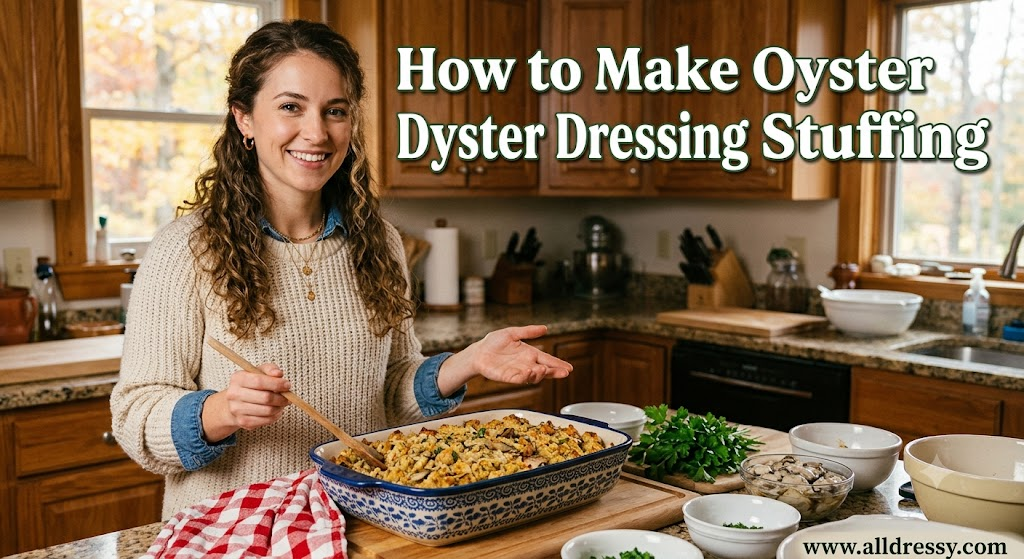
Oyster dressing stuffing is a savory baked side dish made with bread cubes or cornbread, oysters, butter, onions, celery, herbs, broth, and seasonings. Although many people use the terms “stuffing” and “dressing” interchangeably, there is a traditional difference.
- Stuffing is cooked inside a turkey or chicken.
- Dressing is baked separately in a casserole dish.
Today, many home cooks bake oyster stuffing separately for better texture and food safety while still enjoying the traditional flavors.
Why You’ll Love Homemade Oyster Dressing Stuffing
Making oyster dressing stuffing from scratch offers many advantages.
Fresh Flavor
Fresh ingredients create a richer and more authentic taste than packaged mixes.
Fully Customizable
You can easily adjust:
- Oyster quantity
- Bread type
- Herbs
- Moisture level
- Butter amount
- Seasonings
Budget-Friendly
Preparing homemade stuffing often costs less than buying premium prepared versions.
Perfect for Holidays
It’s a favorite side dish for:
- Thanksgiving
- Christmas
- Easter
- Family dinners
- Potluck gatherings
Essential Ingredients
A traditional oyster dressing stuffing recipe uses simple pantry staples.
Main Ingredients
- 8 cups day-old bread cubes
- 1 pint fresh oysters with liquor
- 1 cup diced celery
- 1 cup diced onion
- ½ cup butter
- 2 cups chicken broth
- 2 eggs
- 2 teaspoons poultry seasoning
- 1 teaspoon dried sage
- 1 teaspoon thyme
- 1 teaspoon parsley
- Salt
- Black pepper
Optional Ingredients
Customize the stuffing with:
- Cornbread
- Garlic
- Green onions
- Fresh parsley
- Fresh thyme
- Bacon
- Mushrooms
- Sausage
- Pecans
- Apples
- Dried cranberries
- Parmesan cheese
Choosing the Best Oysters
Oysters are the star ingredient.
Fresh Oysters
Advantages:
- Superior flavor
- Better texture
- More natural oyster liquor
Jarred Oysters
Advantages:
- Convenient
- Readily available
- Consistent quality
Canned Oysters
Advantages:
- Affordable
- Long shelf life
Fresh or refrigerated jarred oysters usually produce the best flavor.
Choosing the Best Bread
Bread significantly affects texture.
Excellent choices include:
- French bread
- White sandwich bread
- Italian bread
- Brioche
- Sourdough
- Country bread
Allow bread to dry overnight for better absorption.
Cornbread Oyster Dressing
Many Southern recipes replace traditional bread with cornbread.
Benefits include:
- Richer flavor
- Slight sweetness
- Softer texture
Many families combine both cornbread and white bread for the perfect balance.
How to Prepare the Bread
Proper preparation is essential.
Cube the Bread
Cut into approximately one-inch cubes.
Dry the Bread
Leave uncovered overnight or bake at low heat until slightly dry.
Dry bread absorbs broth more evenly.
Step-by-Step: How to Make Oyster Dressing Stuffing
Step 1: Prepare the Vegetables
Dice:
- Onion
- Celery
- Garlic (optional)
Cook in butter until softened.
Step 2: Chop the Oysters
Drain while reserving the oyster liquor.
Roughly chop large oysters.
Smaller oysters may remain whole.
Step 3: Combine Dry Ingredients
In a large bowl mix:
- Bread cubes
- Herbs
- Poultry seasoning
- Salt
- Pepper
Step 4: Add Vegetables
Pour the cooked onion and celery mixture over the bread.
Mix gently.
Step 5: Add Oysters
Fold oysters into the mixture carefully.
Avoid overmixing.
Step 6: Add Liquids
Whisk together:
- Chicken broth
- Oyster liquor
- Eggs
Pour gradually over the stuffing.
Mix until evenly moistened.
Step 7: Bake
Transfer to a buttered baking dish.
Bake uncovered until:
- Golden brown
- Crispy on top
- Moist inside
Should Oyster Stuffing Be Moist?
Yes.
Proper stuffing should be:
- Moist
- Tender
- Flavorful
Avoid making it:
- Dry
- Mushy
- Soupy
Adjust broth gradually.
Fresh Herbs vs Dried Herbs
Fresh Herbs
Provide:
- Bright flavor
- Better aroma
- Vibrant appearance
Dried Herbs
Offer:
- Convenience
- Longer shelf life
- Consistent seasoning
Either works well when used properly.
Best Seasonings
Classic oyster dressing includes:
- Sage
- Thyme
- Parsley
- Poultry seasoning
- Black pepper
- Salt
Optional additions:
- Paprika
- Cayenne
- Garlic powder
- Onion powder
Southern Oyster Dressing
Southern recipes often include:
- Cornbread
- Extra butter
- More sage
- Additional celery
- Rich chicken stock
The result is softer and more flavorful.
New England Oyster Stuffing
Northern recipes typically feature:
- White bread
- Fresh oysters
- Butter
- Thyme
- Parsley
This version emphasizes the oyster flavor.
Cajun Oyster Dressing
For a Louisiana-inspired version, add:
- Cajun seasoning
- Bell peppers
- Garlic
- Green onions
- Andouille sausage
This variation offers bold, spicy flavor.
Oyster Stuffing with Sausage
Adding sausage creates a heartier dish.
Popular options:
- Breakfast sausage
- Italian sausage
- Smoked sausage
Cook thoroughly before mixing into the stuffing.
Oyster Stuffing with Bacon
Crispy bacon adds:
- Smoky flavor
- Crunch
- Richness
Reduce added salt accordingly.
Gluten-Free Oyster Stuffing
Use:
- Gluten-free bread
- Gluten-free broth
All remaining ingredients can remain the same after checking labels.
Dairy-Free Version
Replace butter with:
- Olive oil
- Plant-based butter
Choose dairy-free bread if necessary.
Common Mistakes to Avoid
Using Fresh Bread
Fresh bread becomes soggy.
Always dry it first.
Overmixing
Gentle mixing preserves texture.
Too Much Broth
Add broth gradually.
Too much creates mushy stuffing.
Underseasoning
Taste before baking.
Bread absorbs seasoning.
Overcooking Oysters
Long cooking makes oysters rubbery.
Bake only until stuffing is heated through and golden.
Best Side Dishes
Oyster dressing pairs well with:
- Roast turkey
- Roast chicken
- Ham
- Prime rib
- Green beans
- Sweet potatoes
- Cranberry sauce
- Mashed potatoes
- Gravy
- Brussels sprouts
Can You Make Oyster Dressing Ahead?
Yes.
Prepare one day ahead.
Cover tightly.
Refrigerate.
Bake just before serving.
Many cooks find the flavor improves overnight.
Freezing Oyster Dressing
You can freeze:
- Unbaked stuffing
- Fully baked stuffing
Wrap tightly.
Freeze up to two months.
Thaw overnight before baking or reheating.
Storage Tips
Store leftovers in:
- Airtight containers
- Glass containers
- Food-safe storage dishes
Refrigerate promptly.
Consume within 3–4 days for the best quality and food safety.
How to Reheat Oyster Dressing Stuffing
To keep the stuffing moist:
- Add a small splash of chicken broth before reheating.
- Cover with foil while warming in the oven.
- Remove the foil during the last few minutes if you want a crisp top.
Individual portions can also be reheated in the microwave, although the oven provides a better texture.
Nutritional Benefits of Oyster Dressing Stuffing
Homemade oyster dressing contains several nutritious ingredients.
Oysters
Oysters are naturally rich in:
- Protein
- Zinc
- Iron
- Vitamin B12
- Selenium
Celery and Onions
These vegetables contribute:
- Fiber
- Vitamins
- Flavor without many calories
Herbs
Fresh herbs provide antioxidants and aromatic flavor while reducing the need for excess salt.
Although oyster dressing is considered a holiday comfort food, preparing it from scratch allows you to control ingredients and portion sizes.
Expert Tips for Perfect Oyster Dressing Stuffing
- Use day-old bread instead of fresh bread.
- Reserve the oyster liquor for extra flavor.
- Sauté the vegetables before mixing them into the bread.
- Don’t overcook the oysters.
- Mix gently to preserve the bread’s texture.
- Add broth gradually until the mixture is moist but not soggy.
- Let the stuffing rest for a few minutes after baking before serving.
- Taste the mixture before baking and adjust the seasoning if needed.
- Use fresh herbs whenever possible for a brighter flavor.
- Bake uncovered for a crisp, golden-brown top while keeping the interior moist.
With these techniques, you’ll consistently create a flavorful, moist, and perfectly seasoned oyster dressing stuffing that’s ideal for holiday feasts and special family meals.
FAQs
1. What is the difference between oyster dressing and oyster stuffing?
The main difference is how they are cooked. Oyster stuffing is traditionally cooked inside a turkey or chicken, while oyster dressing is baked separately in a casserole dish. Today, many people prefer baking it separately because it promotes even cooking and simplifies serving.
2. Can I use canned oysters instead of fresh oysters?
Yes. Canned oysters are a convenient substitute and work well in most recipes. However, fresh or refrigerated jarred oysters generally provide a better texture and a fresher, more delicate seafood flavor.
3. What type of bread is best for oyster dressing stuffing?
Day-old white bread, French bread, Italian bread, sourdough, or cornbread are all excellent choices. Slightly dried bread absorbs the broth more effectively and helps create the perfect stuffing texture.
4. Can I prepare oyster dressing stuffing ahead of time?
Absolutely. You can assemble the dressing one day in advance, cover it tightly, and refrigerate it. Bake it just before serving for the freshest flavor and best texture.
5. How do I keep oyster dressing from becoming too dry?
Add the broth gradually until the bread is evenly moistened but not soggy. Cover the dish with foil during part of the baking time if necessary, and avoid overbaking.
6. Can I freeze oyster dressing stuffing?
Yes. Oyster dressing can be frozen either before or after baking. Store it in an airtight, freezer-safe container for up to two months. Thaw it overnight in the refrigerator before reheating or baking.
7. What herbs are commonly used in oyster dressing stuffing?
Traditional recipes typically include sage, thyme, parsley, poultry seasoning, black pepper, and sometimes rosemary. Fresh herbs provide brighter flavor, while dried herbs are convenient and work well year-round.
8. What main dishes pair well with oyster dressing stuffing?
Oyster dressing stuffing pairs wonderfully with roast turkey, baked chicken, glazed ham, roast beef, duck, pork loin, and other holiday favorites. It also complements classic side dishes like mashed potatoes, green beans, cranberry sauce, and roasted vegetables.
9. Can I make oyster dressing stuffing gluten-free?
Yes. Simply substitute the regular bread with gluten-free bread and use certified gluten-free chicken broth. Double-check the labels on all seasonings and ingredients to ensure they are gluten-free.
10. Why is my oyster dressing stuffing soggy?
Soggy stuffing is usually caused by adding too much broth or using bread that wasn’t dried properly. Use day-old or lightly toasted bread, add the liquid gradually, and bake uncovered to achieve a moist interior with a lightly crisp top.
Conclusion
Now that you know how to make oyster dressing stuffing, you can prepare a rich, flavorful side dish that’s perfect for holiday dinners and family gatherings. Combining tender oysters, seasoned bread, aromatic vegetables, butter, herbs, and savory broth creates a comforting recipe that has stood the test of time.
One of the greatest advantages of making oyster dressing stuffing from scratch is the ability to customize it to your preferences. Whether you enjoy a traditional Southern cornbread version, a classic bread-based dressing, or a variation with sausage, bacon, or fresh herbs, homemade dressing offers exceptional flavor and texture that packaged mixes simply can’t match.
By selecting quality ingredients, properly drying the bread, balancing the moisture, and following the cooking techniques outlined in this guide, you’ll consistently create a moist, well-seasoned oyster dressing stuffing with a beautifully golden top. It’s a memorable addition to Thanksgiving, Christmas, Sunday dinners, and any special occasion where homemade comfort food takes center stage.