
Finding a dress that looks beautiful on the hanger does not always mean it will fit perfectly when you put it on. A dress may feel slightly loose around the waist, tight across the bust, too long, or uncomfortable around the shoulders. Fortunately, you do not always need to replace the dress. Learning how to make a dress fit better can help you improve its comfort, shape, and overall appearance.
The best method depends on where the dress feels uncomfortable and how much adjustment it needs. Small changes can sometimes be made without sewing, while larger alterations may require basic sewing skills or help from a professional tailor. Understanding the construction of the dress before making any changes is important because fabrics, seams, zippers, linings, and decorative details can all affect the alteration process.
Whether you have a favorite everyday dress, a formal gown, a bridesmaid dress, or a simple summer dress, the right adjustment can make it feel much more comfortable and polished.
How to Make a Dress Fit Better Without Altering It
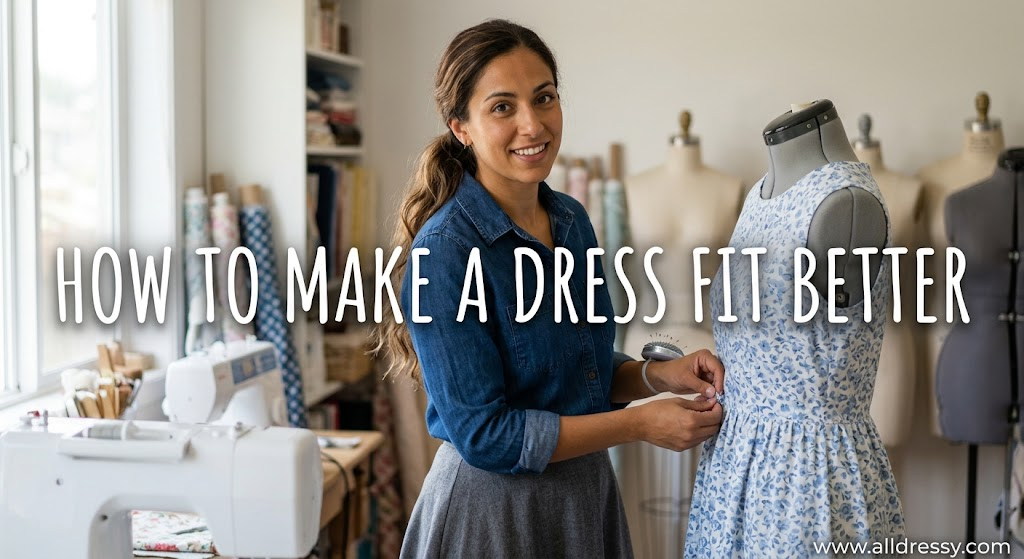
Before reaching for scissors or a sewing machine, consider whether the dress actually needs permanent alterations. Some fit problems can be improved with temporary adjustments or styling techniques.
A belt is one of the easiest ways to improve the appearance of a loose dress. Adding a belt at the natural waist can create definition and prevent a loose-fitting dress from looking shapeless. A narrow belt can provide subtle definition, while a wider belt can create a more noticeable waistline.
Fashion tape can also help with certain minor fit problems, particularly when a neckline or shoulder area does not stay in the desired position. It can temporarily hold fabric in place without permanently changing the garment.
Layering can sometimes improve the practical fit as well. For example, wearing an appropriate camisole underneath a loose dress can provide additional coverage and make the garment feel more secure.
These solutions are useful when the dress is generally the correct size but has a few minor fit issues.
How to Make a Dress Fit Better Around the Waist
A loose waist is one of the most common reasons people search for how to make a dress fit better. If the rest of the dress fits correctly but the waist is too loose, you may be able to make a relatively simple adjustment.
One option is to take in the side seams. This involves removing a small amount of fabric from the sides of the dress so the garment sits closer to the body. The amount should be determined carefully because taking in too much fabric can affect the fit of the bust, hips, or armholes.
Another option is adding darts. Darts are folded and stitched sections of fabric that help shape a garment. They can be particularly useful for dresses that have excess fabric around the back or waist.
An elastic waistband can also be incorporated into some casual dresses. However, this works best with suitable fabrics and garment designs.
When adjusting the waist, always try the dress on and mark the desired fit before permanently sewing anything.
How to Make a Dress Fit Better at the Bust
A dress that is too loose around the bust may look oversized even if the waist fits perfectly. Conversely, a dress that is too tight around the bust can feel restrictive and may pull across the fabric.
If the bust area is loose, small darts can help create a more fitted shape. Darts should be positioned carefully so they follow the natural construction of the garment.
If the dress is too tight across the bust, taking it in further is not the solution. Instead, the garment may need additional fabric or a different alteration. Depending on the construction, a tailor may be able to release fabric from existing seam allowances.
Never assume that simply changing the waist will fix a bust-related fit problem. Different parts of a dress need different types of alterations.
How to Make a Dress Fit Better Around the Hips
A dress can fit comfortably at the waist but feel too tight around the hips. This is especially noticeable in fitted or body-skimming styles.
If the dress contains extra seam allowance, a tailor may be able to let out the side seams slightly. If there is not enough fabric available, more extensive alteration may be necessary.
For a dress that is too loose around the hips, taking in the side seams may provide a cleaner fit. However, the adjustment should be gradual. Removing too much fabric can make walking, sitting, or moving uncomfortable.
Stretch fabrics require special consideration because their fit depends partly on their ability to move with the body. Altering a stretchy garment incorrectly can affect its original flexibility.
How to Make a Dress Fit Better in the Shoulders
Shoulder fit can significantly affect how an entire dress looks. If the shoulders are too wide, the neckline may shift out of position and the sleeves may sit incorrectly.
For dresses with shoulder seams, the shoulder area can sometimes be narrowed. However, this is more complicated than simply sewing along the existing seam because the armhole and sleeve position may also need adjustment.
If the dress has adjustable straps, such as a camisole-style or slip-style dress, shortening the straps can provide a simple solution.
For formal dresses with structured shoulders, professional alteration is often the safest option because these garments may contain lining, interfacing, padding, or carefully constructed seams.
How to Make a Dress Fit Better With Darts
Darts are one of the most useful techniques for shaping a loose garment. They remove excess fabric while creating a more tailored silhouette.
Common dart locations include the bust, waist, and back. The placement depends on the dress design and where the excess fabric is located.
When creating a dart, avoid making it excessively deep or long. A poorly positioned dart can create unwanted folds or change the appearance of the garment.
It is also important to consider the fabric. Lightweight fabrics may show stitching and shaping more easily than thicker materials.
If you are new to sewing, practice on a scrap piece of similar fabric before altering the actual dress.
How to Make a Dress Fit Better by Taking In the Seams
Taking in seams is one of the most common permanent methods for improving the fit of a dress.
The basic idea is to remove a controlled amount of excess fabric along an existing seam. This can make the dress narrower while preserving much of its original shape.
Before sewing the final seam, use temporary stitches or pins to test the new fit. Try sitting, walking, and moving your arms to make sure the dress remains comfortable.
Do not immediately cut away the excess fabric. Leave some extra material until you are certain the new fit is correct.
This is especially important because fabric that has been cut away cannot easily be restored.
How to Make a Dress Fit Better Without Cutting the Fabric
If you are nervous about permanently changing a dress, you can make temporary alterations.
One method is using safety pins on the inside of the garment. Small amounts of fabric can sometimes be gathered at the waist or back to create a closer fit.
Another option is using a temporary stitch. This allows you to test the alteration before making it permanent.
A belt, waist tie, or fabric sash can also change the appearance of a loose dress without modifying the garment itself.
Temporary alterations are especially useful for borrowed clothing, expensive formalwear, or dresses you may want to wear in different ways later.
How to Make a Dress Fit Better With a Belt
A belt can transform the appearance of a loose or oversized dress. It is particularly effective when the dress is too wide through the middle but otherwise fits comfortably.
For a casual outfit, a simple fabric or leather-style belt can add structure. For a more formal dress, a slim, understated belt may complement the garment without distracting from its design.
The placement of the belt also matters. Wearing it at the waist can emphasize the dress’s existing shape, while placing it slightly higher or lower can create a different visual effect.
The goal should be comfort and proportion rather than making the dress excessively tight.
How to Make a Dress Fit Better When It Is Too Long
Length is another common fit issue. A dress can fit perfectly around the upper body but still be inconvenient because the hem is too long.
Shortening a dress usually involves measuring the desired length, marking the new hemline, cutting excess fabric if appropriate, and creating a new finished hem.
However, be careful with dresses that have decorative borders, lace, pleats, or special hems. Cutting these details can permanently change the design.
Some dresses can be shortened from another location instead of the bottom, depending on their construction. This may help preserve a decorative hem.
Always measure while wearing the shoes you expect to wear with the dress, particularly for formal or floor-length styles.
How to Make a Dress Fit Better When It Is Too Tight
Making a tight dress fit better is different from making a loose dress smaller.
First, identify where the tightness occurs. Is it the bust, waist, hips, sleeves, shoulders, or entire garment?
If the dress is only slightly tight and has generous seam allowances, some fabric may be released from the seams.
If the garment has stretch, the fabric itself may provide some flexibility, but it should still allow comfortable movement.
For significantly tight dresses, forcing the garment to fit can damage seams or closures. A professional alteration may be necessary.
Avoid making changes that compromise your ability to move comfortably.
How to Make a Dress Fit Better With a Sewing Machine
A sewing machine can make dress alterations faster and more consistent, but it is important to understand the fabric before beginning.
Start by examining the existing construction. Locate side seams, darts, the zipper, lining, and hem.
Use the appropriate needle and thread for the material. Lightweight fabrics may require a different setup from denim, satin, knit fabric, or heavier materials.
When taking in a dress, sew gradually rather than removing a large amount of fabric immediately. Test the garment after each major adjustment.
If the dress contains stretch fabric, the stitch type and machine settings may need to accommodate the fabric’s movement.
How to Make a Dress Fit Better by Hand Sewing
You do not need a sewing machine for every dress alteration. Hand sewing can work well for small adjustments.
Simple hand stitches can be used to temporarily secure fabric, adjust straps, repair hems, or make minor changes.
Hand sewing is particularly useful when working with delicate garments where you want greater control.
However, permanent alterations should still be planned carefully. Uneven stitching can affect the appearance of the garment, especially on smooth or lightweight materials.
For expensive dresses, practice on scrap fabric first or consider professional tailoring.
How to Make a Dress Fit Better Without Ruining the Shape
One of the biggest mistakes when altering a dress is focusing on one measurement while ignoring the rest of the garment.
A dress should maintain a balanced shape after alteration. If you take in the waist substantially but do not consider the hips, the garment may pull or bunch.
Similarly, changing the shoulders can affect the armholes and sleeves.
Before making any permanent change, examine the dress from the front, back, and sides. Look for wrinkles, pulling, excess fabric, and uneven seams.
The goal is not simply to make the dress smaller. The goal is to create a comfortable and balanced fit.
How Fabric Type Affects Dress Alterations
Fabric plays a major role in determining how easily a dress can be altered.
Cotton is generally easier to work with and can be suitable for beginners.
Polyester can vary considerably depending on its weave and finish. Some polyester garments may require careful pressing because excessive heat can damage the fabric.
Satin can be challenging because it is smooth and may show needle marks.
Knits and stretch fabrics require techniques that preserve their flexibility.
Lace and embellished fabrics can be especially complicated because their decorative patterns may need to be repositioned after alterations.
Understanding the material before beginning an alteration can help prevent unnecessary damage.
When to Take a Dress to a Professional Tailor
Not every dress should be altered at home. Professional tailoring is often the better choice for expensive, highly structured, or complicated garments.
Consider professional help if the dress has:
- A complex lining
- Boning or structured construction
- Heavy embellishments
- Intricate lace
- A complicated zipper
- A dramatically incorrect shoulder fit
- Multiple areas requiring adjustment
- Very little seam allowance
A tailor can evaluate the garment’s construction and determine what can realistically be changed.
Professional alterations may be particularly worthwhile for formal dresses because small construction mistakes can be noticeable.
Common Mistakes to Avoid When Making a Dress Fit Better
One of the most common mistakes is cutting fabric before testing the alteration. Always test the fit first.
Another mistake is making both sides uneven. Measure carefully and use consistent markings.
Avoid taking in too much fabric at once. Small adjustments are easier to correct.
Ignoring the lining is another common problem. If a dress has a lining, the lining may need to be adjusted along with the outer fabric.
Do not forget about movement. A dress can look fitted while standing but become uncomfortable when sitting or walking.
Finally, avoid rushing. A careful fitting process usually produces a much better result than a quick alteration.
A Step-by-Step Approach to Making a Dress Fit Better
If you are learning how to make a dress fit better, use a systematic approach.
First, put on the dress and identify the exact problem.
Second, determine whether the issue is caused by excess fabric, insufficient room, incorrect length, or positioning.
Third, inspect the seams and construction to see whether an alteration is possible.
Fourth, use pins or temporary stitches to test the adjustment.
Fifth, try moving normally while wearing the temporarily altered dress.
Sixth, make the permanent alteration only after confirming that the fit is comfortable.
Finally, finish the seams properly so the garment remains durable and neat.
This approach reduces the risk of making an irreversible mistake.
How to Make a Dress Fit Better for Different Occasions
The ideal fit can also depend on how and where you plan to wear the dress.
For everyday clothing, comfort and freedom of movement should be priorities. A slightly relaxed fit may be more practical than a highly tailored shape.
For professional clothing, a balanced fit can create a polished appearance without restricting movement.
For formal occasions, the dress may require more precise alterations because photographs, structured fabrics, and formal styling can make fit differences more noticeable.
For casual summer dresses, temporary adjustments such as belts or waist ties may be enough.
Thinking about the purpose of the dress before altering it can help you choose the most practical solution.
Final Tips for Getting a Better Dress Fit
Learning how to make a dress fit better is largely about understanding where the problem occurs and choosing an alteration that works with the garment’s original construction.
Start with the simplest solution whenever possible. A belt, adjustable strap, or temporary stitch may solve a minor issue without requiring permanent changes.
For larger problems, carefully evaluate the seams, fabric, lining, and overall structure. Take in fabric gradually and test the fit before cutting anything away.
Most importantly, a well-fitting dress should allow comfortable movement. The best alteration is one that improves both the appearance and usability of the garment.
With careful measuring, patient testing, and the right technique, many common dress-fitting problems can be improved without replacing the entire garment.
Frequently Asked Questions About How to Make a Dress Fit Better
1. How can I make a dress fit better without sewing?
You can make a dress fit better without sewing by using a belt, adjustable straps, fashion tape, or temporary fastening methods. These options work best when the dress is only slightly loose or needs a small adjustment.
2. How do I make a loose dress fit better?
A loose dress can often be improved by adding a belt, using temporary gathers, adding darts, or taking in the side seams. The best method depends on where the dress is loose and how much adjustment is needed.
3. Can a tailor make a dress fit better?
Yes. A professional tailor can adjust many parts of a dress, including the waist, bust, shoulders, hips, sleeves, and length. Tailoring is particularly useful for formal or structured dresses.
4. How can I make a dress tighter around the waist?
You can make a dress tighter around the waist by taking in the side seams, adding darts, or using a waist tie or belt. Test the desired fit before making permanent alterations.
5. Can I make a dress fit better if it is too big?
Yes. If a dress is too big, it may be possible to take in the seams, adjust the darts, shorten the straps, or alter the waist. For complicated garments, professional alterations are usually the safest choice.
6. How can I make a dress fit better around the bust?
If the dress is loose around the bust, darts or carefully adjusted seams may improve the fit. If it is too tight, check whether the garment has enough seam allowance to release additional fabric.
7. How can I make a dress fit better around the hips?
A dress that is loose around the hips can often be taken in at the side seams. If it is too tight, a tailor may be able to release existing seam allowance or make another appropriate alteration.
8. Can I alter a dress without cutting it?
Yes. Temporary stitches, belts, waist ties, adjustable straps, and carefully positioned fasteners can sometimes improve the fit without cutting the fabric. This is useful when you want to preserve the original garment.
9. What should I do if my dress is too tight?
First, identify where the dress feels tight. If there is enough fabric in the seams, a tailor may be able to let it out. Avoid forcing a tight dress because excessive tension can damage seams, closures, or fabric.
10. What is the easiest way to make a dress fit better?
For a slightly loose dress, using a belt or adjusting the straps is often the easiest solution. For a more significant fit problem, taking in the seams or having the dress professionally tailored can provide a more permanent result.
Conclusion
Learning how to make a dress fit better can help you get more use from clothing that does not fit perfectly straight from the store. Whether the problem is a loose waist, oversized shoulders, excess fabric around the bust, an uncomfortable hip area, or an overly long hem, there are several ways to improve the fit.
Start by identifying the exact area that needs adjustment and choose the least complicated solution that will solve the problem. Temporary methods such as belts, waist ties, and adjustable straps can work well for minor issues, while sewing alterations can provide a more precise and permanent fit.
For expensive, structured, delicate, or heavily embellished dresses, professional tailoring is often the best choice. A skilled tailor can make careful adjustments while preserving the garment’s original shape and construction.
Most importantly, a well-fitting dress should feel comfortable as well as look polished. With careful measurements, proper techniques, and a little patience, you can turn an imperfectly fitting dress into a garment that feels much more comfortable and practical to wear.