
Understanding how to dress newborn in winter is extremely important for keeping your baby warm, safe, comfortable, and healthy during cold weather. Newborn babies cannot regulate their body temperature as effectively as adults, which means they can become cold much faster. At the same time, overdressing a newborn can also create safety concerns. Parents often struggle to find the right balance between warmth and comfort, especially during freezing temperatures, windy weather, snow, or cold indoor environments.
Learning how to dress newborn in winter involves understanding layering, choosing proper fabrics, monitoring temperature, dressing babies for sleep, outdoor safety, car seat safety, and recognizing signs of overheating or cold stress. Winter newborn clothing should provide warmth without restricting movement or causing overheating.
This complete guide explains everything you need to know about dressing a newborn during winter, including layering techniques, essential winter clothing items, indoor and outdoor outfits, sleepwear, fabric choices, hats, blankets, winter travel safety, and common mistakes parents should avoid.
Why Dressing a Newborn Properly in Winter Matters
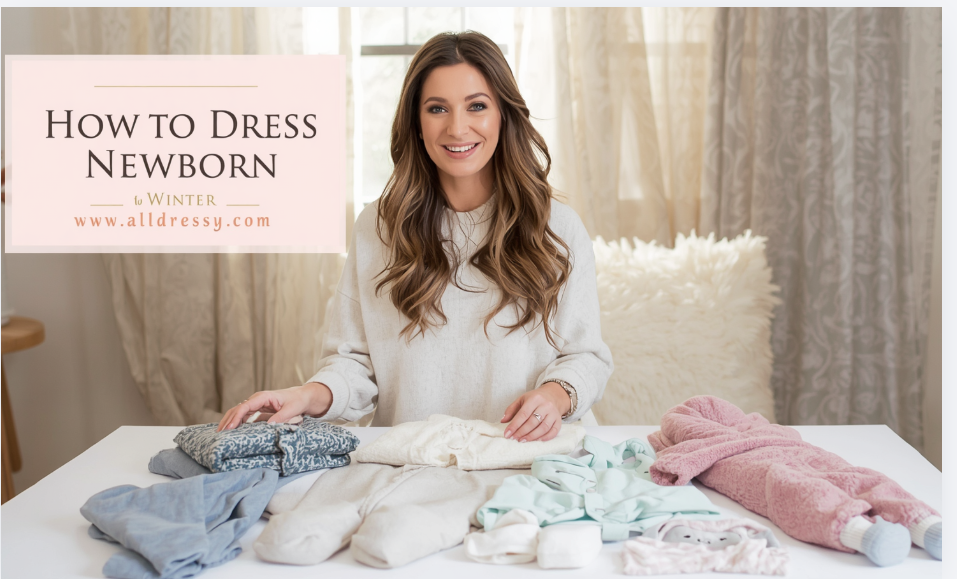
Newborns are more sensitive to cold weather because:
- Their bodies are very small
- They lose heat quickly
- Their temperature regulation is immature
- They have less body fat
Keeping a newborn properly dressed helps maintain a safe body temperature.
Understanding Newborn Temperature Regulation
Babies cannot adapt to temperature changes as quickly as adults.
Why Newborns Get Cold Easily
Newborns lose body heat through:
- Their head
- Hands and feet
- Thin skin
- Cold air exposure
This is why proper layering is important during winter.
Signs Your Newborn Is Too Cold
A baby who is too cold may have:
- Cool chest or neck
- Pale skin
- Fussiness
- Shivering
- Cold hands and feet
Checking the chest or back is more accurate than checking hands alone.
Signs Your Newborn Is Too Hot
Overheating can also be dangerous.
Common Signs of Overheating
Watch for:
- Sweating
- Damp hair
- Flushed skin
- Rapid breathing
- Restlessness
Remove layers if the baby feels excessively warm.
The Basic Rule for Dressing Newborns in Winter

One common recommendation is:
- Dress your newborn in one more layer than an adult would wear comfortably.
This helps maintain warmth without overheating.
Layering Is the Key to Dressing Newborns in Winter
Layering allows easy temperature adjustment.
Why Layering Works Best
Layering helps:
- Trap body heat
- Prevent overheating
- Adjust for indoor and outdoor temperatures
Thin layers are usually safer than one bulky layer.
The Three Main Winter Clothing Layers
Newborn winter outfits often include:
- Base layer
- Middle insulating layer
- Outer protective layer
Each layer serves a specific purpose.
Base Layers for Newborns in Winter
The base layer sits directly against the baby’s skin.
Best Base Layer Clothing
Popular choices include:
- Cotton onesies
- Long-sleeve bodysuits
- Soft thermal pajamas
Soft breathable fabrics are best.
Why Breathable Fabrics Matter
Breathable fabrics help:
- Prevent sweating
- Regulate temperature
- Reduce skin irritation
Cotton is one of the safest newborn materials.
Middle Layers for Winter Warmth
The middle layer provides insulation.
Best Middle Layer Clothing
Common options include:
- Fleece sleepers
- Knit sweaters
- Footed pajamas
- Soft pullovers
This layer traps body heat effectively.
Outer Layers for Outdoor Winter Protection
Outdoor layers protect against:
- Wind
- Snow
- Cold air
Best Outdoor Winter Clothing
Popular choices include:
- Snowsuits
- Bunting bags
- Winter jackets
- Fleece suits
Outerwear should remain lightweight but warm.
How to Dress Newborn in Winter Indoors
Indoor winter temperatures vary greatly.
Ideal Indoor Clothing for Newborns
Most indoor outfits include:
- Long-sleeve onesies
- Footed sleepers
- Cotton pajamas
- Lightweight swaddles
Avoid overdressing indoors.
Best Indoor Room Temperature for Newborns
Most experts recommend:
- 68°F to 72°F (20°C to 22°C)
This helps babies sleep safely and comfortably.
How to Dress Newborn for Winter Sleep
Sleep safety is extremely important.
Safe Winter Sleepwear for Newborns
Good sleep clothing includes:
- Footed pajamas
- Wearable blankets
- Sleep sacks
- Cotton sleepers
Avoid loose blankets in cribs.
Why Sleep Sacks Are Popular
Sleep sacks help:
- Keep babies warm safely
- Prevent blanket risks
- Maintain consistent temperature
They are safer than traditional blankets for sleep.
Swaddling Newborns in Winter
Swaddling can help newborns feel secure and warm.
Best Swaddling Tips for Winter
Use:
- Lightweight swaddles indoors
- Breathable fabrics
- Proper layering underneath
Avoid thick swaddles that may overheat the baby.
How to Dress Newborn in Winter Outside
Outdoor winter clothing needs extra attention.
Best Outdoor Winter Outfit for Newborns
A typical outfit may include:
- Cotton onesie
- Footed sleeper
- Warm sweater
- Hat
- Mittens
- Snowsuit
Layers should be removable if temperatures change.
Winter Hats for Newborns
Babies lose significant heat through their heads.
Why Winter Hats Matter
Warm hats help:
- Retain body heat
- Protect ears
- Reduce heat loss outdoors
Soft knit hats are especially popular.
Mittens and Socks for Newborns
Hands and feet become cold quickly.
Best Winter Accessories for Babies
Important accessories include:
- Soft mittens
- Warm socks
- Booties
Choose breathable materials for comfort.
How to Dress Newborn in Winter Car Seat
Car seat safety is extremely important during winter.
Why Puffy Coats Are Unsafe in Car Seats
Bulky coats can:
- Compress during crashes
- Create loose harness straps
- Reduce car seat effectiveness
Safety experts recommend avoiding thick coats inside car seats.
Safe Car Seat Winter Clothing
Safer options include:
- Thin fleece layers
- Warm hats
- Blankets over harness straps
- Layered clothing
Harnesses should fit snugly.
Winter Baby Blankets
Blankets can provide extra warmth outdoors.
Best Blanket Uses for Winter
Blankets work well for:
- Strollers
- Car rides
- Supervised outdoor time
Avoid covering the baby’s face.
Stroller Safety in Winter
Winter stroller walks require careful preparation.
Best Winter Stroller Tips
Helpful ideas include:
- Use weather covers
- Add blankets carefully
- Check baby’s temperature frequently
Protect babies from wind exposure.
Best Fabrics for Newborn Winter Clothing
Fabric selection matters greatly.
Cotton for Newborn Winter Clothing
Cotton remains one of the safest materials.
Why Cotton Is Recommended
Cotton offers:
- Breathability
- Softness
- Comfort
- Low irritation risk
It works well as a base layer.
Fleece in Winter Baby Clothing
Fleece provides excellent warmth.
Why Fleece Is Popular
Fleece helps:
- Trap body heat
- Stay lightweight
- Dry quickly
Use fleece carefully to avoid overheating indoors.
Wool for Winter Newborn Clothing
Some wool clothing can work well.
Benefits of Wool
Wool provides:
- Excellent insulation
- Moisture control
- Natural warmth
Soft merino wool is usually gentler on baby skin.
How to Dress Premature Babies in Winter
Premature babies may need extra warmth.
Why Premature Babies Need More Protection
Premature infants:
- Lose heat faster
- Have lower body fat
- Need closer temperature monitoring
Doctors may recommend additional layers.
Dressing Newborns for Different Winter Temperatures
Weather conditions affect clothing needs.
Mild Winter Weather
For cool but not freezing weather:
- Onesie
- Sleeper
- Light jacket
- Hat
This may be enough.
Freezing Winter Weather
For very cold temperatures:
- Thermal layers
- Insulated outerwear
- Mittens
- Thick socks
- Warm blankets
Outdoor exposure should remain limited.
Snowy Weather Clothing for Newborns
Snow requires extra protection from moisture and wind.
Best Snow Clothing Tips
Use:
- Waterproof stroller covers
- Warm snowsuits
- Insulated blankets
Keep outings short during severe weather.
Common Mistakes When Dressing Newborns in Winter
Many parents accidentally overdress or underdress babies.
Using Too Many Heavy Layers
Too much clothing can cause overheating.
Ignoring Indoor Temperature
Indoor heating may already keep the room warm enough.
Covering the Baby’s Face
Never allow blankets or covers over the baby’s face.
Using Thick Coats in Car Seats
Bulky jackets reduce car seat safety significantly.
Forgetting to Check Baby’s Temperature
Parents should regularly check:
- Chest
- Neck
- Back
These areas provide better temperature clues.
Winter Baby Clothing Essentials Checklist
Every newborn winter wardrobe should include:
- Long-sleeve onesies
- Footed pajamas
- Warm hats
- Socks
- Mittens
- Sleep sacks
- Fleece layers
- Lightweight blankets
- Snowsuits
These essentials help handle changing winter conditions.
How Often to Change Winter Baby Clothes
Winter clothing should remain:
- Clean
- Dry
- Comfortable
Wet clothing should be changed immediately.
Nighttime Winter Clothing Tips
Nighttime temperatures may drop significantly.
Best Nighttime Clothing Ideas
Popular sleep combinations include:
- Cotton pajamas
- Sleep sacks
- Footed sleepers
Avoid overheating during sleep.
How to Know If Your Newborn Is Comfortable
Comfort matters just as much as warmth.
Signs Your Baby Is Comfortable
Comfortable babies usually:
- Sleep peacefully
- Have warm skin
- Breathe normally
- Stay calm
Frequent monitoring helps parents adjust layers properly.
Confidence Matters When Dressing a Newborn in Winter
Understanding how to dress newborn in winter is about balancing warmth, comfort, breathability, and safety. Proper winter dressing protects newborns from cold temperatures while preventing dangerous overheating. Layering, temperature monitoring, safe sleepwear, proper fabrics, and careful outdoor preparation all help keep babies comfortable during winter months.
Whether dressing a newborn indoors, outdoors, during sleep, or for travel, parents should focus on breathable layers, soft fabrics, proper fit, and safe winter accessories. Cotton onesies, fleece sleepers, sleep sacks, hats, mittens, and lightweight outerwear all play important roles in keeping babies warm and protected.
By understanding winter layering techniques, car seat safety, sleep safety, and temperature regulation, parents can confidently dress newborns for cold weather while keeping them safe, healthy, warm, and comfortable throughout the winter season.
FAQs About How to Dress Newborn in Winter
How many layers should a newborn wear in winter?
A common guideline is to dress your newborn in:
- One more layer than an adult would comfortably wear in the same environment.
For example, if you are comfortable in a sweater, your baby may need a onesie plus a sweater or sleeper.
How do I know if my newborn is too cold?
Signs your newborn may be too cold include:
- Cool chest or neck
- Pale skin
- Fussiness
- Shivering
- Cold hands and feet
Checking the baby’s chest or back is more accurate than checking hands alone.
How do I know if my newborn is overheating?
Signs of overheating include:
- Sweating
- Damp hair
- Flushed cheeks
- Fast breathing
- Restlessness
If your baby feels hot or sweaty, remove a layer immediately.
What should a newborn wear indoors during winter?
Most newborns are comfortable indoors wearing:
- A cotton onesie
- Footed pajamas or sleepers
- A lightweight swaddle or sleep sack
Room temperature also affects how many layers are needed.
What is the best room temperature for a newborn in winter?
A safe indoor temperature is usually:
- 68°F to 72°F (20°C to 22°C)
This helps keep babies warm without overheating.
Should newborns wear hats indoors in winter?
Healthy newborns usually do not need hats indoors once they are home and warm. Babies may wear hats outdoors or in colder rooms, but overheating indoors should be avoided.
Can newborns sleep with blankets in winter?
Loose blankets are not recommended for newborn sleep because they can increase suffocation risks. Safer options include:
- Sleep sacks
- Wearable blankets
- Footed pajamas
These provide warmth more safely.
What fabrics are best for newborn winter clothes?
The best fabrics include:
- Cotton
- Soft fleece
- Merino wool
- Breathable thermal fabrics
Soft and breathable materials help regulate temperature comfortably.
How should I dress my newborn outside in winter?
Outdoor winter clothing may include:
- Long-sleeve onesie
- Footed sleeper
- Sweater or fleece layer
- Warm hat
- Mittens
- Snowsuit or bunting
Layers should be removable if the baby becomes warm.
Can a newborn wear a snowsuit in a car seat?
Bulky snowsuits and puffy jackets are not considered safe inside car seats because they can compress during a crash and loosen harness straps.
Instead:
- Use thin warm layers
- Buckle the harness snugly
- Place blankets over the straps after buckling
Are sleep sacks safe for newborns in winter?
Yes, sleep sacks are one of the safest winter sleep options because they:
- Keep babies warm
- Reduce loose blanket risks
- Help maintain consistent body temperature
Choose the appropriate thickness for the room temperature.
Should newborns wear socks in winter?
Yes, newborns often benefit from:
- Warm socks
- Booties
- Footed sleepers
Their feet can become cold quickly during winter.
How often should I check my newborn’s temperature in winter?
Parents should regularly monitor:
- Chest warmth
- Neck temperature
- Overall comfort
Frequent checks help prevent both overheating and excessive cold exposure.
What should a newborn wear to sleep in cold weather?
Safe winter sleepwear often includes:
- Cotton footed pajamas
- Long-sleeve sleepers
- Sleep sacks
- Lightweight thermal layers
Avoid overdressing during sleep.
Can newborns go outside in freezing weather?
Yes, but outdoor exposure should remain short during extremely cold temperatures. Use:
- Proper layering
- Hats and mittens
- Warm blankets
- Weather protection for strollers
Avoid prolonged exposure to freezing wind or snow.
Conclusion
Understanding how to dress newborn in winter is essential for keeping babies warm, comfortable, and safe during cold weather. Because newborns cannot regulate body temperature as effectively as adults, proper layering, breathable fabrics, and regular temperature checks are extremely important throughout the winter season.
Whether dressing a newborn for indoor comfort, outdoor walks, sleep, travel, or freezing temperatures, the goal is always to balance warmth without causing overheating. Cotton onesies, fleece sleepers, sleep sacks, hats, mittens, socks, and lightweight winter layers all help protect newborns from cold weather while maintaining comfort and safety.
Most importantly, winter baby clothing should focus on flexibility, breathability, and safe layering techniques rather than heavy bulky outfits. By understanding how to monitor temperature, dress in layers, use safe sleepwear, and follow winter car seat safety practices, parents can confidently keep their newborn warm, healthy, and protected throughout the colder months.