Understanding how should dress pants fit length is essential when building a polished, professional, and well-balanced outfit. Dress pants that are too long may bunch up around your shoes, while pants that are too short can expose too much of your socks and disrupt the appearance of your outfit. The right length creates a clean line from your waist to your shoes and helps your trousers look appropriate for business meetings, weddings, formal occasions, and everyday office wear.
Dress pants should generally fall neatly over the top of your shoes, with the amount of fabric resting on the shoe depending on the style of the trousers and your personal preference. Traditional dress pants often feature a slight break, while modern slim-fit trousers may have little or no break. Neither style is automatically better; the most suitable choice depends on the cut, fabric, shoes, and formality of your outfit.
Choosing the right dress pants length involves more than checking whether the hems touch the floor. You also need to consider your height, inseam measurement, trouser fit, shoe type, and how the pants behave when you sit, stand, and walk.
This comprehensive guide explains how dress pants should fit in length, how to identify the ideal trouser break, how to measure your inseam, and how to avoid common tailoring mistakes. Whether you are purchasing new trousers or adjusting an existing pair, these practical tips will help you achieve a comfortable and refined fit.
How Should Dress Pants Fit Length?
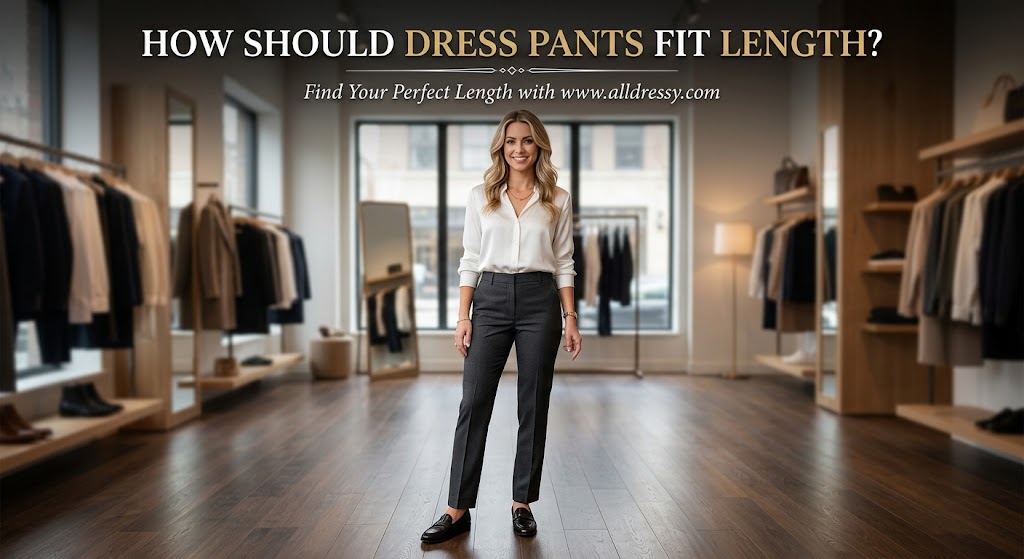
Dress pants should have enough length to create a smooth, intentional line from the leg opening to the shoes without dragging on the ground or producing excessive wrinkles. The ideal length depends on the trouser style and the appearance you want to achieve.
For many traditional dress pants, the hem rests lightly on the front of the shoe, creating a small horizontal fold known as a break. Contemporary styles often use a shorter length, allowing the trousers to fall straight with little or no folding at the ankle.
A properly fitted pair of dress pants should meet several important criteria:
- The hem should not drag on the floor.
- The fabric should not bunch excessively around the ankles.
- The trousers should look balanced when standing.
- The length should remain practical when walking and sitting.
- The hem should complement the shoes you intend to wear.
- Both pant legs should have a consistent, intentional length.
- The trousers should not look accidentally cropped unless that is the intended style.
The correct length also depends on the width of the trouser leg. Wider dress pants can accommodate a slightly different hem position from narrow, slim-fit trousers.
Should Dress Pants Touch the Shoes?
Yes, dress pants commonly touch or rest lightly on the shoes, particularly when styled with a traditional or business-formal fit. However, they should not cover the shoes so extensively that the fabric folds into several layers.
For a classic look, the front hem may rest against the shoe and form a small crease. For a modern, shorter look, the hem may stop just above the shoe with minimal folding.
The main goal is to avoid an awkward gap or excessive fabric. Dress pants should appear intentionally tailored rather than noticeably oversized or undersized.
Should Dress Pants Cover the Entire Shoe?
No. Dress pants do not need to cover the entire shoe. The hem should fall naturally over the upper part of the shoe, while the shoe remains clearly visible.
If the trousers extend too far down, they may hide much of the shoe and create an untidy appearance. If they end too high, they may expose a large area of the sock when standing.
The ideal balance allows the pants and shoes to complement each other without either element overwhelming the outfit.
What Is a Pant Break, and Why Does It Matter?
A pant break is the fold or crease that forms when the bottom of the trouser leg meets the shoe. It is one of the most useful concepts to understand when deciding how dress pants should fit in length.
The amount of break affects the overall appearance of your trousers. A larger break creates a more traditional look, while a smaller break often looks cleaner and more contemporary.
There are four common approaches to trouser length: full break, half break, slight break, and no break.
Full Break Dress Pants
A full break creates a noticeable fold in the fabric at the front of the shoe. The trousers have enough length to rest more heavily against the shoe, producing a traditional silhouette.
This style may work well with classic business suits, traditional tailoring, and wider trouser cuts. It can also suit people who prefer additional coverage around the ankles.
However, too much fabric can create several folds rather than one intentional crease. A full break should not be confused with trousers that are simply too long.
Best for: Traditional business clothing, classic suit styles, and people who prefer longer trouser hems.
Half Break Dress Pants
A half break creates a moderate fold where the front of the trousers meets the shoe. It offers a balance between a traditional appearance and a cleaner, more contemporary finish.
This length is versatile because it works with many business outfits and different trouser cuts.
For people who want dress pants that look polished without appearing overly formal or excessively short, a half break can be a practical starting point.
Best for: Office wear, business meetings, formal trousers, and versatile everyday professional outfits.
Slight Break Dress Pants
A slight break creates a small fold at the front of the shoe. The trousers have enough length to make light contact with the shoe without producing much extra fabric.
This approach often works well with tailored trousers, slim-fit pants, and modern suit styles.
The hem should still be long enough to look intentional when standing and moving. A slight break should not result in a large gap between the trouser hem and the shoe.
Best for: Modern business clothing, tailored trousers, and people who prefer a neat silhouette.
No-Break Dress Pants
No-break dress pants end at the shoe with little or no folding at the front. They create a clean, straight appearance and are common in contemporary tailoring.
This style can work particularly well with slim or tapered trousers. However, the leg opening, shoe shape, and overall trouser cut influence how the length looks.
If the pants are too short, they may resemble cropped trousers rather than properly tailored dress pants. Check the fit while standing and sitting before deciding that the length is correct.
Best for: Contemporary suits, slim-fit trousers, and minimalist formal outfits.
How Long Should Dress Pants Be for Different Styles?
The ideal dress pants length depends on the style of trousers you wear. A traditional suit trouser may look best with a slight or half break, while a slim, tapered design can look cleaner with minimal break.
Classic Dress Pants Length
Classic dress pants often have a straight or moderately relaxed leg. A slight or half break creates a balanced appearance without making the trousers look too short.
If you prefer traditional business clothing, focus on a hem that rests naturally on the shoe and produces a controlled fold.
Slim-Fit Dress Pants Length
Slim-fit dress pants have a narrower leg, so excess fabric can be particularly noticeable around the ankles.
A slight break or no break often complements this silhouette. The hem should fall cleanly without bunching around the shoe.
Avoid shortening slim-fit trousers so much that they become uncomfortable when sitting or expose an unintended amount of sock.
Wide-Leg Dress Pants Length
Wide-leg trousers have more fabric around the lower leg, which affects how the hem falls over the shoes.
Depending on the design, they may look best with a longer hem that creates a continuous line toward the shoe. However, the trousers should not drag on the ground.
The fabric weight is important, too. Heavier material may fall differently from lightweight fabric.
Cropped Dress Pants Length
Cropped dress pants are intentionally shorter than conventional dress trousers. Their hems typically sit above the shoe rather than resting on it.
This is a style choice rather than a standard dress pants length. The visible space between the hem and the shoe should look deliberate and suit the overall outfit.
Cropped trousers may work for smart-casual occasions, modern office outfits, and certain fashion-forward looks. For conservative business environments, a more traditional length may be appropriate.
How to Measure Dress Pants Length Correctly
Knowing your inseam measurement makes it easier to find dress pants that fit properly. The inseam is the length measured along the inside of the leg, from the crotch seam to the bottom hem.
Although inseam measurements are useful, they do not determine the final appearance on their own. Rise, shoe height, leg shape, and the intended pant break can all affect the finished length.
Step 1: Choose a Pair of Well-Fitting Pants
If you already own dress pants with a suitable length, use them as a reference.
Lay the trousers flat on a clean surface and smooth out wrinkles without stretching the fabric. Make sure the legs are aligned naturally.
Step 2: Measure the Inseam
Place a flexible measuring tape at the crotch seam and measure down the inside seam to the bottom of the hem.
Keep the tape aligned with the seam. Do not measure along the outside of the leg, because that gives you a different measurement.
Step 3: Measure Both Legs
Check both legs, particularly if the trousers have been worn frequently or altered previously.
Small differences may occur because of garment construction or how the pants have been laid flat. If one leg is noticeably longer, inspect the seams before making adjustments.
Step 4: Try the Pants On With Your Shoes
The shoes you wear can change how the trouser hem appears. Put on the shoes you expect to wear with the trousers and stand in a natural position.
Check whether the hem creates your preferred break. A pair that looks correct with flat shoes may appear shorter with shoes that have a taller heel or thicker sole.
Step 5: Check the Length While Sitting
Sit down in a natural position and observe how far the trouser legs rise.
Some upward movement is normal. However, if the trousers expose much more of the ankle than you intended, the inseam or overall cut may need adjustment.
Step 6: Mark the Desired Hem
If the pants require tailoring, have the hem marked while wearing the intended shoes.
A tailor can assess the length, leg opening, and fabric before making permanent changes. This is particularly helpful with expensive suit trousers or garments with special hem finishes.
How Should Dress Pants Fit With Different Shoes?
Shoes play an important role in determining how dress pants should fit in length. The same trousers can look slightly different when paired with different shoe styles.
Dress Pants With Oxford Shoes
Oxford shoes are commonly worn with business suits and formal outfits. A slight or half break often creates a balanced appearance with classic Oxford shoes.
The hem should rest naturally on the upper part of the shoe without covering too much of its design.
Dress Pants With Derby Shoes
Derby shoes are versatile and can be worn with business clothing, suits, and smart-casual outfits.
The appropriate pant length depends on the shoe’s shape and the trouser cut. A half break can work well for traditional styling, while a slight break may suit a contemporary outfit.
Dress Pants With Loafers
Loafers often work well with slightly shorter dress pants, especially in smart-casual outfits.
Slim or tapered trousers with a slight break or no break can complement the shoe’s shape. However, the hem should not look unintentionally short.
Dress Pants With Boots
Dress pants worn with dress boots may need a slightly different hem position because boots often have a taller upper and thicker sole.
Check that the trousers fall smoothly over the boot without catching awkwardly or bunching excessively.
Dress Pants With Sneakers
Some modern outfits combine tailored trousers with clean, minimal sneakers.
A slight break or no break may work well with tapered trousers, depending on the sneaker’s shape and sole height. This combination is generally more casual than traditional suit styling, so consider the dress code before wearing it to a formal event.
Common Signs Your Dress Pants Are Too Long
Dress pants that are too long can make an otherwise polished outfit look untidy. The following signs suggest that the trousers may need shortening.
Excessive Fabric at the Ankles
If the trousers form several folds around the shoe, the hem may be too long. Check whether the folds remain excessive even when you stand straight.
A pant break should look intentional rather than creating a pile of fabric.
The Hem Touches the Floor
The bottom of the trousers should not drag on the floor while you walk.
Floor-length hems can collect dirt, fray more quickly, and become damaged through repeated contact with the ground.
The Shoes Are Almost Completely Hidden
If the trouser hem covers too much of the shoe, the pants may be longer than necessary.
This is especially noticeable with slim-fit trousers, where excess length can create an unbalanced shape.
The Back Hem Sags Excessively
The back of the trousers should fall neatly over the heel area. If the fabric hangs too low or drags against the ground, consider having the hem adjusted.
The Pants Catch Under Your Shoes
If the trousers repeatedly become trapped beneath the heel or sole, the length may be unsafe or impractical. Check the hem and leg opening rather than relying on frequent adjustments throughout the day.
Common Signs Your Dress Pants Are Too Short
Dress pants that are too short may also disrupt the balance of your outfit.
Too Much Sock Is Visible While Standing
If your trousers expose a large area of sock while standing, they may be shorter than intended for a traditional or business-formal look.
However, this is not always a problem with deliberately cropped trousers or modern no-break styles. Consider the intended design.
The Hem Sits Far Above the Shoe
For conventional dress pants, a large gap between the hem and the shoe may make the trousers appear accidentally shortened.
The appropriate gap depends on the style, but the length should look intentional.
The Trousers Rise Too High When Sitting
All trousers rise to some extent when you sit. If the hem moves much higher than expected, the pants may be too short or may have a cut that does not suit your preferences.
Check the inseam and rise together because both can influence how the pants behave.
The Overall Silhouette Looks Unbalanced
A hem that is too short can make the lower leg appear disconnected from the shoe, particularly when paired with wider trousers.
Consider the leg opening, fabric drape, and shoe style before deciding on the final length.
How Should Dress Pants Fit Length for Different Occasions?
Different settings may call for different trouser lengths and styling choices.
Business and Office Wear
For most traditional office outfits, a slight or half break is a versatile option. It provides enough coverage for a professional appearance without creating excessive folds.
If your workplace follows a conservative dress code, prioritize neat tailoring and compatibility with your suit jacket and shoes.
Weddings and Formal Events
For weddings and formal occasions, the appropriate length depends on the dress code and suit style.
Classic formal trousers often work well with a slight or half break. Contemporary suits may feature a shorter hem with little or no break.
Make sure the trousers are comfortable for standing, walking, and sitting throughout the event.
Interviews and Professional Meetings
A balanced trouser length helps create a tidy and well-prepared appearance.
For many interview outfits, a classic or slight break is a practical choice. Avoid hems that drag on the ground or look accidentally cropped.
The goal is to wear trousers that complement the jacket and shoes without distracting from the overall outfit.
Smart-Casual Outfits
Smart-casual dress pants allow more flexibility. Slim trousers with little break may work well with loafers or minimal sneakers, while relaxed trousers can support a slightly longer hem.
Consider the setting and the rest of the outfit when choosing the length.
Does Your Height Affect the Ideal Dress Pants Length?
Your height can influence the proportions of an outfit, but there is no single inseam measurement that works for everyone of a particular height.
Two people of the same height can have different leg lengths, rises, and body proportions. That is why measuring the inseam is more reliable than selecting a length based only on height.
Dress Pants Length for Shorter Legs
If you have shorter legs relative to your torso, a clean hem and well-proportioned trouser cut may help create a balanced appearance.
Avoid excessive fabric around the ankles, because bunching can interrupt the line of the trousers. A slight break or no break may work well, depending on your preferred style.
Dress Pants Length for Longer Legs
People with longer legs may need a longer inseam, but the same fitting principles apply.
Choose a length that works with your shoes and the trousers’ intended break. Do not add unnecessary length simply because the trousers appear short when compared with a different brand.
Why Proportion Matters More Than Height Alone
Trouser rise, waist position, leg width, and shoe shape all influence how long the pants appear.
A well-fitted pair should look balanced from the waist to the hem. Instead of following a height-based rule, evaluate the complete silhouette.
How to Choose the Right Dress Pants Length When Shopping Online
Buying dress pants online can be convenient, but selecting the correct length requires careful attention to product measurements and sizing information.
Check the Inseam Measurement
Look for the inseam measurement in the product description or size chart. If it is unavailable, check whether the seller offers multiple inseam options.
Do not assume that two trousers with the same waist size will have the same length.
Understand the Fit Description
Terms such as slim fit, regular fit, straight fit, and relaxed fit describe the overall shape of the trousers.
They can influence how the hem falls, but they do not always specify the finished length. Review the measurements separately.
Read Reviews for Sizing Information
Customer feedback may help identify whether a product tends to run long or short.
Look for repeated comments about length and compare them with the listed measurements. Individual experiences may differ, so use reviews alongside the size chart.
Consider Alteration Options
If the waist and legs fit well but the hem is slightly long, shortening the trousers may be straightforward.
Before purchasing, check whether the fabric and construction are suitable for alterations. Some hems contain special finishes or details that require more careful work.
Account for Fabric Care
Some fabrics may shrink or change shape during washing or drying. Read the care label before purchasing, especially if the trousers contain cotton or other materials that may respond to heat.
Do not assume that an overly long pair will shrink to the correct length. Choose a suitable size and follow the manufacturer’s care instructions.
Can a Tailor Adjust Dress Pants Length?
Yes. Hemming is one of the most common alterations for dress pants. A tailor can shorten trousers to create the desired break and help the hem fall correctly over your shoes.
However, the best approach depends on the garment’s construction and the amount of adjustment needed.
Shortening Dress Pants
If the trousers are too long, a tailor can usually shorten the hem. The pants should be tried on with the shoes you plan to wear so the correct length can be marked.
The tailor should also consider the leg opening and the original hem finish.
Lengthening Dress Pants
Some dress pants have extra fabric inside the hem that may allow a small length adjustment.
However, not all trousers contain sufficient material. Even when lengthening is possible, the original crease or hem line may remain visible depending on the fabric.
Ask a tailor to inspect the garment before assuming it can be lengthened.
Preserving the Original Hem
Certain trousers have distinctive stitching, cuffs, or finishes. If you want to preserve the original appearance, discuss the available alteration methods with your tailor.
The correct method depends on the fabric, construction, and desired result.
When Should You Get Dress Pants Tailored?
Consider tailoring when the trousers fit well at the waist, hips, and thighs but the hem is too long or short.
For a special occasion, arrange alterations early enough to allow time for a fitting and any necessary corrections.
How to Maintain the Correct Dress Pants Length
Once you have the right fit, proper care can help preserve the appearance and condition of your trousers.
Follow the Care Label
Different fabrics require different cleaning methods. Check whether the trousers should be dry-cleaned, machine-washed, or hand-washed.
Incorrect washing can affect the fabric, seams, and overall shape.
Avoid Excessive Heat
High heat can cause shrinkage in some materials and may affect the finish of tailored trousers. Follow the recommended drying instructions and avoid unnecessary heat exposure.
Hang Trousers Properly
Use a suitable trouser hanger to reduce unwanted creasing and help maintain the shape of the legs.
Avoid leaving the hems trapped under heavy objects, which may create unwanted creases.
Check the Hem Periodically
Repeated wear can cause the hem to loosen or fray, particularly if the trousers frequently touch the ground.
Repair loose stitching promptly to help prevent further damage.
Rotate Your Dress Pants
If you wear dress pants frequently, rotating between pairs can reduce repeated wear on the same garment.
This helps preserve the fabric and gives the trousers time to air between uses.
Dress Pants Length Checklist Before You Buy or Tailor
Use this practical checklist to determine whether your dress pants have the correct length.
- The hem does not drag on the floor.
- The trousers do not bunch excessively around the ankles.
- The front hem creates your preferred break.
- The back hem rests neatly over the heel area.
- The trousers work with the shoes you intend to wear.
- The length looks balanced when you stand naturally.
- The pants remain comfortable when sitting and walking.
- The leg opening complements the trouser cut.
- Both legs have a consistent, intentional finish.
- The length suits the occasion and dress code.
- The fabric care instructions are compatible with your routine.
- Any necessary alterations preserve the intended design.
The best dress pants length is the one that combines comfort, proportion, and the intended style. A traditional pair of business trousers may benefit from a half break, while slim, contemporary trousers may look cleaner with little or no break. Wider trousers and cropped designs require their own approach.
By measuring the inseam accurately, trying trousers on with the correct shoes, and understanding how the pant break affects the overall appearance, you can choose a length that looks intentional and feels comfortable. These principles make it easier to select dress pants for professional settings, formal events, and smart-casual outfits while avoiding common problems such as excessive bunching, dragging hems, and unintended ankle exposure.
10 Frequently Asked Questions About How Dress Pants Should Fit Length
1. How should dress pants fit length?
Dress pants should fall neatly over the top of your shoes without dragging on the ground or creating excessive wrinkles. The ideal length depends on the trouser style and your preferred pant break. Traditional dress pants often have a slight or half break, while modern slim-fit trousers may have little or no break.
2. Should dress pants touch the floor?
No. Dress pants should not drag on the floor when you stand or walk. The hem should rest naturally on your shoes or fall just above them, depending on the style. Pants that touch the ground excessively can become dirty, frayed, or damaged over time.
3. What is the best pant break for dress pants?
A slight or half break is a versatile choice for many dress pants. A half break creates a small fold at the front of the shoe, while a slight break produces a cleaner appearance with less fabric. No break can also work well with modern, slim-fit trousers. The best option depends on your outfit and personal preference.
4. Should dress pants cover the ankles?
Traditional dress pants generally provide enough length to cover the ankles while standing. However, the amount of ankle coverage depends on the trouser style. Classic business trousers usually have a longer hem, while intentionally cropped trousers are designed to end above the shoe.
5. How do I measure the correct length for dress pants?
Measure the inseam from the crotch seam down the inside of the leg to the bottom hem. You can also measure a pair of trousers that already fits well. For the most accurate result, try the pants on with the shoes you intend to wear and check the hem while standing and sitting.
6. Should dress pants be longer in the back than the front?
The hem should fall naturally around the shoe, with the back covering the heel area without dragging on the ground. Depending on the trouser cut and tailoring style, the hem may sit slightly differently at the front and back. The overall result should look balanced rather than uneven or excessively long.
7. Are dress pants supposed to have a break?
Dress pants do not have to have a break. A break is the fold created when the trousers meet the shoes. Traditional trousers often have a slight or half break, while contemporary styles may have no break. Both options can look polished when the length suits the trouser cut and shoes.
8. Can a tailor fix dress pants that are too long?
Yes. Shortening dress pants is a common tailoring alteration. A tailor can adjust the hem to create your preferred length and pant break. Try the trousers on with your intended shoes before the alteration so the correct hem position can be marked.
9. How should slim-fit dress pants fit in length?
Slim-fit dress pants often look best with a slight break or no break because their narrower legs make excess fabric around the ankles more noticeable. The hem should fall cleanly over the shoes without bunching. However, the trousers should not be so short that they expose more ankle than intended.
10. Does shoe choice affect dress pants length?
Yes. Different shoes have different sole thicknesses, heel heights, and shapes, which can change how trousers fall. Dress pants worn with Oxford shoes, loafers, boots, or sneakers may require slightly different styling. When choosing a hem length, always consider the shoes you plan to wear most often with the trousers.
Conclusion
Understanding how dress pants should fit in length helps you create a polished appearance for business meetings, office wear, weddings, and formal occasions. The ideal trouser length should complement your shoes, follow the shape of your legs, and provide enough coverage without dragging on the ground or bunching excessively around the ankles.
For a classic look, a slight or half break is a practical choice. If you prefer a modern style, slim-fit trousers with little or no break may be more suitable. The right option depends on the cut of the pants, the shoes you wear, and the formality of your outfit.
To find the perfect fit, measure your inseam carefully, try on your trousers with the appropriate shoes, and check how the hem looks when standing, walking, and sitting. If the pants fit well everywhere except the length, a professional tailor can often make the necessary adjustments.
Ultimately, the best dress pants length is one that combines comfort, proportion, and personal style. By understanding pant breaks, choosing the correct inseam, and avoiding common fitting mistakes, you can select dress pants that look neat, feel comfortable, and suit a wide range of occasions.