
Choosing the right dress shirt is about more than finding the correct sleeve length or chest measurement. One of the most important details is the collar. If you have ever wondered how should a dress shirt collar fit, the answer is simple: it should sit comfortably around your neck without feeling tight, looking loose, or creating excessive gaps. A properly fitted collar helps your shirt look polished, keeps your tie in place, and makes formal outfits more comfortable throughout the day.
Whether you wear dress shirts to work, school events, weddings, business meetings, or other special occasions, understanding dress shirt collar fit can improve your overall appearance. A collar that is too tight may cause discomfort when you button the top button, while a collar that is too loose can look untidy beneath a suit jacket or tie.
The ideal dress shirt collar should allow a small amount of room between your neck and the fabric. However, the exact fit can depend on your neck measurement, collar style, shirt brand, and whether you plan to wear a tie.
In this detailed guide, you will learn how a dress shirt collar should fit, how to measure your neck correctly, how to identify common collar-fitting problems, and how to choose a collar that suits your needs.
How Should a Dress Shirt Collar Fit Around Your Neck?
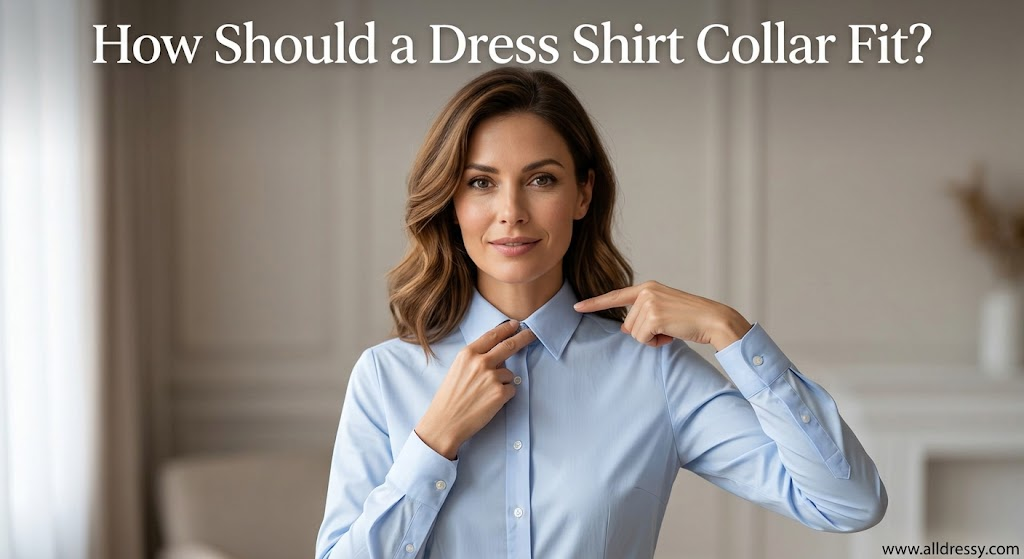
A dress shirt collar should fit comfortably around the base of your neck without squeezing your skin or leaving too much extra space. When the top button is fastened, you should generally be able to slide one or two fingers between your neck and the collar.
This finger test is a useful starting point, although the best fit also depends on your comfort and the shirt’s construction.
A properly fitted dress shirt collar has several characteristics:
- It closes comfortably without excessive pressure.
- It does not leave deep marks on your neck.
- It allows you to turn your head naturally.
- It does not gape widely when the top button is fastened.
- It sits evenly around your neck.
- It works with or without a tie, depending on the shirt’s intended use.
The collar should follow the natural shape of your neck rather than standing away from it or digging into your skin.
The One-Finger or Two-Finger Rule for Dress Shirt Collars
The one-finger or two-finger rule is a common way to evaluate collar comfort. After fastening the top button, try sliding a finger between the collar and your neck.
If you can barely fit a finger into the space, the collar may be too tight. If you can easily fit several fingers without moving the collar, it may be too loose.
For many people, enough space for one or two fingers provides a useful balance between comfort and a neat appearance.
However, this is not a strict measurement for every person. Finger sizes vary, and different shirt manufacturers use different collar shapes. Always consider how the collar feels when you sit, stand, and move your head.
Should a Dress Shirt Collar Touch Your Neck?
Yes. A dress shirt collar is designed to sit around the base of your neck. It should make light contact with your neck without pressing uncomfortably against it.
A collar that stands too far away from your neck may look oversized, especially when worn with a tie. On the other hand, a collar that presses firmly against your throat can feel restrictive.
The goal is a balanced fit that looks clean while allowing natural movement.
How to Measure Your Neck for a Dress Shirt Collar
Knowing your neck measurement is one of the easiest ways to find a dress shirt collar that fits correctly. Although sizing varies by brand, an accurate measurement gives you a reliable starting point when shopping online or in stores.
Step 1: Use a Flexible Measuring Tape
Use a soft measuring tape designed for clothing. Avoid pulling the tape too tightly because this can produce a measurement that is smaller than your actual neck size.
Step 2: Position the Tape Correctly
Wrap the tape around the base of your neck, where the shirt collar normally rests. Keep the tape level and comfortably close to your skin.
Do not measure too high on your neck or around your shoulders. The measurement should reflect the area where the collar will sit.
Step 3: Keep Your Head in a Natural Position
Stand straight and look forward while measuring. Avoid stretching your neck upward or lowering your chin excessively.
Your posture can affect the measurement, so remain relaxed.
Step 4: Allow Room for Comfort
Your measured neck circumference is not always the exact collar size you should purchase. Shirt sizing systems may include some additional room, and the amount varies between manufacturers.
Compare your measurement with the brand’s size chart. If your neck measures close to the boundary between two sizes, check the manufacturer’s guidance and consider your preferred level of comfort.
Step 5: Check the Shirt After Buttoning It
Once you have selected a shirt, button the collar and assess the fit. You should be able to breathe, swallow, and turn your head without noticeable restriction.
If possible, try the shirt on before removing its tags or making alterations.
What Is the Ideal Dress Shirt Collar Fit With a Tie?
A dress shirt collar worn with a tie should provide enough room for the top button to close comfortably while keeping the collar points in their intended position.
When wearing a tie, the collar becomes more noticeable because the knot sits directly beneath it. A collar that is too tight can compress the neck area, while a loose collar can allow the tie knot and collar to shift throughout the day.
For a polished appearance, consider these factors:
- Top button: It should fasten without strain.
- Tie knot: It should sit neatly beneath the collar without forcing the collar outward.
- Collar points: They should lie naturally against the shirt and work with the selected tie knot.
- Neck comfort: You should be able to move and breathe comfortably.
- Jacket compatibility: The collar should sit neatly beneath your suit jacket.
How Much Space Should There Be Around the Collar When Wearing a Tie?
The collar should not be so tight that the tie makes it uncomfortable. It should also not be so loose that the shirt collar shifts noticeably when you move.
A small amount of room is generally sufficient. If the collar feels comfortable without a tie but becomes restrictive after you fasten the top button and tie the knot, consider trying a different collar size or shirt cut.
Remember that a tie should not be used to disguise a poorly fitted collar. The shirt should fit correctly before the tie is added.
Should the Tie Knot Fill the Collar Gap?
The answer depends on the collar design and tie knot.
Some collars have a narrower opening and work well with smaller knots. Others have wider points and are designed to accommodate larger knots.
The tie knot should look proportionate to the collar opening. It should not force the collar points outward or leave a large, distracting gap beneath the collar.
For business and formal occasions, a balanced relationship between the collar and tie creates a cleaner appearance.
How Should a Dress Shirt Collar Fit Without a Tie?
A dress shirt worn without a tie can have a slightly more relaxed appearance, but the collar should still fit properly around the neck.
If you plan to wear the shirt with the top button open, choose a collar that remains neat when unbuttoned. The collar points should sit naturally rather than spreading awkwardly or curling excessively.
For casual business outfits, dinners, and smart-casual occasions, a button-down collar or a moderate spread collar may work well, depending on the rest of your clothing.
Should the Collar Stand Up When the Top Button Is Open?
A dress shirt collar is not generally required to stand upright when the top button is undone. Its behavior depends on the collar construction, stiffness, fabric, and design.
A structured collar may hold its shape, while a softer collar may fall naturally against the shirt.
Avoid forcing a collar into an unnatural position just to make it look more structured. Choose a style that looks good when worn the way you intend.
How Much Should an Open Collar Spread?
There is no single correct width for an open collar. Some styles have narrow points, while others feature a wider spread.
The most important consideration is whether the collar complements your face, shirt, and outfit. It should also remain reasonably balanced when you move.
If the collar repeatedly falls beneath your jacket or curls outward, the issue may involve the collar construction or fabric rather than the neck size alone.
Signs Your Dress Shirt Collar Is Too Tight
A collar that is too tight can make an otherwise well-fitted shirt uncomfortable. It may also affect how the shirt sits beneath a tie or jacket.
Look for these common signs.
1. The Top Button Is Difficult to Fasten
If you need to pull the collar edges together forcefully to fasten the top button, the collar may be too small.
A properly sized collar should close without excessive tension.
2. The Collar Presses Against Your Throat
The collar should not make you feel as though something is squeezing your neck. If swallowing or turning your head becomes uncomfortable, try a different size or cut.
3. The Fabric Pulls or Wrinkles Around the Neck
Excessive tension may cause the collar band to pull against the shirt fabric. Wrinkles around the neckline can also result from the wrong collar shape or a poorly constructed shirt, so check the overall fit.
4. The Tie Feels Uncomfortably Tight
A tie can make a small collar feel even more restrictive. If you experience discomfort after tying it, reassess the collar size before adjusting the tie repeatedly.
5. The Collar Leaves Noticeable Pressure Marks
Temporary marks may occur after wearing clothing, but a collar that consistently presses deeply against your neck is worth replacing with a more comfortable size.
Do not assume that a tight collar will loosen enough with wear. Cotton may soften, but you should not rely on that to correct an unsuitable size.
Signs Your Dress Shirt Collar Is Too Loose
A collar that is too loose can make a dress shirt look less structured, particularly when worn with formal clothing.
Common signs include the following.
1. There Is Too Much Space Around Your Neck
If you can fit several fingers comfortably between your neck and the fastened collar, the collar may be oversized.
However, check the fit while standing naturally. Pulling the collar away from your neck can make a correctly fitted collar appear looser than it really is.
2. The Collar Shifts When You Move
A collar should remain reasonably stable when you turn your head or walk. If it slides around your neck, the shirt may be too large or its collar shape may not suit you.
3. The Tie Knot Looks Detached From the Collar
If a large gap appears between the tie knot and the collar, the collar may be too loose, or the knot may not match the collar style.
Check both factors before choosing a smaller shirt.
4. The Collar Sits Away From Your Neck
A collar that stands away from the neck can create a bulky appearance beneath a jacket. This can result from excess collar room, but it may also be caused by the collar’s shape or stiffness.
5. The Shirt Looks Oversized Around the Upper Chest
A loose collar can sometimes occur alongside a shirt that is too large through the shoulders or chest. However, collar size and body fit are separate measurements.
You may need a different combination of neck size and shirt cut rather than simply buying a smaller shirt overall.
Understanding Different Dress Shirt Collar Styles
Different collar styles are designed for different outfits and preferences. Knowing the differences helps you select a shirt that fits your neck and works with the clothing you plan to wear.
Point Collar
A point collar has relatively narrow collar points. It is a traditional option for office wear, business outfits, and many formal occasions.
Its narrower opening often works well with smaller or moderate tie knots. The exact appearance depends on the length of the collar points and the shirt’s construction.
A point collar should still sit comfortably around your neck. A narrow design does not mean the collar itself should be tight.
Spread Collar
A spread collar has collar points that angle farther apart. It is a versatile option for business and formal clothing.
The wider opening can accommodate different tie knot sizes, depending on the collar’s spread and construction.
When selecting a spread collar, check that the collar points lie neatly and that the shirt closes comfortably at the neck.
Cutaway Collar
A cutaway collar has a particularly wide opening between its collar points. It creates a distinctive appearance and can work with larger tie knots or modern formal outfits.
Because the design is wide, it is especially important to consider the proportion between the collar, tie, and jacket lapels.
The neck circumference should still be comfortable, regardless of the collar’s width.
Button-Down Collar
A button-down collar has small buttons that secure the collar points to the shirt.
It is often associated with business-casual and smart-casual outfits. Some versions are soft and relaxed, while others have more structure.
The buttons help keep the collar points in place, but they do not correct a collar band that is too tight or too loose.
Club Collar
A club collar features rounded collar points. It offers a distinctive, sometimes vintage-inspired look.
This style can be worn with tailored clothing or selected smart-casual outfits. Its rounded shape does not change the basic principles of proper collar sizing.
Tab Collar
A tab collar uses a small fastening beneath the tie knot to bring the collar points closer together.
It is commonly intended for use with a tie. The fastening can help maintain a neat appearance, but the collar band must still fit comfortably around the neck.
How Should a Dress Shirt Collar Fit With a Suit Jacket?
When wearing a suit, the dress shirt collar should sit neatly around the neck and remain balanced beneath the jacket.
A properly fitted collar should not bunch up excessively, collapse awkwardly, or create visible gaps that distract from the outfit.
The jacket collar and shirt collar should work together. The shirt collar should sit naturally beneath the jacket without being pushed out of position.
Check the Back of the Collar
Look at the back of the neck in a mirror or ask someone to check it for you. The shirt collar should sit smoothly without excessive bunching.
If the collar is being pushed upward by the jacket, the problem may involve the jacket’s fit, the shirt’s collar height, or your posture.
Check the Collar Points
The collar points should sit as intended by the collar design. They should not twist, curl excessively, or bunch beneath the lapels.
Some movement is normal, especially with soft collars. The aim is a neat appearance rather than perfect rigidity.
Match the Collar to the Jacket
A narrow collar may work well with a more traditional suit, while a spread collar can complement a range of contemporary jacket styles.
There is no universal rule requiring one collar style for every jacket. Focus on balanced proportions and comfortable fit.
Does Dress Shirt Fabric Affect Collar Fit?
Yes. Fabric affects how a collar feels, how it holds its shape, and how it behaves throughout the day.
Two shirts with the same labeled collar size can feel different because of differences in fabric, construction, finishing, and manufacturing.
Cotton Dress Shirts
Cotton is a common choice for dress shirts. Depending on the weave and finishing, cotton collars can feel crisp, soft, or somewhere in between.
A new cotton shirt may soften after washing, but the collar should fit comfortably from the beginning.
Cotton Blends
Cotton blends may include synthetic fibers that affect wrinkle resistance, stretch, or overall texture.
Some fabrics offer a little flexibility, but you should not depend on stretch to compensate for an undersized collar.
Linen Shirts
Linen shirts are often chosen for warm weather because of their lightweight feel and relaxed appearance.
A linen collar may look less rigid than a heavily structured formal collar. This is a feature of the fabric and design, not necessarily a sign that the collar size is wrong.
Stretch Fabrics
Some dress shirts contain elastane or other stretch fibers. These may allow additional movement, depending on the construction.
Even with stretch fabric, the collar should not feel restrictive when fastened. Comfort and correct sizing remain important.
How to Choose the Right Dress Shirt Collar Size Online
Shopping online can make collar sizing more challenging because you cannot try the shirt on before purchasing it.
However, a few practical steps can help reduce the likelihood of choosing the wrong size.
Review the Brand’s Size Chart
Do not assume every brand uses the same sizing system. One manufacturer’s collar measurement may fit differently from another’s.
Look for a size chart that lists neck or collar measurements. If the brand provides fit guidance, follow that information rather than relying exclusively on the size label.
Check the Shirt’s Fit Category
Dress shirts may be described as slim fit, regular fit, tailored fit, or relaxed fit.
These labels usually refer primarily to the shirt’s body shape, but collar proportions and overall construction can also vary.
A slim-fit shirt is not automatically the best choice for a smaller collar, and a regular-fit shirt is not automatically more comfortable around the neck.
Read Customer Feedback Carefully
Customer reviews may mention whether a shirt runs small or large. Look for repeated comments about collar sizing rather than relying on one review.
Remember that people have different neck shapes, body proportions, and fit preferences, so reviews should be treated as guidance rather than a guarantee.
Check the Return Policy
If you are buying a dress shirt for a special event, check the seller’s return or exchange conditions before ordering.
Trying two adjacent sizes may be useful when the brand’s sizing is unfamiliar, provided the seller allows it and the cost is reasonable.
Common Dress Shirt Collar Fit Mistakes to Avoid
Even when you know your neck measurement, certain mistakes can lead to an uncomfortable or untidy fit.
Choosing a Shirt Based Only on the Label
A medium or large label does not guarantee a specific collar measurement. Compare the actual sizing information whenever possible.
Assuming the Collar Will Stretch Significantly
Fabric may soften with wear and washing, but the collar band generally should not be expected to expand enough to correct a substantial sizing problem.
Choose a comfortable size rather than hoping the shirt will become larger.
Confusing Collar Size With Shirt Body Size
The neck, chest, waist, and sleeves are separate areas of fit. A shirt may fit your body well but have the wrong collar size.
Consider brands that offer multiple neck and sleeve combinations, or consult a tailor if adjustments are needed.
Ignoring Shrinkage
Some fabrics, particularly certain untreated cotton garments, may shrink during washing or drying.
Follow the care label and avoid unnecessarily high heat. If you are between sizes, review the manufacturer’s shrinkage guidance before purchasing.
Wearing a Collar That Becomes Uncomfortable During the Day
A shirt may feel acceptable while standing but uncomfortable after sitting for a long period or wearing a tie.
Test the collar in different positions. Sit down, turn your head, and move naturally before deciding that the fit is right.
Can a Tailor Fix a Dress Shirt Collar That Does Not Fit?
A tailor can adjust some aspects of a dress shirt, but collar alterations have limitations.
If the collar is slightly uncomfortable, ask a qualified tailor whether the shirt’s construction allows an adjustment. The available options depend on the collar band, seam allowance, button placement, and fabric.
When the Collar Is Too Tight
Some shirts may allow a small adjustment, but increasing collar circumference can be difficult if there is little extra fabric.
A tailor may be able to discuss possible alterations, but a different shirt size is often the simpler solution when the collar is substantially too small.
When the Collar Is Too Loose
Reducing collar circumference may be possible, depending on the shirt’s design. However, the alteration may affect the collar band, button position, or overall appearance.
Before paying for alterations, compare the cost with buying a better-fitting shirt.
When the Collar Shape Is the Problem
If the collar stands away from your neck despite having the correct circumference, the issue may involve collar shape, stiffness, or construction.
A tailor may offer suggestions, but selecting a different collar design can sometimes produce a better result.
How to Maintain a Dress Shirt Collar’s Shape and Fit
Proper care helps preserve the collar’s appearance and the shirt’s overall condition.
Follow the Care Label
Check the manufacturer’s washing and drying instructions before cleaning the shirt. Different fabrics and collar constructions require different care methods.
Avoid Excessive Heat
High heat can contribute to shrinkage or damage, depending on the fabric. Use the temperature recommended on the care label.
Treat Collar Stains Carefully
Collars can collect sweat, skin oils, and dirt. Use a suitable laundry treatment and follow the product instructions rather than scrubbing aggressively.
Test any new cleaning product on an inconspicuous area when appropriate.
Store Shirts Properly
Hang dress shirts on suitable hangers or fold them carefully. Avoid crushing the collar under heavy items.
For shirts with structured collars, keep the collar points in their natural position when storing the garment.
Check the Fit After Washing
If a shirt suddenly feels tighter after laundering, check the care instructions and consider whether the fabric may have shrunk.
Do not assume that every change in collar fit is caused by the neck measurement alone. Fabric condition and garment construction can also affect comfort.
Practical Dress Shirt Collar Fit Checklist
Before wearing a dress shirt to work, a formal event, or a special occasion, use this checklist to evaluate the collar.
- The top button closes without excessive force.
- You can comfortably fit approximately one or two fingers between your neck and the collar.
- You can swallow and turn your head without restriction.
- The collar does not press uncomfortably against your throat.
- The collar does not move excessively around your neck.
- The tie knot, if worn, sits neatly beneath the collar.
- The collar points rest naturally in their intended position.
- The shirt collar sits comfortably beneath your jacket.
- The shirt remains comfortable when you sit and move.
- The fabric and care instructions are suitable for your intended use.
Not every shirt needs to satisfy every styling preference in exactly the same way. A casual button-down shirt may look softer than a formal shirt, while a shirt designed for a tie may have a more structured collar. Comfort, correct sizing, and the intended style should guide your final decision.
Final Tips for Finding the Best Dress Shirt Collar Fit
Understanding how should a dress shirt collar fit makes shopping for formal clothing easier and helps you avoid common sizing problems. The most important principle is to choose a collar that sits naturally around your neck without feeling restrictive or leaving excessive space.
Start by measuring your neck accurately, then compare that measurement with the manufacturer’s size chart. When trying on a shirt, fasten the top button and check whether you can move comfortably. The one-finger or two-finger test is a helpful starting point, but it should not replace your own assessment of comfort.
If you plan to wear a tie, check the fit with the tie in place. Make sure the knot sits neatly beneath the collar without forcing the collar points outward. If you prefer an open collar, choose a design that looks balanced when the top button is undone.
Finally, remember that collar size, collar style, fabric, and shirt-body fit are related but separate considerations. The best dress shirt is one that fits your neck comfortably, complements your outfit, and remains comfortable throughout the day.
10 Frequently Asked Questions About How a Dress Shirt Collar Should Fit
1. How should a dress shirt collar fit?
A dress shirt collar should sit comfortably around the base of your neck without feeling tight or leaving excessive space. When the top button is fastened, you should generally be able to slide one or two fingers between your neck and the collar. The collar should also allow you to turn your head and swallow comfortably.
2. How many fingers should fit inside a dress shirt collar?
For most people, one or two fingers should fit comfortably between the neck and the fastened collar. If you cannot fit a finger without discomfort, the collar may be too tight. If several fingers fit easily, it may be too loose. Use this as a general guideline rather than a strict rule.
3. Should a dress shirt collar feel tight when buttoned?
No. A properly fitted dress shirt collar should not squeeze your neck or make swallowing uncomfortable. The top button should close without excessive force, and the collar should allow natural movement. If it feels restrictive, consider trying a larger collar size or a different shirt design.
4. How do I know if my dress shirt collar is too loose?
A dress shirt collar may be too loose if there is excessive space around your neck, the collar shifts noticeably when you move, or the tie knot appears disconnected from the collar. However, collar shape and fabric can also affect how the shirt sits, so evaluate the overall fit before choosing a different size.
5. Should I size up if my dress shirt collar is too tight?
Sizing up may help if the collar is too tight, but check the shirt’s other measurements before making a decision. A larger size might also increase the chest, shoulder, and sleeve dimensions. If the shirt fits your body well but not your neck, consider a brand that offers different neck sizes or consult a tailor.
6. How should a dress shirt collar fit when wearing a tie?
When wearing a tie, the collar should close comfortably around your neck, and the tie knot should sit neatly beneath the collar. The knot should not force the collar points outward or create uncomfortable pressure. Choose a collar style that complements the size of your tie knot and the formality of your outfit.
7. Should a dress shirt collar touch your neck?
Yes. A dress shirt collar is designed to sit around the base of your neck and make light contact with it. However, it should not press tightly against your skin. A small amount of comfortable space helps the collar maintain a neat appearance while allowing normal movement.
8. Can a dress shirt collar shrink after washing?
Yes, some dress shirt fabrics can shrink during washing or drying, depending on their composition and care instructions. Certain cotton shirts may be particularly affected by excessive heat. Follow the garment’s care label and avoid unnecessarily high washing or drying temperatures to help maintain the collar’s original fit.
9. Can a tailor fix a dress shirt collar that is too tight or too loose?
A tailor may be able to adjust a collar, depending on the shirt’s construction and available fabric. Making a collar larger can be difficult when there is insufficient seam allowance, while reducing its size may affect the button placement and collar shape. For substantial sizing problems, purchasing a better-fitting shirt may be more practical.
10. Does the correct dress shirt collar size depend on the brand?
Yes. Dress shirt sizing can vary between brands because manufacturers use different measurements, cuts, and construction methods. Always check the brand’s size chart and compare it with your neck measurement. If possible, try the shirt on and fasten the top button to confirm that the collar feels comfortable.
Conclusion
Finding the right dress shirt collar fit is essential for comfort, confidence, and a polished appearance. A properly fitted collar should sit naturally around the base of your neck, close without excessive force, and provide enough room for comfortable movement. The one-finger or two-finger rule is a useful starting point, but your comfort should always be the priority.
When choosing a dress shirt, measure your neck carefully, review the manufacturer’s size chart, and consider how you intend to wear the shirt. A collar worn with a tie may require a different style from one intended for a relaxed, open-collar outfit. Fabric, collar construction, and washing methods can also influence the way a shirt fits over time.
By understanding how a dress shirt collar should fit, you can avoid common sizing mistakes, choose clothing more confidently, and create outfits that look neat without sacrificing comfort. Whether you are dressing for work, a wedding, a business meeting, or a formal event, the right collar helps your entire outfit look more balanced and well put together.