
If you are wondering how long should a wedding dress be, the answer depends on several factors, including the dress silhouette, type of shoes, wedding venue, desired train length, and how easily you want to move throughout the celebration. A wedding dress should generally be long enough to create the desired bridal look while allowing you to walk comfortably and safely.
There is no single measurement that works for every bride or every style. A traditional floor-length wedding gown may gently touch the floor in front, while a tea-length, midi, or knee-length wedding dress can be intentionally shorter. Likewise, a dramatic cathedral train can extend several feet behind the bride even though the front hem remains close to the floor.
Understanding how long a wedding dress should be before shopping or attending a fitting can help you communicate clearly with a tailor or bridal consultant. It can also help you choose the right shoes, decide whether alterations are necessary, and determine whether a particular dress works for your ceremony and reception.
This guide explains wedding dress lengths in detail, including traditional floor-length gowns, short wedding dresses, train lengths, hem measurements, footwear considerations, venue-specific choices, and practical fitting tips.
How Long Should a Wedding Dress Be?
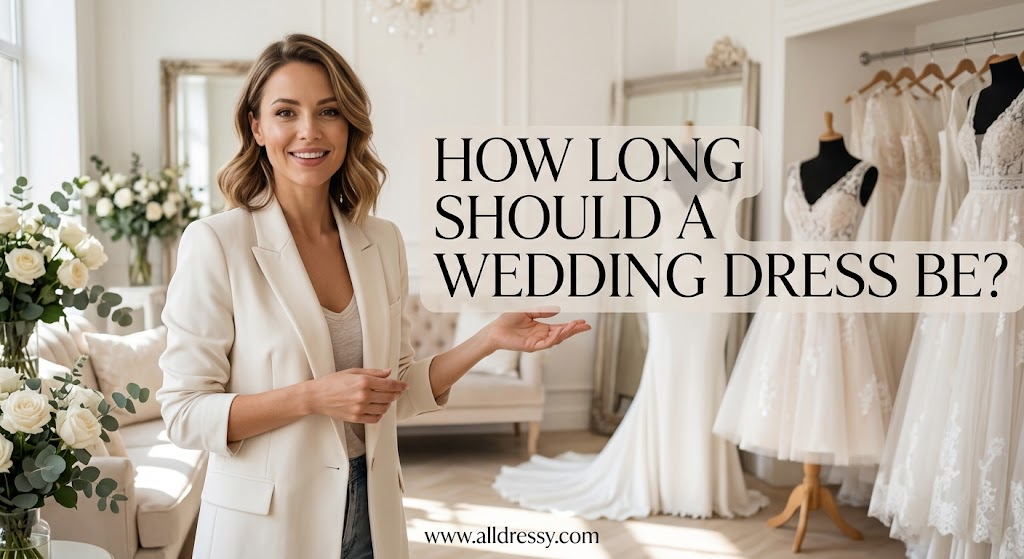
For a traditional floor-length wedding dress, the front hem is usually adjusted so that it falls close to the floor while the bride is wearing her intended wedding shoes. The exact measurement varies because brides have different heights, proportions, dress silhouettes, and heel heights.
The most important goal is not simply reaching a particular number of inches from the ground. Instead, the finished hem should complement the gown’s design and allow comfortable movement.
A wedding dress that is too long can become difficult to walk in and may drag on the floor. A dress that is too short can look noticeably different from the intended silhouette. Professional alterations are therefore important for achieving the correct length.
When determining how long should a wedding dress be, consider these factors:
- Your height and proportions
- The dress silhouette
- Your wedding shoes
- The ceremony and reception venue
- Whether the dress has a train
- How much movement you need
- Whether you want a traditional or contemporary look
- Whether you plan to bustle the train
- Whether the dress will be worn indoors or outdoors
Standard Wedding Dress Lengths
Wedding dresses are available in several different lengths. Each creates a different bridal aesthetic and works well for different types of weddings.
Floor-Length Wedding Dresses
Floor-length is one of the most traditional choices for bridal gowns. The hem generally reaches the floor around the front of the gown, creating an elegant and formal appearance.
Floor-length dresses can work with many silhouettes, including:
- A-line
- Ball gown
- Mermaid
- Trumpet
- Sheath
- Fit-and-flare
A floor-length gown is especially suitable for formal ceremonies, although it can also work beautifully for less formal weddings.
The exact length should be adjusted according to the shoes you intend to wear. If you change from high heels to flats after alterations, the front hem may become longer than intended.
Chapel-Length Wedding Dresses
A chapel-length train extends behind the gown and provides a traditional bridal appearance without being as extensive as a cathedral train.
The front of the gown is generally floor length, while the train extends behind the bride. Chapel trains can be a practical middle ground for brides who want a dramatic effect without an extremely long train.
They are particularly suitable for:
- Formal weddings
- Church ceremonies
- Traditional venues
- Elegant indoor receptions
A bustle may be useful if you want to secure the train after the ceremony.
Cathedral-Length Wedding Dresses
Cathedral trains are among the most dramatic wedding dress options. They extend significantly behind the bride and create a formal, grand appearance.
A cathedral train can look spectacular during the ceremony, especially when the bride is standing at the altar or posing for photographs. However, a long train requires additional planning.
Consider:
- Who will arrange the train before the ceremony
- How the train will be transported
- Whether the venue has enough space
- How it will be bustled afterward
- How you will move around during the reception
If you love the appearance of a long train but want greater freedom later in the day, ask your tailor about bustle options.
How Long Should a Wedding Dress Train Be?
The ideal train length depends primarily on the desired appearance and level of formality.
Sweep Train
A sweep train is relatively short and extends only slightly behind the gown. It offers a subtle train effect without creating substantial additional fabric.
This style is useful for brides who want an elegant appearance while maintaining relatively easy movement.
Court Train
A court train extends farther behind the gown than a sweep train but remains relatively manageable.
It can create a traditional bridal effect without the dramatic proportions of a cathedral train.
Chapel Train
A chapel train is longer and more noticeable. It provides a classic formal appearance and photographs beautifully during the ceremony.
Cathedral Train
A cathedral train is significantly longer and creates a dramatic statement. It is generally associated with highly formal bridal styling.
Royal Train
A royal train is exceptionally long and dramatic. It is generally chosen for very formal or highly stylized ceremonies rather than practical everyday movement.
When deciding how long should a wedding dress train be, consider the balance between visual impact and practicality. The longer the train, the more assistance and planning may be needed.
How Long Should a Wedding Dress Be With Heels?
Your wedding shoes are an essential part of determining the final hem length.
If you plan to wear heels, the dress should be altered while wearing the actual shoes or shoes with the same heel height. This allows the tailor to establish the correct finished length.
For example, if you have your gown altered while wearing tall heels and later change into completely flat shoes, the dress may become too long. Conversely, altering the dress with flats and later wearing significantly higher heels can make the dress appear shorter.
Before your final fitting, decide whether you will:
- Wear the same shoes throughout the wedding
- Change shoes between ceremony and reception
- Use a second pair for dancing
- Wear flats after the ceremony
If you expect to change footwear, discuss this with your alterations professional before the hem is finalized.
How Long Should a Wedding Dress Be With Flats?
A wedding dress worn with flats can still have a traditional floor-length appearance. The key is having the hem adjusted specifically for the shoe height.
Some brides choose flats because they are comfortable for walking, dancing, outdoor ceremonies, or long wedding days. A floor-length gown can work beautifully with flats when properly altered.
If you are uncertain about footwear, bring your preferred shoes to the fitting rather than estimating their height.
How Long Should a Wedding Dress Be for Outdoor Weddings?
Outdoor weddings require additional consideration because the ground may not be perfectly level.
Grass, gravel, sand, stone pathways, and uneven surfaces can make an extremely long hem or train more difficult to manage.
For an outdoor wedding, consider:
- A manageable train
- A slightly more practical hem
- A bustle for the reception
- The condition of the walking paths
- Weather and ground conditions
- Whether the ceremony and reception areas have different surfaces
A dress that looks perfect on a smooth indoor floor may require extra attention outdoors.
For beach weddings, many brides choose lighter silhouettes and manageable lengths because heavy fabric can collect sand and make walking more difficult.
How Long Should a Wedding Dress Be for a Church Wedding?
Traditional church weddings often pair naturally with floor-length gowns and longer trains. However, the appropriate length depends on the church, ceremony style, and personal preference.
A formal gown with a chapel or cathedral train can create a classic appearance. An A-line gown with a modest train can provide a similar traditional feeling while being easier to manage.
Always consider the practical requirements of the venue. Narrow aisles, stairs, pews, and entrances may affect how easily you can move with a long train.
How Long Should a Wedding Dress Be for a Reception?
The ideal reception length depends on how much movement you expect.
During the reception, you may need to:
- Walk between tables
- Sit for meals
- Dance
- Move between indoor and outdoor spaces
- Take photographs
- Greet guests
This is why many brides choose to bustle a long train after the ceremony. A bustle gathers and secures the train so that it is less likely to drag while you move around.
Another option is wearing a second, shorter reception dress. This is particularly useful if your ceremony gown has a dramatic train or elaborate construction.
Short Wedding Dress Lengths
Not every wedding dress needs to reach the floor. Short bridal dresses can be stylish, comfortable, and appropriate for many celebrations.
Knee-Length Wedding Dresses
Knee-length wedding dresses typically finish around the knees. They create a youthful, casual, or retro-inspired appearance.
They can work well for:
- Informal weddings
- Civil ceremonies
- Courthouse weddings
- Second celebrations
- Casual receptions
- Warm-weather events
Tea-Length Wedding Dresses
Tea-length dresses generally fall between the knee and ankle, often around the mid-calf area.
This length has a classic vintage-inspired appearance and allows greater freedom of movement than a floor-length gown.
Tea-length wedding dresses are especially useful for brides who want to showcase their shoes.
Midi Wedding Dresses
Midi bridal dresses can fall anywhere around the mid-calf region, depending on the specific design.
They offer a contemporary alternative to traditional floor-length gowns and can work particularly well for minimalist or modern celebrations.
How Long Should a Wedding Dress Be for Different Silhouettes?
Dress silhouette affects how the hem should look.
A-Line Wedding Dress
An A-line gown gradually widens from the waist toward the hem. A floor-length A-line dress can create a classic and versatile bridal appearance.
Ball Gown
Ball gowns typically have a full skirt. Because of the volume of the skirt, proper hem placement is particularly important.
Mermaid Wedding Dress
Mermaid gowns fit closely through the upper body and hips before flaring near the lower portion. The hem and flare should be altered carefully so the silhouette remains balanced.
Trumpet Wedding Dress
Trumpet gowns flare more gradually than mermaid silhouettes. The correct length helps preserve the intended proportions.
Sheath Wedding Dress
Sheath gowns have a narrow, streamlined shape. Small changes in length can noticeably affect the overall appearance, making precise alterations particularly important.
How to Measure Wedding Dress Length
Understanding how measurements work can help you communicate with your tailor.
A common measurement is taken from the hollow or top-center area near the neckline down to the desired hem. However, bridal gowns vary considerably, and the appropriate measurement method depends on the construction of the dress.
For a floor-length gown, professional measurement should take place while you are wearing your intended wedding shoes.
Do not rely solely on measurements taken from another dress. Different silhouettes can have different construction and proportions.
Why Wedding Dress Alterations Matter
Even if a gown appears to be the correct length when you purchase it, alterations may still be necessary.
Common bridal alterations include:
- Hem shortening
- Adjusting the train
- Taking in the sides
- Adjusting the waist
- Modifying straps
- Adding or changing bustle points
- Adjusting the lining
A professional tailor can assess how the fabric falls and how the gown moves when you walk.
Avoid making major alterations immediately before the wedding. Allow sufficient time for fittings and potential adjustments.
When Should You Have Your Wedding Dress Hemmed?
The final hem should be determined relatively close to the wedding once your footwear and other important details are settled.
Your body measurements, shoes, and dress may be slightly different from what you initially expected. Multiple fittings can help ensure the finished gown sits correctly.
Bring your actual wedding shoes to the fitting whenever possible.
If you are changing shoes during the event, tell the alterations professional. They may be able to recommend a practical solution based on the difference in heel heights.
Should the Wedding Dress Touch the Floor?
For a traditional floor-length gown, the front hem generally comes very close to the floor. However, the exact position depends on the dress design and shoes.
The goal is to avoid excessive fabric dragging under your feet while still maintaining the intended floor-length appearance.
A tiny amount of clearance may make walking easier, but the amount should be determined based on the gown’s silhouette and construction.
How Long Should a Wedding Dress Be for Dancing?
If you plan to dance extensively, a very long train can become inconvenient.
A bustle is one of the most common solutions. It lifts and secures the train after the formal ceremony so that you can move more freely.
Before the wedding, practice walking and moving with the bustled dress. Ask a trusted person to learn how the bustle works so they can help you secure it during the event.
If dancing is a major priority, consider whether a shorter gown or reception outfit would provide greater freedom.
Wedding Dress Length and Bridal Accessories
Dress length also influences how accessories appear.
A shorter gown can make shoes more visible, so footwear may become a more prominent part of the overall bridal outfit.
A floor-length gown generally places more emphasis on the silhouette, neckline, sleeves, veil, and train.
Long trains can also affect the placement and visual impact of:
- Veils
- Hair accessories
- Bridal bouquets
- Statement shoes
- Jewelry
Consider the complete outfit rather than choosing the dress length separately from the accessories.
Wedding Dress Length for Petite Brides
There is no universal dress length that petite brides must follow. The most important consideration is proportion.
A well-fitted floor-length gown can create a clean, continuous line. Shorter dresses can also work beautifully and provide an opportunity to highlight footwear.
For a petite bride considering a long train, remember that excessive fabric may require additional management. A streamlined train can provide drama while remaining easier to handle.
Professional alterations are particularly valuable because adjusting the hem and proportions can help the gown fit properly.
Wedding Dress Length for Tall Brides
Tall brides may have difficulty finding sufficient length in some ready-to-wear gowns, particularly if they want to wear heels.
When shopping, check the manufacturer’s available length and consider whether the gown has enough fabric for alterations.
A long gown or train can create a dramatic appearance, but the final length should still be determined by the actual shoes and desired silhouette.
How Wedding Dress Fabric Affects Length
Fabric weight and structure can influence how a gown hangs.
Lightweight fabrics may move easily and create a soft, flowing effect. Heavier fabrics can create more structure and may require careful handling around the hem.
Common bridal fabrics include:
- Satin
- Chiffon
- Tulle
- Lace
- Organza
- Crepe
- Mikado
- Silk blends
A skilled alterations professional can account for how the specific fabric behaves when determining the final hem.
Choosing Wedding Dress Length Based on Your Venue
Your venue should influence your decision.
Formal Ballroom
A floor-length gown with a chapel or cathedral train can suit an elegant ballroom setting.
Garden Wedding
A manageable floor-length gown or shorter style may be easier to handle on grass and outdoor paths.
Beach Wedding
A lightweight gown with a shorter or manageable train can reduce difficulties caused by sand.
Courthouse Wedding
A knee-length, tea-length, midi, or simple floor-length gown can all work depending on the desired aesthetic.
Rustic Outdoor Venue
Consider the ground conditions and how easily you can move between ceremony and reception areas.
Practical Tips for Getting the Perfect Wedding Dress Length
Bring Your Shoes
Always bring the shoes you expect to wear when having the dress fitted.
Practice Walking
Walk several times in the gown after alterations. Take normal steps and practice stairs if your venue has them.
Practice Sitting
A dress may feel different when sitting than when standing. Make sure you can sit comfortably.
Practice the Bustle
If your gown has a train, practice securing the bustle before the wedding.
Consider Your Reception Activities
Think about dancing, photographs, outdoor activities, and walking between different areas.
Leave Enough Time for Alterations
Avoid waiting until the last moment. Bridal alterations can require multiple fittings, especially for detailed gowns.
Consider a Second Outfit
If you want a dramatic ceremony gown but maximum freedom at the reception, a second dress can provide a practical alternative.
Common Wedding Dress Length Mistakes to Avoid
Altering the Dress Before Choosing Shoes
This can result in an incorrect hem if the shoe height changes later.
Making the Dress Too Short
Over-shortening a gown can alter its intended silhouette and may be difficult to reverse.
Ignoring the Train
A train affects movement even when the front hem is perfect. Plan how you will manage it during the reception.
Forgetting Outdoor Conditions
A floor-length gown can interact differently with grass, sand, gravel, or uneven surfaces than with a smooth indoor floor.
Not Practicing in the Altered Dress
Walking in the dress before the wedding can reveal problems that are not obvious during a fitting.
Assuming Every Floor-Length Dress Has the Same Measurement
Different silhouettes, fabrics, and shoes mean that there is no single universal floor-length measurement.
Final Wedding Dress Length Checklist
Before finalizing your gown, make sure you have considered:
- Your intended wedding shoes
- The front hem
- The train length
- Your dress silhouette
- Your venue
- Indoor and outdoor surfaces
- Walking comfort
- Sitting comfort
- Dancing and reception activities
- Bustle requirements
- Potential footwear changes
- Fabric weight and movement
- Time required for alterations
The best answer to how long should a wedding dress be is ultimately the length that complements the gown, works with your shoes, suits the venue, and allows you to move comfortably throughout your wedding day. A professional fitting and careful planning can help ensure that the finished dress looks elegant while remaining practical from the ceremony through the reception.
Frequently Asked Questions
1. How long should a wedding dress be?
A traditional floor-length wedding dress should generally fall close to the floor in the front when worn with the shoes you plan to wear. The exact length depends on the dress style, your height, and heel height.
2. Should a wedding dress touch the floor?
A floor-length wedding dress is usually altered so the front hem sits very close to the floor. It should not be so long that you regularly step on the fabric while walking.
3. How long should a wedding dress be with heels?
Your wedding dress should be fitted while wearing your actual wedding shoes or shoes with the same heel height. This helps the tailor create a hem that sits correctly with your chosen footwear.
4. How long should a wedding dress be with flats?
A floor-length gown can work beautifully with flats. The dress should be professionally altered while you are wearing the flats so the hem does not become unnecessarily long.
5. What is the most popular wedding dress length?
Floor-length wedding dresses remain one of the most traditional and versatile choices. However, tea-length, midi, and knee-length gowns are also popular for casual, modern, vintage-inspired, and courthouse weddings.
6. How long should a wedding dress train be?
Train length depends on the desired level of formality. Sweep and court trains are relatively manageable, while chapel and cathedral trains create a more dramatic appearance. Consider the venue and how much movement you want during the reception.
7. How long should a wedding dress be for an outdoor wedding?
For an outdoor wedding, consider a manageable hem and train because grass, sand, gravel, and uneven surfaces can make very long dresses harder to walk in. A bustle can also make a long train easier to manage after the ceremony.
8. Can you wear a short wedding dress?
Yes. Knee-length, tea-length, and midi wedding dresses can be excellent choices for casual weddings, courthouse ceremonies, warm-weather celebrations, or brides who prefer greater freedom of movement.
9. When should a wedding dress be hemmed?
The final hem should be completed after you have chosen your wedding shoes and have enough time for fittings and adjustments. Bringing your actual shoes to the alteration appointment is highly recommended.
10. How can I make a long wedding dress easier to walk in?
A professional bustle can lift and secure the train after the ceremony. Practicing walking, sitting, climbing stairs, and dancing in the altered gown can also help you become comfortable with its length before the wedding.
Conclusion
Knowing how long should a wedding dress be helps you choose a gown that looks beautiful while remaining comfortable and practical throughout your wedding day. For a traditional bridal look, a floor-length gown that sits close to the floor is a versatile choice, while shorter lengths can offer greater freedom of movement and a more contemporary style.
The right length depends on more than your height. Your wedding shoes, dress silhouette, train, fabric, venue, and reception activities all play important roles. A cathedral train may be perfect for a formal ceremony, while a shorter train or tea-length dress may be more practical for an outdoor celebration.
Most importantly, have your gown professionally fitted with your intended wedding shoes. Allow enough time for alterations and practice moving in the finished dress before the big day. By considering both appearance and practicality, you can choose a wedding dress length that complements your style and lets you enjoy every part of your celebration comfortably.