
Firefighters work in emergencies where every second matters. Whether responding to a house fire, vehicle fire, or another dangerous situation, they must be prepared to act quickly while protecting themselves from heat, smoke, falling objects, and other hazards. This raises an interesting question: how do firefighters dress in less than 2 minutes while making sure they have the protective equipment needed to do their jobs safely?
Firefighters can often put on their essential protective clothing quickly because they receive specialized training, use carefully organized equipment, and follow established preparation routines. Their uniforms are designed for emergency response, with components that can be prepared in advance and accessed easily. However, speed is never more important than safety. Firefighters must ensure that their protective equipment fits correctly and is properly secured before entering a hazardous environment.
In this comprehensive guide, we will explain how firefighters prepare their protective clothing, what equipment they wear, why their gear is designed for quick access, and how training helps them become efficient. We will also explore the importance of equipment inspections, teamwork, and safety standards.
How Do Firefighters Dress in Less Than 2 Minutes?
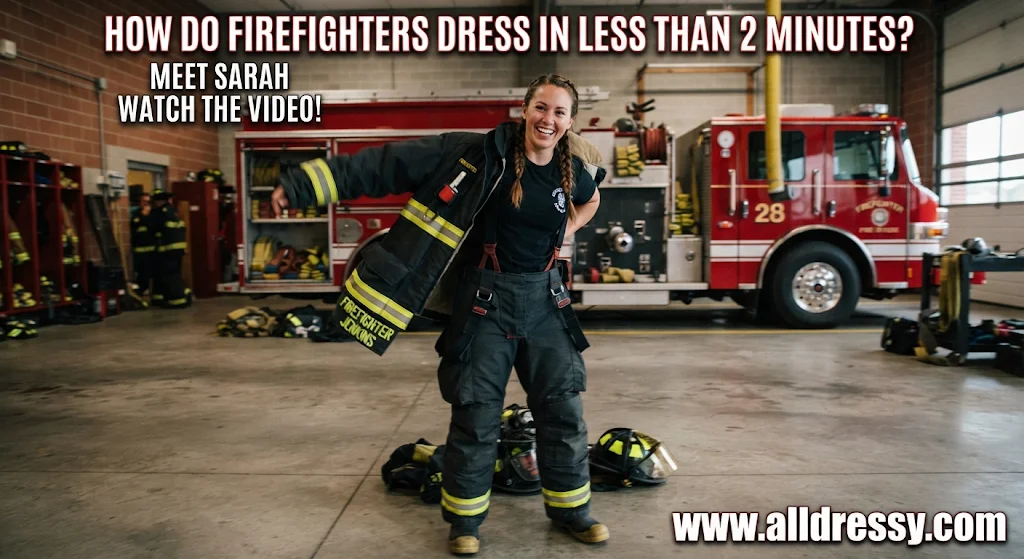
Firefighters can sometimes put on their protective clothing in under two minutes because their equipment is organized, familiar, and designed for emergency use. They practice preparing their gear so that they can locate the necessary items without wasting time searching for individual pieces.
Unlike ordinary clothing, firefighter protective equipment consists of several specialized components. Each item has a particular purpose, and firefighters must understand how the pieces work together.
The preparation process generally involves:
- Keeping protective clothing in a designated location.
- Organizing equipment so that it is easy to identify.
- Becoming familiar with the design and fit of every item.
- Practicing approved preparation routines.
- Checking that essential protective equipment is correctly worn.
- Working with other crew members when necessary.
The exact time depends on the firefighter’s role, equipment, workplace procedures, and type of emergency. Some situations require additional protective equipment, which can take longer to prepare.
The most important point is that firefighters do not simply throw on clothing as quickly as possible. Their preparation must follow department procedures and equipment manufacturers’ instructions.
Why Do Firefighters Need to Dress So Quickly?
Fire emergencies can develop rapidly. A fire may spread, smoke may fill a building, and people may need assistance. Firefighters therefore need to be ready to respond without unnecessary delays.
However, quick preparation is only one part of emergency readiness.
1. To Respond to Emergencies
When an emergency call comes in, firefighters need to prepare for the assigned task. Their protective clothing helps them work in environments where ordinary clothing would not provide sufficient protection.
2. To Protect Against Extreme Heat
Firefighters may encounter high temperatures and radiant heat. Their turnout clothing is specially designed to provide thermal protection and reduce the risk of injury.
3. To Reduce Exposure to Smoke
Smoke can contain dangerous gases, particles, and other harmful substances. Firefighters may use specialized respiratory equipment when working in environments where the air is unsafe to breathe.
4. To Maintain Team Readiness
Firefighters usually work as part of a coordinated team. When crew members are prepared, they can follow their assigned responsibilities more effectively.
5. To Avoid Unnecessary Delays
Equipment that is stored properly and maintained regularly is easier to locate. This helps reduce confusion during emergency preparation.
What Do Firefighters Wear? Understanding the Main Protective Equipment
Firefighter clothing is often called turnout gear or structural firefighting gear. It is designed to provide protection against several workplace hazards.
The equipment can vary depending on the type of firefighting activity. Structural firefighters, wildland firefighters, and airport firefighters may wear different protective clothing because they face different risks.
1. Firefighter Protective Jacket
<PRIVATE_PERSON>
A firefighter’s protective jacket is one of the most recognizable pieces of turnout gear. It is made from specialized materials designed to provide thermal protection and resist certain workplace hazards.
A typical structural firefighting jacket includes:
- An outer shell designed for durability.
- A moisture barrier to help resist water and certain liquids.
- A thermal barrier to reduce heat transfer.
- Reflective or high-visibility markings.
- Closures and adjustable features designed to help maintain a secure fit.
The jacket must be appropriate for the firefighter’s duties and meet applicable safety requirements.
2. Firefighter Protective Pants
Firefighter pants are designed to work with the protective jacket. They cover the lower body and help protect against heat, abrasion, and other hazards.
They may include reinforced areas, adjustable suspenders, and specialized closures.
The pants must fit correctly so that they do not interfere with movement or leave unnecessary gaps in protective coverage.
3. Firefighter Helmet
A firefighter helmet protects the head from certain impacts, falling debris, and other hazards. It is designed specifically for firefighting work rather than ordinary everyday use.
Depending on the model, a helmet may include:
- A protective shell.
- An internal suspension system.
- A secure retention system.
- A face shield or protective goggles.
- Additional accessories approved for the helmet.
A helmet must be correctly fitted and maintained. Damage or missing components can affect its protective performance.
4. Firefighter Gloves
Firefighter gloves protect the hands from heat, abrasion, and other hazards associated with emergency work.
They are designed to provide protection while allowing firefighters to perform tasks that require hand movement and control.
Gloves should be compatible with the rest of the protective clothing. A proper fit is important because gloves that are too loose or too tight may interfere with safe work.
5. Firefighter Boots
Firefighter boots provide protection for the feet and lower legs. Structural firefighting boots are designed to resist certain forms of heat, water, punctures, and impact.
They commonly feature:
- Protective toe areas.
- Slip-resistant soles.
- Heat-resistant construction.
- Reinforced materials.
- Supportive designs.
Boots must be inspected regularly because damaged soles, worn materials, or other defects can affect safety.
6. Protective Hood
A protective hood covers areas around the head and neck that may not be fully protected by other equipment.
It is generally made from specialized flame-resistant materials. Its purpose is to provide additional protection while remaining compatible with the helmet, jacket, and respiratory equipment.
7. Self-Contained Breathing Apparatus (SCBA)
A self-contained breathing apparatus, commonly called an SCBA, provides breathable air when firefighters must work in environments where the atmosphere is dangerous.
An SCBA commonly includes:
- A compressed-air cylinder.
- A carrying harness.
- A pressure regulator.
- A facepiece.
- A system that monitors the available air supply.
SCBA equipment requires specialized training, inspection, and approved procedures. It is not simply another clothing item. Firefighters must be trained to use it correctly and understand its limitations.
How Firefighters Prepare Their Gear Before an Emergency
One major reason firefighters can prepare quickly is that they do not wait until an emergency happens to organize their equipment.
Fire departments establish procedures for storing, inspecting, cleaning, and maintaining protective clothing. These procedures help firefighters identify equipment problems before they become serious.
Equipment Is Stored in Designated Locations
Fire stations usually have designated storage arrangements for protective clothing and emergency equipment. A consistent storage system helps firefighters know where their assigned items are located.
When equipment has a predictable place, firefighters are less likely to waste time searching for it.
Protective Clothing Is Checked Regularly
Firefighters inspect their equipment according to department procedures and manufacturer guidance.
An inspection may help identify:
- Visible damage.
- Missing components.
- Worn closures.
- Contamination.
- Damaged protective materials.
- Problems with equipment fit.
Equipment that is damaged or unsuitable should be removed from service according to established procedures.
Gear Is Maintained Properly
Protective clothing needs appropriate cleaning and maintenance. Heat exposure, contamination, repeated use, and ordinary wear can affect its condition.
Fire departments follow cleaning and inspection requirements to help preserve the equipment’s protective properties.
How Do Firefighters Dress in Less Than 2 Minutes Through Training?
Training is an important part of firefighter readiness. Firefighters become familiar with their protective equipment through supervised instruction and repeated practice.
The purpose of training is not simply to achieve the shortest possible dressing time. It is to develop consistent preparation habits while maintaining safety.
1. Familiarity With Equipment
Firefighters learn the purpose and limitations of each protective item. They become familiar with the equipment assigned to them and understand how different components work together.
This familiarity reduces uncertainty during emergency preparation.
2. Consistent Preparation Procedures
Fire departments establish procedures that explain how equipment should be prepared and checked. Following consistent procedures helps firefighters avoid unnecessary confusion.
3. Supervised Practice
Training activities allow firefighters to become comfortable with their equipment in a controlled environment.
Instructors can identify problems such as incorrect fit, damaged components, or misunderstandings about equipment requirements.
4. Equipment-Specific Instruction
Different protective equipment may have different inspection and preparation requirements. Firefighters receive training relevant to the equipment they are expected to use.
For example, SCBA equipment requires additional instruction because it involves respiratory protection and an air supply.
5. Safety-Focused Evaluation
Firefighter readiness should not be measured by speed alone. Training evaluations should also consider whether protective equipment is correctly fitted, properly secured, and suitable for the assigned task.
A fast preparation time does not demonstrate readiness if essential safety checks have been missed.
Why Is Firefighter Clothing Designed for Quick Preparation?
Firefighter protective clothing is designed around the practical needs of emergency responders. It must provide protection while allowing firefighters to move and perform physically demanding tasks.
Several design features support efficient preparation.
Organized Equipment Components
Protective clothing is made up of separate components that have clearly defined functions. This allows departments to organize equipment according to their procedures.
Durable Materials
Firefighter clothing must withstand demanding working conditions. Manufacturers use specialized materials and construction methods to help protect firefighters from hazards.
Functional Closures
Protective clothing may use closures designed to keep the garment properly secured. These features must work reliably and should be inspected regularly.
Adjustable Fit
Different firefighters have different body measurements. Protective clothing is available in different sizes and may include adjustment features to help achieve an appropriate fit.
Compatibility Between Components
Protective equipment must work together as a system. For example, the jacket, hood, helmet, gloves, and respiratory equipment must be compatible to help maintain protective coverage.
How Long Does It Really Take Firefighters to Get Dressed?
There is no single preparation time that applies to every firefighter or every emergency.
The time can depend on several factors:
Type of emergency: Structural fires, wildland fires, vehicle incidents, and hazardous-material situations may require different equipment.
Equipment requirements: Some assignments require additional protective equipment or specialized tools.
Experience and training: Familiarity with equipment can improve efficiency, but experience does not remove the need for safety checks.
Equipment condition: Damaged, contaminated, or incorrectly stored equipment may require attention before it can be used.
Department procedures: Fire departments may establish different preparation and inspection requirements based on their operations.
The often-mentioned two-minute target should therefore be understood as a general example of rapid readiness, not a universal rule or guarantee.
Firefighters should never skip required checks or use equipment that does not fit correctly just to meet a time target.
How Do Firefighters Make Sure Their Gear Is Safe?
Protective equipment is only useful when it is suitable, correctly maintained, and properly used.
Fire departments use inspection and maintenance procedures to help ensure that protective clothing remains reliable.
Visual Inspections
Firefighters and equipment technicians may examine clothing for visible signs of damage, contamination, or wear.
Fit and Compatibility Checks
Protective equipment must fit the individual firefighter and work correctly with other components.
Cleaning and Decontamination
Firefighting can expose clothing to smoke residues, soot, and other contaminants. Appropriate cleaning and decontamination procedures help reduce the risk of continued exposure.
Equipment Maintenance Records
Departments may maintain records of equipment inspections, repairs, cleaning, and replacement. These records help track the condition and service history of protective clothing.
Replacement of Damaged Equipment
Protective gear should not remain in service when it no longer meets applicable safety requirements. Departments follow established procedures for repairing, evaluating, or replacing unsuitable equipment.
Differences Between Structural and Wildland Firefighter Clothing
Not all firefighters wear the same type of protective clothing. The correct equipment depends on the environment and the hazards involved.
Structural Firefighter Clothing
Structural firefighters respond to fires in buildings and other enclosed or constructed environments.
Their protective equipment commonly includes:
- Structural firefighting jacket.
- Structural firefighting pants.
- Helmet.
- Protective hood.
- Gloves.
- Boots.
- SCBA when required by the operating environment.
This equipment is designed for the hazards associated with structural firefighting.
Wildland Firefighter Clothing
Wildland firefighters work in outdoor environments, including forests, grasslands, and areas affected by vegetation fires.
Their clothing is designed around different requirements, such as mobility, heat exposure, and outdoor working conditions.
It may include:
- Flame-resistant wildland shirt and pants.
- Protective helmet.
- Gloves.
- Appropriate boots.
- Eye protection.
- Additional equipment based on the assignment.
Structural turnout gear is not automatically appropriate for every wildland firefighting task. Firefighters use equipment selected for the hazards they are expected to encounter.
Common Mistakes People Make When Thinking About Firefighter Preparation
People sometimes assume that firefighters can simply put on their uniforms quickly because the clothing is easy to wear. In reality, firefighter protective equipment is specialized and must be used carefully.
Mistake 1: Thinking Speed Is the Only Goal
Fast preparation is useful, but it should never replace correct equipment use. A firefighter must be properly protected before entering a hazardous environment.
Mistake 2: Treating Protective Gear Like Ordinary Clothing
Firefighter equipment has specific performance requirements. Ordinary jackets, boots, gloves, and helmets cannot replace certified protective equipment.
Mistake 3: Ignoring Equipment Compatibility
Protective components must work together. A poorly fitted combination can create gaps or interfere with the intended protection.
Mistake 4: Forgetting About Maintenance
Protective clothing can become damaged or contaminated. Regular inspection and appropriate cleaning are essential.
Mistake 5: Assuming Every Firefighter Uses the Same Gear
Different firefighting roles involve different hazards. Equipment requirements vary according to the assignment and department procedures.
The Role of Teamwork in Firefighter Readiness
Firefighting is a team-based profession. Although each firefighter is responsible for personal equipment, the crew also works together to maintain readiness.
Teamwork helps firefighters:
- Follow established department procedures.
- Confirm that assigned equipment is available.
- Communicate concerns about damaged gear.
- Coordinate responsibilities.
- Support one another during training.
- Maintain awareness of changing emergency conditions.
Team members may also participate in equipment checks and supervised training exercises.
Good communication is especially important because a problem with one piece of equipment can affect a firefighter’s ability to perform an assigned responsibility.
How Technology Is Improving Firefighter Protective Equipment
Firefighter equipment continues to develop as manufacturers and safety organizations work to improve protection, comfort, and reliability.
Modern technology can help firefighters prepare more effectively and understand the condition of their equipment.
Improved Protective Materials
Advances in specialized fabrics and material construction can improve durability and thermal protection. Manufacturers continue to study ways to balance protective performance with comfort and mobility.
Better Helmet Designs
Modern helmet designs may include improved suspension systems, face protection, and accessories that support different operational needs.
Advanced SCBA Systems
Some breathing apparatus systems include electronic monitoring features that help firefighters and their teams track important equipment information.
Communication Equipment
Communication devices help firefighters coordinate with other team members and receive important information during emergency operations.
Equipment Tracking
Some fire departments use inventory and tracking systems to monitor equipment assignments, inspection schedules, and maintenance records.
Technology does not replace training or proper inspection. It supports the wider safety system that firefighters rely on.
Why Proper Fit Matters More Than a Fast Dressing Time
Protective clothing must fit correctly to provide its intended level of protection.
If clothing is too loose, it may interfere with movement or fail to maintain the intended protective coverage. If it is too tight, it may restrict movement or make it difficult to perform essential tasks.
Correct fit also matters for respiratory equipment, helmets, gloves, and boots.
Firefighters receive guidance on selecting and using equipment appropriate for their measurements and assigned duties. Fit should be assessed according to manufacturer instructions and department requirements.
A firefighter should never assume that equipment is safe simply because it can be put on quickly.
What Happens After Firefighters Finish an Emergency?
Firefighter preparation does not end when an emergency response is complete. Post-incident equipment care is an important part of maintaining readiness.
After an assignment, firefighters may need to follow procedures involving:
- Removing equipment in accordance with department safety practices.
- Identifying any damaged or contaminated items.
- Cleaning and decontaminating equipment as required.
- Arranging inspections or repairs.
- Replacing unsuitable equipment.
- Returning serviceable equipment to its designated storage location.
These procedures help ensure that equipment is ready for future assignments.
They also help reduce unnecessary exposure to contaminants that may remain on protective clothing after an incident.
How Do Firefighters Dress in Less Than 2 Minutes Without Compromising Safety?
The key is preparation rather than rushing.
Firefighters can improve readiness by becoming familiar with their equipment, following established department procedures, maintaining consistent storage arrangements, and participating in supervised training.
However, every preparation process must include the safety requirements relevant to the equipment and assignment.
Important principles include:
- Use only approved protective equipment.
- Follow department training and operating procedures.
- Make sure protective clothing fits correctly.
- Check equipment condition before use.
- Do not ignore damaged or contaminated items.
- Use respiratory protection according to training and workplace requirements.
- Never sacrifice essential safety checks to achieve a faster time.
These principles explain why professional firefighter preparation involves much more than quickly putting on a uniform.
Final Thoughts on How Firefighters Dress in Less Than 2 Minutes
Understanding how do firefighters dress in less than 2 minutes reveals how preparation, equipment design, training, and teamwork work together in emergency services.
Firefighters may be able to prepare their protective clothing quickly because their gear is organized, maintained, and familiar. Their specialized jackets, pants, helmets, gloves, boots, protective hoods, and respiratory equipment are designed for demanding working conditions.
However, the exact preparation time varies depending on the emergency, equipment, department procedures, and firefighter responsibilities. The two-minute figure should not be treated as a universal standard.
Above all, firefighter readiness is about being properly protected—not simply being the fastest person to get dressed. Correct equipment fit, regular inspections, appropriate maintenance, and professional training remain essential to firefighter safety.
10 Frequently Asked Questions About How Firefighters Dress in Less Than 2 Minutes
1. How do firefighters dress in less than 2 minutes?
Firefighters can prepare quickly because their protective equipment is organized, regularly maintained, and familiar to them. They also practice approved preparation procedures to improve readiness without skipping essential safety checks.
2. What do firefighters wear when responding to a fire?
Structural firefighters typically wear a protective jacket, pants, helmet, gloves, boots, and a protective hood. They may also use a self-contained breathing apparatus (SCBA) when the environment requires respiratory protection.
3. Why do firefighters need to get dressed so quickly?
Firefighters respond to emergencies where time can be important. Quick preparation helps them become ready for assigned duties while avoiding unnecessary delays.
4. Do all firefighters get dressed in less than 2 minutes?
No. Two minutes is not a universal requirement. Preparation time varies depending on the firefighter’s role, equipment, emergency type, and department procedures.
5. What is firefighter turnout gear?
Turnout gear is specialized protective clothing worn by structural firefighters. It generally includes a protective jacket and pants designed to help protect against heat, moisture, abrasion, and other workplace hazards.
6. Do firefighters wear special shoes?
Yes. Firefighters commonly wear specialized protective boots. These boots are designed to provide protection against certain heat, impact, puncture, and slipping hazards.
7. Why do firefighters wear protective hoods?
Protective hoods help cover areas around the head and neck that may not be fully protected by other equipment. They are designed to work with the firefighter’s helmet, jacket, and respiratory equipment.
8. What is an SCBA, and why do firefighters use it?
SCBA stands for self-contained breathing apparatus. It provides breathable air when firefighters work in environments where the surrounding atmosphere may be dangerous to breathe.
9. How do firefighters keep their protective clothing ready for emergencies?
Firefighters follow regular equipment inspection, cleaning, maintenance, and storage procedures. They also check for visible damage, contamination, and missing components according to department requirements.
10. Is firefighter training important for getting dressed quickly?
Yes. Training helps firefighters become familiar with their protective equipment and follow consistent preparation procedures. It also teaches them to prioritize correct equipment use and safety rather than speed alone.
Conclusion
Understanding how do firefighters dress in less than 2 minutes shows the importance of preparation, professional training, and specialized protective equipment. Firefighters can get ready quickly because their gear is carefully organized, regularly inspected, and designed for emergency response.
Their protective clothing includes jackets, pants, helmets, gloves, boots, protective hoods, and respiratory equipment when required. Every component has a specific purpose and must be used correctly to provide the intended protection.
Although some firefighters may achieve very short preparation times, there is no single time limit that applies to every emergency or department. Equipment requirements and working conditions can make preparation times different.
Ultimately, firefighter readiness is not just about getting dressed quickly. It is about using the right equipment, maintaining proper fit, following safety procedures, and being prepared to protect lives during emergencies.