
Learning how to dress when hiking is an important part of preparing for a comfortable and enjoyable outdoor adventure. The right hiking clothes can help you stay comfortable as temperatures change, manage moisture, protect your skin from the environment, and move easily on different types of trails. Your clothing choices should depend on the weather, trail conditions, season, distance, and intensity of the hike.
Hiking does not require a complicated wardrobe. The most useful approach is to build your outfit in layers so you can add or remove clothing as conditions change. A moisture-managing base layer, comfortable hiking pants or shorts, appropriate socks, a protective outer layer, and suitable footwear form the foundation of a practical hiking outfit.
Understanding how to dress when hiking also means knowing what materials to choose and which common clothing choices can cause discomfort. Cotton, for example, can hold moisture and may take longer to dry, while purpose-designed synthetic or wool-based layers can be more suitable for changing outdoor conditions.
Whether you are going on a short nature walk or a longer mountain trail, dressing appropriately can make the experience much easier.
How to Dress When Hiking Based on the Weather
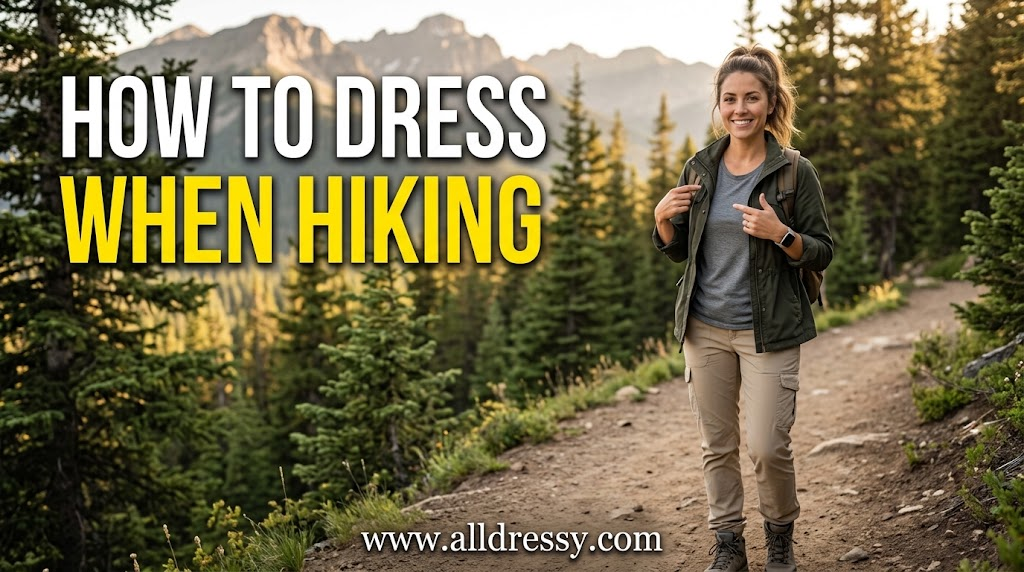
Weather should be one of the first things you consider when choosing hiking clothes.
A sunny summer hike requires different clothing from a cold-weather mountain hike. Conditions can also change during the day, especially at higher elevations.
Before leaving, consider:
- Temperature
- Rain forecast
- Wind
- Humidity
- Sun exposure
- Expected trail conditions
- Elevation changes
- Length of the hike
Instead of dressing only for the temperature when you leave home, think about how conditions might change during the entire hike.
Layering is particularly useful because it allows you to adjust your clothing without carrying a completely different outfit.
How to Dress When Hiking With a Layering System
A layering system is one of the most practical approaches to hiking clothing.
The basic system consists of three layers:
- Base layer: manages moisture and helps regulate comfort.
- Mid layer: provides insulation when temperatures are cooler.
- Outer layer: protects against wind and precipitation.
You do not always need all three layers. On a warm, dry day, a base layer may be enough. During cold or wet conditions, additional layers become more important.
The benefit of layering is flexibility. If you become warm while walking uphill, you can remove a layer. When you stop or encounter colder conditions, you can put it back on.
Choosing the Right Base Layer for Hiking
The base layer sits closest to your skin and plays an important role in managing sweat and moisture.
For active hiking, look for lightweight materials designed to dry relatively quickly. Synthetic fabrics and merino wool are commonly used for outdoor base layers.
A good base layer should:
- Allow comfortable movement
- Manage moisture
- Dry reasonably quickly
- Feel comfortable against the skin
- Avoid unnecessary bulk
- Fit without restricting movement
Avoid choosing a base layer solely based on appearance. Comfort becomes especially important after several hours on a trail.
For warmer conditions, lightweight short-sleeve or sleeveless layers may work well. In cooler weather, long-sleeve base layers can provide additional coverage.
Why Cotton May Not Be Ideal for Long Hikes
Cotton can feel comfortable in everyday clothing, but it is not always the best choice for extended hiking in cool or wet conditions.
When cotton becomes wet from sweat or rain, it can take longer to dry. Wet fabric can make you feel uncomfortable, particularly if the temperature drops.
This does not mean cotton can never be worn outdoors. For a short, easy walk in warm, dry weather, a cotton T-shirt may be perfectly comfortable.
For longer or more demanding hikes, however, moisture-managing outdoor fabrics can be a more practical choice.
How to Choose Hiking Pants
Hiking pants should provide comfort, mobility, and protection appropriate for the trail.
Look for pants that allow you to take long strides, step over obstacles, sit comfortably, and move uphill without restriction.
Common choices include:
- Lightweight hiking pants
- Stretch hiking trousers
- Convertible hiking pants
- Quick-drying pants
- Trail pants
- Hiking shorts for warm weather
For trails with dense vegetation, rough surfaces, or insects, longer pants can provide additional coverage.
For hot weather and open trails, hiking shorts can provide greater airflow.
The best option depends on the environment rather than a single universal style.
How to Dress When Hiking in Hot Weather
Hot-weather hiking requires special attention to airflow, moisture, and sun exposure.
Choose lightweight clothing that allows comfortable movement. A breathable shirt, lightweight hiking pants or shorts, hiking socks, and appropriate footwear can form a practical warm-weather outfit.
Consider:
- Lightweight fabrics
- Breathable shirts
- Light-colored clothing
- Sun-protective layers
- A hat
- Comfortable socks
- Ventilated footwear
Avoid wearing unnecessarily heavy layers when temperatures are high.
However, extremely hot weather also increases the importance of sun protection. A lightweight long-sleeve shirt may sometimes provide useful coverage while remaining comfortable if the fabric is breathable.
Drink enough fluids and take appropriate breaks during hot-weather hikes.
How to Dress When Hiking in Cold Weather
Cold-weather hiking requires a greater focus on insulation and layering.
A typical cold-weather system may include:
- Moisture-managing base layer
- Insulating mid layer
- Protective outer layer
- Warm socks
- Gloves
- Hat or beanie
- Appropriate hiking footwear
Your exact layers should depend on temperature, wind, precipitation, activity level, and personal comfort.
Remember that hiking uphill can generate considerable body heat. You may need fewer layers while actively climbing and more layers when stopping.
Keeping an additional warm layer in your backpack can be useful when conditions become colder than expected.
How to Dress When Hiking in Rain
Rain can make a comfortable hike unpleasant if your clothing becomes saturated.
For wet conditions, consider a waterproof or water-resistant outer shell designed for outdoor use.
A practical rainy-weather combination may include:
- Moisture-managing base layer
- Lightweight insulating layer if needed
- Waterproof shell
- Quick-drying hiking pants
- Water-resistant or waterproof footwear
- Appropriate socks
- Pack protection
A rain jacket should allow enough movement for hiking and should ideally provide ventilation.
Avoid relying solely on an ordinary fashion jacket if you expect prolonged rain. Outdoor rain shells are designed with different priorities, including weather protection and mobility.
Choosing a Hiking Jacket
The best hiking jacket depends on the conditions.
A lightweight wind shell can be useful on breezy days, while an insulated jacket is more appropriate for cold conditions. A waterproof shell becomes valuable when rain is expected.
When choosing a hiking jacket, consider:
- Weather resistance
- Breathability
- Weight
- Packability
- Hood design
- Pocket placement
- Sleeve mobility
- Ventilation
- Layering compatibility
A jacket that is too tight may make layering uncomfortable, while an excessively loose jacket can create unnecessary bulk.
How to Choose Hiking Socks
Socks are easy to overlook when discussing how to dress when hiking, but they can make a major difference in comfort.
Hiking socks should fit properly and work well with your footwear.
Look for socks that:
- Fit securely
- Do not bunch excessively
- Provide suitable cushioning
- Manage moisture
- Match the temperature
- Work well with your hiking shoes
Merino wool and synthetic hiking socks are popular choices because they can provide moisture management and temperature comfort.
Avoid wearing socks that are too large or too small because poor fit can contribute to rubbing and discomfort.
Choosing the Right Hiking Shoes
Footwear should be selected according to the trail rather than fashion alone.
For maintained trails and easy walks, lightweight hiking shoes or trail shoes may be sufficient. Rougher trails may require footwear with more support and traction.
Consider:
- Trail surface
- Distance
- Elevation
- Weather
- Traction
- Fit
- Cushioning
- Stability
Your footwear should allow your toes enough room while keeping your heel reasonably secure.
Do not wait until a long hike to discover that new shoes are uncomfortable. Wear them for shorter outings first so you can determine how they feel during movement.
How to Dress When Hiking on Rocky Trails
Rocky trails may require additional protection and stable footwear.
Longer pants can help protect your legs from rough vegetation and minor contact with rocks. Shoes with suitable traction can also be useful on uneven surfaces.
When selecting clothing for rocky trails, prioritize mobility. You should be able to lift your knees and take large steps comfortably.
Avoid overly loose clothing that can snag on branches or interfere with movement.
How to Dress for a Summer Hike
A practical summer hiking outfit can include:
- Lightweight moisture-managing shirt
- Hiking shorts or lightweight pants
- Breathable hiking socks
- Trail shoes
- Sun hat
- Sunglasses
- Lightweight outer layer packed for changing weather
The exact combination depends on the environment.
A forest trail may require different clothing from an exposed mountain route. An open trail can provide more direct sunlight, while a forest can have more humidity, vegetation, and insects.
How to Dress for a Spring Hike
Spring weather can change quickly, so layering is particularly useful.
A spring hiking outfit might include a lightweight base layer, hiking pants, comfortable socks, and a light jacket.
Keep an additional layer in your backpack if temperatures may fall later in the day.
Spring can also bring rain and muddy trails, so footwear with appropriate traction and clothing that dries reasonably quickly can be useful.
How to Dress for an Autumn Hike
Autumn hiking often involves changing temperatures throughout the day.
A useful approach is to start with a comfortable base layer and carry an insulating layer and weather-resistant shell.
As temperatures change, you can adjust the number of layers.
Autumn trails may also contain fallen leaves, mud, or wet surfaces, so footwear with suitable traction is important.
How to Dress for a Winter Hike
Winter hiking requires careful preparation because cold, wind, snow, and moisture can create challenging conditions.
Depending on the environment, your clothing system may include:
- Thermal or moisture-managing base layer
- Warm mid layer
- Weather-resistant outer layer
- Warm pants or appropriate outer trousers
- Insulated socks
- Gloves
- Warm hat
- Suitable winter footwear
Do not rely on one extremely thick layer when several adjustable layers may provide greater flexibility.
If the hike is in a genuinely severe winter environment, specialized equipment and clothing may be necessary beyond ordinary hiking apparel.
How to Dress When Hiking in Humid Conditions
Humidity can make hiking feel warmer and can reduce how quickly sweat evaporates.
Lightweight, breathable clothing can improve comfort. Loose but practical clothing may allow greater airflow.
Consider:
- Lightweight shirts
- Quick-drying fabrics
- Breathable hiking pants
- Moisture-managing socks
- Sun protection
- A lightweight rain shell when appropriate
Changing into a dry layer after a long hike can also make the return journey more comfortable.
Protecting Yourself From the Sun
Sun protection should be part of your hiking clothing strategy, especially on exposed trails.
A hat with useful coverage can help protect your face and head. Sunglasses can reduce glare, while appropriate clothing can provide additional coverage.
A lightweight long-sleeve shirt can be particularly useful when you want more coverage without wearing heavy fabric.
Apply sunscreen to exposed skin as appropriate and reapply according to the product instructions, especially during longer outdoor activities.
What to Wear for Hiking in Areas With Insects
Some hiking environments have more insects than others.
Long pants and long-sleeve shirts can provide physical coverage. Tucking clothing appropriately and using suitable insect-repellent products according to their instructions may also be useful.
Choose breathable fabrics when wearing more coverage in warm weather.
Research the specific environment before your hike so you know what insects or other outdoor hazards may be common there.
How to Dress When Hiking With a Backpack
Your backpack changes how your clothing feels.
A shirt with bulky seams, excessive pockets, or uncomfortable fabric can become irritating under shoulder straps.
When trying a hiking outfit, consider wearing your backpack at the same time.
Check:
- Shoulder comfort
- Waistband comfort
- Back ventilation
- Jacket pocket placement
- Fabric rubbing
- Ease of movement
Avoid placing bulky objects in pockets located directly beneath backpack straps.
Choose Clothing That Allows Easy Movement
Hiking involves more movement than ordinary walking.
You may need to climb stairs, step over roots, bend down, cross uneven ground, or scramble over rocks.
Your clothing should allow you to:
- Bend your knees
- Lift your legs
- Reach comfortably
- Walk uphill
- Walk downhill
- Sit or crouch
- Move your arms freely
Stretch fabrics can be useful in hiking pants and some outdoor shirts because they allow greater mobility.
How to Dress When Hiking for Different Trail Lengths
The length of your hike should influence your clothing choices.
For a short one-hour trail near a developed area, a simple outfit may be sufficient if the weather is stable.
For a full-day hike, preparation becomes more important. You should consider carrying spare layers and weather protection.
For longer or remote hikes, your clothing system should account for changing weather, temperature drops, and unexpected delays.
The farther you travel from easy access to shelter, the more important it becomes to prepare for conditions rather than dressing only for the weather at departure.
Pack Extra Clothing for Longer Hikes
For longer hikes, carrying a few extra clothing items can be helpful.
Depending on the environment, these might include:
- Extra socks
- Lightweight warm layer
- Rain shell
- Gloves
- Hat
- Dry base layer
Extra clothing does add weight, so choose items that provide useful protection without unnecessary bulk.
A lightweight layer that packs down small can be particularly valuable.
How to Choose Hiking Clothes for Comfort
Comfort should be one of your highest priorities when choosing hiking clothes.
A technically advanced garment is not useful if it restricts movement or feels uncomfortable.
Before a longer hike, test your complete outfit on shorter walks.
Pay attention to:
- Waistband pressure
- Sleeve movement
- Fabric rubbing
- Sock fit
- Shoe comfort
- Backpack interaction
- Temperature regulation
Testing your outfit beforehand allows you to identify problems before you are far from home.
Avoid Overdressing for Active Hiking
One common mistake when learning how to dress when hiking is wearing too many layers at the beginning.
Walking uphill can quickly increase body temperature. If you start sweating heavily, your clothing may become damp, which can make later cooling uncomfortable.
Instead, dress for the activity and carry additional layers for stops and changing conditions.
You can begin with a lighter combination and add layers when necessary.
Clothing Colors and Visibility
Clothing color is not just a fashion decision in outdoor environments.
Bright or highly visible colors can make you easier for companions to spot in certain environments. In areas where hunting seasons occur, hikers should be aware of local regulations and recommendations regarding visibility.
Neutral colors may blend more naturally into outdoor surroundings, but visibility can be useful when hiking with groups.
Choose colors according to the environment, activity, and any local safety considerations.
How to Care for Hiking Clothes
Proper care can extend the useful life of outdoor clothing.
Always follow the garment’s care label. Some technical fabrics require specific washing instructions.
General considerations include:
- Wash sweaty clothing after use when appropriate
- Avoid unnecessary fabric softener if the garment’s care instructions discourage it
- Close zippers before washing
- Avoid excessive heat when drying technical fabrics
- Check waterproof garments according to their care instructions
- Store clothing completely dry
Dirty or damp clothing can develop unpleasant odors and may deteriorate more quickly.
Build a Simple Hiking Clothing Checklist
Before leaving for a hike, check your clothing against the expected conditions.
Warm and Dry Weather
- Breathable shirt
- Hiking shorts or lightweight pants
- Hiking socks
- Comfortable trail footwear
- Hat
- Sunglasses
- Lightweight weather layer
Cool Weather
- Base layer
- Hiking pants
- Mid layer
- Weather-resistant jacket
- Warm socks
- Appropriate footwear
- Hat or gloves if needed
Wet Weather
- Moisture-managing base layer
- Waterproof shell
- Quick-drying bottoms
- Suitable socks
- Water-resistant or waterproof footwear
- Backpack protection
The exact list should always be adjusted for the forecast and trail environment.
Common Mistakes When Choosing Hiking Clothes
Understanding what not to wear can be just as useful as knowing what to wear.
Common mistakes include:
- Wearing shoes that have not been tested
- Choosing cotton for prolonged cold or wet conditions
- Wearing too many layers
- Forgetting rain protection
- Ignoring sun exposure
- Wearing uncomfortable socks
- Choosing clothing that restricts movement
- Carrying no extra layer on a long hike
- Dressing only for the starting temperature
- Ignoring the specific trail environment
Avoiding these mistakes can make your hiking experience significantly more comfortable.
How to Dress When Hiking Comfortably and Safely
The best approach to how to dress when hiking is to think about the entire environment rather than choosing clothes based only on appearance. Temperature, precipitation, wind, terrain, trail length, elevation, and activity level should all influence your choices.
Start with a comfortable moisture-managing layer, choose bottoms that allow unrestricted movement, wear suitable socks and footwear, and add layers according to the conditions. Carry weather protection and an additional layer when the hike is long or conditions are unpredictable.
A good hiking outfit does not need to be complicated. The most useful clothing is comfortable, functional, appropriate for the environment, and easy to adjust as conditions change. With thoughtful preparation, you can spend less time worrying about your clothing and more time enjoying the trail.
Here are 10 SEO-friendly FAQs and a conclusion you can add to the hiking article.
Frequently Asked Questions About How to Dress When Hiking
1. What should I wear when hiking?
Wear comfortable, breathable clothing that allows easy movement. A moisture-managing shirt, suitable hiking pants or shorts, comfortable socks, and supportive footwear are good starting points. Add layers according to the weather and trail conditions.
2. What should I wear for hiking in hot weather?
For hot-weather hiking, choose lightweight and breathable clothing. Hiking shorts or lightweight pants, a breathable shirt, comfortable socks, a hat, and suitable footwear can work well. Consider clothing that provides protection from direct sunlight on exposed trails.
3. Is cotton good for hiking?
Cotton can be comfortable for short hikes in warm, dry conditions, but it may not be ideal for long hikes or cool, wet weather. When cotton becomes wet, it can take longer to dry. Moisture-managing synthetic fabrics or wool-based outdoor clothing may be more suitable for changing conditions.
4. What pants are best for hiking?
The best hiking pants are comfortable, durable, and flexible enough to allow a full range of movement. Lightweight hiking pants, stretch trousers, and quick-drying pants are popular choices. Shorts can also be suitable for warm weather and appropriate trails.
5. How many layers should I wear when hiking?
The number of layers depends on the weather, activity level, and trail conditions. A basic layering system includes a base layer, an insulating mid layer, and an outer weather-resistant layer. You may only need one or two layers in mild conditions.
6. What should I wear hiking in the rain?
For rainy conditions, wear a moisture-managing base layer and a suitable waterproof or water-resistant outer shell. Quick-drying pants and appropriate footwear can also help. Carrying an extra dry layer can be useful on longer hikes.
7. What kind of shoes should I wear for hiking?
Choose footwear based on the trail surface, distance, weather, and terrain. Lightweight trail shoes can work well on easier trails, while hiking shoes or boots may provide additional stability and protection on rougher terrain. Make sure the footwear fits comfortably before taking it on a long hike.
8. Should I wear long pants when hiking?
Long pants can be useful on trails with dense vegetation, insects, rough terrain, or cooler temperatures. Lightweight hiking pants can provide coverage while still allowing comfortable movement. On warm, open trails, shorts may be more comfortable.
9. What should I wear hiking in cold weather?
Cold-weather hiking generally requires several layers. A moisture-managing base layer can be combined with an insulating layer and protective outer shell. Depending on conditions, you may also need warm socks, gloves, and a hat. Carry an additional layer when temperatures may change.
10. How can I stay comfortable while hiking?
Choose clothing that fits comfortably, allows unrestricted movement, manages moisture, and suits the weather. Test your shoes and hiking outfit before a long trip, dress in adjustable layers, and carry appropriate weather protection. Comfort also depends on choosing clothing suitable for the specific trail.
Conclusion
Knowing how to dress when hiking can make a significant difference in your comfort and outdoor experience. The right clothing helps you adapt to changing temperatures, rain, wind, sunlight, and different trail conditions.
A practical hiking outfit starts with comfortable, moisture-managing clothing and footwear that suits the terrain. From there, use layers to adjust to changing conditions. Lightweight clothing can be useful in warm weather, while additional insulating and protective layers become more important when temperatures drop or rain and wind are expected.
There is no single hiking outfit that works for every trail. A short summer walk, a rainy day hike, and a cold mountain trail all require different considerations. Before heading out, check the weather, consider the terrain and length of the hike, and choose clothing that allows you to move comfortably.
With the right preparation and a flexible layering system, you can stay comfortable, protected, and ready for changing conditions throughout your hike.