
In an era defined by mindful consumption, capsule wardrobes, and creative styling, the ability to reimagine a single piece of clothing is the ultimate fashion superpower. Most people view a dress as a static, one-and-done ensemble—an entire outfit pre-determined by a designer. However, with the right styling methodologies, any dress in your closet can be instantly transformed into a completely separate lower-half garment. Learning how to wear a dress as a sktirt unlocks half an empty wardrobe that you didn’t even know you owned, bridging the gap between seasons and maximizing the cost-per-wear of your most expensive pieces.
The philosophy behind this transformation relies heavily on textile manipulation, camouflage physics, and strategic proportions. By hiding the bodice of a dress under complementary layers or utilizing structural hacks, you can seamlessly convert mini, midi, slip, and maxi dresses into high-fashion skirts. This comprehensive guide breaks down the precise mechanical techniques, seasonal formulas, and fabric pairings required to turn your favorite dresses into chic, undetectable skirts without ever picking up a pair of scissors.
The Top-Down Layering Strategy: The Oversized Knit Matrix
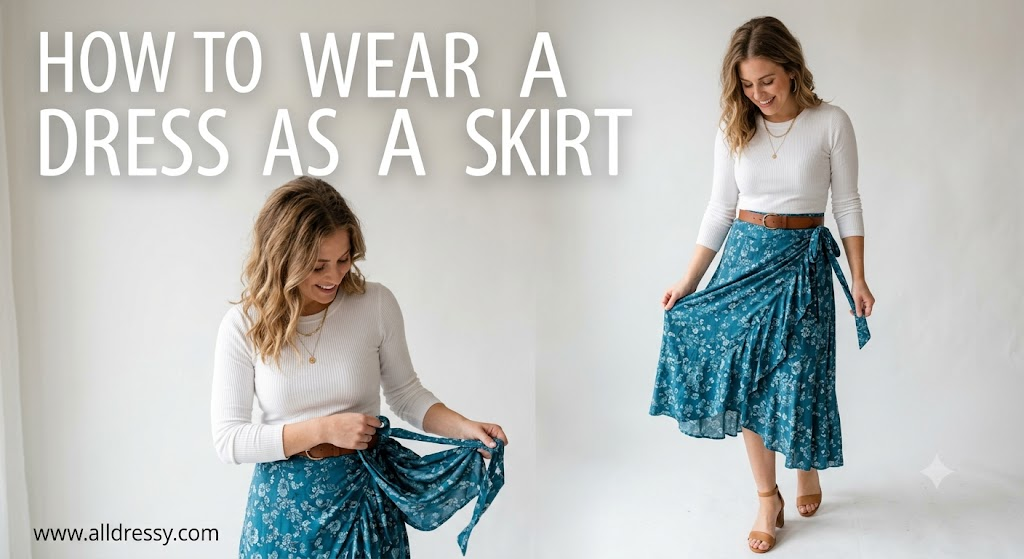
The most straightforward and globally accessible method to convert an existing dress into a skirt is through strategic top-down layering. This technique relies on an external top completely enveloping the bodice of the dress, letting only the skirt portion anchor the outfit.
1. The Chunky Cable-Knit Method
Thick, heavy knits are perfect for hiding structured dress bodices, zippers, collars, and buttons. When learning how to wear a dress as a skirt during transitional or cold weather, pairing a heavy cable-knit or cashmere sweater over a flowy maxi or pleated midi dress creates an elegant balance of textures. The sheer density of the yarn flattens out any under-layer fabric bulk, making the dress look identical to a standalone skirt.
2. Controlling Volume with the Sports Bra or Bralette Trick
If you try to put a relaxed or cropped sweater directly over a dress, the hem of the sweater often hangs awkwardly, creating a bulky, shapeless midsection. To combat this, employ this professional styling hack:
Wear a tight, elastic sports bra or seamless bralette over your dress bodice, sitting right at your natural waistline. Put your sweater on over the bra, then take the bottom hem of the sweater and tuck it up into the elastic band of the sports bra.
This creates a flawless faux-crop effect that stays securely in place as you move, defining your waistline while completely masking the dress underneath.
The Inverse Under-Tuck: Utilizing the Structural Belt Hack
When the weather is too warm for heavy sweaters and you want to use lightweight t-shirts, silk blouses, or linen button-downs, you cannot rely on thick fabric to hide a hidden dress bodice. Instead, you must reverse the mechanics by folding the dress bodice downwards over a belt.
[Wear Dress Normally] ──> [Affix Tight Belt at Waist] ──> [Pull Bodice Down & Invert Over Belt] ──> [Smooth Out & Layer Top Over]
Step-by-Step Execution of the Inverted Belt Roll
- Put on your chosen dress (this method works best with lightweight slip dresses, satin column dresses, or cotton maxis).
- Secure a sturdy, non-slip leather or webbed belt tightly around your natural waistline, directly over the dress.
- Carefully unfasten any top buttons or zippers if necessary, then pull the shoulder straps or sleeves of the dress downward, folding the entire upper bodice down over the belt line.
- Smooth the folded fabric flat against your hips so it does not bunch up under your clothes. The belt now acts as a brand-new waistband for your “skirt.”
- Slip a graphic tee, crisp white button-down, or blouse over the folded fabric. You can tie the shirt in a chic knot at the waist or utilize a french-tuck to completely cover the makeshift waistband.
The Double-Skirt Concealment Technique
Another highly sophisticated method favored by couture stylists involves layering an actual, separate structured skirt directly on top of a dress. This technique is particularly effective if you love the top bodice, neckline, or pattern of a specific dress but have grown tired of its skirt shape, or if the dress is too short for a specific setting.
Recontextualizing Silhouettes
By placing a heavy, structured A-line, denim, or utility skirt over a lightweight patterned maxi dress, the dress is instantly transformed into an elegant shirt or bodysuit. The collar, sleeves, and upper chest of the dress remain perfectly visible, while the lower skirt of the dress acts as a built-in lining or extended petticoat peeking out from the bottom hem of the top skirt. This creates an incredibly detailed, intentional, multi-layered look that adds instant editorial depth to your personal style.
Master Matrix: Matching Dress Silhouettes to Skirt Transformations
Not every dress responds identically to conversion hacks. To determine how to wear a dress as a skirt successfully, you must align the architecture of the dress with the appropriate styling technique.
| Original Dress Type | Ideal Conversion Technique | Best Overlay Complement | Primary Structural Advantage |
| Satin Slip Dress | Inverted Belt Roll / Fold-Down | Cropped Graphic Tee or Linen Shirt | Smooth, fluid fabric prevents any hip bunching; creates a sleek silk maxi skirt silhouette. |
| Pleated Maxi Dress | Sports Bra Tuck-Up | Chunky Oversized Wool Knit | The heavy knit completely compresses the top bodice while highlighting the kinetic movement of the pleats below. |
| Button-Down Shirt Dress | Half-Unbuttoned Knotting | Cropped Denim Jacket or Blazer | The bottom half can be unbuttoned to create a dramatic leg slit, giving the skirt movement. |
| Bodycon Jersey Dress | Over-Skirt Layering | Rigid Denim Mini or Midi Skirt | The tight dress acts as a smooth, seamless bodysuit base that will not ride up under a structured skirt. |
Fabric Alchemy: Navigating Friction and Bulk
The secret to successfully executing the dress-as-skirt illusion lies in understanding textile friction. When two incompatible fabrics rub against each other, they cling, generate static electricity, ride up your legs, or create strange, unnatural lumps.
1. Overcoming the Static Cling of Synthetics
If you are layering a polyester, nylon, or rayon knit top over a synthetic dress, static electricity will cause the top layer to stick awkwardly to the base. To eliminate this friction, wear a traditional silk or anti-static nylon slip between the dress and your top layer. Alternatively, you can lightly mist the surface of the dress fabric with a static guard spray or run a wire hanger down the inside of the garments to discharge accumulated static electricity.
2. Distributing Heavy Bodice Fabric
Dresses with heavy components—such as long sleeves, functional metal zippers, or structured shoulder pads—require careful management. If you try to fold these down around your waist, they will distort your hip measurements. For long-sleeve dresses, instead of folding them down, pull the sleeves forward around your waist and tie them into a chic, intentional flat knot at the belly button, mimicking a modern tie-waist utility skirt.
Seasonal Style Templates: Year-Round Multi-Tasking
Transforming your dresses ensures your warm-weather wardrobe doesn’t sit dormant during the frigid months of the year, allowing for true multi-seasonal utility.
Autumn/Winter: The Cozy Column Look
Take a sleeveless summer slip dress and transition it into a cozy winter skirt look.
- The Layering Base: Keep your legs warm by slipping on fleece-lined thermal tights underneath the dress.
- The Top Conversion: Pull a heavy, cropped turtleneck knit sweater over the top, anchoring the hem via the sports bra tuck method.
- Footwear Integration: Pair the look with structured leather ankle boots that slide up under the dress hem. The contrast between the soft, feminine shine of the slip skirt and the heavy, rugged texture of the wool knit creates an impeccable winter look.
Spring/Summer: The Relaxed Casual Silhouette
Convert a structured floral maxi dress into a breezy, casual weekend skirt layout perfect for warm afternoon markets.
[Summer Vibe] ──> Base: Floral Maxi Dress
               ├── Step 1: Fold Bodice down to Waist with a Slim Belt
               ├── Step 2: Layer an Organic Cotton Tee Over Top
               └── Step 3: Knot Tee at Waist + Add Canvas Sneakers
Fold the upper bodice of the dress down using the slim belt methodology to locate your natural waistline. Layer an organic white cotton t-shirt over the top, grabbing the excess fabric of the tee and tying it into a clean side-knot right against the belt line. Roll up the cuffs of the t-shirt sleeves twice to mimic a muscle tee, and step into low-top canvas sneakers. This effortlessly camouflages the formal nature of the dress, giving you a fresh, daytime separate.
Professional and Tailored Styling Adaptations
If you plan on figuring out how to wear a dress as a skirt for a professional office environment, corporate event, or formal dinner, you must substitute casual knits and t-shirts for sharp, tailored wardrobe counterparts.
The Blazer and Cinch Strategy
To wear a colorful or patterned dress as a corporate skirt, keep the dress fully intact on your body.
- Slip a sleek, high-quality, longline double-breasted blazer over the dress.
- Leave the blazer completely unbuttoned or buttoned casually, and place a premium leather statement belt directly over the exterior of the blazer, locking it tightly to your waist.
This cinching mechanism traps the blazer close to your torso, completely obscuring the front neckline and back panel of the dress. To the observer, you are wearing a highly professional, sharp blazer paired with a matching patterned office skirt. This technique is highly effective for converting wrap dresses, low-cut cocktail dresses, and sleeveless sheaths into corporate-appropriate boardroom attire.
Frequently Asked Questions (FAQs)
Will folding a heavy dress down damage its structure or zippers?
If a dress features rigid metal zippers, delicate lace overlays, or thick internal boning, folding it down using the belt method can warp the zipper teeth or crease the structure over time. For heavily structured dresses, avoid folding the bodice down. Instead, keep the dress fully intact on your body and use the top-down layering method with an oversized sweater or a structured blazer to camouflage the top half without putting physical strain on the garment’s components.
How do I prevent a dress from riding up or shifting when using the sports bra trick?
If the dress fabric is smooth or slippery (like satin or silk), it can slide around under the compression of a sports bra. To lock everything in place, use a sports bra with a wider, rubber-lined or silicone-backed elastic band. Alternatively, you can use two small safety pins to discreetly clip the waistband of the bra to the inside seams of the dress, ensuring the faux-cropped top layer stays firmly in place all day.
Can I transform a mini dress into a skirt, or does this only work for long lengths?
You can absolutely transform a mini dress into a skirt, but your styling options change based on the length. Because mini dresses have less fabric hanging from the waist, folding them down can make the resulting “skirt” too short. The best way to style a mini dress as a skirt is to wear it normally and layer a slightly longer cropped sweatshirt, denim jacket, or a button-down shirt knotted at the waist over the top, converting it into a casual mini-skirt look.
What do I do if the neckline of the dress peeks out from the collar of my sweater?
If you are layering a crewneck or V-neck sweater over a dress with a high collar, mock neck, or wide straps, the dress might peek through. You can use this to your advantage by leaning into a deliberate layered look—such as letting a crisp shirt collar stick out of a sweater. If you want total camouflage, opt for a thick turtleneck or cowl-neck sweater as your top layer, which naturally masks any high necklines underneath.
Conclusion
Reimagining your wardrobe through the lens of garment fluidity completely changes how you look at your closet. Learning how to wear a dress as a skirt breaks down the rigid boundaries of traditional dressing, giving you a highly versatile capsule wardrobe without requiring you to buy a single new piece. Whether you deploy the structural security of the inverted belt roll for a lightweight summer look or utilize the sports bra tuck method to pair cozy winter knits with fluid maxi dresses, the styling variations are virtually endless. By mastering these simple textile hacks, you maximize the value of your clothing, reduce fashion waste, and step out in unique, multi-layered ensembles that showcase true sartorial creativity.