
Mastering how to pose in a dress is an art form that combines an understanding of fabric dynamics, body angles, camera perspectives, and confidence. Whether you are wearing a flowing maxi dress, a structured cocktail dress, or a form-fitting bodycon, the way you position your body changes how the garment is perceived.
Many people struggle with feeling awkward or stiff in front of the lens. The secret to a phenomenal photograph lies in movement, angles, and intentionality. In this definitive guide, we will break down every element of dress posing—from foundational body mechanics to advanced techniques tailored to specific dress styles—ensuring you always capture the perfect shot.
1. The Core Fundamentals of Dress Posing
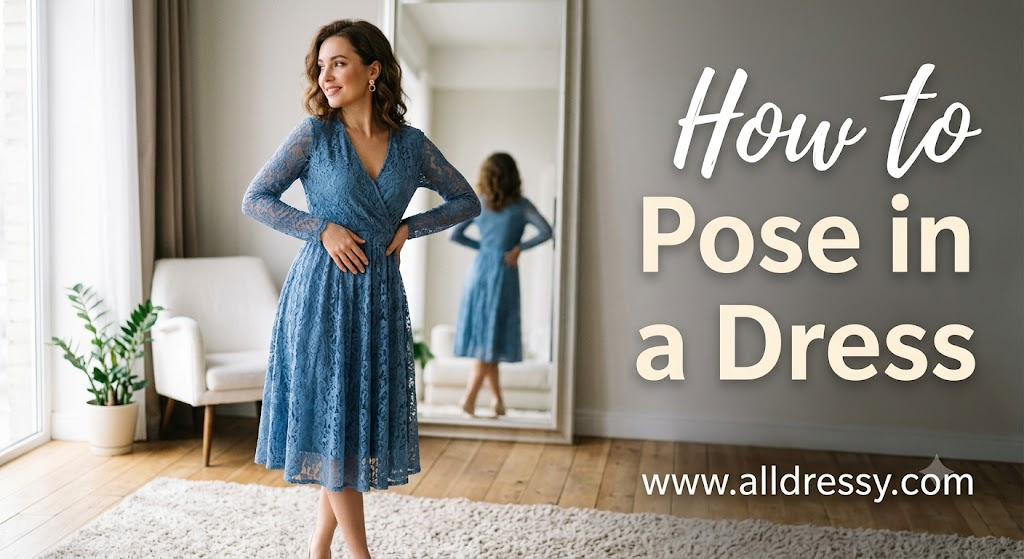
Before diving into specific styles, you must understand the universal rules of body alignment. These foundational principles ensure that your posture looks elegant and relaxed, regardless of what you are wearing.
The Power of Asymmetry
Symmetry can often look rigid and corporate in photos. To look dynamic and elegant in a dress, create asymmetry with your body.
- The “Red Carpet” Stance: Shift your weight to your back leg. This naturally elongates your front leg and slims your profile.
- Drop One Shoulder: Angling your shoulders slightly away from the camera prevents a boxy, wide appearance.
- Pop a Knee: Bending one knee slightly breaks up straight vertical lines, creating soft curves that complement the drape of a dress.
Creating Space Between Arms and Torso
One of the most common mistakes when learning how to pose in a dress is pressing your arms flat against your body. This squishes the upper arms, making them appear wider than they are, and hides the waistline of the dress.
- The Soft Triangle: Place a hand gently on your hip or thigh to create a triangle of negative space between your arm and your waist. This visually pinches the waist and adds structure.
- The Delicate Touch: Bring your hands up toward your collarbone, neck, or hair. Keep your fingers loose and separated—stiff fingers look tense.
Elongating the Neck and Spine
Good posture is non-negotiable. Imagine a string pulling the crown of your head toward the sky.
- Roll Your Shoulders Back: Roll them up, back, and down to open up your chest.
- The “Turtle” Technique: Push your chin slightly forward and down. While it feels unnatural in real life, it defines the jawline and eliminates any hint of a double chin on camera.
2. Master the Movement: Bringing Fabric to Life
Dresses are meant to move. Static poses can make a beautiful gown look lifeless. Capturing motion is the ultimate trick to an editorial, high-fashion look.
The Gentle Swish
For A-line, midi, and maxi dresses, use the fabric to your advantage.
- The Grip: Grab a small pinch of the skirt between your thumb and index finger. Avoid grabbing fistfuls of fabric, which looks bulky.
- The Motion: Gently sway the fabric back and forth. The photographer should use a fast shutter speed to capture the fabric in mid-air.
- The Timing: Move your body slightly behind the fabric to create a sense of effortless wind or motion.
The Walk and Turn
Walking naturally helps shake off physical tension.
- The Runway Walk: Cross one foot slightly in front of the other as you walk directly toward or past the camera. This narrows the hips and adds a rhythmic swing to the hemline.
- The Look Back: Walk away from the camera, then glance back over your shoulder. This is incredibly effective for dresses with open backs, cowl necks, or dramatic rear detailing.
3. How to Pose in a Dress Based on Silhouette
Every dress is cut differently, meaning a pose that works for a ballgown will completely fail for a sheath dress. Let’s look at exactly how to pose in a dress based on its specific silhouette.
The Maxi and Flowing Dress
Maxi dresses are all about drama, romance, and scale.
- The Wide Stance: Step one foot out to the side under the fabric. This creates a strong, powerful base and allows the dress to drape widely, showcasing its full volume.
- The Seated Cascade: If sitting, let the skirt pool around your feet or drape over the edge of a chair or steps. Ensure your torso remains elongated.
The Tight Bodycon and Mermaid Dress
These silhouettes are designed to highlight your silhouette, so your poses should emphasize your shape.
- The S-Curve: Stand at a 45-degree angle to the camera. Push your hips back and away from the lens while pulling your upper torso forward. This maximizes the illusion of an hourglass figure.
- The Crossed-Leg Stand: Place one foot directly in front of the other, tightly crossing at the thighs. This creates an immediate narrowing effect down the length of your body.
The A-Line and Fit-and-Flare Dress
A-line dresses define the waist and flare out. Your goal is to highlight that contrast.
- The Hands-on-Waist Anchor: Place both hands right where the fabric begins to flare. This draws the viewer’s eye straight to the narrowest part of your frame.
- The Mid-Twist: Keep your feet planted but twist your upper torso toward the camera. This emphasizes the flare of the skirt while keeping the waist tight.
The Mini Dress
Mini dresses emphasize your legs. Posing incorrectly can make your legs look cut off or awkwardly proportioned.
- The Tiptoe Extender: Point the toe of your forward-facing foot down toward the ground. This physically and visually extends the line of your leg.
- The Seated Angle: When sitting in a mini dress, never sit flat facing the camera. Angle your knees to the side and cross your legs at the ankles, pushing your feet toward the corner of the frame to maximize length.
4. Advanced Hand and Arm Placement
An otherwise perfect pose can be ruined by awkward, stiff hands. Managing your hands is crucial when figuring out how to pose in a dress.
The “Ballet Hands” Rule
Keep your hands incredibly soft. Fingers should be slightly separated, curled gently, and relaxed. Never face the flat palm or the direct back of your hand to the camera; always show the side profile of your hand for a slimmer look.
Utilizing Dress Features
- Pockets: If the dress has pockets, slide your hands in, but leave your thumbs hanging out. This prevents the arms from looking buried or missing.
- Straps and Necklines: Lightly rest your fingertips on the strap of your dress or near the collarbone. It creates a vulnerable, elegant, and timeless framing effect.
- Prop Engagement: If you are holding a clutch, a glass, or a flower, hold it away from your body slightly so it doesn’t block the silhouette of the dress.
5. Navigating Different Camera Angles and Lighting
Your physical pose is only half the battle; how your body interacts with the camera’s lens and the light source dictates the final image quality.
The Camera Height Matter
- Low Angle (Below Eye Level): Perfect for long gowns, maxi dresses, and pantsuits. It makes the wearer look taller, more powerful, and gives the dress an epic, grand scale.
- Eye Level: Best for casual, lifestyle shots where you want to look approachable and natural.
- High Angle (Above Eye Level): Use this cautiously. It minimizes the body, which can be great for emphasizing a dramatic face or neckline, but it will make the skirt of your dress look significantly shorter.
Working with Light Direction
- Backlighting: If the sun is behind you, flowing dresses will catch the light beautifully, creating a glowing halo effect through sheer fabric layers.
- Side Lighting: Direct light coming from the side casts deep shadows, which is phenomenal for highlighting the structural details, pleats, or texture of a high-fashion dress.
6. Common Pitfalls to Avoid
Even experienced models fall into traps that can make a dress look unflattering. Keep these mistakes in mind so you can actively avoid them:
- Hiding the Waist: Avoid letting loose fabric bunch around your midsection. Keep at least one hand anchored to define your shape.
- The “Dead Leg” Look: When standing straight with your weight evenly distributed, your legs look stiff like pillars. Always micro-bend at least one knee.
- Souching the Shoulders: Leaning forward collapses the neckline of the dress. Keep your chest proud.
- Mirroring the Camera: Avoid facing the camera completely flat like a passport photo. Always utilize micro-twists to add depth and dimension to the shot.
Frequently Asked Questions (FAQs)
How do you look thinner when posing in a dress?
To create a slimming effect, avoid standing flat and square to the camera. Instead, turn your body to a 45-degree angle. Shift your weight to your back foot, pop your front knee, and point your front toe toward the lens. Additionally, always leave a gap of negative space between your arms and your waistline to highlight the narrowest part of your torso.
What should I do with my hands when wearing a dress with no pockets?
When your dress doesn’t have pockets, look for natural anchor points on your body or the garment itself. You can lightly rest your fingertips on your hips, gently touch your collarbone or neckline, or run a hand through your hair. If you want a more dynamic look, use your hands to hold, pinch, or gently swish the fabric of your skirt.
How do you pose naturally in a dress if you feel awkward?
The best way to eliminate stiffness is to introduce gentle movement. Instead of holding a frozen pose, try walking slowly toward or past the camera, looking over your shoulder, or shifting your weight rhythmically from one foot to the other. Taking a deep breath and letting your mouth relax slightly right before the shutter clicks also removes tension from your face.
How do I pose in a tight bodycon dress without showing a bloated stomach?
When wearing a form-fitting dress, angle your body into a tight profile or an S-curve, pushing your hips back and away from the lens. Crossing one leg tightly in front of the other while standing can also mask the lower abdomen. Alternatively, you can use a high-angle shot (camera slightly above eye level) or strategically place a hand, a stylish clutch, or a prop over your midsection.
What is the best camera angle for a long maxi dress?
A low camera angle (shooting from slightly below eye level) is ideal for maxi dresses and formal gowns. This perspective elongates your frame, makes you look taller, and emphasizes the grand scale, length, and sweep of the skirt.
Conclusion
Mastering how to pose in a dress comes down to understanding your garment’s silhouette and working in harmony with your body’s natural lines. By replacing rigid symmetry with fluid angles, creating negative space around your waist, and embracing micro-movements, you can transform a static snapshot into a stunning, editorial portrait.
The next time you step in front of the camera, remember to relax your shoulders, engage your core, and let the fabric move. With these foundational techniques in mind, you will exude effortless elegance and confidence in every single frame.