
Knowing how to measure bust for dress is one of the most important steps when buying or tailoring a dress. Whether you’re shopping online, ordering a custom-made gown, choosing a bridesmaid dress, or altering a favorite outfit, an accurate bust measurement ensures a comfortable and flattering fit. Even the most beautiful dress can look awkward if the bust measurement is incorrect.
Many people assume measuring the bust is as simple as wrapping a tape measure around the chest. However, taking an accurate bust measurement involves proper posture, wearing the right bra, positioning the measuring tape correctly, and understanding how different dress styles fit around the bust.
This comprehensive guide explains everything you need to know about how to measure bust for dress, including the tools you’ll need, step-by-step measuring instructions, common mistakes, body shape considerations, dress sizing, measuring for different dress styles, online shopping tips, and expert advice for achieving the perfect fit every time.
Why Bust Measurement Is Important
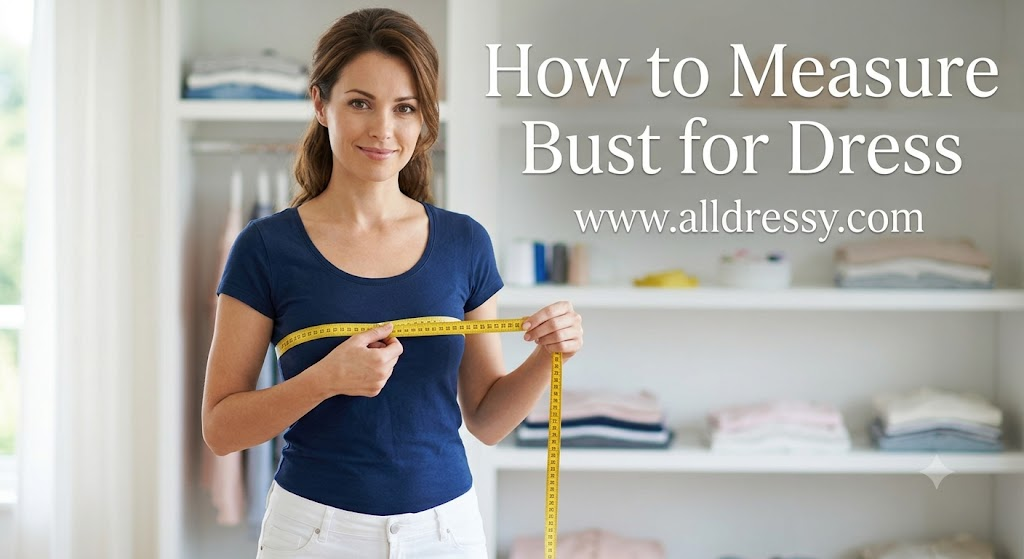
The bust is one of the primary measurements used in women’s clothing size charts. Along with the waist and hips, it determines how a dress will fit through the upper body.
A correct bust measurement helps you:
- Choose the correct dress size.
- Avoid tight or loose-fitting garments.
- Reduce the need for alterations.
- Shop confidently online.
- Order custom-made dresses accurately.
- Achieve a more flattering silhouette.
Whether you’re buying a casual dress or a formal gown, the bust measurement is essential.
What Is a Bust Measurement?
A bust measurement is the circumference of the fullest part of your chest. It includes the fullest area of your breasts while the measuring tape remains level around your body.
It is different from:
- Band size (used for bras)
- Underbust measurement
- Chest measurement used for men’s clothing
For dresses, the bust measurement is the primary upper-body measurement used by manufacturers.
Tools You’ll Need
Before measuring, gather the following items:
- Flexible measuring tape
- Mirror
- Well-fitting bra
- Notebook or smartphone
- Friend or family member (optional)
A soft tailor’s measuring tape provides the most accurate results.
Wear the Right Bra
The bra you wear affects your measurement.
For the most accurate results:
- Wear a non-padded bra.
- Choose a well-fitting everyday bra.
- Avoid push-up bras.
- Avoid sports bras that compress the chest.
- Don’t measure without a bra unless the dress will be worn that way.
The goal is to measure your natural bust shape.
Stand Correctly Before Measuring
Good posture improves measurement accuracy.
Stand:
- Straight
- Relaxed
- Feet together
- Arms resting naturally
Avoid:
- Puffing out your chest.
- Slouching.
- Raising your shoulders.
How to Measure Bust for Dress Step by Step
Step 1: Find the Fullest Part of Your Bust
Locate the fullest area of your chest.
This is usually across the nipples.
The tape measure should pass evenly around the fullest point.
Step 2: Wrap the Measuring Tape
Wrap the tape around your back and across the fullest part of your bust.
Make sure it remains:
- Level
- Parallel to the floor
- Flat against your body
Step 3: Keep the Tape Snug
The tape should fit comfortably.
Avoid:
- Pulling too tightly.
- Leaving excessive slack.
You should be able to slide one finger underneath the tape.
Step 4: Read the Measurement
Stand naturally.
Read the number where the tape overlaps.
Record the measurement in inches or centimeters.
Step 5: Measure Twice
Repeat the process.
If the numbers differ, measure a third time and use the average.
Measuring Yourself vs. Having Someone Help
Although self-measuring is possible, having another person assist often produces more accurate results because:
- The tape stays level.
- Your posture remains natural.
- The tape isn’t twisted.
If measuring alone, use a mirror to check tape placement.
Bust Measurement vs. Underbust Measurement
Many beginners confuse these two measurements.
Bust Measurement
Measured around:
- Fullest part of the breasts
Used for:
- Dresses
- Tops
- Jackets
Underbust Measurement
Measured directly under the breasts.
Used primarily for:
- Bra band sizing
- Corsets
- Structured garments
Most dress size charts require the full bust measurement, not the underbust.
How to Measure for Different Dress Styles
Fitted Dresses
Accuracy is essential because there is little extra room in the bust area.
Bodycon Dresses
Measure carefully while wearing your intended undergarments.
Wedding Dresses
Professional measurements are highly recommended.
Bridal gowns often have minimal stretch and require precise sizing.
Evening Gowns
Pay close attention to the bust if the dress features structured cups or boning.
Casual Dresses
These styles often allow a bit more flexibility, but accurate measurements are still helpful.
How Fabric Affects Bust Fit
Different fabrics behave differently around the bust.
Stretch Fabrics
Examples include:
- Jersey
- Spandex blends
- Knit fabrics
These provide flexibility and may accommodate slight measurement differences.
Non-Stretch Fabrics
Examples include:
- Satin
- Silk
- Linen
- Cotton poplin
- Taffeta
These require more accurate measurements because they have little or no give.
Understanding Dress Size Charts
Every clothing brand uses its own sizing system.
A size 8 in one brand may fit like a size 10 in another.
Always compare your:
- Bust
- Waist
- Hips
with the manufacturer’s size chart before purchasing.
If you’re between sizes, choose the size that best accommodates your bust and tailor the waist if needed.
Measuring Bust for Online Dress Shopping
Online shopping makes accurate measurements even more important.
Before placing an order:
- Measure yourself within the last few weeks.
- Compare your measurements to the brand’s chart.
- Read customer reviews for sizing feedback.
- Check whether the fabric has stretch.
- Review the return and exchange policy.
These steps reduce the chances of ordering the wrong size.
Common Bust Measuring Mistakes
Wearing the Wrong Bra
A padded or push-up bra changes the measurement.
Pulling the Tape Too Tight
This creates a smaller measurement and can lead to a dress that’s too tight.
Holding the Tape Too Loose
Loose tape results in a larger measurement and a baggy fit.
Measuring Over Thick Clothing
Always measure over lightweight clothing or directly over your undergarments.
Using a Metal Tape Measure
Construction tape measures are rigid and unsuitable for body measurements.
How Often Should You Measure?
Body measurements change over time.
It’s a good idea to measure yourself:
- Before ordering a new dress
- After significant weight changes
- Before special events
- Before purchasing formalwear
- Every few months if you shop online regularly
Keeping updated measurements helps ensure a better fit.
Tips for Measuring Plus-Size Busts
For fuller busts:
- Wear a supportive bra.
- Ensure the tape stays level around the back.
- Don’t compress the bust.
- Ask someone to help if possible.
Accurate measurements improve both comfort and appearance.
Measuring Bust for Sewing and Dressmaking
If you’re making your own dress or providing measurements to a tailor:
- Measure the full bust.
- Measure the high bust.
- Measure the underbust.
- Record shoulder width.
- Measure waist and hips.
These additional measurements help create a more precise fit.
High Bust vs. Full Bust
Many sewing patterns ask for both measurements.
High Bust
Measured above the fullest part of the bust, just under the arms.
Full Bust
Measured around the fullest part of the chest.
The difference between these measurements helps determine pattern adjustments for a better fit.
Bust Measurement Tips for Teenagers
Teenagers may still experience body changes.
When measuring:
- Wear a properly fitted bra if needed.
- Measure every few months if purchasing formal dresses.
- Choose dresses with adjustable straps or slight stretch for growing bodies.
Comfort should always be a priority.
How to Record Your Measurements
Keep a record of your:
- Bust
- Waist
- Hips
- Shoulder width
- Height
- Underbust
Store the measurements on your phone or in a notebook so they’re always available when shopping.
When Professional Measurements Are Worth It
Consider visiting a professional tailor or bridal boutique if you’re purchasing:
- Wedding dresses
- Prom dresses
- Evening gowns
- Custom-made clothing
- Expensive formalwear
Professionals can identify subtle fitting issues and provide highly accurate measurements.
Expert Tips for Getting the Perfect Dress Fit
- Measure yourself in front of a mirror.
- Wear the undergarments you plan to wear with the dress.
- Keep the measuring tape level and snug without tightening it too much.
- Measure at least twice to confirm accuracy.
- Compare your measurements with each brand’s individual size chart rather than relying on your usual clothing size.
- If you’re between sizes, choose the size that fits your bust and tailor the rest of the dress if necessary.
- Re-measure after significant weight changes or before major events.
- Consider the fabric type, as non-stretch fabrics require more precise measurements.
- Ask someone to help you if possible for greater accuracy.
- Save your latest measurements for future online shopping and custom orders.
Final Thoughts on Measuring Bust for Dresses
Understanding how to measure bust for dress correctly is one of the simplest yet most valuable skills for anyone who buys, tailors, or sews dresses. Accurate measurements lead to better-fitting clothing, fewer returns, and greater confidence in every purchase.
By following the steps in this guide, using the proper measuring technique, wearing the right undergarments, and checking size charts carefully, you can confidently choose dresses that flatter your shape and fit comfortably. Whether you’re shopping for everyday wear, formal occasions, or custom-made garments, taking a few extra minutes to measure your bust properly can make all the difference in achieving a polished, comfortable, and stylish look.
FAQs
1. How do I measure my bust for a dress?
To measure your bust for a dress, wear a well-fitting, non-padded bra and wrap a soft measuring tape around the fullest part of your bust. Make sure the tape is level across your back and parallel to the floor. Keep it snug but not tight, then record the measurement in inches or centimeters.
2. Should I wear a bra when measuring my bust?
Yes. It’s best to wear the type of bra you plan to wear with the dress or a well-fitting everyday bra. Avoid padded, push-up, or sports bras, as they can alter your natural bust measurement.
3. Where exactly should I place the measuring tape?
The tape should pass around the fullest part of your bust, usually across the nipples, while staying level around your back. It should lie flat against your body without twisting.
4. What is the difference between bust and underbust measurements?
A bust measurement is taken around the fullest part of your chest and is used for dress sizing. An underbust measurement is taken directly beneath your breasts and is mainly used for determining bra band size.
5. Can I measure my bust by myself?
Yes. You can measure yourself using a flexible measuring tape and a mirror to ensure the tape stays level. However, asking someone to help often provides more accurate results.
6. What if my bust measurement falls between two dress sizes?
If your bust measurement falls between sizes, it’s generally recommended to choose the larger size, especially for dresses made from non-stretch fabrics. A tailor can easily adjust the waist or hips if needed.
7. How often should I measure my bust?
You should measure your bust whenever you’re buying a new dress online, ordering custom clothing, or after significant weight changes. Updating your measurements every few months also helps ensure accurate sizing.
8. Does fabric affect how a dress fits around the bust?
Yes. Stretch fabrics like jersey and spandex offer more flexibility, while non-stretch fabrics such as satin, silk, and linen require more accurate bust measurements for a comfortable fit.
9. Why is my bust measurement different from my usual dress size?
Dress sizes vary between brands and manufacturers. Your bust measurement is more reliable than the number on a clothing label, so always compare your measurements with the brand’s size chart before purchasing.
10. What other measurements should I take when buying a dress?
In addition to your bust measurement, you should measure your waist, hips, shoulder width, and sometimes your inseam or dress length, depending on the style. These measurements help you choose the best-fitting dress and reduce the need for alterations.
Conclusion
Knowing how to measure bust for dress correctly is an essential skill that helps you choose clothing that fits comfortably and looks flattering. A precise bust measurement makes online shopping easier, improves the accuracy of custom-made garments, and reduces the chances of ordering the wrong size or needing costly alterations.
By wearing the right bra, using a flexible measuring tape, maintaining proper posture, and checking each brand’s size chart, you can achieve consistent and reliable measurements. Taking the time to measure carefully is especially important for fitted dresses, wedding gowns, evening wear, and other garments where an accurate fit is crucial.
Whether you’re shopping for casual dresses, formal attire, or sewing your own clothing, following the techniques in this guide will help you find the perfect fit with confidence. Keep your measurements up to date, compare them with every manufacturer’s sizing guide, and enjoy a more comfortable and stylish dress-shopping experience every time.