
A De Laru dress is a vintage fashion piece that is especially associated with 1990s and Y2K-era occasionwear. If you are searching for a De Laru dress, you may find everything from elegant evening gowns and prom dresses to cocktail dresses, maxi dresses, velvet styles, beaded designs, metallic gowns, and dramatic party dresses. Vintage listings commonly identify De Laru pieces by designers or labels such as Sheila Yen and Linda Bernell, making the brand particularly interesting to people who enjoy distinctive vintage fashion.
Unlike many modern mass-market dresses, vintage De Laru designs often have noticeable details such as beading, sequins, lace, velvet textures, metallic finishes, unusual necklines, fitted bodices, decorative straps, and statement silhouettes. Examples found in vintage marketplaces include black beaded maxi dresses, metallic evening gowns, velvet formal dresses, strapless styles, halter gowns, and floral or embroidered designs.
Because De Laru dresses are generally encountered through vintage and resale markets today, shopping for one requires a slightly different approach from buying a newly manufactured dress. Measurements, fabric condition, closures, embellishments, lining, and care instructions can all be important.
What Is a De Laru Dress?
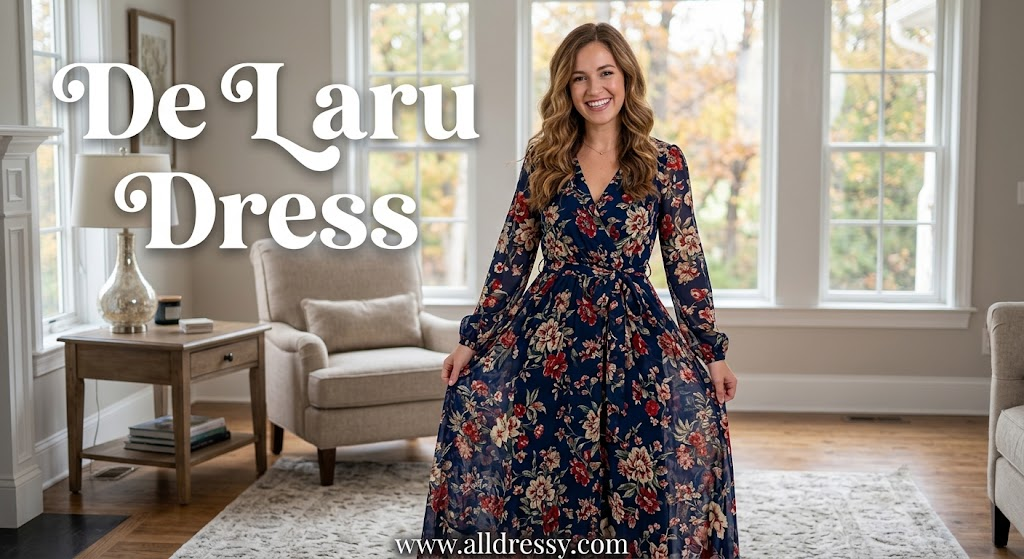
A De Laru dress is a vintage dress carrying the De Laru label. The name appears on a variety of women’s dresses rather than representing one single silhouette or fabric type.
Vintage listings show De Laru dresses in numerous categories, including:
- Prom dresses
- Evening gowns
- Cocktail dresses
- Maxi dresses
- Mini dresses
- Strapless dresses
- Halter dresses
- Velvet dresses
- Beaded dresses
- Sequin dresses
- Metallic dresses
- Lace dresses
- Satin-style dresses
- Formal occasion dresses
This variety is one reason the term De Laru dress can describe many different looks.
Some examples have a distinctly 1990s appearance, while others fit the Y2K vintage aesthetic that has become popular among vintage-fashion enthusiasts.
De Laru Dress and 1990s Vintage Fashion
Many De Laru dresses available through resale markets are described as originating from the 1990s or early Y2K period.
This era produced a wide range of occasionwear featuring decorative details and eye-catching materials. De Laru pieces reflect several of those characteristics.
For example, vintage listings include dresses with:
- Shimmering metallic fabrics
- Rhinestone details
- Sequins
- Beaded decoration
- Velvet panels
- Lace
- Corset-style backs
- Spaghetti straps
- Halter necklines
- Open-back designs
- Dramatic evening silhouettes
A vintage De Laru dress can therefore work particularly well for someone interested in recreating a period-inspired outfit or adding an unusual vintage item to a modern wardrobe.
What Styles of De Laru Dress Are Available?
One of the most useful things to understand about De Laru is that there is no single standard dress style.
Vintage resale listings show many different designs.
De Laru Prom Dress
Prom dresses are among the most common types associated with the label in vintage marketplaces.
These can include long gowns, beaded dresses, satin-inspired designs, velvet dresses, halter gowns, and dramatic evening silhouettes.
Some vintage examples have elaborate embellishment, while others are comparatively simple.
When shopping for a vintage De Laru prom dress, look beyond the label and examine the actual measurements, construction, and condition.
De Laru Maxi Dress
A De Laru maxi dress is another popular category.
Vintage examples can feature long flowing skirts, spaghetti straps, halter necklines, beads, sequins, lace, or metallic details.
A long De Laru dress can be appropriate for formal occasions, themed events, vintage-inspired styling, or collectors who appreciate older eveningwear.
De Laru Cocktail Dress
De Laru cocktail dresses are often shorter than full-length evening gowns.
Vintage listings include cocktail dresses made with velvet, acetate blends, sequins, and decorative details. Some have fitted waists and flared skirts, while others have straighter silhouettes.
The variety makes it possible to find both understated and highly decorative designs.
De Laru Velvet Dress
Velvet is another material frequently encountered in vintage De Laru dresses.
Velvet can give an outfit a rich texture and a distinctly vintage appearance. Some examples combine velvet with decorative trim, sequins, contrasting panels, or metallic embellishment.
When purchasing an older velvet dress, inspect the fabric carefully for crushing, thinning, discoloration, or other signs of age.
De Laru Beaded Dress
Beading is one of the details that can make a vintage De Laru dress particularly distinctive.
Some examples use beads as borders or patterns, while others have larger areas of decorative embellishment.
Vintage beaded garments require careful handling because individual beads or threads can become loose over time.
One current vintage listing, for example, describes a De Laru by Sheila Yen dress with beaded floral embroidery and a corset-style back.
De Laru Dress by Sheila Yen
The name Sheila Yen appears repeatedly in vintage De Laru listings.
Dresses attributed to De Laru by Sheila Yen include formal gowns, beaded maxi dresses, metallic dresses, halter gowns, velvet designs, and other occasionwear.
Some resale listings identify Sheila Yen designs with distinctive decorative details such as beading, lace, metallic fabric, and unusual necklines.
If you are specifically searching for a De Laru by Sheila Yen dress, using the designer name along with the garment style can make it easier to distinguish one vintage design from another.
For example, a shopper might encounter descriptions involving:
- De Laru by Sheila Yen maxi dress
- De Laru by Sheila Yen evening gown
- De Laru by Sheila Yen beaded dress
- De Laru by Sheila Yen velvet dress
- De Laru by Sheila Yen metallic dress
De Laru Dress by Linda Bernell
Another name appearing in vintage De Laru listings is Linda Bernell.
Resale marketplaces show De Laru dresses attributed to Linda Bernell in styles ranging from simple vintage dresses to more elaborate formal designs.
When looking at a vintage listing, checking the interior label and seller-provided measurements can help determine exactly which De Laru design you are considering.
Common Fabrics Found in De Laru Dresses
Vintage De Laru dresses can use a variety of fabrics.
Examples found in listings include polyester, acetate blends, velvet-like materials, satin-style fabrics, chiffon, lace, and other synthetic textiles.
One listed De Laru dress, for example, is described as an acetate-blend velvet dress with sequined and faux-diamond decoration.
Another vintage listing identifies a De Laru by Sheila Yen dress as 100% polyester with beaded floral embroidery.
Because materials differ from one dress to another, never assume that every De Laru dress has the same washing or cleaning requirements.
How to Choose a De Laru Dress
Buying vintage clothing requires more attention to measurements than purchasing a newly produced garment.
The first step is to identify the type of dress you want.
Consider whether you are looking for:
- A formal gown
- A prom-style dress
- A cocktail dress
- A maxi dress
- A vintage party dress
- A velvet dress
- A beaded dress
- A metallic dress
- A simple everyday vintage piece
Once you know the style, examine the individual listing carefully.
Check the Measurements
Vintage sizing can differ substantially from modern sizing.
A tag marked with a particular size should not automatically be treated as equivalent to today’s sizing.
Instead, compare the seller’s measurements with a dress you already own that fits comfortably.
Useful measurements can include:
- Bust
- Waist
- Hip
- Shoulder
- Length
- Arm opening
- Strap length
Some vintage listings specifically warn shoppers that tagged sizes are not guaranteed to correspond to modern fit.
Examine the Condition
Condition is especially important for vintage dresses.
Look carefully for information about:
- Missing beads
- Loose sequins
- Stains
- Fabric wear
- Broken zippers
- Damaged lining
- Discoloration
- Loose seams
- Stretching
- Previous alterations
A dress can be attractive while still requiring repairs, so understanding its condition before purchasing is useful.
How to Identify an Authentic-Looking De Laru Dress
When shopping for a vintage De Laru dress, examine the label and construction.
Look for an interior brand label and compare the seller’s description with photographs of the garment.
You can also examine:
- Label spelling
- Country of manufacture
- Fabric information
- Closure type
- Construction details
- Embellishment
- Lining
- Overall age and condition
Some vintage listings identify dresses as made in the USA, while other examples have different manufacturing origins.
The label alone should not determine the value of a dress. Condition, rarity, design, measurements, materials, and demand can all influence how a particular vintage piece is valued.
De Laru Dress for Formal Events
A De Laru evening gown can work well for occasions where vintage styling is appropriate.
Depending on the specific design, a vintage De Laru dress may be suitable for:
- Formal dinners
- Vintage-themed events
- Prom-inspired styling
- Costume or period-inspired outfits
- Special celebrations
- Evening occasions
- Fashion photography
- Vintage collections
The appropriate choice depends on the dress’s formality and the event’s dress code.
A heavily embellished floor-length gown would naturally create a different impression from a short cocktail dress.
Styling a De Laru Dress
Because many De Laru dresses already have decorative details, accessories should complement rather than compete with the garment.
For a heavily beaded dress, simple accessories may allow the dress to remain the central feature.
For a simpler vintage dress, accessories can add visual interest.
Possible styling elements include:
- Simple earrings
- A small handbag
- Classic shoes
- A lightweight wrap
- Minimal jewelry
- A vintage-inspired hairstyle
The exact combination depends on the dress’s neckline, color, embellishment, and occasion.
Shoes to Wear With a De Laru Dress
Shoes can significantly change the overall character of a vintage dress.
A formal De Laru gown can be paired with classic dress shoes or simple heels, while a shorter cocktail dress can work with a variety of polished footwear.
When choosing shoes, consider the length and structure of the dress.
For a floor-length gown, comfort and secure footing are especially important because the hem can make walking more difficult if the footwear is unsuitable.
How to Care for a De Laru Dress
Vintage garments often require more careful treatment than everyday modern clothing.
Always check the garment’s care label first.
If the label recommends dry cleaning, follow those instructions rather than automatically putting the dress in a washing machine.
Be particularly cautious with dresses containing:
- Beads
- Sequins
- Metallic finishes
- Lace
- Velvet
- Delicate trims
- Older synthetic fabrics
Decorative elements can be damaged by aggressive washing or excessive heat.
Can You Machine Wash a De Laru Dress?
There is no single washing rule for every De Laru dress.
Some garments may tolerate gentle washing, while others may require professional cleaning.
The correct method depends on the fabric, construction, age, lining, embellishments, and care label.
If a vintage dress has extensive beadwork or a delicate decorative surface, professional cleaning may be more appropriate than ordinary machine washing.
Never assume that a vintage polyester dress can automatically be washed like a modern polyester garment.
How to Store a De Laru Dress
Proper storage can help preserve an older dress.
Keep the garment in a clean, dry environment away from excessive moisture and direct sunlight.
For heavier gowns, avoid using a thin hanger that could place excessive stress on the shoulders.
Some delicate dresses may benefit from careful folding and appropriate garment storage rather than prolonged hanging.
Avoid overcrowding vintage dresses because tight storage can cause wrinkles and place stress on embellishments.
De Laru Dress and Y2K Fashion
The renewed interest in Y2K fashion has helped bring attention to many vintage garments from the late 1990s and early 2000s.
De Laru dresses fit naturally into this broader vintage-fashion conversation because many available examples feature the era’s recognizable details.
Metallic fabrics, fitted silhouettes, decorative beads, dramatic necklines, and unusual eveningwear details can all contribute to a distinctly late-1990s or Y2K-inspired appearance.
This makes a De Laru dress interesting not only as formalwear but also as a vintage fashion piece.
Why Vintage De Laru Dresses Are Interesting to Collectors
Collectors often look for garments that have distinctive construction, unusual details, recognizable labels, or strong connections to a particular fashion period.
De Laru dresses can be interesting because there is considerable variety within the label.
One dress might be a simple cocktail style, while another may be a heavily decorated evening gown.
Vintage marketplaces currently show examples spanning black, purple, metallic, red, silver, floral, velvet, beaded, and sequined designs.
That variety gives vintage shoppers many different directions to explore.
Common De Laru Dress Details
Several design details appear repeatedly across vintage listings.
Beading
Beaded decoration can create intricate patterns and add texture to an evening gown.
Sequins
Sequins provide reflective detail and are particularly common in party and formal styles.
Metallic Fabric
Metallic finishes can give vintage dresses a distinctive eveningwear appearance.
Velvet
Velvet contributes texture and a richer visual effect, especially in darker colors.
Lace
Lace may appear as a panel, overlay, trim, or decorative section.
Halter Necklines
Halter designs are another recurring style in vintage De Laru listings.
Spaghetti Straps
Thin straps appear on numerous maxi and evening designs.
Corset-Style Backs
Some dresses feature lace-up or corset-inspired backs that allow a degree of adjustment.
De Laru Dress Shopping Tips
Before purchasing a vintage De Laru dress, create a simple checklist.
First, verify the measurements.
Second, inspect all photographs carefully.
Third, read the condition description.
Fourth, ask about missing or damaged embellishments if the listing does not provide enough information.
Fifth, check the fabric and care requirements.
Sixth, consider whether alterations may be necessary.
Seventh, compare the overall condition and design rather than focusing only on the labeled size.
This process can make vintage shopping much more predictable.
De Laru Dress Alterations
Vintage dresses sometimes need alterations because modern body measurements and vintage sizing do not always match.
Possible alterations can include adjusting straps, modifying hems, repairing closures, or making limited adjustments to the fit.
However, alterations can be more complicated when a dress contains extensive beading, sequins, lace, boning, or unusual construction.
Before altering a valuable or particularly delicate vintage dress, consider consulting someone experienced with vintage garments.
How to Recognize a Quality Vintage De Laru Dress
Quality is not determined by one feature.
Instead, examine the garment as a whole.
Look at the stitching, lining, fabric condition, closures, embellishments, and overall construction.
A dress with beautiful decoration may require substantial restoration if the fabric or seams have deteriorated.
Likewise, a simpler dress may be especially desirable if it has excellent construction and remains in very good condition.
De Laru Dress for Modern Wardrobes
A vintage De Laru dress does not have to be styled as a complete head-to-toe vintage outfit.
You can combine a vintage dress with simpler modern accessories to create a balanced appearance.
For example, a dramatic vintage gown can be paired with understated accessories, while a simpler dress can be given a more contemporary feel through modern footwear or a simple bag.
The key is to consider the dress’s strongest design elements and avoid adding unnecessary visual competition.
De Laru Dress as a Vintage Fashion Investment
Some people purchase vintage clothing because they enjoy collecting pieces from earlier fashion periods.
However, the future value of any particular De Laru dress is uncertain.
Factors such as rarity, condition, size, design, provenance, and current fashion interest can affect resale demand.
A dress should therefore be purchased because you appreciate its design and history rather than assuming that every vintage garment will increase in value.
Final Buying Considerations for a De Laru Dress
When searching for a De Laru dress, remember that the label represents a diverse collection of vintage styles rather than one standardized design.
You may encounter formal gowns, cocktail dresses, maxi dresses, velvet pieces, beaded styles, metallic dresses, halter designs, strapless dresses, and other occasionwear.
The best way to evaluate an individual dress is to look beyond the brand name. Examine the measurements, fabric, construction, embellishments, condition, care instructions, and overall design.
Because many De Laru dresses are vintage, the exact garment you find may be one-of-a-kind or available only in a particular size. Taking time to understand the listing can therefore make the shopping process much easier.
Whether you are interested in 1990s fashion, Y2K style, formalwear, vintage collecting, or simply looking for a distinctive occasion dress, De Laru offers a wide range of designs worth exploring
Frequently Asked Questions
1. What is a De Laru dress?
A De Laru dress is a vintage women’s dress carrying the De Laru label. Vintage examples include formal gowns, cocktail dresses, maxi dresses, beaded dresses, velvet styles, metallic designs, and other occasionwear.
2. Is De Laru a vintage dress brand?
De Laru dresses are commonly found through vintage and resale clothing markets. Many available examples have styling associated with the 1990s and early Y2K fashion era.
3. What types of De Laru dresses are available?
De Laru dresses can include prom dresses, evening gowns, cocktail dresses, maxi dresses, velvet dresses, beaded dresses, sequin dresses, halter dresses, strapless styles, and metallic eveningwear.
4. Are De Laru dresses good for formal occasions?
Many De Laru dresses are designed as occasionwear and can work well for formal dinners, parties, proms, vintage-themed events, and other special occasions. The appropriate choice depends on the individual dress and the event’s dress code.
5. Are De Laru dresses vintage?
Many De Laru dresses found on resale and vintage marketplaces are older garments, particularly designs associated with the 1990s and Y2K period. However, the exact age of a dress should be determined from its label, construction, listing information, and other available details.
6. How should you choose the right De Laru dress?
Check the actual garment measurements instead of relying only on the size printed on the label. Also examine the fabric, condition, lining, closures, embellishments, and seller’s photographs before purchasing.
7. How do you clean a De Laru dress?
Cleaning depends on the specific fabric and construction. Check the care label first. Dresses with beads, sequins, velvet, lace, or delicate decorative details may require especially careful cleaning or professional garment care.
8. Can a De Laru dress be altered?
Some De Laru dresses can be altered, depending on their construction and condition. Simple adjustments such as hems or straps may be possible, while heavily embellished or unusually constructed dresses can require more specialized alteration work.
9. Why are De Laru dresses popular with vintage-fashion shoppers?
De Laru dresses can appeal to vintage shoppers because they offer distinctive designs, decorative details, and styles associated with earlier fashion eras. Beading, velvet, metallic fabrics, sequins, and unusual necklines can give individual pieces a recognizable vintage character.
10. How should you store a De Laru dress?
Store the dress in a clean, dry place away from direct sunlight and excessive moisture. Avoid overcrowding the garment with other clothing, and use storage methods appropriate for its weight and decorative details.
Conclusion
A De Laru dress can be an interesting choice for anyone who appreciates vintage fashion, 1990s style, Y2K-inspired clothing, or distinctive occasionwear. The label can be found on a variety of designs, including formal gowns, cocktail dresses, maxi dresses, velvet pieces, beaded styles, metallic dresses, and other statement garments.
When shopping for a De Laru dress, the most important factors are not simply the label or tagged size. Carefully examine the measurements, fabric, construction, embellishments, closures, lining, and overall condition. Vintage sizing can differ from modern sizing, so comparing measurements with a garment you already own can be particularly helpful.
Care is also important. Older dresses may contain delicate fabrics, beads, sequins, lace, velvet, or other decorative details that require specialized cleaning and storage. Following the garment’s care instructions can help preserve its appearance.
Whether you are searching for a formal De Laru gown, a vintage cocktail dress, a beaded maxi dress, or a Y2K-inspired piece, taking time to evaluate each individual garment can help you find a dress that suits your occasion and personal style.