
If you are searching for what dresses look good on big busts, the most useful place to start is with comfort, fit, and personal style. A dress should allow comfortable movement, provide enough room through the chest, and sit naturally on the body without pulling, gaping, or feeling restrictive. Instead of following strict rules about which body types can wear particular styles, consider how different dress designs fit and function.
Finding a comfortable dress can sometimes be challenging because clothing manufacturers use different measurements and proportions. A dress that fits well through the waist or hips may feel tighter through the chest, while a dress that provides enough room at the bust may feel loose elsewhere. Understanding construction details such as neckline, fabric, seams, closures, waist placement, and adjustable features can make shopping easier.
When considering what dresses look good on big busts, there are many possibilities. Wrap dresses, V-neck dresses, square-neck dresses, shirt dresses, fit-and-flare styles, A-line dresses, empire-waist designs, and dresses with adjustable straps can all work depending on the individual garment and the wearer’s preferences. There is no single universally correct dress style.
The goal is to find clothing that feels comfortable, stays in place, and suits the occasion while allowing you to express your own style.
What Dresses Look Good on Big Busts? Understanding Dress Fit
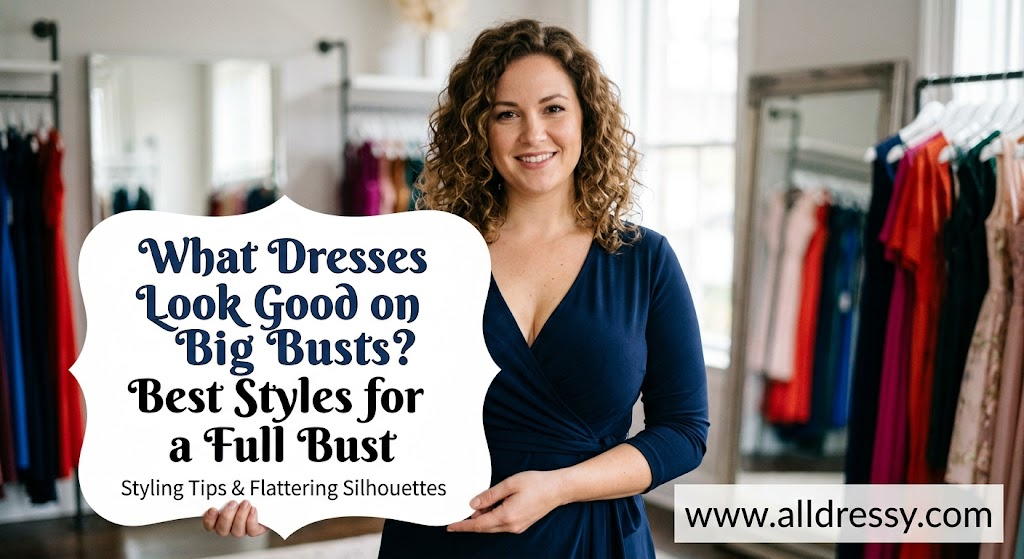
The first step in answering what dresses look good on big busts is understanding how a dress should fit.
A well-fitting dress should allow normal movement without excessive pulling across the chest. The neckline should lie comfortably against the body, and closures should remain secure without creating uncomfortable tension.
Important fit points include:
- Enough room through the chest
- Comfortable shoulder placement
- A neckline that stays in position
- Fabric that allows movement
- A waistline that sits where intended
- Sleeves that do not feel restrictive
- Closures that lie flat
- A hemline appropriate for the occasion
A dress does not need to fit tightly to look polished. Similarly, a loose dress can be stylish and comfortable. The best choice depends on personal preference and the purpose of the outfit.
Why Fabric Matters When Choosing Dresses
Fabric can significantly affect how a dress feels and fits.
Stretch fabrics can provide additional flexibility, especially around areas where movement is frequent. A fabric containing elastane or another stretch fiber may make a fitted design more comfortable.
Woven fabrics with little stretch can provide structure but may require more precise sizing. If a woven dress has buttons or a zipper through the front, check that the closure lies comfortably when standing and moving.
Soft fabrics such as jersey can provide comfortable movement and are commonly used for casual dresses. Structured fabrics may be useful for formal or professional clothing.
When shopping, consider both the fabric composition and its weight. A lightweight fabric can feel comfortable in warm weather, while heavier fabrics may provide more structure.
Wrap Dresses and Adjustable Styles
Wrap dresses are frequently considered when discussing what dresses look good on big busts because their adjustable construction can provide flexibility.
A traditional wrap design usually allows the wearer to adjust how closely the dress sits across the torso. This can make it easier to achieve a comfortable fit when measurements differ between the chest, waist, and hips.
However, not every wrap dress fits the same way. Look for:
- Secure waist ties
- Adequate fabric coverage
- Comfortable neckline placement
- Enough material across the front
- Adjustable fastening
- Fabric with suitable stretch
If the dress tends to open or shift during movement, a small hidden fastening or appropriately designed closure can improve practicality.
V-Neck Dresses
V-neck dresses are another option worth considering.
The shape of the neckline creates an open vertical line and can be available in many different depths. A moderate V-neck can provide a comfortable alternative to a high neckline if you prefer more space around the neck.
The important consideration is comfort rather than following a particular appearance rule. If the neckline feels too low or moves during normal activity, choose a higher version.
For everyday clothing, a modest V-neck can work well with casual, professional, or semi-formal dresses.
Square-Neck Dresses
Square-neck dresses can provide a structured neckline while allowing comfortable space across the upper torso.
They are available in fitted, relaxed, casual, and formal designs. Some include wider straps, which can provide additional stability.
When choosing a square-neck dress, check whether the neckline stays comfortably in position while you move your arms. A neckline that constantly shifts can become inconvenient during everyday activities.
Scoop-Neck Dresses
Scoop necklines have a rounded shape and can be found in both casual and dressier designs.
A scoop-neck dress can be a useful choice if you prefer a softer neckline and want to avoid a very high collar. The depth varies considerably between garments, so examine the specific design rather than assuming all scoop necklines provide the same coverage.
What Dresses Look Good on Big Busts for Everyday Wear?
For everyday use, prioritize comfort and practicality.
Casual shirt dresses, A-line dresses, relaxed jersey dresses, and simple wrap designs can all be useful options. The best choice depends on the fabric, construction, and individual fit.
For school, family activities, shopping, or casual outings, consider dresses that:
- Allow easy movement
- Do not require constant adjustment
- Have comfortable shoulder straps
- Use breathable fabric when appropriate
- Provide suitable coverage
- Can be washed easily
- Work with comfortable footwear
A simple dress that feels comfortable throughout the day can be more practical than a complicated design that requires frequent adjustment.
Shirt Dresses for Flexible Styling
Shirt dresses can be particularly practical because many designs include buttons, allowing some control over the front opening.
Look for designs with buttons that sit securely without pulling. Adjustable waist ties can also make the dress easier to customize.
If a shirt dress fits comfortably through the chest but is loose elsewhere, a belt or waist tie can sometimes provide additional styling flexibility without changing the basic fit.
However, a belt is optional. A relaxed shirt dress can look equally appropriate without one.
A-Line Dresses
A-line dresses gradually widen from the upper portion of the garment toward the hem.
This construction provides freedom around the lower part of the dress and can be useful for casual and formal occasions.
When choosing an A-line dress, pay attention to the upper fit. The dress should still provide enough room through the chest and shoulders even though the lower portion is relatively spacious.
A-line dresses are available in many fabrics and lengths, making them suitable for different seasons and occasions.
Fit-and-Flare Dresses
Fit-and-flare dresses generally have a more defined upper section followed by a skirt that becomes wider.
The main consideration is whether the upper portion provides enough room for comfortable movement. Stretch fabrics can sometimes make these designs easier to wear.
If the waist seam feels restrictive, consider a different construction or a more relaxed fit. Comfort should take priority over forcing a particular silhouette.
Empire-Waist Dresses
Empire-waist dresses have a seam or visual waistline positioned higher on the torso.
Some people find this construction comfortable because the lower portion of the dress falls more freely. Others may prefer a more traditionally positioned waist.
The key is to check where the seam actually sits on your body. Different manufacturers can place the empire seam at slightly different heights.
What Dresses Look Good on Big Busts for Formal Occasions?
Formal dresses require additional attention to structure, comfort, and movement.
For weddings, celebrations, parties, or formal dinners, consider dresses with:
- Secure straps
- Comfortable necklines
- Appropriate lining
- Stable closures
- Flexible fabrics where appropriate
- Enough room for normal movement
A formal dress should allow you to sit, walk, and move your arms comfortably. Try these movements before deciding that a dress fits properly.
If shopping online, review garment measurements carefully and check the return policy before purchasing.
Dresses With Sleeves
Sleeve design can influence overall comfort.
Short sleeves, elbow-length sleeves, three-quarter sleeves, and long sleeves can all work depending on personal preference.
If sleeves feel restrictive, look for designs with additional room around the upper arm or fabrics with stretch.
Flutter sleeves and relaxed sleeves can provide a looser feel, while fitted sleeves may feel more structured.
The most suitable sleeve is the one that provides comfortable movement and matches the occasion.
Dresses With Adjustable Straps
Adjustable straps can be particularly useful because they allow the wearer to change the position of the dress slightly.
They can help improve the fit around the upper portion of the garment and may reduce the need for constant adjustment.
When evaluating a dress with adjustable straps, check the quality of the strap hardware and whether the adjustment stays secure during movement.
Choosing the Right Dress Length
Dress length should be selected according to personal preference, occasion, and comfort.
Mini, knee-length, midi, and maxi dresses can all be appropriate in different situations.
For everyday activities, consider whether the length allows you to walk, sit, and move comfortably.
For formal occasions, the dress code may influence the most appropriate length.
There is no single dress length that everyone needs to follow. Personal comfort and the requirements of the occasion are more useful considerations.
What Dresses Look Good on Big Busts in Different Seasons?
Seasonal fabric choices can make a major difference.
Spring
Lightweight cotton, jersey, and breathable blends can be comfortable during mild temperatures.
Summer
Look for breathable materials and designs that allow airflow. Lightweight dresses with comfortable straps or sleeves can work well.
Fall
Medium-weight fabrics, long sleeves, and layering-friendly dresses can provide greater versatility.
Winter
Heavier fabrics and dresses designed for layering can be paired with appropriate outerwear.
Rather than focusing only on the dress style, consider how the fabric works with the weather.
Choosing Dresses for School and Casual Activities
For everyday activities, comfort should be a priority.
A dress should not require constant pulling, adjusting, or checking. Choose practical designs that allow you to walk, sit, bend, and move your arms normally.
Casual jersey dresses, relaxed shirt dresses, and simple A-line designs can provide practical choices.
When selecting clothing for school or other structured environments, also consider the applicable dress code.
How Neckline Construction Affects Comfort
Neckline construction is more important than simply choosing a particular neckline name.
A neckline should lie flat without excessive pulling or gaping. If it shifts when you move, the garment may need a different size or construction.
Look for reinforced seams and appropriate lining where needed.
If you prefer additional coverage, choose a higher neckline. If you prefer more openness around the neck, select a lower neckline that still feels secure and appropriate for the occasion.
Understanding Dress Closures
Closures include buttons, zippers, hooks, snaps, and ties.
Front-button dresses should have enough room for the buttons to remain flat during movement. If buttons pull apart or create gaps, consider another size or construction.
Zippered dresses should close smoothly without excessive tension.
Wrap dresses should have secure ties or fastening systems.
A good closure should make the dress easier to wear rather than becoming a source of discomfort.
Choosing the Right Size
Size labels are not standardized across all clothing brands.
One manufacturer’s medium may fit differently from another manufacturer’s medium. Instead of relying solely on the label, compare your measurements with the manufacturer’s size chart.
Pay attention to:
- Chest measurement
- Shoulder measurement
- Waist measurement
- Hip measurement
- Dress length
- Sleeve length
If your measurements fall between sizes, examine the garment’s fabric and construction. A stretchy dress may provide more flexibility than a structured woven design.
What Dresses Look Good on Big Busts Without Feeling Restrictive?
If comfort is your main priority, look for dresses with flexible construction.
Useful features can include:
- Stretch fabric
- Adjustable straps
- Relaxed cuts
- Wrap construction
- Elasticized sections
- Roomy sleeves
- Comfortable necklines
Avoid assuming that a particular silhouette will automatically be comfortable. Two dresses with the same general style can fit very differently because of fabric, pattern, and construction.
How to Avoid Gaping and Pulling
Gaping and pulling can be signs that the garment’s proportions do not match your measurements.
For button-front dresses, check whether the buttons remain closed naturally while you move.
For fitted dresses, look for excessive horizontal pulling across the fabric.
For necklines, check whether the garment lies flat rather than shifting away from the body.
If a dress fits well in most areas but needs a small adjustment, professional tailoring may sometimes help, provided the garment has enough fabric and suitable construction.
The Role of Tailoring
Tailoring can transform the practicality of a dress.
A garment may fit comfortably through the chest and require only a small adjustment elsewhere. Depending on the construction, a tailor may be able to modify areas such as the waist, straps, hem, or side seams.
Not every garment can be altered easily, so examine the seams and construction before purchasing an expensive dress.
For inexpensive clothing, the cost of alterations may also be greater than the value of the garment.
Choosing Comfortable Undergarments
The clothing worn underneath a dress can affect overall comfort.
Choose undergarments that fit properly and do not create unnecessary pressure or discomfort. The goal is to provide comfortable support and a smooth foundation without forcing the dress into a different shape.
For dresses with unusual necklines or straps, consider whether the undergarment is compatible with the garment’s construction.
Comfort should remain the priority.
What Dresses Look Good on Big Busts for Special Events?
For special events, start with the dress code and practical requirements.
Consider:
- How long you will be wearing the dress
- Whether you will be sitting for extended periods
- Whether you will be walking or dancing
- The weather
- The level of formality
- Whether the dress requires additional layers
A dress that looks attractive but becomes uncomfortable after an hour may not be the most practical choice for a long event.
Try moving, sitting, and walking in the dress before the event whenever possible.
Shopping Online for the Right Dress
Online shopping requires additional attention to measurements because you cannot try the dress on immediately.
Read the product description carefully and look for garment measurements rather than relying only on the size label.
Customer reviews can provide information about:
- Fit
- Fabric stretch
- Length
- Opacity
- Comfort
- Whether the dress runs larger or smaller than expected
However, reviews are individual experiences. Look for repeated patterns rather than relying on a single comment.
Common Dress-Shopping Mistakes
Choosing a Size Based Only on the Label
Always check measurements when possible.
Ignoring Fabric Stretch
A woven non-stretch dress can fit very differently from a jersey dress with substantial stretch.
Focusing Only on Appearance
Comfort, construction, and movement are equally important.
Forgetting About the Occasion
A dress appropriate for a casual outing may not meet a formal dress code.
Ignoring Care Instructions
Some dresses require delicate washing or special care. Check this before buying.
Not Testing Movement
A dress should be tested while sitting, walking, and moving the arms when possible.
How to Build a Versatile Dress Wardrobe
A versatile wardrobe does not need dozens of dresses.
Consider having different styles for different purposes:
- A comfortable everyday dress
- A simple dress for casual outings
- A dress suitable for formal occasions
- A lightweight warm-weather option
- A layering-friendly dress
- A seasonal dress for cooler weather
Choose colors, patterns, and silhouettes that you personally enjoy wearing.
A Practical Checklist Before Buying
Before purchasing a dress, ask:
- Is the fabric comfortable?
- Does the dress provide enough room for movement?
- Does the neckline stay comfortably in position?
- Do the closures remain secure?
- Are the straps or sleeves comfortable?
- Is the length appropriate for the occasion?
- Does the size chart match your measurements?
- Is the fabric suitable for the weather?
- Are the care instructions practical?
- Can the dress be worn with clothing and accessories you already own?
These questions can be more useful than relying on rigid fashion rules.
Personal Style Matters Most
When researching what dresses look good on big busts, remember that fashion recommendations are not universal rules. People have different comfort preferences, lifestyles, cultures, climates, and style interests.
Some people prefer structured dresses, while others prefer loose silhouettes. Some enjoy V-necks, while others prefer crew, square, or high necklines. Some prefer sleeves, while others prefer sleeveless designs.
The best dress is ultimately one that fits comfortably, suits the occasion, and makes the wearer feel confident in their own personal style.
Key Features to Prioritize When Shopping
For a practical and comfortable dress, focus on these features:
Comfortable fabric: Choose material appropriate for the weather and intended use.
Suitable fit: Make sure there is enough room for normal movement.
Secure neckline: The neckline should remain comfortably positioned.
Appropriate construction: Look for strong seams and quality finishing.
Useful adjustability: Adjustable straps, ties, or other features can make fitting easier.
Practical care: Consider whether the washing and maintenance requirements suit your lifestyle.
Appropriate coverage: Choose coverage that matches your comfort level and the occasion.
Personal preference: Your own style should guide the final choice.
What Dresses Look Good on Big Busts: Final Shopping Perspective
The most useful answer to what dresses look good on big busts is not a single list of supposedly perfect styles. Instead, focus on dresses that provide comfortable room through the chest, allow natural movement, stay securely in place, and fit the occasion.
Wrap dresses, V-neck styles, square-neck designs, shirt dresses, A-line dresses, fit-and-flare dresses, empire-waist designs, and adjustable-strap dresses can all be worth considering. Their suitability depends on the specific garment, fabric, measurements, and personal preferences.
By paying attention to fabric, construction, sizing, neckline, closures, sleeves, dress length, and comfort, you can make more informed clothing choices without limiting yourself to rigid fashion rules. The most useful dress is one that lets you move comfortably and enjoy wearing it.
FAQs About What Dresses Look Good on Big Busts
1. What dresses look good on big busts?
Dresses with comfortable room through the chest can work well. Wrap dresses, V-neck dresses, square-neck styles, A-line dresses, shirt dresses, and adjustable designs are popular options. The best choice depends on the individual’s preferred fit, comfort, and occasion.
2. Are wrap dresses good for a larger bust?
Wrap dresses can be useful because their adjustable construction allows some flexibility around the torso. Look for secure ties, adequate front coverage, and a neckline that stays comfortably in place.
3. Are V-neck dresses suitable for a larger bust?
V-neck dresses can be a comfortable option. They are available in different depths, so you can choose a neckline that provides the amount of coverage you prefer.
4. What neckline is most comfortable for a larger bust?
There is no single neckline that works for everyone. V-neck, scoop-neck, square-neck, and other styles can all be comfortable when properly fitted. Choose a neckline that stays in place and provides your preferred level of coverage.
5. Are A-line dresses a good choice?
A-line dresses can provide comfortable room through the lower portion of the garment. However, the upper part still needs to fit comfortably through the chest and shoulders.
6. How can I prevent buttons from gaping on a dress?
Choose a size and construction that provide sufficient room through the chest. Dresses with stretch, hidden snaps, or carefully positioned buttons may help. If the rest of the dress fits well, a tailor may also be able to make an adjustment.
7. Should I choose stretchy fabric?
Stretch can provide additional flexibility and comfort, particularly in fitted dresses. However, stretch is not essential for every style. The best fabric depends on the dress design, climate, and personal preference.
8. How do I choose the right dress size?
Use the manufacturer’s measurements rather than relying only on the size label. Compare your chest, waist, and hip measurements with the garment’s size chart and consider the fabric’s stretch and construction.
9. Can a dress be tailored for a better fit?
Yes, some dresses can be altered by a professional tailor. Depending on the construction, adjustments may be possible around the waist, straps, side seams, or hem. Always consider alteration costs before purchasing.
10. What should I consider when buying a dress online?
Check the size chart, fabric composition, garment measurements, neckline, closure type, dress length, care instructions, and customer reviews. Pay particular attention to repeated comments about fit, stretch, transparency, and comfort.
Conclusion
Understanding what dresses look good on big busts is primarily about finding comfortable proportions, suitable construction, and a style that matches your personal preferences. There is no single dress design that everyone needs to follow.
Wrap dresses, V-neck styles, square-neck dresses, A-line silhouettes, shirt dresses, fit-and-flare designs, and adjustable dresses can all provide useful options. The most important factors are whether the dress fits comfortably, allows natural movement, stays securely in place, and works for the occasion.
When shopping, pay attention to fabric, stretch, neckline, closures, measurements, sleeve design, and dress length. Checking the manufacturer’s size chart and reading customer feedback can also make online shopping easier.
Most importantly, choose dresses based on comfort, confidence, practicality, and personal style rather than strict body-shape rules. A well-fitting dress should help you enjoy what you are wearing while allowing you to move comfortably throughout the day.