
When planning a wedding, one question that often creates confusion is who buys bridesmaid dresses? Traditionally, bridesmaids have been expected to purchase their own dresses, but modern weddings have made the answer much more flexible. Depending on the couple’s budget, wedding style, location, dress requirements, and relationship between the bride and bridesmaids, the bride, bridesmaids, or another member of the wedding party may pay for the dresses.
Understanding who buys bridesmaid dresses before shopping begins can prevent misunderstandings and make the entire wedding-planning experience more comfortable for everyone involved. Bridesmaid dresses can range from affordable casual styles to expensive formal gowns, and additional costs such as alterations, shoes, accessories, shipping, and taxes may also affect the final budget.
This guide explains who typically pays for bridesmaid dresses, what modern etiquette recommends, how costs can be divided, and how brides and bridesmaids can handle dress expenses fairly.
Who Buys Bridesmaid Dresses Traditionally?
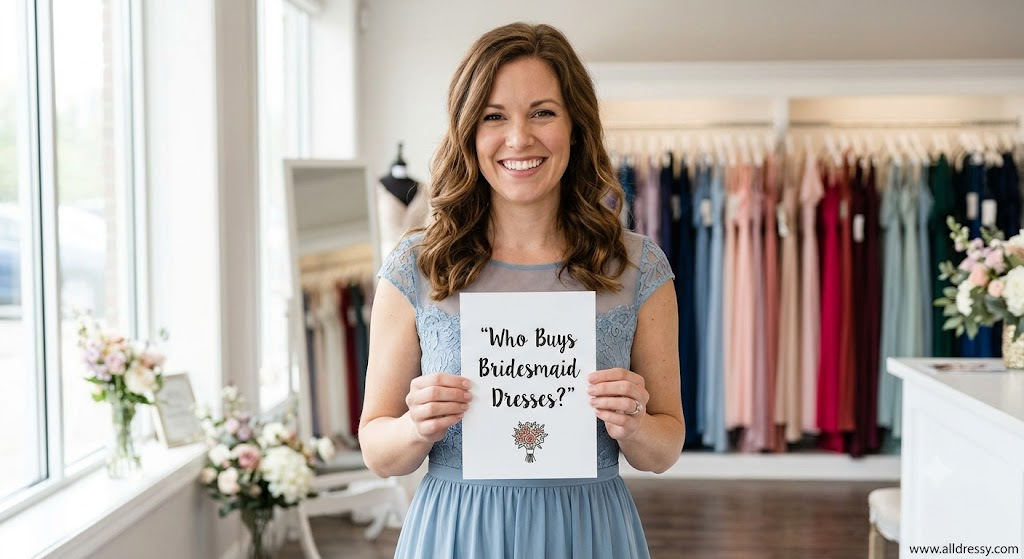
Traditionally, bridesmaids buy their own dresses. This custom developed because bridesmaids are members of the wedding party rather than hired participants. Each bridesmaid generally pays for the clothing and accessories she will wear during the wedding.
However, traditional etiquette does not mean that every wedding must follow the same financial arrangement. Wedding traditions have changed significantly, and couples now have many different ways to organize wedding expenses.
If bridesmaids are expected to purchase their dresses, the bride should communicate the approximate price range before asking them to commit. This gives each person an opportunity to consider whether the expense fits within her budget.
For example, a bride may choose dresses that cost around $100 to $200 each rather than selecting a designer gown that costs several hundred dollars. Being transparent about the expected cost can make the process easier for everyone.
Who Buys Bridesmaid Dresses in Modern Weddings?
In modern weddings, there is no single rule about who buys bridesmaid dresses. The person paying may depend on the couple’s financial situation and the preferences of the wedding party.
Some common arrangements include:
- Bridesmaids pay for their own dresses.
- The bride and groom pay for all bridesmaid dresses.
- The bride pays for part of each dress.
- The couple gives bridesmaids a fixed clothing allowance.
- Parents or family members contribute toward the dresses.
- Bridesmaids pay for the dresses while the couple covers alterations.
- The couple purchases the dresses and bridesmaids pay for accessories.
The best arrangement is usually the one that is discussed clearly before the dresses are ordered.
Why Do Bridesmaids Usually Pay for Their Own Dresses?
There are several reasons bridesmaids traditionally pay for their own dresses.
First, bridesmaids are voluntarily participating in the wedding. The dress is considered part of the clothing they need for the event, similar to formal clothing purchased for another special occasion.
Second, the bride often has many other wedding expenses to manage. Paying for several bridesmaid dresses can add hundreds or even thousands of dollars to the wedding budget.
Third, bridesmaids may have different preferences and budgets. Allowing them to purchase their own dresses can give them more flexibility.
However, this tradition becomes less practical when the bride chooses unusually expensive dresses or requires additional clothing that bridesmaids would not normally purchase.
When Should the Bride Pay for Bridesmaid Dresses?
There are several situations in which the bride or couple may reasonably decide to pay for bridesmaid dresses.
One example is when the bride has a very specific dress in mind that is expensive. If the bride insists that everyone wear a particular designer gown, covering some or all of the cost can be a considerate choice.
The same applies when the dress is highly specialized. A bridesmaid may never wear a formal floor-length gown again, especially if the wedding has an unusually elaborate dress code.
The bride may also pay when she has a large wedding budget and wants to give the dresses as gifts.
Another possibility is when the bride chooses dresses that are significantly more expensive than the bridesmaids expected. Instead of asking everyone to absorb an unexpected cost, the couple can contribute toward the purchase.
Should the Bride Pay for Bridesmaid Dresses as a Gift?
Yes, a bride can choose to purchase bridesmaid dresses as gifts. This can be especially thoughtful when the dress is expensive or highly specific to the wedding.
However, the bride should not feel obligated to pay for every bridesmaid dress simply because she is the bride. Wedding budgets vary widely.
If the bride does purchase the dresses, she can consider the dress part of a larger bridesmaid gift or provide the clothing separately from other gifts.
A personalized robe, jewelry, handbag, or other accessory may also be given to bridesmaids, but these additional gifts should be considered optional rather than required.
Who Buys Bridesmaid Dresses When the Bride Chooses the Style?
When the bride chooses the exact dress, payment expectations can become more complicated.
Suppose the bride gives bridesmaids freedom to select a dress from a specific color palette and general style. In that situation, it is common for bridesmaids to pay for their own dresses.
However, if the bride requires an exact designer gown, specific fabric, custom alterations, or a particular expensive style, she may want to consider paying for some or all of the expense.
The more specific the requirement, the more important it becomes to consider the financial impact on the bridesmaids.
How Much Do Bridesmaid Dresses Usually Cost?
The cost of bridesmaid dresses varies considerably. A simple dress from an affordable retailer may cost less than $100, while formal designer dresses can cost several hundred dollars or more.
The dress itself is only one part of the total expense.
Bridesmaids may also need to pay for:
- Alterations
- Shoes
- Jewelry
- Hair accessories
- Undergarments
- Handbags
- Shipping
- Taxes
- Garment care
- Transportation to fittings
Therefore, when discussing who buys bridesmaid dresses, it is better to discuss the complete expected cost rather than only the price shown on the dress.
For example, a $150 dress might eventually cost $220 or more after alterations and accessories.
Who Pays for Bridesmaid Dress Alterations?
In most cases, bridesmaids pay for their own alterations when they are responsible for purchasing their dresses.
Alterations are generally considered personal fitting expenses because every person’s body and preferred fit are different.
Common alterations include:
- Hemming the length
- Adjusting straps
- Taking in the waist
- Adjusting the bust
- Shortening sleeves
- Changing the neckline
- Adding or removing modesty panels
However, there are exceptions.
If the bride requires a major alteration for stylistic reasons, she may choose to pay for it. For example, if every bridesmaid must have the same custom modification, the couple could reasonably cover that additional expense.
Who Pays for Bridesmaid Shoes?
The answer to who buys bridesmaid dresses does not automatically determine who pays for shoes.
Shoes are usually purchased by the bridesmaids themselves. Some brides specify only a color or general style, allowing each bridesmaid to choose a pair she already owns or can afford.
For example, a bride might request nude, black, silver, or gold shoes without requiring everyone to buy the exact same pair.
This approach can reduce costs and give bridesmaids more freedom.
If the bride requires matching shoes from a particular retailer, she may consider purchasing them or providing a clothing allowance.
Who Pays for Bridesmaid Accessories?
Accessories such as earrings, necklaces, bracelets, hairpieces, or handbags can be handled in several ways.
If the bride wants everyone to wear identical accessories, she may purchase them as bridesmaid gifts. This can also make the wedding party look coordinated.
If bridesmaids have freedom to choose their accessories, they typically pay for their own items.
A particularly useful approach is to give bridesmaids a simple guideline rather than requiring exact pieces. For example, the bride might request simple pearl earrings or neutral-colored jewelry.
Who Buys Bridesmaid Dresses in a Destination Wedding?
Destination weddings can create additional financial challenges.
Bridesmaids may already be paying for:
- Flights
- Hotels
- Transportation
- Meals
- Wedding-related events
- Time away from school or work
- The bridesmaid dress
- Shoes and accessories
Because of these additional expenses, couples planning destination weddings should be especially thoughtful about dress costs.
If bridesmaids are paying significant travel expenses, the couple may choose to cover their dresses or provide a contribution.
Another option is selecting reasonably priced dresses that can be worn again for other occasions.
What If a Bridesmaid Cannot Afford the Dress?
One of the most important parts of deciding who buys bridesmaid dresses is recognizing that not every bridesmaid has the same financial situation.
A bride should avoid assuming that everyone can comfortably afford the selected dress.
If a bridesmaid privately explains that the dress is too expensive, the bride can consider several solutions.
She might:
- Choose a less expensive dress.
- Contribute toward the cost.
- Allow the bridesmaid to select a cheaper alternative.
- Provide a clothing allowance.
- Choose a dress style that can be worn again.
- Offer flexibility with accessories and shoes.
The goal should be to keep the wedding celebration enjoyable rather than creating unnecessary financial stress.
Should Bridesmaids Be Told the Dress Price Before Agreeing?
Yes. Price transparency is extremely important.
Before asking someone to become a bridesmaid, it is helpful to provide an approximate estimate of expected wedding-party expenses.
This may include the dress, alterations, shoes, travel, accommodation, and other required events.
A bridesmaid can then make an informed decision about participating.
If the dress cost changes later, the bride should communicate the change before ordering it.
Who Buys Bridesmaid Dresses for a Large Wedding Party?
Large wedding parties can make dress expenses especially significant.
For example, if eight bridesmaids each purchase a $200 dress, the total clothing cost is $1,600 before alterations and accessories.
If the couple wants to pay for the dresses, the wedding budget needs to account for this amount.
One solution is to establish a maximum budget per bridesmaid. Another is to choose a dress collection with several styles at different prices.
The bride can also allow bridesmaids to select different dresses within the same color family.
This can create a coordinated appearance without forcing everyone to purchase an identical gown.
Should Bridesmaids Choose Their Own Dresses?
Allowing bridesmaids to choose their own dresses can solve several financial and practical problems.
The bride can specify:
- Color
- Length
- Formality
- Fabric
- General silhouette
- Dress code
Each bridesmaid can then select a style that fits her budget and preferences.
This approach is particularly useful for weddings with a diverse wedding party because different people may prefer different cuts and levels of coverage.
It also increases the possibility that bridesmaids will wear their dresses again after the wedding.
Who Buys Bridesmaid Dresses When the Dresses Are Custom-Made?
Custom-made bridesmaid dresses can be significantly more expensive than standard ready-to-wear options.
If the bride requires custom dresses, it is worth discussing whether the couple will contribute toward the cost.
Custom dresses may involve:
- Fabric costs
- Design fees
- Pattern creation
- Sewing charges
- Multiple fittings
- Alterations
- Rush fees
- Special embellishments
If the customization is primarily for the bride’s preferred wedding aesthetic, paying for some of the expense can be a considerate choice.
Who Pays for Bridesmaid Dresses in a Traditional Formal Wedding?
A formal wedding often requires more expensive clothing than a casual ceremony.
If the wedding requires floor-length gowns, formal shoes, professional styling, and coordinated accessories, the total cost can quickly increase.
Traditionally, bridesmaids may still purchase their own dresses, but the bride should be realistic about the financial commitment.
A formal wedding does not automatically mean the bride must pay. It simply means that clear communication about the budget becomes more important.
How to Discuss Bridesmaid Dress Costs Politely
Money can be an uncomfortable subject, but avoiding the discussion can create bigger problems later.
A bride can make the conversation simple and direct.
For example, she can explain the approximate dress price, expected alteration costs, and whether shoes or accessories need to match.
The conversation should happen before bridesmaids place orders.
It is also helpful to avoid making anyone feel embarrassed about having a limited budget. Financial circumstances differ, and wedding participation should not become a test of how much someone can spend.
Who Buys Bridesmaid Dresses When the Bride Changes the Dress?
Sometimes the bride changes her mind after bridesmaids have already purchased their dresses.
If the original dresses can no longer be used and the change is entirely the bride’s decision, it may be reasonable for the bride or couple to cover the replacement cost.
This is especially true if bridesmaids already paid for alterations.
Before making a significant change, the bride should consider the financial consequences for everyone involved.
Who Pays If the Bridesmaid Dress Is Damaged?
Responsibility depends on how the damage occurred.
If a bridesmaid accidentally damages her own dress, she would generally be responsible for repairing or replacing it.
If the dress is damaged because of something associated with the wedding arrangements, responsibility may be different.
For example, if the wedding venue or wedding planner causes damage to a dress, the couple may need to help resolve the situation.
The best approach is to consider the circumstances rather than applying one universal rule.
Can Bridesmaids Wear Dresses They Already Own?
Absolutely. If the wedding style allows flexibility, wearing an existing dress can significantly reduce costs.
A bride might specify a color and dress length while allowing bridesmaids to choose something they already own.
This is particularly effective for casual, outdoor, minimalist, or modern weddings.
It can also make the wedding more sustainable by reducing the need to purchase clothing that may only be worn once.
How to Choose Affordable Bridesmaid Dresses
If bridesmaids are expected to pay for their own dresses, affordability should be part of the selection process.
Consider dresses that:
- Are available at multiple price points
- Require minimal alterations
- Can be worn after the wedding
- Use comfortable fabrics
- Do not require expensive accessories
- Are available in several sizes
- Have flexible styling options
- Can be purchased without rush shipping
A versatile dress is often a better choice than an extremely specialized gown.
Who Buys Bridesmaid Dresses as Part of the Wedding Budget?
When creating a wedding budget, the couple should decide early whether bridesmaid dresses are their responsibility.
If the couple plans to pay, the expense should be included alongside other wedding-party costs.
A simple budget might separate:
- Bridesmaid dresses
- Groomsmen attire
- Accessories
- Alterations
- Wedding-party gifts
- Transportation
- Pre-wedding events
This makes it easier to determine how much can reasonably be spent on clothing.
Is It Rude to Ask Bridesmaids to Buy Their Own Dresses?
No. It is not automatically rude to ask bridesmaids to purchase their own dresses.
It becomes problematic when the bride expects bridesmaids to pay for expenses that were not clearly communicated or when the required clothing is far beyond the budget previously discussed.
The most important factors are transparency, consideration, and reasonable expectations.
If bridesmaids know the approximate costs before accepting the role, they can make their own decisions.
How Far in Advance Should Bridesmaid Dresses Be Purchased?
Bridesmaid dresses should generally be ordered well before the wedding date, particularly if they are being made to order.
Ordering early provides time for:
- Shipping
- Fittings
- Alterations
- Exchanges
- Unexpected delays
- Accessories
- Final adjustments
Last-minute shopping can create unnecessary stress and may result in rush fees or limited availability.
The exact timeline depends on the retailer, designer, dress type, and wedding date.
How Can Brides Make Bridesmaid Dresses More Affordable?
There are many ways to reduce the cost without sacrificing the overall wedding aesthetic.
Choose a Flexible Dress Code
Instead of requiring an exact gown, choose a color palette and general style.
Allow Different Dress Styles
Bridesmaids can select silhouettes that work for them while maintaining a coordinated appearance.
Choose Rewearable Dresses
A dress that can be worn to another formal event offers greater value.
Avoid Excessive Accessories
If the dress is already detailed, simple accessories may be enough.
Consider Off-the-Rack Options
Ready-to-wear dresses can sometimes be more affordable than custom or made-to-order gowns.
Avoid Last-Minute Purchases
Early shopping can help prevent rush shipping and alteration expenses.
Who Buys Bridesmaid Dresses: A Fair Approach for Everyone
Ultimately, who buys bridesmaid dresses depends on the wedding’s traditions, budget, expectations, and circumstances.
The most important principle is not whether the bride, couple, or bridesmaids technically pay. It is whether everyone understands the financial expectations before committing to the purchase.
When bridesmaids are paying, the bride should consider selecting dresses at a reasonable price and communicating additional expenses clearly. When the couple has a larger budget, paying for dresses can be a generous way to reduce the financial burden on the wedding party.
A flexible approach can work particularly well. The couple might establish a specific amount they are comfortable contributing, while bridesmaids cover any optional upgrades or personal expenses.
Key Factors to Consider Before Deciding Who Buys Bridesmaid Dresses
Before finalizing the payment arrangement, consider the following factors:
Wedding Budget
Determine whether the couple can comfortably afford to purchase several dresses.
Dress Price
Consider not only the listed price but also alterations, taxes, shipping, and accessories.
Wedding Location
Destination weddings may require bridesmaids to spend considerably more on travel.
Dress Requirements
An exact designer gown creates a different financial expectation from a flexible color-and-style dress code.
Wedding Party Size
The larger the wedding party, the more significant the total expense becomes.
Bridesmaids’ Circumstances
A reasonable price for one person may be difficult for another.
Reusability
A versatile dress can provide more value than a gown designed exclusively for one wedding.
Communication
Discuss expenses before ordering rather than after the dresses have been purchased.
A Practical Payment Model for Bridesmaid Dresses
For couples who are uncertain about who buys bridesmaid dresses, a shared-cost model can be a useful compromise.
For example, the couple could contribute a fixed amount toward each dress. Bridesmaids would then pay the remaining balance, along with their own alterations.
Another model is for the bridesmaids to pay for their dresses while the couple purchases matching accessories as gifts.
A third option is for the couple to pay for the dress while each bridesmaid handles her shoes and alterations.
These arrangements can make the financial responsibility more predictable while still allowing everyone some flexibility.
Final Thoughts on Who Buys Bridesmaid Dresses
The question of who buys bridesmaid dresses has no universal answer. Traditional etiquette generally places the dress cost on the bridesmaids, but modern weddings increasingly use flexible arrangements based on budget, dress requirements, and individual circumstances.
The most successful approach is to decide the payment arrangement early, communicate the expected cost clearly, and consider all additional expenses before choosing the dresses. Bridesmaids should know what they are expected to pay before committing to the purchase.
Whether the couple pays for everything, bridesmaids purchase their own dresses, or both sides share the expense, thoughtful planning can make the process smoother and help everyone focus on celebrating the wedding rather than worrying about unexpected costs
FAQs About Who Buys Bridesmaid Dresses
Who usually buys bridesmaid dresses?
Traditionally, bridesmaids usually purchase their own dresses. However, modern weddings often use different arrangements. The bride or couple may pay for the dresses, contribute a fixed amount, or cover specific expenses depending on the wedding budget and dress requirements.
Does the bride have to pay for bridesmaid dresses?
No, the bride does not have to pay for bridesmaid dresses. It is common for bridesmaids to purchase their own dresses. However, if the bride chooses particularly expensive or custom-made dresses, she may decide to contribute toward the cost or pay for the dresses completely.
Should bridesmaids know the dress price before accepting the role?
Yes. Bridesmaids should ideally know the approximate cost of the dress and other required expenses before accepting the role. This allows them to determine whether the financial commitment fits their budget and avoids uncomfortable surprises later.
Who pays for bridesmaid dress alterations?
Bridesmaids generally pay for their own alterations when they purchase their dresses. Alteration costs can include hemming, adjusting straps, changing the waist, or modifying the fit. If the bride requests special alterations for everyone, the couple may choose to cover those additional costs.
Who pays for bridesmaid shoes?
Bridesmaids commonly purchase their own shoes. If the bride requires a specific pair, color, or expensive style, she may choose to provide the shoes or contribute toward the expense. Allowing bridesmaids to wear shoes they already own can help reduce costs.
Who pays for bridesmaid accessories?
The payment arrangement for accessories depends on the wedding. Bridesmaids may purchase their own jewelry and accessories, while some brides provide matching accessories as gifts. If identical accessories are required, the bride or couple may reasonably choose to cover the expense.
What if a bridesmaid cannot afford the dress?
The bride should handle the situation sensitively. Possible solutions include selecting a less expensive dress, contributing toward the cost, allowing the bridesmaid to choose a cheaper alternative, or establishing a clothing allowance. The goal should be to avoid placing unnecessary financial pressure on the wedding party.
Do bridesmaids have to wear matching dresses?
No. Bridesmaids do not necessarily need to wear identical dresses. Many modern weddings use a coordinated color palette, similar fabrics, or complementary styles instead. This approach can give bridesmaids more freedom while maintaining a cohesive wedding-party appearance.
Can bridesmaids wear dresses they already own?
Yes, if the bride allows it. A color-and-style dress code can make it possible for bridesmaids to use dresses they already have. This can be a practical option for casual weddings and can significantly reduce wedding-related expenses.
Who pays for bridesmaid dresses at a destination wedding?
There is no universal rule. Traditionally, bridesmaids may still pay for their dresses, but destination weddings often create additional travel and accommodation expenses. Because of this, some couples choose to pay for the dresses or provide a contribution to reduce the overall financial burden.
Is it rude to ask bridesmaids to buy their own dresses?
No. Asking bridesmaids to purchase their own dresses is a common wedding practice. It becomes a concern when the cost is unexpectedly high or when financial expectations are not communicated in advance. Clear and respectful communication is the most important part of the process.
Should the bride pay if she changes the bridesmaid dress?
If the bridesmaids have already purchased dresses and the bride later changes the required style, the bride or couple may reasonably consider paying for replacement dresses. This is especially considerate when the original dresses can no longer be used and the change was not caused by the bridesmaids.
Conclusion
The answer to who buys bridesmaid dresses depends on the traditions, budget, dress requirements, and circumstances of each wedding. Traditionally, bridesmaids purchase their own dresses, but modern couples have plenty of flexibility. The bride and groom may pay for the dresses, contribute toward the cost, or share expenses with the wedding party.
The most important consideration is communication. Bridesmaids should understand the expected dress price and any additional costs, such as alterations, shoes, accessories, and shipping, before committing to the purchase. Brides should also consider the different financial situations of their wedding party when selecting dresses.
Whether bridesmaids pay for their own dresses or the couple covers the expense, a thoughtful and transparent approach can make wedding planning easier for everyone. Choosing reasonably priced, comfortable, versatile dresses and discussing financial expectations early can help prevent misunderstandings and allow the wedding party to enjoy the celebration without unnecessary financial stress.