
For generations, footwear has been far more than a functional necessity. It is a declaration of personal style, social standing, and aesthetic intent. Yet, when entering the world of formal and professional attire, many individuals find themselves asking: what are dress shoes female options, and how do they differ from casual footwear?
Unlike men’s dress shoes, which typically follow a strict and relatively limited set of rules (such as Oxfords, Derbies, and loafers), women’s dress shoes encompass a vast, deeply expressive spectrum of designs. They span from towering structural stilettos and elegant block heels to tailored flat slip-ons and architectural loafers.
Understanding what are dress shoes female varieties requires looking closely at materials, silhouettes, heel heights, and historical dress codes. Whether you are building a professional wardrobe, preparing for a black-tie gala, or looking to elevate your daily style, this comprehensive guide will dissect the structural definitions, diverse categories, and styling rules of the modern female dress shoe.
Defining the Category: What Are Dress Shoes Female Standards?
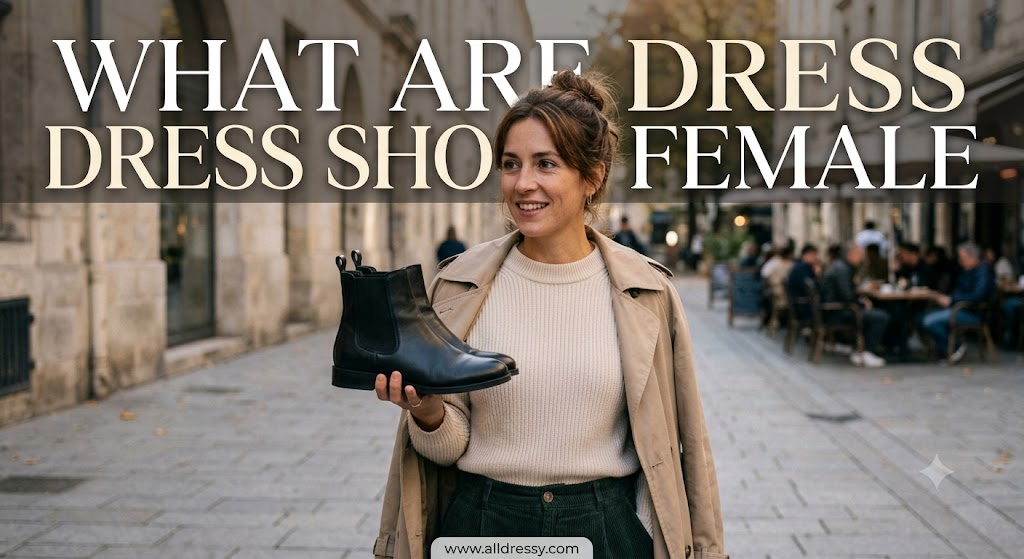
At its core, a female dress shoe is any footwear designed to be worn for formal, semi-formal, professional, or elegant social occasions. While comfort has increasingly influenced contemporary fashion, a dress shoe is distinguished from casual footwear (like athletic sneakers, canvas slip-ons, or utilitarian boots) by several key elements:
- Premium Materials: True dress shoes are crafted from high-grade leather, suede, patent leather, satin, velvet, or advanced, high-quality synthetic alternatives.
- Refined Construction: They feature clean stitching, finished edges, polished hardware, and minimal bulkiness.
- Structured Silhouette: Even when flat, a dress shoe retains a distinct shape—such as a pointed, square, or almond toe—that visually elongates or refines the foot.
- Polished Finish: The soles are typically thin and elegant, avoiding the chunky rubber outsoles associated with activewear or casual street shoes.
The Core Classifications of Women’s Dress Shoes
To truly answer the question of what are dress shoes female classifications, we must break down the market into its distinct style families. Each of these styles serves a specific aesthetic and functional purpose.
1. Pumps and Court Shoes
Pumps are the quintessential women’s dress shoe. Characterized by a low-cut front (vamp) that exposes the top of the foot, a closed back, and a seamless slip-on design, pumps are the ultimate chameleon of formal footwear.
- Classic Pumps: Typically feature a heel height ranging from 2 to 4 inches, with either a pointed or almond toe.
- Court Shoes: A slightly more conservative European term for pumps, often featuring a sturdier heel and a lower-cut upper line.
- D’Orsay Pumps: A dramatic variation where the side panels of the shoe are cut away, exposing the arch of the foot for a highly elegant, sensual silhouette.
2. Slingbacks
Slingbacks strike a beautiful balance between a pump and a sandal. They feature a closed toe (though peep-toe varieties exist) and an open heel secured by a delicate strap that wraps around the back of the ankle.
- Style Note: Slingbacks are highly favored in professional settings during warmer months because they offer the polish of a closed-toe shoe with the breathability of an open back.
3. Mary Janes
Historically a juvenile style, Mary Janes have transitioned into a powerhouse of high-fashion female dress wear. They are defined by a closed toe and one or more straps running across the instep of the foot.
- Heeled Mary Janes: Feature chunky block heels or kitten heels, offering a retro-chic look that pairs beautifully with tailored trousers and A-line skirts.
- Flat Mary Janes: Offer an elegant, low-profile alternative to heels, often detailed with pearl-embellished or metallic-buckled straps.
4. Loafers and Oxfords
For those who prefer tailored, gender-neutral, or menswear-inspired aesthetics, structured flats are a cornerstone of dress footwear.
- Penny Loafers: A slip-on shoe with a mock-toe seam and a leather strap across the vamp. Polished patent leather penny loafers are widely accepted in highly formal corporate environments.
- Bit Loafers: Feature a metal bar (often resembling a horse bit) across the instep, adding an instant touch of luxury and prestige.
- Oxfords & Brogues: Lace-up shoes featuring closed lacing (Oxfords) or decorative perforations (Brogues). These provide unmatched structure and support for formal business wear.
5. Ballet Flats
Can a flat shoe truly be a dress shoe? Yes, provided the structure and materials are sufficiently elevated.
- Dressy Ballet Flats: Differentiated from casual house slippers by a rigid sole, structured toe box (often pointed or square), and premium materials like metallic leather, suede, or woven satin. They provide the polished look of a pump without the physical strain.
6. Mules and Slides
Mules are characterized by a closed front and a completely backless design.
- Flat Mules: Often pointed-toe and rendered in rich velvets or embossed leathers, making them a staple for creative offices and smart-casual events.
- Heeled Mules: Feature kitten, stiletto, or block heels. Because they lack an ankle strap, they require precise engineering to stay securely on the foot while walking.
7. Dress Sandals
In warm-weather formal environments, weddings, and evening galas, dress sandals are highly appropriate.
- Strappy Stilettos: Feature ultra-thin straps that minimally cover the foot, focusing attention on a high, slender heel.
- Block-Heel Sandals: Provide a broader base of support, making them the ideal choice for outdoor venues, such as lawn weddings or historic paved streets.
Anatomy of a Female Dress Shoe: Key Design Elements
To fully comprehend what are dress shoes female designers create, one must understand the anatomy of the shoe. Each component can drastically alter the formality, comfort, and style of the footwear.
| Component | Common Variations | Formality Level | Best Suited For |
| Toe Shape | Pointed, Almond, Square, Round, Peep-toe | Pointed/Almond (Highly Formal), Square/Round (Casual-Smart) | Pointed elongates the frame; Square offers retro modernism. |
| Heel Style | Stiletto, Block, Kitten, Wedge, Flat | Stiletto (Formal/Evening), Block (Workplace), Kitten (Micro-chic) | Stilettos offer height; Block heels offer unmatched stability. |
| Vamp Cut | Low-vamp, High-vamp, V-cut | Low-vamp is traditional; High-vamp (glove style) is modern | V-cut vamps visually lengthen the leg line. |
| Fastening | Slip-on, Buckle, Ankle strap, Lace-up | Slip-on/Buckle (Classic), Lace-up (Tailored Professional) | Ankle straps add stability but can visually bisect the leg. |
Understanding Toe Shapes and Their Impact on Style
The toe box of a dress shoe dictates its overall aesthetic and how it interacts with the rest of your outfit.
Pointed Toes
Pointed-toe shoes are the gold standard of formal wear. By drawing the eye to a sharp point, they create a continuous, uninterrupted line down the leg, making the wearer appear taller and more streamlined. They are perfect under wide-leg trousers or paired with midi dresses.
Almond Toes
A softer, more forgiving cousin of the pointed toe, the almond toe mimics the natural curve of the foot while remaining highly sophisticated. It is a favored silhouette for classic business pumps and high-end loafers.
Square Toes
Square-toe shoes offer a distinctly modern, architectural look. They bring an edgy, structured aesthetic to an outfit, making them highly popular in contemporary professional circles and fashion-forward street style.
Round and Peep-Toes
Round toes are softer and inherently more casual, though highly polished round-toe pumps or Mary Janes carry an iconic, retro appeal. Peep-toes show just a hint of the toes and are traditionally reserved for semi-formal, cocktail, or daytime formal events.
What Are Dress Shoes Female Heel Heights and When to Wear Them?
Heel height is often the most critical factor in deciding whether a shoe fits a particular occasion or dress code.
[ Flats ] -----------------> [ Kitten Heels ] --------------> [ Mid-Heels ] --------------> [ High Heels ]
(0 to 0.75 inches)           (1 to 1.75 inches)               (2 to 3 inches)              (3.5 to 4.5+ inches)
Best for: All-day mobility,  Best for: Desk-to-dinner,        Best for: Business formal,   Best for: Black-tie,
commutes, tailored suitings. minimalist sophistication.       boardroom presentations.     galas, evening events.
Flats (0 to 0.75 inches)
Flats have reclaimed their rightful spot in the formal wear landscape. Gone are the days when women were required to wear heels to look professional. A pointed-toe flat in premium black leather, patent finish, or deep jewel-toned suede is fully acceptable in corporate boardrooms and upscale events.
Kitten Heels (1 to 1.75 inches)
Made famous by style icons like Audrey Hepburn, the kitten heel is a micro-heel that offers just a touch of lift while keeping the foot at a comfortable, natural angle. It is highly feminine, elegant, and exceptionally practical for jobs that require standing or walking.
Mid-Heels (2 to 3 inches)
The absolute workhorse of the professional wardrobe. A 2.5-inch block heel or sturdy pump provides height and posture correction without causing the severe joint strain associated with higher stilettos.
High Heels (3.5 to 4.5+ inches)
Reserved primarily for formal evening wear, galas, red carpets, and highly styled social events. High stilettos shift the body’s center of gravity forward, creating a dramatic arch in the foot and elongating the legs. They are best worn when sitting is frequent and walking is kept to a minimum.
Materials Matter: Selecting High-Value Fabrics
The material of your shoe directly influences how formal it looks and how long it will last. When shopping for investment pieces, prioritize these materials:
Full-Grain and Top-Grain Leather
The most durable and breathable material available. Leather molds to the shape of your foot over time, preventing blisters and offering natural temperature regulation. High-quality calfskin or nappa leather develops a beautiful patina and can be polished repeatedly to look brand new.
Patent Leather
Leather treated with a high-gloss, reflective finish. It is exceptionally formal and water-resistant. Patent leather pumps are a classic choice for black-tie optional events and formal business wear. However, they are prone to scuffing and require immediate care if scratched.
Suede
Suede is leather with a napped, velvety finish. It absorbs light rather than reflecting it, giving colors a rich, deep saturation. Suede pumps and flats are incredibly elegant for autumn and winter wardrobes but must be treated with a protective spray to prevent water staining.
Satin and Silk
The domain of evening wear. Satin shoes, often adorned with rhinestone buckles or pearl embellishments, are designed for weddings, galas, and upscale cocktail parties. They are delicate and can be permanently stained by moisture or dirt, meaning they require gentle, indoor-only wear.
Styling Guide: Matching Dress Shoes to Your Outfit
Knowing how to pair your dress shoes with different silhouettes is key to creating a cohesive, balanced look.
With Wide-Leg Trousers
Wide-leg pants require shoes that can hold their own against the heavy volume of fabric.
- Best choice: Pointed-toe pumps, structured square-toe block heels, or substantial patent loafers. The sharp or structured toe peeking out from under the hemline prevents the trousers from swallowing your frame.
With Midi Skirts and Dresses
Midi lengths hit mid-calf, which can sometimes visually shorten the legs.
- Best choice: Nude pumps, slingbacks, or pointed-toe flats. Choosing a shoe color that closely matches your skin tone creates an illusion of continuous length, balancing the proportions of a midi hemline.
With Slim-Cut or Ankle Pants
Ankle-length trousers are incredibly versatile and put your shoes on full display.
- Best choice: Classic loafers, Mary Jane flats, or kitten-heel slingbacks. This pairing highlights the narrowest part of your leg (the ankle) for a highly polished, Euro-chic finish.
Buying Guide: How to Select the Perfect Pair of Female Dress Shoes
Investing in dress shoes requires looking beyond aesthetics to prioritize construction, fit, and foot health. Keep these factors in mind when shopping:
- Shop in the Afternoon: Your feet naturally swell throughout the day due to gravity and walking. To ensure your dress shoes will remain comfortable during long events, try them on in the late afternoon or evening.
- Check the Toe Box: Your toes should have room to wiggle slightly. If a pointed shoe pinches your pinky toe or forces your toes to overlap, size up or look for a brand that offers wide-width options.
- Evaluate Arch Support: Many cheap flats and high pumps lack proper arch support, causing plantar fasciitis over time. Look for padded insoles, or buy shoes a half-size larger to accommodate high-quality orthotic inserts.
- Test the Heel Placement: On a well-constructed heel, the heel stem should sit directly under the center of your heel bone, not pushed too far back. Proper alignment distributes your body weight evenly and prevents back pain.
Professional Care: Extending the Lifespan of Your Shoes
Because high-quality dress shoes are an investment, proper maintenance is essential to keep them looking pristine and performing well for years:
- Rotate Your Shoes: Avoid wearing the same pair of leather dress shoes two days in a row. Leather needs at least 24 hours to air out and release the moisture absorbed from your feet, which prevents stretching and structural degradation.
- Use Shoe Trees: For structured flats, loafers, and closed-toe heels, insert cedar shoe trees when they are not in use. Cedar absorbs moisture, deodorizes naturally, and helps the leather maintain its original shape.
- Add Sole Protectors: Most luxury dress shoes feature painted leather soles, which wear down quickly on asphalt and concrete. Ask a professional cobbler to apply a thin, slip-resistant rubber sole protector (such as Vibram) to dramatically extend the life of the shoe.
- Weatherproof Immediately: Before wearing suede or soft leather shoes outside, treat them with a high-quality water and stain repellent spray. Clean scuffs immediately with a specialized leather cleaner or a soft suede brush.
Frequently Asked Questions
What makes a shoe a “dress shoe” for women?
A female dress shoe is defined by its premium materials (such as full-grain leather, patent leather, suede, or satin), refined construction, and structured silhouette. Unlike casual footwear, dress shoes feature clean stitching, polished finishes, thin soles, and a shaped toe box (like pointed, almond, or square) designed to complement formal, professional, or smart-casual attire.
Can flat shoes be considered formal dress shoes?
Absolutely. Modern dress codes fully recognize high-quality flats as appropriate for formal and professional settings. To qualify as a dress shoe, a flat should feature a structured toe box (such as a sharp pointed toe), be made of elevated materials like patent leather or embellished satin, and have a rigid, supportive sole rather than a soft, slipper-like construction.
How do I choose the right heel height for the office?
For a professional office environment, a heel height between 1.5 to 3 inches (such as a kitten heel or a sturdy block heel) is generally considered the sweet spot. This range provides a polished posture and height without causing excessive physical fatigue during long workdays.
What are the most comfortable dress shoes for standing all day?
If your routine requires standing for extended periods, look for dress shoes with block heels, wedge heels, or structured flats. Ensure the shoes feature built-in arch support, padded insoles, and a wider toe box (like an almond or square shape) to accommodate natural foot swelling throughout the day.
How should female dress shoes fit?
Your dress shoes should feel snug but not restrictive. There should be roughly a thumb’s width of space between your longest toe and the end of the shoe, and your toes should be able to wiggle slightly without pinching. The heel should not slip out when you walk, and the sides of the shoe should not dig into your ankles or arches.
Conclusion
Navigating the diverse world of women’s dress shoes is an exercise in balancing personal expression with situational etiquette. From the timeless, leg-lengthening silhouette of the classic pointed pump to the sharp, structural authority of a patent leather loafer, the right footwear has the power to anchor and elevate any ensemble.
By understanding the distinct classifications, analyzing structural elements like toe shapes and heel heights, and prioritizing high-quality materials, you can curate a versatile footwear collection that delivers both elegance and comfort. Investing in well-constructed dress shoes and maintaining them with proper care ensures that you will always step out with confidence, no matter how formal the occasion.