
Navigating the nuances of modern professional attire can feel like decoding a shifting set of unwritten rules. In today’s corporate landscape—where traditional business formal, creative professional, and casual startup environments coexist—determining exactly how to balance personal style with office-appropriate modesty is an art form. The dress remains one of the most powerful garments in a woman’s professional wardrobe; it offers a complete, streamlined look in a single piece, eliminating the stress of matching separates during a rushed morning commute.
However, translating a weekend or evening frock into a boardroom-ready ensemble requires intentional styling. When executed without an eye for fabric structure, neckline boundaries, and layering mechanics, a dress that should project executive presence can easily miss the mark. Learning how to wear a dress to work like a seasoned corporate leader means understanding the hidden architecture of professional clothing. This comprehensive masterclass covers the precise rules of corporate dress silhouettes, textile selections, smart undergarments, footwear pairings, and tailoring adjustments required to build a highly optimized, professional work wardrobe.
Decoding Your Office Environment: The Three Professional Dress Categories
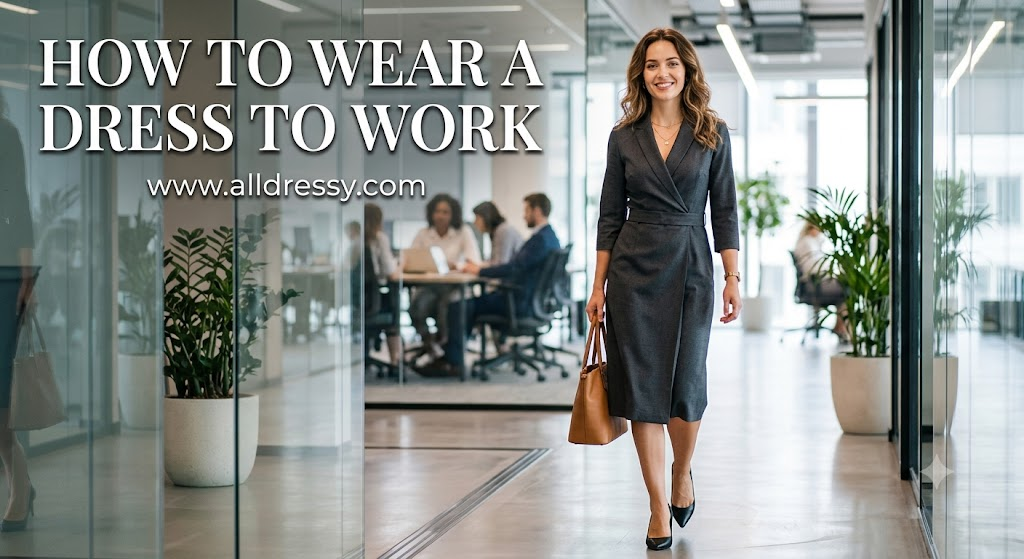
Before selecting a dress from your closet, you must accurately evaluate the cultural landscape of your workplace. Professional environments generally fall into one of three distinct style categories, each with its own set of rules and boundaries.
Professional Dress Spectrum:
┌──────────────────────────────┼──────────────────────────────┼──────────────────────────────┐
│       Business Formal        │     Business Casual          │     Creative / Startup       │
├──────────────────────────────┼──────────────────────────────┼──────────────────────────────┤
│ • Tailored Sheath Dresses    │ • A-Line & Midi Silhouettes  │ • Shirt Dresses & Wraps      │
│ • Solid Neutrals Only        │ • Muted Patterns & Textures  │ • Bold Prints & Knits        │
│ • Always Paired with Blazers │ • Optional Smart Outerwear   │ • Paired with Loafers/Boots  │
└──────────────────────────────┴──────────────────────────────┴──────────────────────────────┘
1. Traditional Business Formal (Corporate, Finance, Law)
In high-stakes corporate environments like law firms, investment banks, and executive boardrooms, the style rules are conservative and rigid. Here, your dress choices must prioritize structure and clean lines. The primary goal is to project stability, authority, and meticulous attention to detail.
2. Business Casual (Tech Corporate, Education, Marketing)
The most common yet frequently misunderstood category, business casual allows for a broader expression of personal style while maintaining a clear boundary of professionalism. In these spaces, ultra-rigid suits are set aside in favor of softer silhouettes, varied textile textures, and muted patterns, provided the overall look remains highly polished.
3. Creative Professional and Smart Startup
Creative environments—such as design agencies, fashion offices, and modern tech startups—embrace trend-forward styling, bold colors, and utilitarian comfort. While the boundaries of modesty remain, you have full freedom to experiment with unique geometries, casual fabrics, and statement footwear.
The Four Essential Office Dress Silhouettes
To build a reliable capsule wardrobe that simplifies the process of how to wear a dress to work, look for these four foundational dress silhouettes. These designs are celebrated for their natural ability to look polished, professional, and sophisticated in a workplace setting.
1. The Tailored Sheath Dress
The sheath dress is a form-fitting silhouette that features a straight cut, a defined waist, and a hemline that hits right at or below the knee. Because of its clean geometry, it is the ultimate power dress for business formal environments. It functions beautifully as a base layer underneath tailored blazers and structured trench coats.
2. The Classic A-Line and Fit-and-Flare Dress
Characterized by a fitted bodice that gently flares out from the natural waist down to the hem, the A-line dress offers exceptional comfort and mobility. It provides a timeless, balanced look that is highly effective for long days packed with meetings, as the flared skirt does not restrict your stride or pull when you sit at a desk.
3. The Structural Wrap Dress
Popularized as a workspace staple, the wrap dress uses a dynamic, overlapping closure that conforms cleanly to your frame. When choosing a wrap dress for work, look for variants with built-in collar configurations or hidden safety buttons along the neckline to ensure the deep-V plunge stays completely secure and professional throughout active workdays.
4. The Tailored Shirt Dress
Borrowing architectural details from the classic men’s button-down shirt—including a structured collar, button placket, and cuffed sleeves—the shirt dress balances casual comfort with sharp tailoring. It is an exceptional option for business casual and creative office environments, adapting easily to styling with belts, blazers, and various footwear styles.
The Modesty Matrix: Hemlines, Necklines, and Sleeve Rules
The most critical factor in determining whether a garment is appropriate for the office is its physical dimensions. Even the most expensive designer dress will fail in a corporate setting if its cut compromises professional boundaries.
The Knee-Line Mandate
When analyzing how to wear a dress to work, the hemline is your primary consideration. The golden rule for corporate and business casual environments dictates that your hemline should rest no higher than two inches above the top of your kneecap.
The Desk Test: Before clearing a dress for office wear, sit down in front of a mirror. Many dresses that appear appropriately long while standing can ride up significantly when you sit, exposing too much thigh. If the hemline climbs past mid-thigh when seated, save the dress for your weekend wardrobe.
Navigating Neckline Boundaries
Plunging necklines, deep scoops, and dramatic cowls have no place in a professional office setting. Aim to keep your necklines conservative:
- Safe Choices: Boatnecks, crew necks, mock necks, and modest jewel necklines are universally safe and professional.
- The Four-Inch Rule: For V-necks, wrap dresses, and scoop necks, the lowest point of the neckline should sit no lower than four inches below your collarbone. If a dress cuts lower, layer an ultra-fine silk camisole or a tailored tank top underneath to provide seamless coverage.
Shoulder Coverage Realities
Even in casual office settings, completely bare shoulders can lean a bit too casual. If you want to wear a sleeveless sheath or A-line dress to work, the shoulder straps must be wide—at least three to four inches—to completely cover your undergarments. As a general rule, pair sleeveless dresses with a lightweight layer like a blazer, cardigan, or tailored jacket to maintain a polished look throughout the day.
Fabric Selection: Choosing Textiles that Resist Wrinkles and Maintain Structure
An often overlooked aspect of office attire is how the fabric behaves after sitting at a desk for several hours. If your dress fabric wrinkles easily, you will look unkempt and disheveled by your afternoon presentations.
| Fabric Type | Professional Rating | Wrinkle Resistance | Best Structural Use |
| Wool Crepe | Excellent (Formal) | High | Structured sheath dresses and winter tailoring. |
| Ponté Knit | Excellent (Casual) | Ultra-High | Double-knit construction that holds shape and stretches. |
| 100% Linen | Poor (Unsafe) | Extremely Low | Avoid for work; wrinkles instantly upon sitting. |
| Cotton Poplin | Moderate | Medium | Best used for sharp shirt dresses; requires ironing. |
| Triacetate / Polyester | High | High | Travel-friendly capsule pieces; drapes smoothly. |
The Miracle of Ponté Knit
If you prioritize comfort but need to look sharp, search for dresses made from Ponté knit. This is a heavy, double-knit fabric made from a blend of rayon, nylon, and spandex. Unlike flimsy jersey fabrics that cling to the body and look casual, Ponté knit is thick, sturdy, and structural. It holds its shape beautifully, offers comfortable four-way stretch, and is virtually immune to wrinkling, making it the premier textile for long office flights and marathon desk sessions.
The Third-Piece Rule: Engineering Layered Authority
The fastest way to elevate a simple dress into a commanding professional outfit is by applying the “Third-Piece Rule.” This styling concept states that an outfit consisting of just a top and bottom (or a single dress) is functional, but adding a third structural piece—like a blazer, jacket, or tailored vest—creates a complete, intentional look.
Layering Architecture:
    [Base Layer: Simple Sheath Dress]
                 ▲
                 │  ◄─── Add The "Third Piece" (Tailored Blazer)
                 ▼
    [Result: High-Structure Corporate Ensemble]
1. The Power Blazer Integration
Pairing a sharp blazer over a dress instantly sharpens the shoulders and gives the outfit a commanding silhouette.
- With Sheath Dresses: Pair a fitted, cropped blazer with a classic sheath dress. The cropped hemline emphasizes your natural waist without adding bulk over your hips.
- With A-Line Dresses: Choose a tailored, single-breasted blazer that is lightly nipped at the waist to complement the flared skirt of the dress without compressing it awkwardly.
2. The Contemporary Longline Vest
For warm-weather styling or creative offices, swap your traditional blazer for a longline, sleeveless tailored vest. A structural vest that hits mid-thigh or near the knee creates clean vertical lines down your torso. This leaves your arms free, keeps you cool during hot commutes, and adds a modern, sophisticated layer over simple shirt dresses or minimalist shift designs.
Footwear Curation: Balancing Style and Office Practicality
Your footwear choice grounds your entire outfit and sets its professional tone. The ideal shoe should offer complete comfort for walking between meetings while maintaining sharp design lines.
1. The Classic Pointed-Toe Pump and Block Heel
A pointed-toe shoe visually elongates your legs, making it an excellent companion for midi and knee-length dresses. If traditional stilettos cause discomfort during long workdays, opt for a modern block heel ranging between 1.5 to 2.5 inches. Block heels provide a wider base of support on office flooring while offering a polished, professional lift.
2. Tailored Loafers and Pointed Flats
You do not need to wear heels to look authoritative in a dress. High-quality leather loafers, sleek pointed-toe ballet flats, or tailored smoking slippers work beautifully with office dresses. When styling flats, ensure the shoe features a structured sole and premium leather construction to keep the look feeling sophisticated rather than overly casual.
3. Professional Boot Integration
During cold weather months, dresses pair exceptionally well with structured leather boots.
- Ankle Boots: Pair ankle boots with dresses that hit above the knee, or ensure the boot features a slim shaft that tucks cleanly beneath a midi hemline.
- Knee-High Boots: A classic office styling formula is pairing a pleated midi dress with high-quality, structured knee-high leather boots. Ensure the hem of the dress slightly overlaps the top of the boot to create a long, elegant line that keeps you warm during winter commutes.
Strategic Interior Management: Undergarments and Shape Retention
The final step in mastering how to wear a dress to work involves managing what happens underneath the garment. Because office lighting is notoriously bright and unforgiving, your undergarment choices require careful attention.
Seamless Foundations
Always wear seamless, skin-tone matching undergarments beneath your office dresses. Avoid heavy lace, decorative embroidery, or bright colors that can show through lighter dress fabrics under bright fluorescent office lights.
The Anti-Static Slip Shield
If your dress is unlined or made from synthetic fibers, it can cling to your legs or ride up awkwardly as you walk across carpeted office floors. To eliminate static friction, always wear a lightweight, anti-static nylon or silk slip beneath your dress. A slip ensures the dress fabric drapes smoothly and flows naturally with your movement, preserving your professional silhouette all day long.
Frequently Asked Questions (FAQs)
What types of dresses should be completely avoided in a professional workplace?
You should avoid dresses made from ultra-casual fabrics like thin beach jersey, unlined linen, or distressed denim. Additionally, silhouettes designed for evening or weekend wear—such as slip dresses with spaghetti straps, strapless designs, dresses with dramatic cutouts, and anything with a hemline sitting mid-thigh or higher—should be kept out of the office. If a dress looks at home at a beach resort or a nightclub, it will look out of place in a corporate setting.
How can I make a sleeveless dress appropriate for a conservative corporate office?
The most reliable way to wear a sleeveless dress in a formal workspace is by applying the “Third-Piece Rule.” Layer a tailored, structured blazer, a sharp cropped jacket, or a high-quality cardigan over the dress to keep your shoulders covered. Alternatively, you can use the dress as a jumper by layering a crisp, slim-fit button-down shirt or an ultra-fine merino wool turtleneck underneath it, converting the ensemble into a chic, multi-layered look.
Is it acceptable to wear a printed or brightly colored dress to work?
Yes, but the acceptability depends entirely on your specific office culture and how you balance the rest of the outfit. In creative or business casual settings, vibrant jewel tones (like emerald, sapphire, and ruby) and geometric or muted floral patterns are perfectly appropriate. To keep the look professional, ensure the dress silhouette is modest and pair it with understated, neutral accessories—such as a black blazer and nude or black pumps—to anchor the bold colors.
How do I stop my dress from sticking to my tights during winter?
Static electricity often causes lightweight dress fabrics to cling awkwardly to nylon tights in cold weather. To prevent this friction, wear a traditional silk or anti-static slip between your tights and your dress. Alternatively, you can lightly mist your tights with a static-guard spray, rub a dryer sheet over your tights before putting on the dress, or apply a thin layer of moisturizing lotion to your hands and smooth it over your tights to neutralize the static charge.
Conclusion
Building a professional wardrobe around versatile, well-fitted dresses is one of the smartest ways to streamline your workday routine while projecting executive authority. By understanding the unique culture of your office, selecting reliable silhouettes like the sheath or the tailored shirt dress, and adhering to strict modesty guidelines regarding hemlines and necklines, you can master how to wear a dress to work with absolute ease. Remember that the ultimate key to professional dressing lies in the details: choosing wrinkle-resistant fabrics like Ponté knit, utilizing the tailoring power of a third layer, and grounding the look with polished, comfortable footwear. With these strategic styling principles in place, your office attire will consistently reflect your competence, confidence, and modern professionalism.