
Knowing how to describe a dress is an essential skill for fashion writers, online sellers, boutique owners, students, designers, bloggers, and anyone who wants to communicate clothing details effectively. A well-written dress description does more than simply tell someone what a dress looks like. It helps readers visualize the garment, understand its style, appreciate its features, and imagine wearing it.
Whether you are writing product descriptions for an online store, creating fashion content, reviewing clothing, or writing creatively, learning how to describe a dress can make your descriptions more engaging, informative, and persuasive. The best dress descriptions combine details about color, fabric, silhouette, fit, design elements, occasion, and overall aesthetic.
Many people struggle because they focus only on basic details such as color and length. However, professional fashion descriptions go much deeper. They explain how the dress moves, how it feels, what makes it unique, and which occasions it suits best.
This comprehensive guide explores every aspect of how to describe a dress, providing techniques, vocabulary, examples, and professional insights that go beyond what most competitors cover.
Why Learning How to Describe a Dress Matters
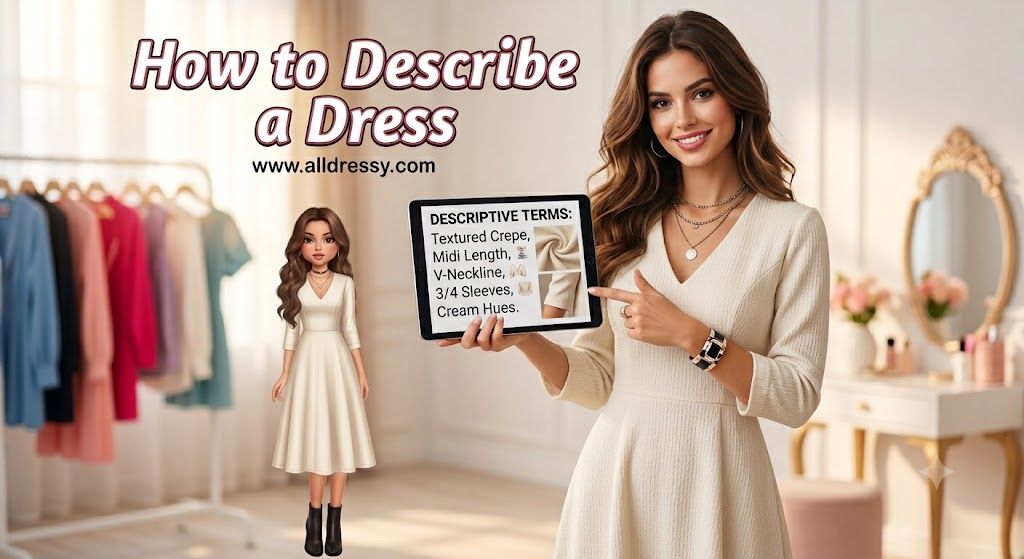
A detailed dress description serves multiple purposes.
Benefits include:
- Improving product sales
- Helping customers make informed decisions
- Enhancing fashion writing
- Increasing SEO performance
- Creating vivid visual imagery
- Building brand credibility
- Supporting creative storytelling
Strong descriptions help readers connect emotionally with the garment.
Start With the Overall Style of the Dress
The first step in how to describe a dress is identifying its overall style.
Examples include:
- Casual dress
- Cocktail dress
- Evening gown
- Maxi dress
- Mini dress
- Midi dress
- Sundress
- Formal dress
- Wedding dress
- Party dress
Example:
“A sophisticated midi dress designed for both professional and semi-formal occasions.”
This immediately provides context.
Describe the Dress Color
Color is often the first thing people notice.
Basic Color Descriptions
Examples include:
- White
- Black
- Red
- Blue
- Green
- Pink
Advanced Color Descriptions
Professional descriptions often use more specific terms.
Examples include:
- Emerald green
- Burgundy
- Champagne gold
- Navy blue
- Blush pink
- Ivory white
- Lavender
- Coral
Example:
“The dress features a rich emerald-green hue that adds elegance and sophistication.”
Explain the Fabric
Fabric plays a major role when learning how to describe a dress.
Common fabrics include:
Cotton
Soft and breathable.
Linen
Lightweight and airy.
Silk
Luxurious and smooth.
Satin
Glossy and elegant.
Chiffon
Light and flowing.
Velvet
Rich and textured.
Lace
Delicate and romantic.
Polyester
Durable and versatile.
Example:
“Crafted from lightweight chiffon, the dress drapes gracefully with every movement.”
Describe the Silhouette
Silhouette refers to the overall shape of the dress.
A-Line Dress
Fitted at the top and gradually widens toward the hem.
Sheath Dress
Closely follows the body’s shape.
Ball Gown
Features a fitted bodice and dramatic full skirt.
Empire Waist
Waistline sits just below the bust.
Mermaid Dress
Fitted through the body and flares near the knees.
Shift Dress
Straight and relaxed shape.
Example:
“The elegant A-line silhouette flatters a variety of body types while providing graceful movement.”
Explain the Dress Length
Length significantly affects style and occasion suitability.
Mini Dress
Falls above the knee.
Knee-Length Dress
Ends around the knees.
Midi Dress
Falls between the knee and ankle.
Maxi Dress
Reaches the ankles.
Floor-Length Gown
Touches or sweeps the floor.
Example:
“The flowing maxi length creates a sophisticated and effortless appearance.”
Describe the Neckline
The neckline is an important design feature.
V-Neck
Creates a slimming effect.
Crew Neck
Simple and classic.
Scoop Neck
Rounded and feminine.
Sweetheart Neckline
Heart-shaped and romantic.
Halter Neck
Secured around the neck.
Off-the-Shoulder
Exposes the shoulders.
Square Neck
Structured and modern.
Example:
“A flattering sweetheart neckline adds a touch of timeless romance.”
Detail the Sleeve Style
Sleeves contribute significantly to a dress’s overall design.
Sleeveless
Ideal for warm weather.
Cap Sleeves
Short sleeves covering only the shoulder.
Short Sleeves
Classic and versatile.
Three-Quarter Sleeves
Extend below the elbow.
Long Sleeves
Provide coverage and elegance.
Puff Sleeves
Add volume and drama.
Bell Sleeves
Flared at the wrist.
Example:
“The dramatic puff sleeves create a fashion-forward silhouette.”
Describe the Fit
Fit helps readers understand how the dress wears on the body.
Fitted
Closely follows body contours.
Relaxed Fit
Loose and comfortable.
Tailored Fit
Structured and polished.
Bodycon
Designed to hug the figure.
Flowing Fit
Moves freely and comfortably.
Example:
“The tailored fit accentuates the waist while maintaining a polished appearance.”
Highlight Unique Design Features
One of the best ways to master how to describe a dress is emphasizing special details.
Examples include:
- Ruffles
- Pleats
- Embroidery
- Sequins
- Beading
- Bows
- Lace panels
- Cutouts
- Buttons
- Slits
Example:
“Intricate floral embroidery enhances the dress with artisanal charm.”
Explain the Pattern
Patterns add personality and visual interest.
Solid Color
Simple and timeless.
Floral
Romantic and feminine.
Polka Dot
Playful and classic.
Striped
Clean and structured.
Plaid
Traditional and versatile.
Animal Print
Bold and fashionable.
Geometric Print
Modern and artistic.
Example:
“A delicate floral pattern brings freshness and charm to the design.”
Describe Texture
Texture influences both appearance and feel.
Examples include:
- Smooth
- Soft
- Crisp
- Silky
- Textured
- Ribbed
- Plush
- Lightweight
Example:
“The silky texture offers a luxurious feel against the skin.”
Discuss Movement and Drape
Professional fashion descriptions often explain how a dress moves.
Examples:
- Flows gracefully
- Skims the body
- Cascades elegantly
- Drapes softly
- Swings naturally
Example:
“The flowing skirt moves beautifully with every step.”
Mention the Occasion
Readers want to know where the dress can be worn.
Casual Wear
Everyday comfort.
Office Wear
Professional settings.
Cocktail Parties
Semi-formal gatherings.
Weddings
Guest or bridal attire.
Evening Events
Elegant occasions.
Vacation Wear
Travel-friendly styling.
Example:
“Perfect for weddings, garden parties, and special celebrations.”
Describe the Mood and Aesthetic
When learning how to describe a dress, emotional language can be highly effective.
Examples include:
Romantic
Soft and feminine.
Elegant
Refined and sophisticated.
Modern
Contemporary and sleek.
Bohemian
Relaxed and artistic.
Glamorous
Luxurious and eye-catching.
Vintage
Inspired by past eras.
Example:
“The dress exudes timeless elegance with a modern twist.”
Use Sensory Language
Sensory details help readers visualize and experience the dress.
Describe:
- Appearance
- Texture
- Movement
- Feel
Example:
“The lightweight fabric gently glides across the skin, creating a breezy and comfortable feel.”
Include Seasonal Relevance
Different dresses suit different seasons.
Spring Dresses
Floral patterns and lightweight fabrics.
Summer Dresses
Breathable and airy materials.
Fall Dresses
Richer colors and layered designs.
Winter Dresses
Heavier fabrics and longer sleeves.
Example:
“This lightweight sundress is ideal for warm summer afternoons.”
Describe Formal Dresses Effectively
Formal dresses require elevated language.
Focus on:
- Sophistication
- Craftsmanship
- Luxury materials
- Elegant details
Example:
“The floor-length gown features exquisite beadwork and a dramatic silhouette perfect for formal occasions.”
Describe Casual Dresses Effectively
Casual dresses emphasize comfort and versatility.
Focus on:
- Ease of wear
- Practicality
- Everyday styling
Example:
“This relaxed cotton dress offers effortless comfort for daily wear.”
How to Describe a Wedding Dress
Wedding dresses require detailed descriptions.
Include:
Silhouette
Ball gown, mermaid, A-line.
Fabric
Lace, satin, tulle.
Details
Beading, embroidery, train.
Mood
Romantic, elegant, timeless.
Example:
“The lace-covered bodice and flowing tulle skirt create a breathtaking bridal look.”
Fashion Vocabulary for Dress Descriptions
Using varied vocabulary improves writing quality.
Instead of repeatedly saying:
- Beautiful
- Nice
- Pretty
Use:
- Elegant
- Sophisticated
- Refined
- Graceful
- Stunning
- Chic
- Luxurious
- Feminine
- Polished
- Fashionable
These words create stronger imagery.
Common Mistakes When Describing a Dress
Avoid these frequent errors.
Being Too Vague
Provide specific details.
Ignoring Fabric Information
Fabric affects comfort and appearance.
Forgetting Fit Details
Readers want to know how the dress wears.
Overusing Adjectives
Balance creativity with clarity.
Neglecting Occasion Information
Explain where the dress can be worn.
Repeating the Same Words
Use varied vocabulary.
SEO Tips for How to Describe a Dress
For online content, SEO is essential.
Use the Keyword Naturally
Include how to describe a dress in:
- Introduction
- Headings
- Body text
Use Related Keywords
Examples:
- Dress description
- Dress style
- Dress silhouette
- Fashion writing
- Clothing description
Create Detailed Content
Long-form content often performs better in search results.
Answer User Intent
Provide practical guidance readers can apply immediately.
Examples of Strong Dress Descriptions
Example 1
“This elegant navy-blue midi dress features a flattering A-line silhouette, delicate lace sleeves, and a fitted waist that enhances natural curves. Crafted from lightweight chiffon, it flows beautifully with movement and is ideal for weddings, cocktail parties, and formal gatherings.”
Example 2
“This relaxed floral maxi dress combines effortless comfort with feminine charm. The breathable cotton fabric, flutter sleeves, and flowing skirt make it perfect for summer vacations and casual weekend outings.”
Example 3
“This luxurious satin evening gown showcases a dramatic mermaid silhouette, sparkling beadwork, and a sophisticated sweetheart neckline that creates a glamorous red-carpet-inspired appearance.”
Advanced Techniques for Professional Fashion Writers
Experienced fashion writers go beyond basic details.
Tell a Story
Help readers imagine wearing the dress.
Focus on Benefits
Explain how features improve comfort or appearance.
Create Emotional Appeal
Use descriptive language that evokes feelings.
Balance Technical and Creative Writing
Combine factual information with vivid imagery.
Understand the Target Audience
Different audiences require different tones and details.
Mastering how to describe a dress involves understanding every element that contributes to a garment’s appearance, feel, and purpose. By carefully describing color, fabric, silhouette, fit, texture, movement, design details, and occasion suitability, you can create engaging and informative dress descriptions that help readers fully visualize the garment. Whether you’re writing product listings, fashion blogs, reviews, or creative content, strong descriptive skills can elevate your writing and make every dress come to life on the page.
FAQs About How to Describe a Dress
What is the best way to describe a dress?
The best way to describe a dress is to cover its key features, including color, fabric, silhouette, length, neckline, sleeve style, fit, and overall aesthetic. A complete description helps readers clearly visualize the garment and understand its purpose.
Why is it important to know how to describe a dress?
Knowing how to describe a dress is important for fashion writers, online sellers, designers, bloggers, and marketers. A detailed description helps customers make informed decisions and improves engagement with fashion-related content.
What details should be included in a dress description?
A strong dress description should include:
- Color
- Fabric
- Silhouette
- Length
- Neckline
- Sleeve style
- Fit
- Pattern
- Design details
- Occasion suitability
These elements provide a complete picture of the garment.
How do you describe the fabric of a dress?
Describe both the material and its characteristics. For example, chiffon can be described as lightweight and flowing, while velvet may be described as soft, rich, and luxurious. The goal is to help readers imagine how the fabric looks and feels.
How can I make a dress description more appealing?
Use vivid and descriptive language, highlight unique features, explain the benefits of the design, and create an emotional connection. Words such as elegant, sophisticated, graceful, and timeless can make descriptions more engaging.
What are some common dress silhouettes?
Popular dress silhouettes include:
- A-line
- Sheath
- Empire waist
- Ball gown
- Mermaid
- Shift
- Bodycon
Each silhouette creates a different shape and overall appearance.
How do you describe a formal dress?
When describing a formal dress, focus on elegance, craftsmanship, luxurious fabrics, and special design elements. Mention details such as beadwork, lace, satin finishes, dramatic silhouettes, and occasion suitability.
How do you describe a casual dress?
Casual dress descriptions should emphasize comfort, versatility, ease of wear, and everyday practicality. Mention breathable fabrics, relaxed fits, and styling flexibility.
What adjectives can be used to describe a dress?
Useful adjectives include:
- Elegant
- Chic
- Stylish
- Sophisticated
- Graceful
- Feminine
- Modern
- Luxurious
- Romantic
- Timeless
Using varied adjectives makes descriptions more interesting.
How do you describe the fit of a dress?
Fit can be described using terms such as fitted, tailored, relaxed, loose, flowing, body-hugging, structured, or comfortable. Explaining the fit helps readers understand how the dress will look on the body.
What is the difference between describing a dress and reviewing a dress?
A dress description focuses on factual details such as color, fabric, and design. A dress review includes personal opinions, experiences, comfort assessments, quality evaluations, and recommendations.
How can I improve my fashion writing skills?
Practice observing garments closely and describing every detail. Build your fashion vocabulary, study professional product descriptions, and focus on creating vivid imagery while maintaining accuracy and clarity.
Conclusion
Learning how to describe a dress is a valuable skill that combines observation, creativity, and effective communication. A well-written dress description goes beyond basic details and helps readers fully visualize the garment by explaining its color, fabric, silhouette, fit, texture, and unique design features. Whether you are creating product listings, writing fashion articles, reviewing clothing, or developing creative content, strong descriptive skills can make your writing more engaging and informative.
The most effective dress descriptions balance technical accuracy with vivid language. They provide enough detail to answer practical questions while also creating an emotional connection that helps readers imagine wearing the dress themselves. By focusing on key elements such as style, movement, occasion suitability, and overall aesthetic, you can create compelling descriptions that stand out from competitors and deliver real value to your audience.
As you continue practicing how to describe dresses, you’ll develop a richer fashion vocabulary and a stronger ability to communicate clothing details clearly. Over time, this skill can enhance your writing, improve customer engagement, and help you create professional-quality fashion content that resonates with readers and shoppers alike.