
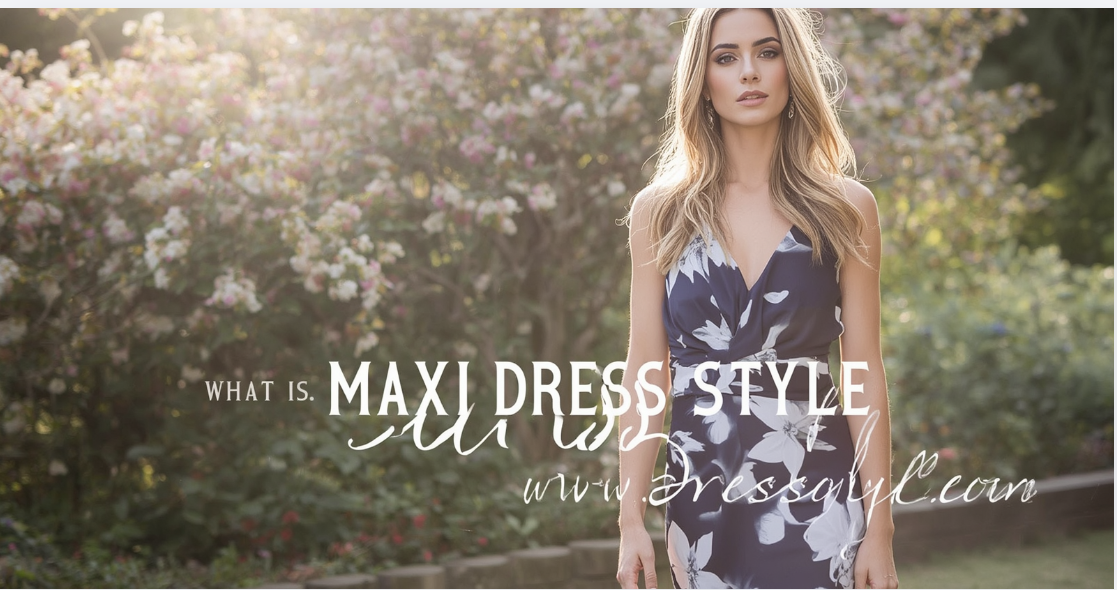
In fashion design and personal wardrobe curation, understanding what is maxi dress style requires exploring an iconic silhouette defined by length, fluid movement, and functional elegance. A maxi dress is fundamentally a floor- or ankle-length dress cut to drape gracefully over the body. Unlike short minidresses or calf-length midi dresses, the maxi dress silhouette offers full vertical coverage while creating a distinct visual elongation.
Beyond its physical length, what is maxi dress style in contemporary fashion encompasses a versatile style philosophy. It bridges the gap between casual comfort and formal sophistication, effortlessly transitioning from coastal resort wear to black-tie evening galas through alterations in fabric, cut, and accessorizing.
Anatomy of the Silhouette: Key Characteristics of Maxi Dress Style
To answer what is maxi dress style from a design perspective, one must evaluate the structural components that separate a true maxi dress from standard long gowns or casual garments.
+--------------------------------------------------------------------------+
|                     MAXI DRESS SILHOUETTE ANATOMY                        |
+--------------------------------------------------------------------------+
| [ Neckline ]     V-Neck, Halter, Square, Off-Shoulder, or High-Neck         |
| [ Bodice ]       Fitted, Smocked, Wrap, Shirred, or Unconstructed Loose     |
| [ Waistline ]    Empire, Natural Waist, Drop Waist, or Belted               |
| [ Skirt Drape ]  A-Line, Tiered, Straight Sheath, Bias-Cut, or Fishtail     |
| [ Hemline ]      Ankle-Skimming (1-2" clearance) to Floor-Sweeping          |
+--------------------------------------------------------------------------+
Hemline Standards and Length Proportions
The defining metric of any maxi dress is its hemline position. A traditional maxi dress falls between the top of the ankle bone and the floor.
- Ankle-Skimming Length: The hem sits roughly 1 to 2 inches above the ground, revealing shoe choices and allowing unimpeded movement without dragging.
- Floor-Sweeping Length: The fabric grazes the top of the foot or gently touches the ground, maximizing the continuous vertical line to create an elongating visual effect.
- Train-Sweeping Length: Reserved primarily for formal evening maxis, where the back hem extends slightly onto the floor for dramatic flair.
The Physics of Drape and Fabric Movement
Unlike structured tailoring (such as blazers or pencil skirts) that holds its shape independently, the essence of the maxi dress relies on fabric gravity and movement. The weight of the extended skirt fabric pulls the garment downward naturally, creating continuous vertical folds that soften body contours while accentuating organic motion as the wearer steps forward.
The Historical Evolution of the Maxi Dress Silhouette
Understanding what is maxi dress style today requires recognizing its historical evolution over the past six decades.
| Era | Key Design Characteristics | Cultural Influence | Key Style Icon / Designer |
| Late 1960s | Ankle-length cotton and silk prints, high necklines, long sleeves | Counterculture movement, Bohemian revival | Oscar de la Renta, Yves Saint Laurent |
| 1970s | Empire waists, psychedelic prints, tiered skirts, polyester chiffon | Disco era, prairie aesthetic, resort luxury | Halston, Biba, Diane von Fürstenberg |
| 1980s | Bold shoulder pads, drop waistlines, metallic knits, drop sleeves | Power dressing, dramatic evening glam | Catherine Walker, Zandra Rhodes |
| 1990s | Minimalist bias-cut slip maxis, neutral monochrome, spaghetti straps | Grunge, understated luxury, minimalist revolution | Calvin Klein, Narciso Rodriguez, Kate Moss |
| 2000s–2010s | Smocked tube maxis, jersey knit halter necks, bold geometric resort prints | Festival culture (Coachella), boho-chic trend | Rachel Zoe, Nicole Richie |
| 2020s–Present | Sustainable organic cotton, cutouts, tailored shirt-maxis, liquid satin | Eco-conscious fashion, versatile quiet luxury | Cult Gaia, Zimmermann, Jacquemus |
Comprehensive Taxonomy: 12 Distinct Types of Maxi Dress Styles
The term “maxi dress” represents a umbrella category containing diverse structural cuts. Here is a comprehensive taxonomy of the primary silhouettes that define what is maxi dress style.
1. The Wrap Maxi Dress
Featuring a front closure formed by wrapping one side of the dress over the other, the wrap maxi creates a natural V-neckline and cinched waist fastened with an integrated fabric tie or side buckle.
- Best For: Hourglass and pear body shapes; maternity wear due to adjustable sizing.
- Primary Fabrics: Jersey knit, silk wrap, rayon, viscose.
- Key Feature: Highly adjustable fit with a natural front walk slit created by the overlap.
2. The Tiered Boho Maxi Dress
Constructed from horizontal bands of gathered fabric sewn together in descending layers, the tiered maxi grows progressively wider toward the hem.
- Best For: Athletic frames seeking soft volume; daytime casual and vacation settings.
- Primary Fabrics: Lightweight cotton lawn, linen, crushed chiffon.
- Key Feature: Visual texture, maximum breeze circulation, and movement.
3. The Minimalist Slip Maxi Dress
Inspired by traditional 1990s lingerie aesthetics, the slip maxi is cut on the bias (diagonal grain of the fabric), allowing the material to drape over body curves without clinging tightly or requiring zippers.
- Best For: Minimalist aesthetics, formal evening layering, petite and column figures.
- Primary Fabrics: Silk satin, heavy charmeuse, washable cupro.
- Key Feature: Delicate spaghetti straps, fluid sheen, uncluttered simplicity.
4. The Bodycon & Sheath Maxi Dress
A streamlined silhouette that hugs the torso, hips, and legs from chest to ankle. Fitted bodycon maxis often feature elastane or rib-knit construction, alongside side or back leg slits to preserve mobility.
- Best For: Showcasing curves, evening lounge settings, contemporary urban street style.
- Primary Fabrics: Ribbed cotton-blend knit, double-knit jersey, spandex blends.
- Key Feature: Body-hugging vertical contouring paired with side slits.
5. The Tailored Shirt Maxi Dress
Combining the formal upper structure of a button-down shirt (collared neck, button placket, cuffs) with an extended full-length skirt, the shirt maxi offers a refined, structured option.
- Best For: Professional environments, smart casual luncheons, classic styling.
- Primary Fabrics: Crisp poplin, structural linen, washed denim, twill.
- Key Feature: Functional buttons, chest pockets, integrated waist belts.
6. The Empire Waist Maxi Dress
Designed with a raised waistline that sits directly below the bust line, leaving the remainder of the skirt to flow loosely down over the abdomen, hips, and legs.
- Best For: Elongating shorter legs, hiding waistline tension, maternity fashion.
- Primary Fabrics: Chiffon, georgette, soft modal.
- Key Feature: High waist placement creating the visual illusion of extended leg length.
7. The Off-Shoulder & Bardot Maxi Dress
Unveils the collarbones, shoulders, and upper neck by sweeping the neckline horizontally across the arms, frequently detailed with elasticized ruffled sleeves.
- Best For: Highlighting the upper torso, outdoor summer weddings, resort galas.
- Primary Fabrics: Eyelet lace, embroidered cotton, lightweight crepe.
- Key Feature: Romantic, horizontal frame accentuating shoulders and neck.
8. The Halter Neck Maxi Dress
Features straps that tie or fasten behind the nape of the neck, leaving the shoulders and upper back exposed while drawing vertical focus inward toward the neck.
- Best For: Broad shoulders, athletic upper bodies, warm-weather evening events.
- Primary Fabrics: Fluid satin, patterned chiffon, silk crepe de chine.
- Key Feature: Dramatic open-back options combined with strong shoulder lines.
9. The Smocked & Peasant Maxi Dress
Features a bodice constructed with gathered elastic thread stitching (“smocking”) that expands and contracts to mold to the upper body, paired with puffy sleeves and a loose skirt.
- Best For: All-day comfort, fluctuating sizes, rustic summer occasions.
- Primary Fabrics: Lightweight cotton voile, seersucker, linen blends.
- Key Feature: High elasticity, textured bodice, zero zipper restriction.
10. The Asymmetric & High-Low Maxi Dress
Utilizes intentional structural imbalance—either via a single-shoulder neckline or a slanted hemline that is higher in the front to showcase shoes and lower in the back.
- Best For: Statement evening wear, cocktail events, modern fashion styling.
- Primary Fabrics: Structured mikado, crisp organza, fluid satin.
- Key Feature: Dynamic visual angles and shoe visibility.
11. The Mermaid / Fishtail Maxi Dress
Hugs the torso, waist, and hips tightly down to the knees, where it dramatically flares outward down to the floor.
- Best For: Black-tie galas, formal red-carpet events, hour-glass silhouettes.
- Primary Fabrics: Heavy velvet, sequined mesh, heavyweight satin.
- Key Feature: Dramatic silhouette transition at the lower leg line.
12. The Trapeze / Tent Oversized Maxi Dress
A completely unconstructed design that starts narrow at the shoulders or bust line and flares continuously outward in a wide ‘V’ shape without any waist definition.
- Best For: Tropical heat, avant-garde style, maximum physical comfort.
- Primary Fabrics: Heavyweight linen, crisp cotton poplin, silk habotai.
- Key Feature: Complete detachment from body waistlines for airy comfort.
Fabric Science: Material Selection for Maxi Dress Style
The fabric selection dictates whether a maxi dress reads as casual beachwear, everyday street attire, or formal gala evening wear.
+--------------------------------------------------------------------------+
|                  FABRIC PROPERTIES FOR MAXI DRESSES                      |
+--------------------------------------------------------------------------+
| FABRIC TYPE     | WEIGHT (GSM) | DRAPE CHARACTER | BEST OCCASION         |
+-----------------+--------------+-----------------+-----------------------+
| Cotton Poplin   | 110 - 150    | Crisp, Structured| Casual, Daytime Work  |
| Linen           | 130 - 180    | Breathable, Stiff| Summer, Resort Travel |
| Silk Satin      | 80 - 120     | Liquid, Clinging | Formal, Black Tie     |
| Viscose/Rayon   | 120 - 160    | Heavy Draping   | Daily Casual, Brunch  |
| Chiffon (Poly)  | 50 - 80      | Airy, Sheer     | Bridesmaid, Garden    |
| Velvet (Silk)   | 200 - 300    | Rich, Heavy     | Autumn/Winter Galas   |
+--------------------------------------------------------------------------+
Natural Breathable Fibers
- Organic Cotton: Ideal for daytime cotton maxis. Provides structural breathability, absorbs moisture, and holds vivid dye prints exceptionally well.
- Linen: The definitive warm-weather textile. Its textured weave allows maximum airflow, though it acquires natural structural creases that add relaxed charm.
- Silk Crepe & Satin: Luxury natural textiles offering liquid-like draping properties, radiant light refraction, and ultra-soft handfeel for high-end formal wear.
Semi-Synthetic & Performance Blends
- Viscose / Rayon: Manufactured from wood pulp, viscose mirrors the fluidity of silk at a accessible weight. It drapes heavily, resisting static build-up.
- Modal Knits: Blended with micro-spandex to create stretch maxi dresses that maintain shape after repeated washes without stretching out.
- Polyester Georgette & Chiffon: Durable, wrinkle-resistant sheer fabrics commonly used for layered skirts, wedding guest attire, and pleated maxi dresses.
Body Type Matching Guide: Elevating What Is Maxi Dress Style
Because maxi dresses provide continuous vertical fabric, selecting the correct silhouette for your natural body geometry enhances your proportions.
+--------------------------------------------------------------------------+
|                    BODY TYPE & MAXI MATCH MATRIX                         |
+--------------------------------------------------------------------------+
|  PETITE FRAME     Empire Waist / Ankle Skimming / Vertical Stripes       |
|  TALL FRAME       Tiered Skirts / Drop Waist / Bold Oversized Prints      |
|  HOURGLASS        Wrap Style / Belted Natural Waist / Bias Slip           |
|  PEAR SHAPE       A-Line Skirt / Off-Shoulder Bodice / Embellished Top    |
|  ATHLETIC/COL    Ruffled Details / Cutout Waistlines / Halter Necks      |
|  APPLE SHAPE      V-Neck Empire / Trapeze Flow / Smocked Bust             |
+--------------------------------------------------------------------------+
Styling Strategies for Petite Frames (5’4″ and Under)
- Prioritize Ankle-Skimming Lengths: Avoid hemlines that puddle on the ground, which visually shortens the body line.
- Elevate the Waistline: Choose Empire waist cuts or high-waisted wrap dresses to create the illusion of longer legs.
- Opt for Monochromatic or Small-Scale Prints: Large, broad floral prints can visually overpower a smaller frame; subtle patterns or solid tones keep the silhouette elongated.
- V-Necklines and High Slits: Open necklines draw the eye upward toward the face, while a side leg slit adds vertical exposure.
Styling Strategies for Tall Frames (5’9″ and Over)
- Embrace Full Floor-Sweeping Lengths: Tall frames easily carry dramatic floor-length hemlines without tripping risks.
- Experiment with Oversized Scale: Bold geometric patterns, thick horizontal tiers, and voluminous ruffle sleeves look proportional on tall silhouettes.
- Drop-Waist and Wide Belts: Low waistlines and broad contrasting belts break up extreme vertical length when desired.
Styling Strategies for Curvy and Pear Shapes
- Defined Waist Construction: A-line maxi dresses cinched at the natural narrowest point of the waist highlight natural curves.
- Focus Detail on the Upper Torso: Off-shoulder cuts, cowl necklines, or bold sleeve details draw attention to the neck and shoulders, balancing wider hips.
- Avoid Stiff Fabrics: Rigid stiff fabrics can add bulk; opt instead for fluid fabrics like viscose, silk crepe, or soft jersey that drape smoothly over hips.
Seasonal Adaptation: Wearing Maxi Dresses Year-Round
A common misconception is that maxi dresses belong solely to summer beach vacations. By adjusting layering strategies and fabric choices, what is maxi dress style transforms into a versatile year-round staple.
+--------------------------------------------------------------------------+
|                     SEASONAL MAXI STYLING MATRIX                         |
+--------------------------------------------------------------------------+
| SPRING   | Floral Georgette Maxi + Cropped Denim Jacket + Ankle Boots    |
| SUMMER   | Breathable Linen Halter Maxi + Woven Straw Tote + Flat Sandals|
| AUTUMN   | Ribbed Knit Maxi + Leather Moto Jacket + Knee-High Boots      |
| WINTER   | Heavy Velvet/Wool Maxi + Tailored Trench + Thermal Layers    |
+--------------------------------------------------------------------------+
Spring Transition Layering
Spring weather requires adaptable layers to balance variable temperatures.
- The Outerwear Pairing: Pair lightweight floral maxi dresses with cropped denim jackets or structured blazers. Cropped jackets end precisely at the natural waistline, maintaining proportions without hiding the dress shape.
- Footwear Shift: Swap winter boots for suede ankle booties or clean leather sneakers for a modern casual aesthetic.
Summer Peak Heat Styling
In high heat, the maxi dress functions as an effortless single-piece outfit.
- Fabric Priority: Rely on unlined 100% linen, eyelet cotton, or breathable rayon.
- Silhouette Focus: Open back halter dresses, strapless bandeau styles, and sleeveless smocked peasant dresses maximize airflow.
- Accessories: Natural fiber accessories—such as raffia totes, woven straw hats, and leather slide sandals—complement relaxed summer textures.
Autumn Texture Stacking
As temperatures cool, autumn styling emphasizes rich textures and heavier outer layers.
- Fabrics: Transition to long-sleeved jersey maxis, corduroy shirt dresses, or dark floral viscose cuts.
- Layering Underneath: Wear fitted turtleneck tops underneath slip maxi dresses or sleeveless V-neck maxis.
- Outerwear & Footwear: Contrast soft maxi fabrics with a structured leather moto jacket or suede trench coat, paired with leather knee-high boots slipping underneath the dress hemline.
Winter Thermal Integration
Winter maxi styling focuses on insulation while maintaining a sleek outer line.
- Thermal Underlayers: Wear seamless fleece-lined leggings and long-sleeve thermal tops beneath long-sleeved turtleneck knit maxis.
- Heavyweight Fabrics: Select ribbed sweater-knit maxis, heavy velvet gowns, or lined wool-blend maxis.
- Formal Outerwear: Pair with full-length tailored wool overcoats that match or exceed the length of the dress hemline to prevent awkward horizontal proportions.
Masterclass in Footwear Pairing with Maxi Dresses
Shoe selection dramatically alters the formality, height proportion, and overall visual balance of a maxi dress.
+--------------------------------------------------------------------------+
|                   FOOTWEAR & HEMLINE MATCHING GUIDE                      |
+--------------------------------------------------------------------------+
| SHOE TYPE           | BEST DRESS LENGTH    | OCCASION FORMALITY          |
+---------------------+----------------------+-----------------------------+
| Flat Leather Slides | Ankle-Skimming       | Casual Beach / Daytime      |
| White Sneakers      | Ankle / Above-Ankle  | Casual Streetwear           |
| Espadrille Wedges   | Floor-Sweeping       | Summer Resort / Garden Party|
| Block Heel Boots    | Mid-Ankle Skimming   | Autumn / Winter Casual      |
| Strappy Stiletto    | Floor / Train Length | Black Tie / Evening Formal  |
+---------------------+----------------------+-----------------------------+
1. Flat Sandals & Leather Slides
- Best Paired With: Casual cotton, tiered boho, or linen summer maxis.
- Rule of Thumb: Ensure the dress hem sits at least 0.5 to 1 inch above the ground when wearing flat sandals to prevent the heel area of the fabric from stepping under foot.
2. Espadrille Wedges
- Best Paired With: Resort maxis, wrap dresses, and tropical summer styles.
- Rule of Thumb: Wedges add comfortable height, making them perfect for floor-sweeping maxi dresses that would otherwise drag on the ground.
3. Classic White Leather Sneakers
- Best Paired With: Ribbed knit bodycon maxis, shirt dresses, and casual jersey styles.
- Rule of Thumb: Keep hemlines strictly at ankle length; allowing a long skirt to swallow casual sneakers disrupts the footwear line.
4. Ankle Boots & Knee-High Leather Boots
- Best Paired With: Tiered autumn maxis, long-sleeved floral dresses, and dark bohemian cuts.
- Rule of Thumb: When wearing knee-high boots, let the maxi skirt drape directly over the boot shaft so no leg skin is exposed between boot top and dress hem.
5. Fine Strappy Heels & Stilettos
- Best Paired With: Silk slip maxis, formal fishtail gowns, and evening wrap dresses.
- Rule of Thumb: Delicate straps counterbalance the heavy fabric volume of a full-length evening gown.
Proportional Outerwear: How to Layer Over a Maxi Dress
One of the biggest challenges in mastering what is maxi dress style is choosing outerwear that does not visually distort body proportions.
+--------------------------------------------------------------------------+
|                   OUTERWEAR PROPORTION PRINCIPLES                        |
+--------------------------------------------------------------------------+
| RULE 1: THE CROPPED CUT (Ends at or above natural waist)                |
|         - Cropped Denim Jackets, Moto Jackets, Cropped Cardigans         |
|         - Creates instant 1/3 upper to 2/3 lower golden ratio visually.  |
|                                                                          |
| RULE 2: THE MATCHING FULL DUSTER (Matches dress hemline length)          |
|         - Long Duster Cardigans, Full-Length Wool Trench Coats           |
|         - Creates a continuous uninterrupted outer envelope.             |
|                                                                          |
| AVOID:  THE MID-THIGH JACKET (Ends mid-thigh or knee)                    |
|         - Cuts the body in half awkwardly over long skirts.              |
+--------------------------------------------------------------------------+
The Golden Ratio of Outerwear
To maintain flattering proportions when wearing a long skirt:
- Option A (Cropped Outerwear): Choose jackets that terminate at or above the natural waist (such as a waist-length leather jacket or cropped denim). This divides the silhouette into an appealing 1/3 torso to 2/3 leg ratio.
- Option B (Full-Length Outerwear): Choose long duster cardigans or trench coats that fall within 2 to 4 inches of the dress hemline. This encapsulates the entire outfit within one long vertical line.
- What to Avoid: Mid-length jackets that hit at the mid-thigh or knee level disrupt the fluid vertical sweep of a maxi skirt, cutting your visual height in half.
Accessorizing the Maxi Dress: Belts, Bags, and Jewelry
Because a maxi dress presents a large canvas of uninterrupted fabric, strategic accessorizing adds balance, focal points, and shape.
+--------------------------------------------------------------------------+
|                    ACCESSORY INTEGRATION STRATEGY                        |
+--------------------------------------------------------------------------+
| DRESS CHARACTERISTIC   | RECOMMENDED ACCESSORY FOCUS                     |
+------------------------+-------------------------------------------------+
| Deep V-Neckline        | Layered Pendant Necklaces or Statement Choker   |
| High Neck / Halter     | Bold Drop Earrings + Stacked Wrist Cuffs        |
| Bold Floral Pattern    | Solid Neutral Handbag + Minimalist Gold Bands   |
| Solid Monochromatic    | Wide Textured Leather Belt + Statement Bag      |
| Voluminous Trapeze Cut | Structured Top-Handle Bag (adds sharp lines)    |
+------------------------+-------------------------------------------------+
Belting Strategies for Structure
- Wide Leather Belts: Transform an oversized or unconstructed trapeze maxi into an hourglass silhouette by cinching at the narrowest point of the midsection.
- Metallic Chain Belts: Add jewelry-like shimmer to solid silk slip dresses or jersey wrap maxis for evening occasions.
- Integrated Fabric Sash Ties: Knotting a matching fabric sash softly to one side creates a relaxed, elegant look.
Handbag Scale and Proportion
Large fabric volumes require balanced handbag scale:
- Casual Daytime: Oversized straw totes, relaxed canvas hobo bags, or slouchy woven leather bags complement breezy summer maxis.
- Formal Evening: Micro box clutches, structured hard-shell minaudieres, or delicate chain-strap shoulder pouches balance sweeping silk gowns.
- Avoid: Heavy, utilitarian leather work bags with casual summer maxi dresses—the contrasting styles clash visually.
Jewelry Dynamics by Neckline Type
- For High-Neck & Halter Maxis: Skip neckwear entirely; focus attention on dramatic chandelier earrings, architectural drop earrings, and stacked wrist bangles.
- For Scoop & Plunging V-Necks: Fill open chest space with layered delicate gold chains or a single statement pendant.
- For Off-Shoulder & Bardot Cuts: Showcase the open collarbones with a collar-length necklace or let the shoulders remain clean with dramatic hoop earrings.
Maintenance, Care, and Storage for Long Hemlines
Maintaining the crisp hemline and drape of a maxi dress requires specialized fabric care, given its extended length and proximity to the ground.
Hem Protection & Stain Prevention
- Pre-Treating New Maxi Hemlines: Apply a fabric protector spray along the bottom 2 inches of casual cotton or linen maxi dresses to repel ground dust and street moisture.
- Addressing Ground Soil: After wearing a floor-sweeping maxi, inspect the inside hem for dirt accumulation. Spot clean immediately using cool water and mild detergent before storing.
Storage and Hanging Techniques
- Preventing Hanger Stretch: Hanging heavy knit or jersey maxi dresses on standard hangers will cause gravity to stretch the shoulder seams and permanently elongate the dress over time. Always fold heavy knit maxis flat in drawers or on shelves.
- The Hanger Loop Fold Method for Woven Maxis: When hanging woven silk, cotton, or chiffon maxis:
- Slide the shoulders or straps onto a padded hanger.
- Take the lower half of the skirt, fold it in half horizontally, and drape it across the horizontal trouser bar of the hanger. This reduces down-pull weight on the shoulder seams and prevents the hem from touching the closet floor.
Frequently Asked Questions About Maxi Dress Styles
What is the difference between a maxi dress and a midi dress?
The primary difference between a maxi dress and a midi dress lies in the placement of the hemline:
- Maxi Dress: Features a long hemline that extends all the way down to the ankle bone or floor level.
- Midi Dress: Features a mid-length hemline that finishes at the middle of the calf—resting strictly between the knee and the ankle.
Can petite women wear maxi dresses without looking shorter?
Yes, petite women can wear maxi dresses. To maximize visual height, choose an empire waist or high-waisted wrap silhouette that sits above your natural waistline to elongate your legs. Stick to ankle-skimming hemlines, deep V-necklines, solid colors, or small-scale prints, and avoid heavy floor-puddling fabrics that can overpower a smaller frame.
How do I prevent the hem of my maxi dress from dragging on the ground?
To protect your hemline, match your footwear height directly to the dress length. If a maxi dress is slightly too long for flat sandals, pair it with platform espadrilles or block heels. Alternatively, you can use temporary hem tape, add a waist belt to blouse the dress over slightly, or have a tailor shorten the hem so it clears the ground by at least half an inch.
How can I make a casual maxi dress look formal for an event?
Transform a casual maxi dress into event-ready formal wear by altering your fabric choices, footwear, and accessories:
- Footwear: Swap casual flat slides or sneakers for sleek strappy stilettos or polished pumps.
- Jewelry & Handbags: Replace woven straw totes with a hard-shell metallic or satin clutch, and add statement drop earrings or a crystal necklace.
- Layering: Drape a tailored blazer or structured evening cape over your shoulders rather than wearing a casual denim or utility jacket.
Is a maxi dress appropriate for a wedding guest dress code?
Yes, maxi dresses work exceptionally well for wedding guest attire across multiple dress codes. A floral chiffon or linen-blend maxi is ideal for casual, garden, or beach weddings, while a silk satin, velvet, or embellished column maxi dress fits Black Tie and formal evening dress codes.
Conclusion
Understanding what is maxi dress style comes down to appreciating how a full-length silhouette balances continuous coverage with effortless style. From its origins in 1960s bohemian fashion to its modern role as a year-round wardrobe essential, the maxi dress remains one of the most adaptable garments in women’s fashion.
By selecting the right cut for your body geometry, pairing appropriate footwear with your hemline, and mastering strategic layering throughout changing seasons, you can wear the maxi dress with total confidence for virtually any occasion—from casual weekend morning outings to formal evening celebrations.