
If you are wondering what are dress slacks, they are a type of tailored trousers designed to create a polished, neat, and sophisticated appearance. Dress slacks are commonly worn for business settings, professional events, formal occasions, dinners, and other situations where everyday casual pants may not be appropriate. They are valued for their structured appearance, comfortable construction, versatile designs, and ability to complement different types of shirts, jackets, and shoes.
Dress slacks are an important part of both men’s and women’s wardrobes. They are available in different fabrics, colors, cuts, waist styles, and lengths, making them suitable for a wide range of occasions. Depending on their construction and styling, dress slacks can look professional, business casual, semi-formal, or elegant.
Although many people use the terms dress pants and dress slacks interchangeably, there can be small differences in how retailers and clothing brands describe them. Understanding these differences can help you choose the right trousers for your needs.
In this comprehensive guide, we will explain what dress slacks are, their common characteristics, different styles, popular fabrics, how they should fit, what to wear with them, and how to care for them. Whether you are shopping for office clothing or building a versatile wardrobe, learning about dress slacks can help you make better fashion decisions.
What Are Dress Slacks?
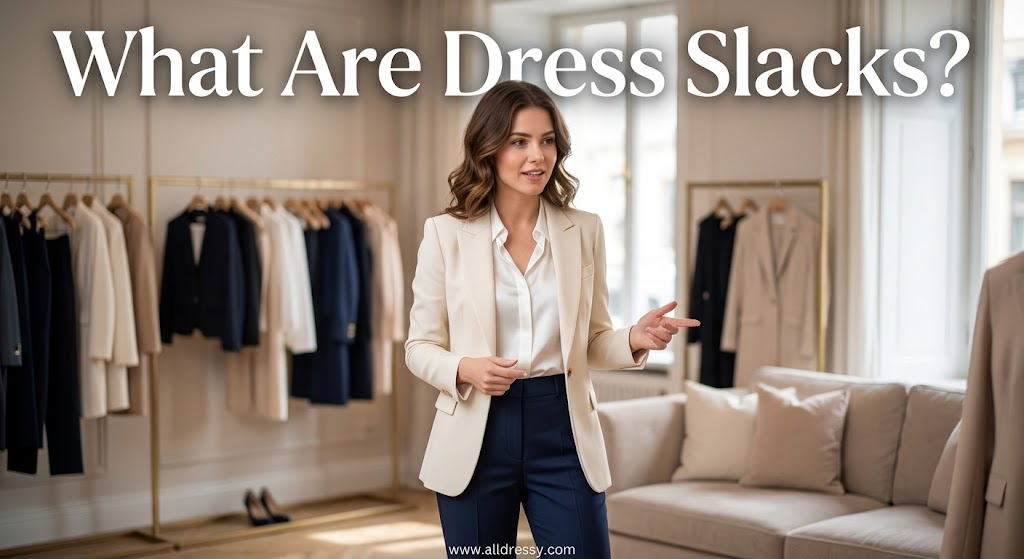
Dress slacks are tailored trousers designed for occasions that require a more polished appearance than ordinary casual pants. They typically feature a structured waistband, clean lines, a refined silhouette, and fabrics that create a smooth and professional finish.
Unlike jeans, sweatpants, or athletic trousers, dress slacks are generally made from woven fabrics such as wool, polyester blends, cotton blends, and other materials suitable for tailored clothing.
They are commonly worn with dress shirts, blouses, sweaters, blazers, sport coats, and formal footwear.
Some of the most recognizable characteristics of dress slacks include:
- Tailored construction: Designed with a more structured appearance than casual trousers.
- Refined fabrics: Often made from wool, polyester, cotton blends, or lightweight suiting materials.
- Clean silhouette: Usually feature straight, tapered, or slightly relaxed leg shapes.
- Formal details: May include belt loops, pressed creases, front pleats, and welt pockets.
- Versatile styling: Can be worn for professional, business casual, and certain formal occasions.
Dress slacks are available in many styles, so not every pair has exactly the same design. Some have a traditional straight-leg cut, while others feature a modern slim or tapered silhouette.
What Is the Difference Between Dress Slacks and Dress Pants?
Dress slacks and dress pants are closely related terms. In everyday fashion conversations, they often refer to the same general category of tailored trousers.
However, some retailers use these terms differently when organizing their clothing collections.
Dress slacks are frequently associated with classic tailored trousers worn for business, office, and smart occasions. Dress pants is a broader term that can include several types of polished trousers, including formal suit trousers and contemporary tailored pants.
The distinction is not universal, and clothing brands may use either term for similar products.
| Feature | Dress Slacks | Dress Pants |
|---|---|---|
| General meaning | Tailored trousers | Broad category of polished trousers |
| Common use | Business and smart occasions | Business, formal, and professional occasions |
| Fabrics | Wool, polyester, cotton blends | Wool, suiting fabrics, and blends |
| Styling | Classic or contemporary | Classic, modern, or formal |
| Availability | Men’s and women’s styles | Men’s and women’s styles |
When shopping, it is more useful to examine the fabric, fit, construction, and intended occasion than rely entirely on the product name.
What Are the Different Types of Dress Slacks?
Dress slacks come in several styles, each offering a different appearance and level of comfort. Understanding these options makes it easier to select trousers that suit your personal style and the occasion.
1. Straight-Leg Dress Slacks
Straight-leg dress slacks have a relatively consistent width from the knee to the hem. They offer a traditional appearance that works well in professional environments.
This style is popular because it is versatile and can be paired with many types of shirts and jackets.
Straight-leg trousers are suitable for:
- Office environments
- Business meetings
- Professional presentations
- Formal dinners
- Smart casual outfits
They are a practical choice for people who prefer classic clothing rather than extremely narrow or wide silhouettes.
2. Slim-Fit Dress Slacks
Slim-fit dress slacks have a narrower cut through the hips, thighs, and legs than traditional trousers.
They provide a modern appearance and are commonly available in contemporary officewear collections.
Slim-fit trousers can be paired with fitted dress shirts, lightweight sweaters, blazers, and simple dress shoes.
When choosing slim-fit dress slacks, make sure the fabric does not pull tightly across the hips or thighs. A good fit should allow comfortable movement when walking and sitting.
3. Relaxed-Fit Dress Slacks
Relaxed-fit dress slacks provide additional room through the seat and thighs.
They are designed for comfort and a less restrictive feel while maintaining a polished appearance.
This style can work well for long office days, professional travel, and situations where freedom of movement is important.
Relaxed-fit trousers can still look refined when their waistband, leg length, and overall proportions are properly tailored.
4. Tapered Dress Slacks
Tapered dress slacks gradually become narrower toward the ankle.
They combine the comfort of a little extra room in the upper leg with a more defined lower-leg shape.
This style works particularly well with modern business casual outfits and contemporary footwear.
Tapered trousers can be paired with loafers, oxfords, derby shoes, and other polished footwear.
5. Pleated Dress Slacks
Pleated dress slacks feature folds of fabric at the front waistband. These folds are called pleats and provide additional room around the upper thigh.
There are two common types:
- Single-pleat trousers: Have one fold on each side of the front.
- Double-pleat trousers: Have two folds on each side of the front.
Pleated trousers are often associated with traditional tailoring, although modern fashion collections also include updated versions.
They can be worn with dress shirts, sweaters, blazers, and tailored jackets.
6. Flat-Front Dress Slacks
Flat-front dress slacks do not have visible pleats at the front.
They create a smooth appearance around the waistband and upper thighs.
This style is widely used in modern business clothing because it has a simple, clean design.
Flat-front trousers are available in straight, slim, tapered, and relaxed fits.
7. Wide-Leg Dress Slacks
Wide-leg dress slacks feature a broader leg shape that provides additional room from the hips or thighs down toward the hem.
They are popular in contemporary women’s fashion and are also available in men’s tailored clothing collections.
Wide-leg trousers can create an elegant appearance when paired with a fitted top, tucked-in blouse, or structured blazer.
The length and fabric are particularly important because they influence how the trousers drape and move.
8. Cropped Dress Slacks
Cropped dress slacks have a shorter leg length, generally ending above the ankle.
They are commonly worn in contemporary office and smart casual outfits.
Cropped trousers can be paired with loafers, flats, heels, or polished low-profile shoes.
Their shorter length makes them useful for creating outfits with a more relaxed, modern appearance.
What Are Dress Slacks Made Of?
The fabric used to make dress slacks affects their appearance, comfort, durability, and suitability for different seasons.
Some fabrics are designed to provide warmth and structure, while others are lightweight and breathable.
Wool Dress Slacks
Wool is one of the traditional fabrics used in tailored trousers.
Wool dress slacks are valued for their refined appearance, natural drape, and ability to maintain a polished shape.
They are available in different weights, making them suitable for different weather conditions.
Wool trousers are commonly used for business clothing, professional events, and formal outfits.
Some varieties include:
- Merino wool
- Worsted wool
- Flannel wool
- Tropical wool
Worsted wool is particularly popular for traditional suiting because it has a smooth, refined finish.
Polyester Dress Slacks
Polyester dress slacks are popular because polyester is generally durable, relatively easy to maintain, and resistant to wrinkles compared with many untreated natural fabrics.
They are often available at affordable prices and can be suitable for everyday office clothing.
Polyester may also be blended with wool, cotton, or other fibers to improve the fabric’s performance and appearance.
The quality of polyester trousers can vary depending on fabric construction and finishing.
Cotton Dress Slacks
Cotton dress slacks provide a comfortable option for people who prefer natural fibers.
Cotton is generally breathable and suitable for many everyday outfits.
However, cotton trousers may wrinkle more easily than some synthetic blends.
Cotton dress slacks are often a good choice for business casual environments, warmer weather, and smart everyday clothing.
Linen Dress Slacks
Linen dress slacks are particularly useful for warm-weather outfits.
Linen is lightweight and breathable, making it comfortable in hot conditions.
However, linen naturally wrinkles, which gives it a relaxed appearance.
Linen trousers are suitable for summer gatherings, outdoor events, vacations, and relaxed professional settings where the dress code allows them.
Stretch Fabric Dress Slacks
Stretch dress slacks contain materials such as elastane or spandex blended with other fibers.
These fabrics provide additional flexibility and can improve comfort during movement.
Stretch trousers are useful for people who spend long periods sitting, walking, or traveling.
They can maintain a professional appearance while offering greater freedom of movement.
What Are the Best Colors for Dress Slacks?
Dress slacks are available in numerous colors, but some shades are especially versatile because they work with a wide range of shirts, jackets, and shoes.
Choosing the right color depends on your wardrobe, workplace dress code, and the occasion.
Black Dress Slacks
Black dress slacks are among the most versatile options.
They can be paired with white, gray, blue, pastel, and many other shirt colors.
Black trousers are suitable for professional settings, evening occasions, and outfits that require a clean appearance.
They also work well with black, brown, and certain neutral footwear, depending on the overall outfit.
Navy Dress Slacks
Navy dress slacks provide a polished alternative to black trousers.
They work particularly well with white, light blue, gray, and pale pink shirts.
Navy trousers can be worn for office meetings, business casual outfits, and smart social events.
They are also easy to coordinate with gray and navy blazers.
Gray Dress Slacks
Gray dress slacks are another practical wardrobe choice.
Light gray can create a softer appearance, while charcoal gray offers a more traditional professional look.
Gray trousers pair well with white, black, blue, burgundy, and pastel shirts.
They are particularly useful for people who want trousers that work across different professional and social occasions.
Khaki Dress Slacks
Khaki dress slacks offer a lighter and more relaxed appearance.
They are commonly used in business casual clothing and can be paired with white, navy, olive, and light blue shirts.
Khaki trousers are especially useful for spring and summer outfits.
Brown Dress Slacks
Brown dress slacks create a warm, classic appearance.
They can be paired with cream, white, light blue, beige, and other complementary colors.
Depending on their fabric and construction, brown trousers can work for office outfits, casual professional clothing, and social events.
How Should Dress Slacks Fit?
Understanding how dress slacks should fit is essential when choosing a comfortable and attractive pair.
Even expensive trousers may look poorly fitted if the waistband, seat, thighs, or leg length are incorrect.
A good pair should feel comfortable while creating a clean and balanced silhouette.
Waist Fit
The waistband should sit comfortably around your natural waist or the intended position of the trousers.
It should remain secure without requiring excessive belt tightening.
You should be able to sit, stand, and move without feeling uncomfortable pressure.
Seat Fit
The seat refers to the area around the hips and backside.
Dress slacks should lie smoothly across this area.
Excessive pulling can indicate that the trousers are too tight, while too much loose fabric may create an untidy appearance.
Thigh Fit
The thighs should have enough room for comfortable movement.
Slim-fit trousers may have a narrower shape, but they should not restrict walking or sitting.
Pleated and relaxed-fit styles generally provide more room in this area.
Length Fit
Dress slacks should have an appropriate length based on their cut and the footwear being worn.
Traditional trousers may have a slight break, where the front of the fabric rests gently against the shoe.
Modern styles may have little or no break.
Cropped trousers are intentionally shorter and generally end above the ankle.
The most important consideration is that the trousers should look balanced and should not drag along the ground.
Hem Fit
The hem should complement the width of the trouser leg and the shoes.
A narrow hem can work with slim-fit trousers, while wider hems may suit straight-leg and wide-leg styles.
Proper hemming can improve the overall appearance of an otherwise well-fitting pair of dress slacks.
What to Wear With Dress Slacks
One of the biggest advantages of dress slacks is their versatility.
They can be styled with different tops, jackets, shoes, and accessories depending on the occasion.
Dress Slacks With a Dress Shirt
A dress shirt is one of the most traditional combinations.
White and light blue shirts work especially well with black, navy, and gray trousers.
For professional settings, tuck the shirt in neatly and choose a suitable belt and polished footwear.
Dress Slacks With a Blazer
Combining dress slacks with a blazer creates a smart, polished outfit.
Unlike a matching suit, the trousers and blazer do not need to be made from the same fabric or color.
For example, gray dress slacks can be paired with a navy blazer, while navy trousers can work with a gray jacket.
This combination is suitable for business casual events, dinners, and professional gatherings.
Dress Slacks With a Sweater
A sweater can make dress slacks look more relaxed while preserving a polished appearance.
A crew-neck sweater, V-neck sweater, or fine-knit cardigan can work well.
For cooler weather, consider pairing wool trousers with a lightweight sweater and suitable outerwear.
Dress Slacks With a Blouse
For women’s outfits, dress slacks can be paired with a blouse to create an elegant professional look.
A tucked-in blouse creates a more structured appearance, while a slightly relaxed blouse can make the outfit suitable for smart casual occasions.
Accessories should complement the outfit rather than overwhelm it.
Dress Slacks With a Polo Shirt
In workplaces with relaxed dress codes, a neat polo shirt can be worn with dress slacks.
This combination offers a balance between professional and casual styling.
Choose a well-maintained polo shirt in a complementary color and pair it with clean loafers or other smart shoes.
What Shoes Should You Wear With Dress Slacks?
Footwear plays an important role in completing an outfit with dress slacks.
The best choice depends on the trouser style, fabric, occasion, and overall level of formality.
Oxford shoes: These are a classic option for formal business outfits and traditional tailored trousers.
Derby shoes: Derby shoes offer a polished appearance and work well for professional and smart casual outfits.
Loafers: Loafers are versatile and can be worn with many types of dress slacks, particularly in business casual settings.
Ballet flats: These can complement women’s cropped, straight-leg, and wide-leg dress slacks.
Heels: Heels can create a more formal appearance when paired with tailored trousers and an appropriate blouse or blazer.
Dress boots: Polished ankle boots can work with wool trousers and other tailored styles, particularly during cooler weather.
When choosing footwear, consider the trouser hem and overall proportions to create a balanced outfit.
Are Dress Slacks Formal or Business Casual?
Dress slacks can be formal, business casual, or somewhere between these categories depending on their design.
Traditional wool trousers with a refined finish are commonly worn for professional and more formal occasions.
Cotton or stretch-blend trousers may be better suited to business casual environments.
The rest of the outfit also influences how formal the trousers appear.
For example, pairing black wool dress slacks with a formal shirt, blazer, and polished shoes creates a more formal appearance.
Wearing cotton dress slacks with a polo shirt and loafers produces a more relaxed business casual outfit.
It is important to remember that dress slacks alone do not automatically make an outfit appropriate for every formal occasion. A strict black-tie event, for example, generally requires specific eveningwear rather than ordinary dress slacks.
What Is the Difference Between Dress Slacks, Chinos, and Jeans?
Although these trousers may look similar at first glance, they are designed for different purposes.
| Feature | Dress Slacks | Chinos | Jeans |
|---|---|---|---|
| Typical fabric | Wool and tailored blends | Cotton twill | Denim |
| Appearance | Polished and tailored | Smart casual | Casual |
| Common use | Business and formal occasions | Everyday and business casual | Casual outfits |
| Construction | Structured tailoring | Usually simpler construction | Denim construction |
| Styling | Shirts, blazers, sweaters | Polos, shirts, casual jackets | T-shirts, shirts, casual tops |
Dress slacks generally have a more refined appearance than chinos and jeans.
Chinos are usually more relaxed than traditional dress slacks but can still work in professional environments with casual dress codes.
Jeans are primarily casual trousers, although dark, clean denim may be acceptable in some business casual workplaces.
How to Choose the Best Dress Slacks
Choosing the right dress slacks involves more than selecting an attractive color.
You should consider the intended occasion, fabric, fit, construction, and how easily the trousers can be combined with clothing you already own.
Consider the Occasion
Start by deciding where you plan to wear the trousers.
For office environments, consider classic colors such as navy, charcoal, and black.
For relaxed social occasions, cotton, linen, and lighter-colored trousers may be suitable.
For formal professional events, tailored wool trousers are often a reliable option.
Choose the Right Fabric
Consider the weather and how frequently you plan to wear the trousers.
Wool blends are useful for professional clothing, cotton can work well for everyday wear, and linen is a practical choice for warm weather.
If easy maintenance is important, consider a suitable wrinkle-resistant fabric blend.
Select a Comfortable Fit
Check the waistband, seat, thigh, leg shape, and length.
The trousers should allow comfortable movement and should not pull excessively when sitting or walking.
If the fit is close but not quite right, alterations may improve the final result.
Check the Construction
Look at the waistband, seams, pockets, zipper, buttons, and hems.
Well-constructed trousers should have neat stitching and properly finished details.
Pay attention to the fabric quality because it influences how the trousers look and perform over time.
Consider Versatility
Neutral colors are generally easier to coordinate with different shirts and jackets.
If you are buying your first pair, black, navy, or charcoal gray can be useful starting points.
These shades can support multiple outfits without requiring an entirely new wardrobe.
How to Care for Dress Slacks
Proper care can help maintain the appearance, shape, and condition of dress slacks.
Different fabrics require different cleaning methods, so always check the garment’s care label before washing or ironing.
Follow the Care Label
Wool, cotton, polyester, and linen trousers may have different cleaning requirements.
Some wool trousers require professional dry cleaning, while certain cotton and polyester blends can be machine washed according to their labels.
Avoid assuming that every pair of dress slacks can be washed in the same way.
Remove Minor Wrinkles
Use an iron or garment steamer according to the fabric’s care instructions.
For delicate materials, use an appropriate temperature and avoid applying excessive heat.
A pressing cloth can provide additional protection for certain fabrics.
Store Them Properly
Hang dress slacks using suitable trouser hangers to help maintain their shape.
Avoid overcrowding your wardrobe because excessive pressure can cause wrinkles.
For longer-term storage, make sure the trousers are clean and completely dry.
Treat Stains Carefully
Address stains according to the fabric type.
Avoid rubbing delicate materials aggressively because this may damage the fibers or spread the stain.
For difficult stains, professional cleaning may be the safest option.
Avoid Excessive Washing
Not every pair of dress slacks needs washing after every wear.
Follow the care label and consider airing the trousers between uses when appropriate.
This can help reduce unnecessary wear and maintain the fabric’s appearance.
Why Are Dress Slacks an Important Wardrobe Essential?
Dress slacks are useful because they combine versatility, comfort, and a polished appearance.
A well-chosen pair can be worn for multiple occasions with relatively simple changes to the rest of the outfit.
For example, navy dress slacks can be styled with a white shirt and blazer for a professional meeting. The same trousers can be paired with a lightweight sweater for a more relaxed dinner outfit.
Their versatility also makes them useful for people who want to build a practical wardrobe without purchasing separate trousers for every occasion.
Dress slacks are available in different price ranges, fabrics, and designs, making it possible to find options for different preferences and budgets.
Are Dress Slacks Suitable for Everyday Wear?
Yes, dress slacks can be suitable for everyday wear, particularly when you choose comfortable fabrics and practical cuts.
For regular office use, consider polyester blends, wool blends, or stretch fabrics that provide a good balance of appearance and comfort.
Cotton dress slacks can also work well for everyday professional outfits.
Choose a fit that allows you to move comfortably throughout the day.
If you spend considerable time sitting, walking, or commuting, fabric flexibility and waistband comfort are particularly important.
You can also create multiple everyday outfits by combining neutral dress slacks with different shirts, sweaters, blazers, and shoes.
Can You Wear Dress Slacks Without a Suit Jacket?
Yes. Dress slacks do not always need to be worn with a matching suit jacket.
They can be styled independently with dress shirts, blouses, sweaters, cardigans, polo shirts, and separate blazers.
This flexibility is one reason they are popular in modern professional wardrobes.
For a business casual outfit, pair gray dress slacks with a light blue shirt and loafers.
For a more formal appearance, choose black or charcoal trousers with a neatly pressed dress shirt and an appropriate blazer.
The key is to coordinate the clothing pieces according to the occasion and dress code.
What Are the Best Dress Slacks for Different Seasons?
Seasonal fabric selection can make dress slacks more comfortable throughout the year.
Spring
For spring, lightweight wool blends and cotton dress slacks are useful options.
Neutral and lighter shades can create fresh outfits when paired with shirts, blouses, and lightweight jackets.
Summer
Linen, lightweight cotton, and breathable fabric blends are suitable for warmer weather.
Choose trousers that allow comfortable movement and avoid overly heavy materials.
Autumn
Medium-weight wool, cotton blends, and textured fabrics can work well during autumn.
Earthy shades such as brown, charcoal, olive, and navy can complement seasonal clothing.
Winter
Wool and flannel dress slacks provide additional warmth.
They can be paired with sweaters, coats, blazers, and suitable footwear to create comfortable cold-weather outfits.
Final Shopping Considerations for Dress Slacks
Before purchasing dress slacks, compare several important features rather than choosing a pair based only on appearance.
Consider the following points:
- Fabric quality: Choose a material suitable for the intended season and occasion.
- Comfort: Make sure the waistband, seat, and thighs allow comfortable movement.
- Fit: Decide whether straight, slim, tapered, relaxed, or wide-leg trousers suit your preferences.
- Color: Select versatile shades that coordinate with your existing wardrobe.
- Construction: Check the seams, waistband, pockets, zipper, and hem.
- Maintenance: Consider whether the trousers require special cleaning or ironing.
- Versatility: Look for a style that can be worn with several different tops and shoes.
By considering these factors, you can choose dress slacks that offer a good balance of appearance, comfort, practicality, and long-term wardrobe value.
10 Frequently Asked Questions About Dress Slacks
1. What are dress slacks?
Dress slacks are tailored trousers designed for professional, business, and smart occasions. They are usually made from fabrics such as wool, polyester, cotton, and blended materials. They feature a polished appearance and can be paired with dress shirts, blouses, blazers, sweaters, and formal shoes.
2. Are dress slacks the same as dress pants?
Dress slacks and dress pants are generally used interchangeably. Both describe tailored trousers designed for professional and polished outfits. However, some clothing brands use dress pants as a broader category that includes different types of formal and tailored trousers.
3. Can you wear dress slacks casually?
Yes. Dress slacks can be worn casually when styled with appropriate clothing. Pairing them with a polo shirt, lightweight sweater, simple blouse, or casual blazer creates a relaxed yet polished outfit. Cotton and stretch-blend dress slacks are particularly useful for smart casual styling.
4. What is the difference between dress slacks and chinos?
Dress slacks are generally more structured and formal than chinos. They are commonly made from wool, polyester, and tailored fabric blends. Chinos are usually made from cotton twill and have a more relaxed appearance. Dress slacks are popular for professional settings, while chinos are frequently worn for everyday and business casual outfits.
5. What are the best colors for dress slacks?
Black, navy, gray, charcoal, and khaki are among the most versatile colors for dress slacks. These shades coordinate easily with different shirts, blouses, blazers, and shoes. Black and charcoal are particularly useful for professional outfits, while navy and khaki offer additional styling flexibility.
6. How should dress slacks fit?
Dress slacks should fit comfortably around the waist, hips, and thighs without excessive pulling or loose fabric. The leg shape should complement the overall outfit, and the hem should have an appropriate length for the trouser style and footwear. Proper tailoring can improve the appearance and comfort of dress slacks.
7. What shoes should you wear with dress slacks?
Oxford shoes, Derby shoes, loafers, dress boots, flats, and heels can all work with dress slacks. The best option depends on the occasion and outfit. For professional settings, polished dress shoes are a classic choice, while loafers and flats can create a smart casual appearance.
8. Are dress slacks appropriate for business casual outfits?
Yes. Dress slacks are an excellent choice for business casual outfits. They can be paired with button-down shirts, polo shirts, blouses, sweaters, and separate blazers. Choosing comfortable fabrics and coordinating colors helps create a professional appearance without making the outfit excessively formal.
9. What fabrics are best for dress slacks?
Wool, cotton, polyester blends, linen, and stretch fabrics are popular choices. Wool is valued for its refined appearance and natural drape, cotton offers comfortable everyday wear, and polyester blends are often easy to maintain. Linen works well in warm weather, while stretch fabrics provide additional flexibility.
10. Can women wear dress slacks?
Yes. Dress slacks are a versatile wardrobe option for women. They are available in straight-leg, slim-fit, wide-leg, tapered, cropped, and relaxed styles. Women can pair them with blouses, sweaters, dress shirts, blazers, heels, flats, or loafers to create professional, business casual, and elegant outfits.
Conclusion
Understanding what are dress slacks makes it easier to choose the right trousers for professional, formal, and everyday smart outfits. Dress slacks are tailored trousers that combine a polished appearance with versatility and comfort. They are available in different fabrics, colors, fits, and designs, making them suitable for many occasions.
Whether you prefer classic straight-leg trousers, modern slim-fit styles, relaxed cuts, or elegant wide-leg designs, the right pair can become a valuable part of your wardrobe. Choosing suitable fabrics such as wool, cotton, linen, or polyester blends also helps ensure that your trousers meet your comfort and maintenance needs.
Dress slacks can be styled with dress shirts, blouses, sweaters, blazers, and different types of footwear. By paying attention to fit, color coordination, fabric quality, and proper care, you can create attractive outfits for work, social gatherings, and other occasions.
Ultimately, the best dress slacks are those that suit your personal style, fit comfortably, and provide the versatility you need. Investing in a few well-made pairs in classic colors can make building professional and smart casual outfits much easier.
Add practical fit measurementsClarify formal versus casual styling