
When preparing a classic seven-layer salad, one common question is: does olive go into the 7 layer salad dressing recipe? The answer depends on the recipe, because olives are not traditionally a required ingredient in the creamy dressing itself. However, olives can be included as one of the salad layers or added as an optional topping to give the dish a salty, tangy flavor. Some cooks also experiment with finely chopped olives in the dressing to create a more savory variation.
A traditional seven-layer salad is known for its colorful layers of lettuce, vegetables, cheese, bacon, peas, and a creamy dressing. The dressing is usually made with mayonnaise, sour cream, a little sugar, and sometimes vinegar or lemon juice. It is spread over the top of the salad to add creaminess and help bring the ingredients together.
Olives can complement these flavors, especially if you enjoy a salty or Mediterranean-inspired salad. The important thing is understanding where olives fit best, how much to use, and how they affect the taste and texture of the finished dish.
This guide explains whether olives belong in a seven-layer salad dressing recipe, the difference between adding olives to the dressing and salad layers, the best olive varieties to choose, and how to prepare a delicious seven-layer salad with a balanced creamy dressing.
Does Olive Go into the 7 Layer Salad Dressing Recipe?
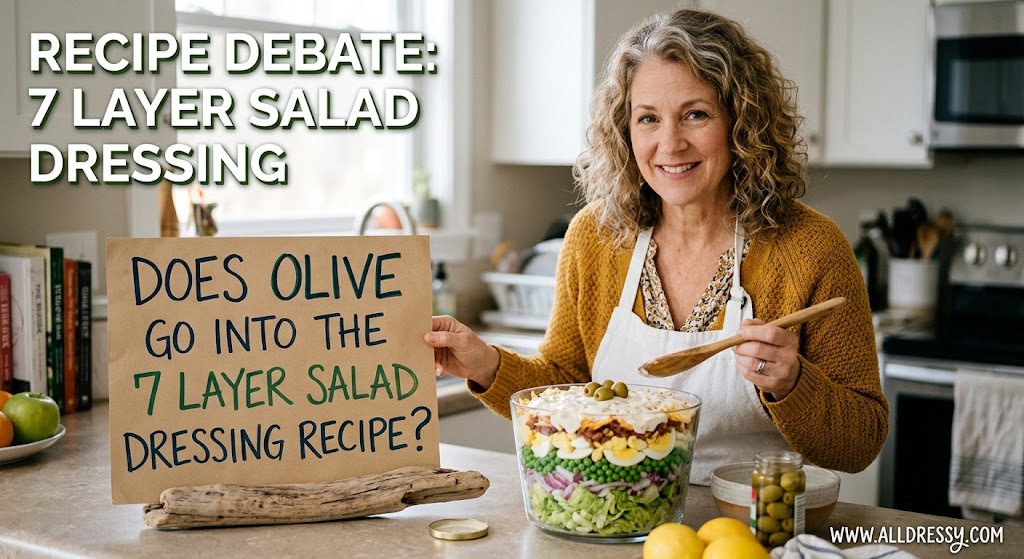
Olives are not usually a standard ingredient in traditional seven-layer salad dressing. Most classic recipes use mayonnaise, sour cream, sugar, and a small amount of vinegar or another acidic ingredient.
However, olives can be added if you want a stronger savory flavor. They work particularly well with lettuce, tomatoes, cheese, peas, and bacon.
There are two main ways to use olives:
- As a salad layer: Add sliced or chopped olives between the vegetable and cheese layers.
- Inside the dressing: Finely chop a small amount of olives and mix them into the creamy dressing.
Adding olives as a separate layer is generally the easier option because it preserves the smooth texture of the dressing. Mixing olives directly into the dressing creates a more distinctive flavor and a slightly textured consistency.
If you are making a traditional seven-layer salad for a family gathering or holiday meal, you can leave olives out without affecting the basic recipe. If you enjoy their flavor, use them as an optional ingredient.
What Is a Traditional 7 Layer Salad?
A seven-layer salad is a chilled, layered salad traditionally prepared in a large glass bowl or serving dish. Its colorful appearance makes it popular for potlucks, family dinners, picnics, and holiday gatherings.
The ingredients are arranged in separate layers rather than tossed together. This allows guests to see the different colors and textures before serving.
A traditional version commonly includes:
- Lettuce
- Tomatoes
- Cucumbers or another crunchy vegetable
- Frozen peas
- Cheddar cheese
- Bacon
- Creamy dressing
Recipes differ from family to family. Some include red onion, hard-boiled eggs, celery, bell peppers, or green onions. Others use olives as an additional layer.
The creamy dressing is usually spread over the top and covers the ingredients underneath. This helps protect the salad from drying out while it chills.
What Ingredients Are in 7 Layer Salad Dressing?
The dressing is one of the most important parts of a seven-layer salad. It provides a creamy, slightly sweet, and tangy flavor that complements the fresh vegetables and savory toppings.
Mayonnaise
Mayonnaise is usually the main ingredient in traditional seven-layer salad dressing. It creates a rich, smooth texture and helps the dressing spread evenly across the top of the salad.
Choose a good-quality mayonnaise with a flavor you enjoy. If you prefer a lighter taste, you can replace part of the mayonnaise with plain yogurt or sour cream.
Sour Cream
Sour cream adds a mild tanginess and makes the dressing taste less heavy. It also softens the richness of mayonnaise.
Some recipes use mayonnaise alone, but combining mayonnaise and sour cream creates a balanced flavor.
Sugar
A small amount of sugar gives the dressing a subtle sweetness. This sweetness balances the natural acidity of the vegetables and the tanginess of sour cream.
You do not need a large amount. Start with a small quantity and adjust according to your preference.
Vinegar or Lemon Juice
A little vinegar or lemon juice can add brightness to the dressing. It helps balance the creamy ingredients and prevents the flavor from becoming too rich.
White vinegar, apple cider vinegar, or fresh lemon juice can work, depending on the taste you prefer.
Seasonings
Salt and black pepper are common additions. Garlic powder, onion powder, or a small amount of mustard can also be used for extra flavor.
Season gradually because ingredients such as bacon, cheese, and olives already contain salt.
Can You Add Olives to 7 Layer Salad Dressing?
Yes, you can add olives to seven-layer salad dressing if you enjoy their flavor. However, they are optional rather than essential.
Olives have a naturally salty, savory, and sometimes slightly bitter taste. When combined with mayonnaise and sour cream, they create a dressing that is more robust than the traditional sweet-and-creamy version.
For a small batch of dressing, start with one or two tablespoons of finely chopped olives. Mix them into the prepared dressing and taste before adding more.
Avoid adding too many olives at once. Their strong flavor can overpower the mild taste of the vegetables and creamy base.
Best Way to Mix Olives into Dressing
Follow these simple steps:
- Prepare the mayonnaise and sour cream mixture.
- Add the sugar and a small amount of vinegar or lemon juice.
- Season with black pepper.
- Finely chop the olives.
- Stir the chopped olives into the dressing.
- Taste and adjust the seasoning.
- Refrigerate until you are ready to assemble the salad.
This method distributes the olive flavor throughout the dressing without making it difficult to spread.
Should Olives Be a Layer or Part of the Dressing?
For most seven-layer salad recipes, adding olives as a separate layer is the better option.
When olives are placed in a separate layer, their flavor remains distinct. Guests can also see them clearly, making the salad more colorful.
Mixing olives into the dressing is useful when you want every serving to have a little olive flavor. However, chopped olives can make the dressing less smooth and may add extra salt.
Consider these differences:
| Method | Flavor | Texture | Best for |
|---|---|---|---|
| Olives as a layer | Distinct and salty | Firm | Traditional layered presentation |
| Olives in dressing | Spread throughout | Slightly textured | Savory dressing variation |
| Olives as a topping | Concentrated in each bite | Firm | Garnishing before serving |
You can also use both methods, but keep the quantities modest so the olive flavor does not dominate the salad.
Which Olives Are Best for 7 Layer Salad?
Different types of olives provide different flavors. Choosing the right variety depends on whether you want a mild, salty, or tangy result.
Black Olives
Black olives are a popular choice for salads because they have a mild, slightly salty flavor. They are easy to slice and distribute across the layers.
Their dark color also creates an attractive contrast with lettuce, tomatoes, peas, and cheese.
For a traditional-style seven-layer salad with an optional olive layer, sliced black olives are a convenient choice.
Green Olives
Green olives generally have a stronger, tangier flavor than mild black olives. Some varieties are also stuffed with pimentos, garlic, or other ingredients.
They can add a distinctive taste to the salad, but their stronger flavor may not suit everyone.
If you use green olives, chop them into small pieces and add a modest amount.
Kalamata Olives
Kalamata olives are known for their rich, fruity, and slightly tangy flavor. They can give seven-layer salad a Mediterranean-inspired variation.
Their flavor is more noticeable than that of many standard canned black olives. Use them sparingly, particularly if the salad already contains salty cheese or bacon.
Pimento-Stuffed Olives
Pimento-stuffed olives combine the salty taste of olives with the mild sweetness of pimento peppers.
They can be chopped and mixed into the dressing or arranged as a small topping. They are a useful option when you want additional color and flavor.
A Classic 7 Layer Salad Recipe with Optional Olives
This recipe uses familiar seven-layer salad ingredients and gives you the option to add olives. The dressing remains creamy, while the olives provide an extra savory element.
Ingredients for the Salad
- 1 large head of iceberg lettuce, chopped
- 2 medium tomatoes, diced
- 1 cup diced cucumber
- 1 cup frozen peas, thawed
- 1/2 cup finely chopped red onion
- 1 cup shredded cheddar cheese
- 6 slices cooked bacon, crumbled
- 1/2 cup sliced black olives (optional)
Ingredients for the Dressing
- 1 cup mayonnaise
- 1/2 cup sour cream
- 1 tablespoon sugar
- 1 teaspoon apple cider vinegar
- 1/4 teaspoon black pepper
- A small pinch of salt, if needed
Step 1: Prepare the Vegetables
Wash the lettuce, tomatoes, cucumber, and other fresh vegetables thoroughly.
Dry the lettuce well before chopping it. Excess water can collect at the bottom of the serving bowl and make the salad watery.
Dice the tomatoes and cucumber into small, similar-sized pieces. Finely chop the red onion so its flavor does not overpower the other ingredients.
If you are using frozen peas, thaw them in the refrigerator and drain away excess water.
Step 2: Prepare the Bacon
Cook the bacon until crisp, following the package instructions. Allow it to cool before crumbling it into small pieces.
Keeping the bacon crisp until serving helps maintain a pleasant texture.
For a vegetarian version, simply leave out the bacon or use a suitable plant-based alternative.
Step 3: Prepare the Creamy Dressing
Add mayonnaise and sour cream to a mixing bowl.
Stir until the mixture becomes smooth. Add sugar, vinegar, and black pepper.
Mix again until all ingredients are evenly combined. Taste the dressing and adjust the sweetness or acidity according to your preference.
If you want olive dressing, stir in one or two tablespoons of finely chopped olives. Otherwise, keep the dressing traditional and use sliced olives as a separate salad layer.
Step 4: Build the Salad Layers
Choose a large, clear serving bowl if you want the colorful layers to be visible.
Begin with chopped lettuce at the bottom. Spread it evenly to create a firm base.
Add the tomatoes, followed by cucumber and red onion. Next, add the thawed peas.
If using olives as a separate layer, add them after the peas or arrange them just above the vegetables.
Add the shredded cheddar cheese and finish with the crumbled bacon.
Step 5: Add the Dressing
Spread the prepared dressing evenly over the top of the salad.
Try to cover the surface without mixing the layers. This creates the familiar appearance of a traditional seven-layer salad.
If you want a decorative finish, reserve a small amount of cheese, bacon, or sliced olives to sprinkle over the dressing.
Step 6: Chill Before Serving
Cover the serving bowl and refrigerate the salad until ready to serve.
Chilling allows the flavors to come together. However, avoid preparing it too far in advance if you want the vegetables and toppings to remain crisp.
Serve cold and use a large spoon to reach through the layers.
How Much Olive Should You Add to 7 Layer Salad?
The right amount depends on the type of olive and how strong you want the flavor to be.
For a medium-sized family salad, approximately one-third to one-half cup of sliced black olives is a reasonable starting point if you are adding them as a separate layer.
If you are mixing olives into the dressing, use a smaller quantity. One or two tablespoons of finely chopped olives can add noticeable flavor without overwhelming the creamy base.
For stronger varieties such as Kalamata or green olives, start with less and taste before adding more.
Remember that olives can be salty. If you use them, you may need less added salt in the dressing.
Tips for Making the Best 7 Layer Salad Dressing
A good dressing should be creamy, balanced, and easy to spread. These practical tips can help improve the result.
Use the Right Mayonnaise-to-Sour-Cream Ratio
Mayonnaise provides richness, while sour cream adds tanginess. A ratio of approximately two parts mayonnaise to one part sour cream is a useful starting point.
You can adjust the ratio depending on whether you prefer a richer or lighter dressing.
Do Not Add Too Much Sugar
The dressing should have a gentle sweetness rather than taste like dessert.
Start with a small amount of sugar and adjust gradually. The natural sweetness of the vegetables and peas may also affect the final flavor.
Chop Olives Finely
If you are adding olives directly to the dressing, chop them into small pieces.
Large pieces can make the dressing uneven and difficult to spread. Smaller pieces distribute the flavor more consistently.
Taste Before Adding Salt
Bacon, cheddar cheese, and olives can all contribute saltiness.
Taste the finished dressing before adding extra salt. This simple step helps prevent the salad from becoming overly salty.
Keep the Dressing Cold
Refrigerating the dressing before assembling the salad helps maintain its texture and keeps the finished dish chilled.
Use a covered container if you prepare the dressing in advance.
Common Mistakes When Adding Olives to 7 Layer Salad
Even though olives are easy to use, a few mistakes can affect the taste and texture of the salad.
Adding Too Many Olives
Olives have a concentrated flavor. Too many can overpower the mild vegetables and creamy dressing.
Begin with a small quantity and add more only if needed.
Using Olives Without Draining Them
Olives stored in brine contain liquid that can make the dressing watery.
Drain them thoroughly and pat them dry before chopping or adding them to the salad.
Making the Dressing Too Salty
If you combine olives, bacon, and cheese, the salad may already contain plenty of salt.
Avoid adding salt automatically. Taste the dressing first.
Mixing the Salad Too Early
A layered salad is designed to maintain separate ingredients. Tossing everything together too early can make it look less attractive and may soften some of the vegetables.
Keep the layers intact until serving.
Adding Dressing to Wet Lettuce
Water left on lettuce can collect at the bottom of the bowl.
Wash and dry the lettuce thoroughly before building the salad. This helps keep the dressing creamy and the layers fresh.
Can You Make 7 Layer Salad Without Olives?
Absolutely. Olives are optional, and a seven-layer salad can be delicious without them.
The traditional flavor comes from the combination of crisp vegetables, creamy dressing, cheese, peas, and savory toppings. Olives are simply an additional ingredient for people who enjoy their taste.
If you do not like olives, leave them out entirely. You do not need to replace them with another ingredient.
If you want more color or crunch, consider adding diced bell peppers, celery, or extra cucumber instead.
How to Store 7 Layer Salad with Olives
Seven-layer salad should be refrigerated because it contains fresh vegetables and a dressing made with perishable ingredients.
Keep it covered in the refrigerator at 40°F (4°C) or below. For the best texture and quality, prepare it close to serving time and eat leftovers within a short period.
If the salad has been sitting at room temperature for more than two hours, it is safest to discard it. In very hot conditions above 90°F (32°C), the recommended limit is one hour.
If you are preparing the salad ahead of time, you can store the dressing separately and assemble the layers closer to serving. This helps prevent the lettuce from becoming soggy.
Do not freeze a prepared seven-layer salad. Freezing can damage the texture of fresh vegetables and cause the creamy dressing to separate when thawed.
Variations of 7 Layer Salad with Olives
Once you understand the traditional recipe, you can create different versions to suit your preferences.
Mediterranean 7 Layer Salad
Use cucumber, tomatoes, lettuce, red onion, feta cheese, and Kalamata olives. You can replace the traditional mayonnaise dressing with a simple lemon-and-olive-oil dressing for a Mediterranean-inspired variation.
Vegetarian 7 Layer Salad
Leave out the bacon and use additional vegetables, cheese, or another suitable protein source.
Black olives, peas, cucumber, tomatoes, and lettuce provide plenty of flavor and color.
Low-Sugar Dressing Variation
If you prefer a less sweet dressing, reduce or omit the sugar. Add a little lemon juice or vinegar to maintain a balanced flavor.
Olive and Cheddar Variation
Combine sliced black olives with shredded cheddar cheese for a savory topping. This combination works well with the traditional mayonnaise and sour cream dressing.
Extra-Crunchy Seven-Layer Salad
Add celery, bell peppers, or additional cucumber. These ingredients provide crunch and complement the soft texture of peas and creamy dressing.
Final Tips for Choosing Between Olive Dressing and Traditional Dressing
If you are making seven-layer salad for guests, consider serving olives separately or using them as a small optional layer. This allows people who enjoy olives to add them while keeping the traditional flavor available to everyone.
If you know that your guests enjoy olives, finely chopped black olives can be mixed into a small portion of the dressing for a savory variation.
For a classic seven-layer salad, however, mayonnaise, sour cream, sugar, and a little vinegar are enough to create a delicious creamy dressing. Olives are an extra ingredient, not a requirement.
10 FAQs About Olives in 7 Layer Salad Dressing
1. Does olive go into the 7 layer salad dressing recipe?
Olives are not a traditional ingredient in seven-layer salad dressing. However, you can add finely chopped olives for a salty, savory flavor. They can also be included as a separate salad layer.
2. What ingredients are used in traditional 7 layer salad dressing?
Traditional seven-layer salad dressing usually contains mayonnaise, sour cream, sugar, vinegar, and black pepper. Some recipes also include a little mustard or lemon juice.
3. Can I use black olives in 7 layer salad?
Yes. Black olives are a popular optional addition because their mild, salty flavor complements lettuce, tomatoes, peas, cheese, and creamy dressing.
4. Are green olives good for 7 layer salad?
Yes. Green olives provide a stronger, tangier flavor. Chop them into small pieces and use a modest amount so they do not overpower the other ingredients.
5. Should olives go in the dressing or in a separate layer?
Both methods work. Adding olives as a separate layer keeps their flavor distinct and preserves the smooth texture of the dressing. Mixing chopped olives into the dressing spreads their flavor throughout the salad.
6. How many olives should I add to 7 layer salad?
For a medium-sized salad, approximately one-third to one-half cup of sliced black olives is a reasonable starting point. If adding olives directly to the dressing, begin with one or two tablespoons of finely chopped olives.
7. Can I make 7 layer salad without olives?
Absolutely. Olives are optional, so you can leave them out without changing the basic recipe. The salad will still have its traditional creamy flavor from the dressing, vegetables, cheese, and other toppings.
8. Can I prepare 7 layer salad dressing ahead of time?
Yes. You can prepare the dressing a day ahead and store it in a covered container in the refrigerator. Stir it before spreading it over the salad.
9. How do I prevent 7 layer salad from becoming watery?
Dry the lettuce and other washed vegetables thoroughly. Drain thawed peas and olives, and avoid adding excess liquid to the dressing. Keeping the salad refrigerated also helps maintain its texture.
10. How long does 7 layer salad last in the refrigerator?
For the best quality, keep the salad covered and refrigerated at 40°F (4°C) or below, and use leftovers within about 3–4 days. Discard it if it has been left at room temperature for more than two hours, or more than one hour in temperatures above 90°F (32°C).
Conclusion
Olives are not a required ingredient in a traditional seven-layer salad dressing recipe, but they can be a delicious addition. Black olives, green olives, and Kalamata olives each provide a different level of saltiness and flavor. You can mix finely chopped olives into the creamy dressing or arrange sliced olives as a separate salad layer.
For a classic dressing, mayonnaise, sour cream, sugar, vinegar, and seasonings are usually enough. If you enjoy a stronger savory taste, add a small amount of olives and adjust the seasoning carefully to avoid making the salad too salty.
Ultimately, the best choice depends on your taste. Whether you prefer traditional creamy dressing or a savory olive variation, a well-prepared seven-layer salad can be a colorful and satisfying addition to family meals, potlucks, and special gatherings.
Clarify olives versus olive oilAdd a simple dressing recipe