
Learning how to dress elegant as a beginner does not require an expensive wardrobe, designer labels, or an expert understanding of fashion. Elegant style is primarily about making thoughtful choices: selecting comfortable clothing with a neat fit, coordinating colors, balancing proportions, choosing appropriate accessories, and keeping garments well maintained.
For beginners, the biggest challenge is often knowing where to start. Fashion can seem complicated because there are countless trends, silhouettes, colors, fabrics, and styling options. The good news is that elegance can be simplified into a practical system. A small collection of versatile pieces can create many polished outfits when the colors, proportions, and textures work together. Current capsule-wardrobe approaches similarly emphasize interchangeable pieces and coordinated color palettes rather than simply owning a large number of clothes.
This guide explains how to dress elegant as a beginner from the basics upward, including clothing selection, colors, accessories, shoes, outfit formulas, seasonal dressing, wardrobe organization, and common mistakes to avoid.
What Does Elegant Style Mean for a Beginner?
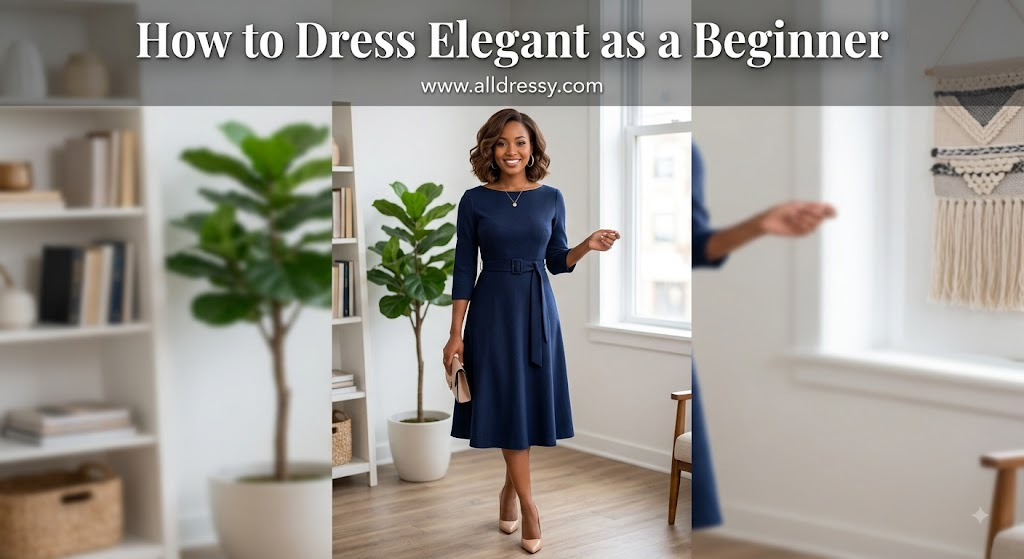
Before learning how to dress elegant as a beginner, it is useful to understand what “elegant” actually means.
Elegant dressing does not have one universal appearance. It can be classic, modern, casual, minimalist, romantic, professional, or even slightly playful. The common factor is that the outfit looks intentional and coordinated.
Elegant style often includes:
- Comfortable, appropriate fit
- Clean and well-maintained clothing
- Balanced proportions
- Coordinated colors
- Simple but thoughtful accessories
- Appropriate footwear
- Suitable fabrics and textures
- Clothing appropriate for the occasion
- A personal touch
Elegance should not mean trying to look older or copying another person’s appearance. Instead, it means developing a polished way of putting together clothes that feels natural to you.
How to Dress Elegant as a Beginner by Starting With Fit
One of the most important lessons in how to dress elegant as a beginner is learning about fit.
You do not need every garment to be tightly fitted. In fact, elegant outfits can include relaxed, oversized, straight, wide-leg, or structured silhouettes. The important thing is that the proportions look deliberate and the clothing allows comfortable movement.
When buying or wearing clothing, consider:
Shoulder Fit
On shirts, jackets, and structured tops, the shoulder seams should generally sit where the garment was designed to sit.
Sleeve Length
Sleeves should look intentional rather than excessively long or awkwardly short.
Trouser Length
Trousers should work with the shoes and silhouette you are wearing. Wide-leg trousers, straight-leg trousers, and tailored pants can all look polished when their length is appropriate.
Overall Comfort
Do not sacrifice comfort just to create a particular appearance. Clothing that allows you to move naturally can help you feel more confident.
Fit is particularly useful when building a beginner wardrobe because versatile pieces become much easier to combine when their proportions work well together.
How to Dress Elegant as a Beginner With Basic Wardrobe Pieces
You do not need dozens of garments to start developing an elegant wardrobe.
Instead, look for versatile pieces that can be worn in several different combinations.
A beginner-friendly wardrobe might include:
- A simple button-down shirt
- A neat blouse
- Straight-leg or tailored trousers
- A pair of clean, versatile jeans
- A simple skirt
- A classic everyday dress
- A cardigan
- A structured jacket
- A lightweight sweater
- Simple everyday shoes
- One versatile bag
- A few understated accessories
The exact items should depend on your lifestyle, climate, school or work environment, and personal preferences.
Recent capsule-wardrobe discussions similarly emphasize choosing pieces that can be mixed and matched instead of buying unrelated garments simply because they look attractive individually.
How to Dress Elegant as a Beginner With Neutral Colors
Color coordination is one of the easiest ways to make outfits look more organized.
Beginners often find neutral colors particularly easy to work with because they can be combined in numerous ways.
Common neutrals include:
- Black
- White
- Cream
- Beige
- Brown
- Gray
- Navy
- Taupe
You do not have to create an entirely neutral wardrobe. Instead, consider choosing two or three reliable base colors and adding one or two colors that you genuinely enjoy.
For example:
Navy + white + soft blue
or
Brown + cream + burgundy
or
Black + gray + muted green
A coordinated color palette can make a relatively small wardrobe much more versatile. Current capsule-wardrobe guidance frequently recommends starting with a small group of base neutrals and adding accent colors.
How to Dress Elegant as a Beginner Without Wearing Only Black
A common beginner misconception is that elegance means wearing black all the time.
Black is certainly versatile, but elegant outfits can use many colors.
Try:
- Cream and brown
- Navy and white
- Beige and blue
- Gray and burgundy
- Olive and cream
- Chocolate brown and ivory
- Soft blue and white
You can also create a monochromatic outfit by wearing several shades of the same color.
For example, a cream top with beige trousers and a slightly darker neutral jacket can create visual depth without relying on bold patterns.
How to Dress Elegant as a Beginner With the Right Proportions
Proportion is another essential part of how to dress elegant as a beginner.
Think about how the different shapes in your outfit interact.
For example:
Relaxed top + straight trousers
Oversized jacket + simple fitted or streamlined base layer
Wide-leg trousers + relatively simple top
Flowing skirt + structured top
These are not strict rules. Fashion allows many combinations. The purpose is simply to help you understand balance.
If every piece of an outfit has significant volume, the overall look may feel less structured. If every piece is extremely fitted, the outfit may feel visually rigid. Combining different shapes can create contrast.
How to Dress Elegant as a Beginner With Simple Dresses
A dress can make dressing easier because it creates the foundation of an outfit in one piece.
For beginners, versatile silhouettes can be especially useful.
Midi Dresses
Midi dresses can work for everyday occasions, gatherings, dinners, and semi-formal settings depending on their fabric and styling.
Shirt Dresses
Shirt dresses combine the appearance of a structured shirt with the simplicity of a dress.
A-Line Dresses
A-line dresses have a classic shape and can be styled with simple shoes and accessories.
Simple Knit Dresses
A straightforward knit dress can create a polished casual appearance when paired with appropriate footwear and a layer.
When choosing a dress, think about where you will actually wear it rather than buying something only because it looks impressive on a model or hanger.
How to Dress Elegant as a Beginner With Jeans
You do not have to give up jeans to dress elegantly.
The secret is combining casual denim with more polished pieces.
Try:
Straight-leg jeans + button-down shirt + loafers
Dark jeans + simple blouse + cardigan
Clean jeans + knit top + structured jacket
Straight jeans + simple shirt + understated accessories
The goal is balance. If the jeans are casual, adding a more polished top or outer layer can make the entire outfit feel more intentional.
Current fashion coverage also continues to show how classic denim can work with minimalist basics and polished accessories.
How to Dress Elegant as a Beginner With Trousers
Trousers are extremely useful for creating polished outfits.
Possible styles include:
- Straight-leg trousers
- Tailored trousers
- Wide-leg trousers
- Tapered trousers
- Relaxed trousers
For a simple beginner outfit, combine trousers with a plain blouse or knit top.
You can then add a cardigan, jacket, or blazer depending on the occasion.
The advantage of trousers is that one pair can work with multiple tops, allowing you to create several outfits without purchasing many additional garments.
How to Dress Elegant as a Beginner With Accessories
Accessories can make a simple outfit look more complete.
However, beginners often make the mistake of adding too many accessories at once.
Start with one or two simple pieces:
- Small earrings
- A watch
- A simple necklace
- A belt
- A scarf
- A neat handbag
- A simple hair accessory
If your clothing already has a strong pattern or noticeable detail, understated accessories may work better.
If your outfit is very simple, one interesting accessory can provide personality.
The goal is not to make every accessory noticeable. Instead, accessories should support the overall outfit.
How to Dress Elegant as a Beginner With Shoes
Shoes can change the entire impression of an outfit.
Elegant footwear does not have to mean high heels. Comfortable flats, loafers, boots, simple sandals, and polished sneakers can all work depending on the outfit and occasion.
When choosing shoes, consider:
- Comfort
- Cleanliness
- Occasion
- Weather
- Color
- Outfit proportions
- Practicality
A simple shoe that works with several outfits is particularly useful for a beginner.
For example, a neutral pair of flats or loafers can work with trousers, jeans, skirts, and dresses.
How to Dress Elegant as a Beginner With Bags
A bag can also contribute to a polished appearance.
Beginners can start with one versatile everyday bag in a color that works with several wardrobe pieces.
Black, brown, tan, beige, navy, or another frequently worn neutral can be practical.
Look for a bag that:
- Fits your everyday needs
- Is comfortable to carry
- Works with your clothing
- Is easy to maintain
- Has a shape appropriate for your lifestyle
You do not need a large collection of handbags to create elegant outfits.
How to Dress Elegant as a Beginner by Using Layers
Layering can make even a simple outfit look more thoughtful.
For example:
Blouse + cardigan + trousers
T-shirt + structured jacket + jeans
Dress + cardigan + simple shoes
Button-down shirt + lightweight sweater + trousers
Layering is also practical because it allows you to adapt your outfit to changing temperatures.
When layering, pay attention to proportions. If one layer is oversized, the surrounding pieces can be kept relatively simple to prevent the outfit from feeling visually crowded.
How to Dress Elegant as a Beginner on a Budget
Elegant style does not require expensive clothing.
In fact, a beginner can often make a greater difference by improving styling rather than buying an entirely new wardrobe.
Focus on:
Fit
Choose clothing that fits comfortably and looks intentional.
Versatility
Before buying something, consider how many outfits you can create with it.
Maintenance
Clean, pressed, well-maintained clothing naturally looks more polished.
Color Coordination
Choose colors that work with clothes you already own.
Quality Over Quantity
You do not necessarily need expensive clothing, but choosing pieces that hold their shape and remain useful can be more practical than repeatedly buying disposable trend pieces.
A capsule wardrobe can also reduce unnecessary purchases by encouraging you to choose pieces that work together.
How to Dress Elegant as a Beginner With a Capsule Wardrobe
A capsule wardrobe can make learning how to dress elegant as a beginner much easier.
Instead of having a closet filled with unrelated pieces, create a smaller collection where many items can be combined.
For example, imagine you have:
- 3 versatile tops
- 2 shirts
- 2 trousers
- 1 pair of jeans
- 1 skirt
- 1 dress
- 1 cardigan
- 1 jacket
- 2 pairs of everyday shoes
You can create numerous combinations from these pieces by changing the accessories, layers, and colors.
The exact number does not matter. Your wardrobe should reflect your actual lifestyle rather than an arbitrary capsule-wardrobe formula.
How to Dress Elegant as a Beginner for Everyday Life
Everyday elegance does not mean dressing formally every day.
Instead, try making ordinary outfits slightly more intentional.
For example:
Casual: Clean jeans + simple top + neat shoes
Polished casual: Jeans + button-down shirt + cardigan
Smart casual: Trousers + blouse + flats
Relaxed elegant: Midi dress + cardigan + simple shoes
The key is matching your outfit to the setting.
You should not feel as though you are wearing formal clothing simply to go about ordinary activities.
How to Dress Elegant as a Beginner for School or Other Everyday Settings
For younger people, elegant dressing should remain comfortable, age-appropriate, practical, and suitable for the environment.
Simple options can include:
- A neat shirt with trousers
- A clean knit top with jeans
- A cardigan over a simple top
- A modest dress appropriate for the setting
- Comfortable, clean shoes
- A practical bag
You do not need to imitate adult businesswear to look polished. Personal style can be neat and sophisticated while still feeling youthful and comfortable.
How to Dress Elegant as a Beginner for a Special Occasion
For events, first determine the expected dress code.
A casual gathering, family celebration, school event, dinner, and formal occasion may all require different levels of dressing.
Once you know the dress code, choose one main piece and build around it.
For example:
Dress + simple shoes + understated accessories
or
Trousers + polished blouse + simple jewelry
Avoid adding every formal item you own. A balanced outfit is usually easier to style successfully.
How to Dress Elegant as a Beginner in Hot Weather
In warm climates, comfort becomes especially important.
Choose breathable and lightweight fabrics where appropriate, and avoid unnecessary layers.
Possible combinations include:
- Lightweight blouse + trousers
- Cotton dress + simple sandals
- Loose shirt + straight trousers
- Lightweight skirt + simple top
Current summer styling also continues to emphasize breathable fabrics and versatile separates for polished warm-weather outfits.
The most elegant warm-weather outfit is one that looks neat while allowing you to remain comfortable.
How to Dress Elegant as a Beginner in Cool Weather
Cooler weather provides more opportunities for layering.
Try:
Sweater + trousers + simple shoes
Shirt + cardigan + jeans
Dress + cardigan + boots
Blouse + jacket + trousers
Textures become especially useful in cooler seasons. Combining knitwear, cotton, denim, and structured outer layers can make a simple outfit more interesting.
How to Dress Elegant as a Beginner by Adding Texture
If you prefer neutral colors, texture can prevent your wardrobe from looking repetitive.
For example, combine:
- Smooth cotton
- Ribbed knitwear
- Denim
- Suede-like textures
- Woven accessories
- Structured fabrics
A neutral outfit can become visually interesting through differences in texture, proportion, and layering rather than relying on bright colors or elaborate patterns. Recent capsule-style guidance specifically highlights texture and silhouette as ways to add depth to neutral outfits.
How to Dress Elegant as a Beginner With Patterns
Patterns are not forbidden in elegant dressing.
The key is coordination.
If you choose a patterned blouse, pair it with relatively simple trousers or a skirt.
If you choose a printed dress, keep your shoes and accessories understated.
Beginner-friendly patterns can include:
- Stripes
- Small florals
- Subtle checks
- Simple geometric patterns
You do not need to avoid bold prints completely. Simply make sure the rest of the outfit supports the main pattern.
How to Dress Elegant as a Beginner by Maintaining Your Clothes
Clothing care is an underrated part of polished dressing.
Before wearing an outfit, check whether:
- It needs pressing
- A button is loose
- A thread needs trimming
- Shoes need cleaning
- The fabric needs appropriate care
- The garment has stains or visible wear
Proper storage also matters. Fold knitwear appropriately and hang garments that benefit from hanging.
Taking care of clothing can extend its useful life and help your wardrobe look more polished.
How to Dress Elegant as a Beginner Without Following Every Trend
Fashion trends can be fun, but beginners do not need to chase every new style.
Instead, learn the difference between:
Personal style: What consistently feels right for you.
Trends: Styles that become popular for a particular period.
You can incorporate a trend through one small element while keeping the rest of the outfit timeless.
For example, a classic outfit can be updated with a current bag, shoe, color, or accessory without replacing your entire wardrobe.
Common Mistakes Beginners Make When Learning How to Dress Elegant
Buying Too Many Clothes at Once
A large wardrobe does not automatically produce better outfits.
Choosing Clothing Only Because It Is Trendy
Something popular may not suit your lifestyle or existing wardrobe.
Ignoring Comfort
If an outfit is uncomfortable, you may spend the entire day adjusting it.
Wearing Too Many Accessories
Too many competing details can make an outfit look busy.
Using Too Many Colors
Start with a small color palette and gradually experiment.
Forgetting Proportions
Consider how the shapes of different garments interact.
Neglecting Clothing Care
Wrinkles, stains, and damaged details can make an otherwise good outfit look unfinished.
Copying Someone Else Completely
Inspiration is useful, but your wardrobe should eventually reflect your own preferences and daily life.
How to Dress Elegant as a Beginner With Easy Outfit Formulas
Having a few reliable formulas makes getting dressed much easier.
Formula 1: Classic Casual
Straight-leg jeans + simple blouse + flats
Formula 2: Polished Casual
Trousers + knit top + cardigan + simple shoes
Formula 3: Simple Dress
Midi dress + understated accessories + comfortable shoes
Formula 4: Smart Casual
Button-down shirt + trousers + loafers
Formula 5: Layered Look
Simple top + cardigan or jacket + jeans
Formula 6: Monochromatic Outfit
Top + bottom + outer layer in related shades
These formulas are starting points rather than strict rules. Change colors, fabrics, shoes, and accessories according to your personal style.
How to Dress Elegant as a Beginner by Developing Personal Style
The final stage of learning how to dress elegant as a beginner is discovering what you personally like.
Start by noticing which outfits make you feel comfortable and confident.
Ask yourself:
- Do I prefer classic or modern clothing?
- Do I enjoy neutral colors?
- Do I prefer dresses or separates?
- Do I like relaxed or structured silhouettes?
- Which shoes do I actually enjoy wearing?
- Which clothes fit my daily activities?
- Which accessories feel natural to me?
You can then build your wardrobe around those answers.
Elegant dressing does not have to look identical from person to person. A minimalist outfit, a colorful outfit, and a classic outfit can all be elegant when they are coordinated and appropriate.
A Beginner’s Step-by-Step Approach to Elegant Dressing
If the entire process feels overwhelming, simplify it.
Step 1: Look through your existing wardrobe.
Step 2: Identify the clothes you wear most often.
Step 3: Choose two or three reliable neutral colors.
Step 4: Identify a few versatile pieces that already coordinate.
Step 5: Remove combinations that feel uncomfortable or impractical.
Step 6: Practice simple outfit formulas.
Step 7: Add accessories gradually.
Step 8: Experiment with proportions and textures.
Step 9: Learn what works for your lifestyle.
Step 10: Add new pieces only when they fill a genuine wardrobe need.
This approach prevents you from feeling that you need to transform your entire style overnight.
The Most Important Rules for How to Dress Elegant as a Beginner
When learning how to dress elegant as a beginner, remember that sophistication usually comes from consistency rather than complexity.
Focus on these principles:
- Choose comfortable, intentional fits.
- Build around versatile basics.
- Use a coordinated color palette.
- Balance proportions.
- Keep accessories purposeful.
- Choose practical, polished footwear.
- Maintain your clothing carefully.
- Dress appropriately for the occasion.
- Use layers and textures to create depth.
- Avoid buying clothing simply because it is trendy.
- Let your personal preferences influence your wardrobe.
- Improve gradually rather than trying to change everything at once.
A polished wardrobe is not created by purchasing the most expensive clothes. It develops through understanding what works together and choosing pieces that support your everyday life.
The easiest way to begin is with clothing you already own. Find one comfortable pair of trousers or jeans, one simple top, one coordinating layer, and one pair of clean shoes. Then experiment with colors and accessories. As you gain confidence, you can gradually explore different silhouettes, fabrics, patterns, and styling techniques.
Most importantly, how to dress elegant as a beginner is not about becoming someone else. It is about learning how to make thoughtful clothing choices, creating balanced outfits, and developing a style that feels comfortable, polished, and genuinely yours.
FAQs About How to Dress Elegant as a Beginner
1. How can I dress elegant as a beginner?
Start with simple, well-fitting clothes in coordinated colors. Build outfits around versatile basics such as trousers, jeans, blouses, shirts, simple dresses, cardigans, and clean shoes. Add a few understated accessories and make sure your clothing is clean and well maintained.
2. Do I need expensive clothes to dress elegantly?
No. Elegant dressing does not require designer clothing or expensive brands. Fit, coordination, fabric appearance, clothing condition, and appropriate styling are often more important than price. A simple outfit can look polished when the pieces work well together.
3. What colors are best for an elegant beginner wardrobe?
Neutral colors such as black, white, cream, beige, navy, gray, and brown are easy starting points because they can be mixed and matched. You can gradually introduce accent colors that suit your personal preferences.
4. How many clothes do I need to dress elegantly?
There is no fixed number. A small collection of versatile pieces can be enough. Focus on having several tops, a few bottoms, one or two dresses, a layer such as a cardigan or jacket, versatile shoes, and a practical bag.
5. Can I wear jeans and still look elegant?
Absolutely. Choose clean, comfortable jeans and combine them with polished pieces such as a blouse, button-down shirt, cardigan, structured jacket, loafers, or simple flats. Keeping the rest of the outfit coordinated can create a refined casual appearance.
6. What accessories should a beginner wear?
Start with simple accessories such as understated earrings, a watch, a small necklace, a belt, scarf, or neat handbag. You do not need many accessories. Choose pieces that complement your clothing instead of competing with it.
7. Are dresses necessary for elegant style?
No. Dresses are convenient, but elegant style can also include trousers, skirts, jeans, blouses, shirts, knitwear, and jackets. The most important consideration is how the pieces fit together and whether they suit the occasion.
8. How can I dress elegantly on a budget?
Begin with clothes you already own and identify pieces that can be combined in several ways. Prioritize versatile garments, coordinated colors, comfortable fit, and good clothing care. Add new pieces gradually instead of replacing your entire wardrobe.
9. What shoes are best for an elegant beginner wardrobe?
Choose comfortable shoes that coordinate with your everyday clothing. Depending on your lifestyle, useful options may include flats, loafers, simple sneakers, sandals, or boots. Clean and well-maintained shoes can make an outfit look considerably more polished.
10. How can I make my everyday outfits look more elegant?
Keep your outfit simple and intentional. Choose clothing that fits comfortably, coordinate the colors, balance the proportions, add one or two accessories, and make sure your shoes and clothing are neat. You can create an elegant appearance without making your everyday outfit overly formal.
Conclusion
Learning how to dress elegant as a beginner is a gradual process rather than something that requires an instant wardrobe makeover. The foundation is simple: choose comfortable clothing with an intentional fit, build outfits around versatile pieces, coordinate colors, balance proportions, and use accessories thoughtfully.
You do not need a large wardrobe or expensive labels to develop an elegant appearance. Start with the clothes you already have, identify the combinations that work best, and gradually add pieces that complement your existing wardrobe. Simple shirts, trousers, jeans, dresses, cardigans, jackets, comfortable shoes, and understated accessories can provide countless styling possibilities.
Most importantly, elegant dressing should reflect your own personality and lifestyle. Experiment with different colors, silhouettes, textures, and accessories until you discover combinations that feel natural. With practice, choosing polished outfits becomes easier, and you can develop a personal style that looks sophisticated while remaining comfortable and authentic.