
Learning how to dress a pear figure can help you create outfits that feel comfortable, coordinated, and suitable for different occasions. A pear-shaped figure is commonly described as having hips that are wider than the shoulders, with a more defined waist. However, body shapes are simply general descriptions, and everyone’s proportions are different. There is no single correct way to dress a particular figure.
The best approach to styling a pear figure is to understand clothing proportions, choose fabrics that feel comfortable, and experiment with different cuts, colors, and outfit combinations. Some people enjoy highlighting their waist, while others prefer relaxed silhouettes, flowing layers, or simple everyday clothing. All these choices can work beautifully.
Whether you are getting dressed for work, a casual outing, a wedding, or a special event, the right combination of clothing can help you express your personal style. This guide explains how to dress a pear figure, including the best tops, dresses, skirts, pants, jeans, jackets, accessories, and outfit ideas for different occasions and seasons.
What Is a Pear-Shaped Figure?
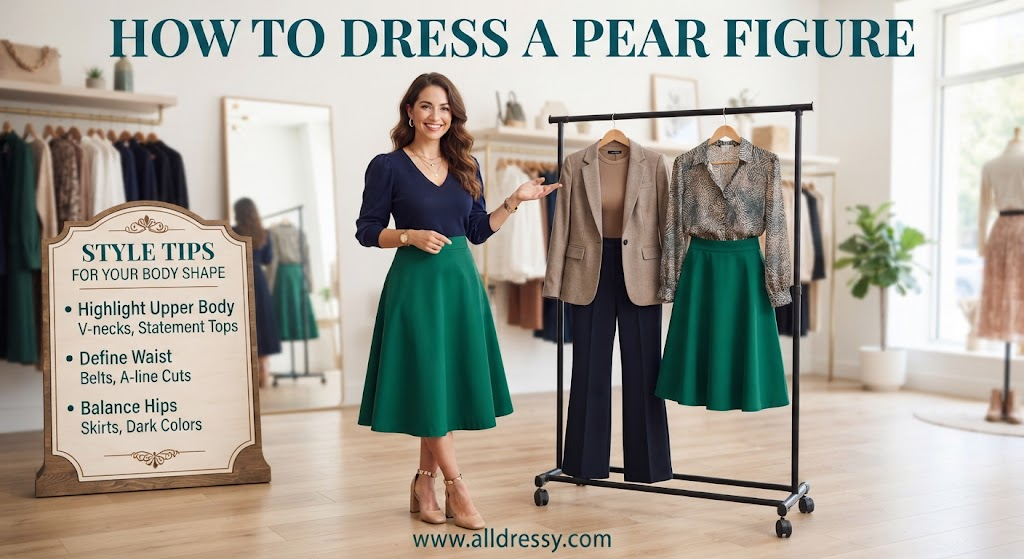
A pear-shaped figure is a general body-shape category in which the hips are typically wider than the shoulders. The waist may appear more defined, and the upper body may look narrower in comparison with the lower body.
People with pear-shaped proportions can wear many different clothing styles. Understanding these general proportions can simply make it easier to explore different outfit combinations.
Common characteristics associated with a pear-shaped figure include:
- Hips that are wider than the shoulders.
- A waist that may appear defined.
- A comparatively narrower upper body.
- A lower-body silhouette that may have more visual width than the upper body.
These characteristics are not strict rules. Body shapes vary naturally, and a person does not need to fit perfectly into one category.
How to Dress a Pear Figure: Understanding Clothing Proportions
When learning how to dress a pear figure, it helps to understand how different garments create different visual effects.
Some people prefer clothing that follows their natural shape, while others enjoy loose or oversized outfits. Both approaches can be stylish.
1. Understand Your Preferred Silhouette
A silhouette is the overall shape created by an outfit. For example, a fitted top with wide-leg pants creates a different silhouette from an oversized sweater with straight-leg jeans.
Experiment with combinations such as:
- Fitted tops with flowing skirts.
- Relaxed shirts with straight-leg pants.
- Structured jackets with simple trousers.
- Loose blouses with comfortable jeans.
- Coordinated outfits with similar colors.
Choose the silhouettes that feel most comfortable and reflect your personal preferences.
2. Consider the Fit of Each Clothing Item
Clothing fit is often more important than following a particular body-shape rule.
A garment should allow comfortable movement and sit naturally on your body. Avoid choosing clothing that feels too tight, too loose, or uncomfortable simply because a style guide recommends it.
3. Experiment With Different Proportions
Different lengths and shapes can change the overall appearance of an outfit.
For example, a tucked-in blouse creates a different look from a long tunic worn over trousers. A cropped jacket creates a different outline from a long cardigan.
Try several combinations to discover which ones you enjoy wearing.
Best Tops for a Pear Figure
Tops provide many opportunities to experiment with colors, fabrics, necklines, and details. When considering how to dress a pear figure, choose tops based on your preferred style rather than strict body-shape rules.
1. Boat-Neck Tops
Boat-neck tops have a wide neckline that extends horizontally across the upper chest. They can create a clean, elegant appearance and work well with jeans, trousers, and skirts.
You can wear a boat-neck top with:
- Straight-leg jeans.
- Wide-leg trousers.
- A-line skirts.
- Tailored pants.
- Casual denim skirts.
Choose cotton, knit, or lightweight woven fabrics according to the occasion.
2. Square-Neck Tops
Square-neck tops feature a straight neckline that creates a structured appearance. They are available in casual T-shirts, blouses, fitted tops, and dressy designs.
A square-neck blouse with simple trousers can create a polished outfit for a daytime event.
3. V-Neck Tops
V-neck tops are versatile wardrobe essentials. They work with many different outfit styles and can be worn for casual, professional, or formal occasions.
A simple V-neck shirt can be paired with jeans, a midi skirt, or tailored trousers.
4. Puff-Sleeve Tops
Puff sleeves add decorative volume to the shoulders and sleeves. They can create an interesting upper-body design without requiring complicated accessories.
Pair a puff-sleeve blouse with simple jeans or trousers to let the sleeve details stand out.
5. Structured Blouses
Structured blouses have defined shapes, seams, collars, or carefully designed details. They can make an outfit look polished and are suitable for work, meetings, and formal gatherings.
Choose a blouse with comfortable fabric and a fit that allows natural movement.
6. Wrap Tops
Wrap tops feature overlapping fabric that usually ties or fastens around the waist. They are useful for creating adjustable outfits.
A wrap top can be styled with straight-leg pants, denim, or a simple skirt.
7. Peplum Tops
Peplum tops have an additional fabric section around the waist or lower edge. They are available in casual and formal designs.
Pair a peplum top with straight-leg trousers or simple jeans for a coordinated outfit.
Best Dresses for a Pear Figure
Dresses are convenient because they create a complete outfit with one main clothing item. There are many dress styles to explore when learning how to dress a pear figure.
1. A-Line Dresses
Versatile dress style
A-line dresses are fitted around the upper portion and gradually widen toward the hem. They are popular for casual outings, office wear, parties, and family gatherings.
You can choose:
- Short-sleeved A-line dresses.
- Long-sleeved A-line dresses.
- Floral A-line dresses.
- Solid-colored A-line dresses.
- Formal A-line dresses.
Wear an A-line dress with flats, sandals, or heels depending on the occasion.
2. Fit-and-Flare Dresses
Fit-and-flare dresses have a more defined upper section and a skirt that opens outward. They are available in many fabrics, patterns, and lengths.
A cotton fit-and-flare dress works well for daytime activities, while a satin or chiffon version can be suitable for special events.
3. Wrap Dresses
Wrap dresses are designed with overlapping fabric that creates an adjustable waist area. They are available in both casual and formal versions.
A printed wrap dress can be styled with simple sandals for daytime wear. For a more formal outfit, choose a solid-colored design with elegant accessories.
4. Empire-Waist Dresses
Empire-waist dresses have a raised waistline positioned just below the bust. The fabric then falls loosely toward the hem.
This style is useful for people who prefer flowing clothing and a relaxed silhouette.
Choose lightweight cotton, chiffon, or other comfortable fabrics.
5. Maxi Dresses
Maxi dresses are long dresses that generally reach the ankles or lower. They are available in fitted, relaxed, A-line, and flowing silhouettes.
For casual outfits, choose cotton or jersey maxi dresses. For celebrations, consider chiffon, satin, or decorative designs.
6. Shirt Dresses
Shirt dresses have a shirt-inspired design, often featuring buttons, collars, and sleeves. They are suitable for everyday wear and smart casual outfits.
You can wear a shirt dress with sandals, loafers, sneakers, or ankle boots.
A belt can be added if you prefer a more defined waistline.
7. Fit-and-Flowy Dresses
Flowy dresses are comfortable options for people who prefer less structured clothing.
Look for soft fabrics, comfortable necklines, and practical sleeve designs. A flowing dress can be styled with sandals, flats, or a lightweight cardigan.
Best Skirts for a Pear Figure
Skirts are versatile wardrobe pieces that can be styled with different tops and shoes.
The best skirt depends on the outfit you want to create, the occasion, and the level of comfort you prefer.
1. A-Line Skirts
A-line skirts are wider toward the hem and create a classic silhouette. They work well with T-shirts, blouses, sweaters, and button-down shirts.
A black A-line skirt can be a useful wardrobe essential because it pairs with many different colors.
2. Pleated Skirts
Pleated skirts feature folds that create movement and texture. They are available in mini, midi, and maxi lengths.
For everyday outfits, pair a pleated skirt with a basic T-shirt or lightweight sweater.
For more formal occasions, choose a pleated skirt with a blouse and elegant footwear.
3. Midi Skirts
Midi skirts usually fall between the knee and ankle. They are suitable for work, casual outings, and special events.
You can choose straight, pleated, A-line, or flowing designs according to your preference.
4. Maxi Skirts
Maxi skirts are useful for creating comfortable and versatile outfits.
Pair them with:
- Simple T-shirts.
- Fitted knit tops.
- Button-down shirts.
- Lightweight blouses.
- Casual sweaters.
Choose footwear according to the skirt’s length and the occasion.
5. Denim Skirts
Denim skirts are practical for casual clothing. They are available in straight, A-line, button-front, and long designs.
A denim skirt can be paired with a white T-shirt, striped top, cotton blouse, or casual sweater.
6. Satin Skirts
Satin skirts have a smooth finish that makes them suitable for dressier outfits.
Pair a satin midi skirt with a simple blouse or fitted knit top. Add flats or heels depending on the event.
Best Pants and Jeans for a Pear Figure
Pants and jeans are everyday wardrobe essentials. Choosing the right fit can make a major difference in comfort and overall outfit coordination.
1. Straight-Leg Jeans
Straight-leg jeans have a relatively consistent width from the thigh to the ankle.
They are versatile and can be worn with T-shirts, blouses, sweaters, and jackets.
Choose a comfortable waist and leg fit rather than focusing only on current trends.
2. Wide-Leg Pants
Wide-leg pants have a relaxed shape throughout the leg. They are available in denim, cotton, linen, and formal fabrics.
For a casual outfit, combine wide-leg jeans with a simple top and sneakers.
For work, choose tailored wide-leg trousers with a blouse or structured shirt.
3. Bootcut Jeans
Bootcut jeans are relatively fitted through the upper leg and gradually widen toward the bottom.
They work well with casual shirts, sweaters, blouses, and boots.
4. Flared Jeans
Flared jeans widen more noticeably toward the hem. They can create a retro-inspired outfit when combined with a fitted top or tucked-in blouse.
Choose a length that works with your footwear and does not drag on the ground.
5. Tailored Trousers
Tailored trousers are useful for professional and formal outfits.
Choose comfortable fabrics, suitable waistbands, and a fit that allows easy movement.
A neutral pair of trousers can be styled with many different tops.
6. Relaxed-Fit Pants
Relaxed-fit pants provide extra room and are useful for everyday comfort.
They work well with basic shirts, sweaters, and casual blouses.
Choose a fabric that suits the weather and the occasion.
How to Dress a Pear Figure for Different Occasions
A well-planned outfit should suit the event, weather, and your personal preferences.
1. Casual Everyday Outfits
Casual outfits should be comfortable and easy to coordinate.
Try these combinations:
- A basic T-shirt with straight-leg jeans.
- A cotton blouse with an A-line skirt.
- A relaxed shirt with wide-leg trousers.
- A simple maxi dress with flat sandals.
- A lightweight sweater with denim.
Sneakers, flats, and comfortable sandals are practical footwear choices.
2. Office Outfits
Professional clothing does not need to be complicated. A few versatile pieces can help create several work outfits.
Consider:
- A structured blouse with tailored trousers.
- A button-down shirt with an A-line skirt.
- A simple dress with a lightweight blazer.
- A knit top with straight-leg pants.
- A coordinated two-piece outfit.
Neutral colors such as black, navy, beige, gray, and cream are easy to combine.
Choose clothing that meets your workplace dress code.
3. Party Outfits
For parties, you can experiment with fabrics, patterns, and decorative details.
Suitable options include:
- A satin wrap dress.
- A floral fit-and-flare dress.
- A pleated skirt with a dressy blouse.
- Wide-leg trousers with a decorative top.
- A maxi dress with elegant accessories.
Choose footwear that is appropriate for the venue and comfortable enough for the event.
4. Wedding Guest Outfits
A wedding is a good opportunity to wear elegant clothing.
You might choose a chiffon dress, satin skirt with a blouse, or a formal A-line dress.
Consider the invitation’s dress code and any cultural expectations. Choose colors that are appropriate for the celebration.
5. Travel Outfits
Travel outfits should be practical, comfortable, and easy to layer.
Good options include:
- Stretchy trousers with a cotton T-shirt.
- A relaxed maxi dress.
- Straight-leg jeans with a cardigan.
- Wide-leg pants with a comfortable blouse.
Sneakers and flat shoes are useful for walking.
How to Choose Colors When Dressing a Pear Figure
Color coordination can help create attractive outfits. You can use color to express your personal style, match different clothing pieces, or create a coordinated appearance.
There is no rule that people with a particular body shape must wear specific colors.
1. Neutral Colors
Neutral colors are easy to coordinate and suitable for many occasions.
Popular options include:
- Black.
- White.
- Beige.
- Cream.
- Gray.
- Navy.
- Brown.
A neutral wardrobe can make it easier to create multiple outfits from a smaller clothing collection.
2. Bright Colors
Bright colors can add energy and personality to an outfit.
You can experiment with red, royal blue, emerald green, pink, orange, and yellow.
A colorful blouse paired with neutral trousers creates a simple and coordinated combination.
3. Pastel Colors
Pastel shades create a soft appearance and work well for spring and summer outfits.
Popular choices include lavender, mint, baby blue, pale pink, and light yellow.
4. Printed Clothing
Florals, stripes, geometric patterns, and abstract prints can add visual interest.
If you are wearing a bold printed top, you may prefer simple trousers or a plain skirt. Alternatively, a printed skirt can be paired with a solid-colored blouse.
How to Choose Jackets and Outerwear for a Pear Figure
Jackets and outerwear can complete an outfit and make it suitable for different weather conditions.
1. Cropped Jackets
Cropped jackets end around the waist or slightly below it. They work well with high-waisted trousers, jeans, and skirts.
Denim, leather-look, and lightweight fabric jackets are popular options.
2. Structured Blazers
Blazers are useful for office outfits and smart casual clothing.
Choose a comfortable shoulder fit and a length that works with the rest of your outfit.
Wear a blazer with tailored trousers, jeans, or a midi skirt.
3. Long Cardigans
Long cardigans create a relaxed layered outfit. They are useful during cooler weather and can be worn over dresses, tops, and jeans.
Choose lightweight materials for mild weather and warmer knits for winter.
4. Trench Coats
Trench coats are classic outerwear pieces that work well with both casual and professional clothing.
They can be worn over dresses, trousers, and skirts.
Neutral shades such as beige, navy, and black are particularly versatile.
5. Denim Jackets
Denim jackets are practical for everyday outfits.
Wear one over a maxi dress, T-shirt and jeans combination, or casual skirt outfit.
How to Dress a Pear Figure in Different Seasons
Seasonal styling allows you to use many of the same wardrobe pieces throughout the year.
Spring Outfits
Spring is a good time to wear lightweight fabrics, floral prints, and pastel colors.
Try:
- A floral dress with flats.
- A cotton blouse with an A-line skirt.
- Straight-leg jeans with a lightweight cardigan.
- A pastel shirt with tailored trousers.
Summer Outfits
Choose breathable materials such as cotton and linen during warmer weather.
Useful combinations include:
- A cotton maxi dress.
- A linen blouse with relaxed trousers.
- A simple T-shirt with a denim skirt.
- A lightweight shirt with wide-leg pants.
Sandals and breathable flats are practical footwear options.
Fall Outfits
Fall outfits can include sweaters, jackets, long-sleeved shirts, and denim.
Pair a knit sweater with straight-leg jeans or wear a structured blouse with a midi skirt.
Colors such as brown, burgundy, olive, navy, and cream are popular seasonal choices.
Winter Outfits
During winter, layering helps keep outfits comfortable.
Try:
- A sweater with tailored trousers.
- A long-sleeved dress with a coat.
- Straight-leg jeans with a cardigan.
- A knit top with a long skirt.
- A blazer layered over a warm shirt.
Choose appropriate footwear and fabrics for the weather.
Best Accessories for a Pear Figure
Accessories add personality and help complete an outfit. You can choose them according to the occasion, clothing style, and your personal preferences.
1. Necklaces
Necklaces can add detail to simple tops and dresses.
Choose delicate necklaces for everyday outfits or more decorative pieces for special occasions.
2. Earrings
Earrings are easy to coordinate with different outfits.
Stud earrings, hoops, and drop earrings can all work well depending on your style.
3. Belts
Belts can add a finishing detail to dresses, trousers, and skirts.
A simple belt can coordinate an outfit, while a decorative belt can become a noticeable accessory.
4. Handbags
Choose handbags according to the activity.
- Crossbody bags for casual outings.
- Tote bags for everyday use.
- Shoulder bags for smart casual outfits.
- Clutches for formal occasions.
5. Scarves
Scarves can add color, texture, and warmth.
Lightweight scarves are useful in spring and summer, while thicker scarves are suitable for colder weather.
Common Styling Mistakes to Avoid When Dressing a Pear Figure
There are no universal clothing rules for a pear-shaped figure. However, some practical considerations can make outfit planning easier.
1. Following Every Body-Shape Rule
Body-shape guides are suggestions, not strict instructions. You do not need to avoid particular clothing styles because of your proportions.
Experiment with different cuts and choose what you enjoy.
2. Ignoring Comfort
A fashionable outfit is not useful if it feels uncomfortable.
Choose clothing that allows you to sit, walk, and move naturally.
3. Wearing the Wrong Size
Clothing that is too tight or too loose may not feel comfortable.
Check garment measurements and size charts when shopping online.
4. Choosing Uncomfortable Fabrics
Some materials may feel scratchy, stiff, or restrictive.
Read fabric descriptions and consider how the garment will feel during everyday use.
5. Overcomplicating an Outfit
Too many competing patterns, accessories, or decorative details can make outfit planning difficult.
Start with a simple combination and add accessories only when they improve the overall look.
6. Ignoring the Occasion
A casual outfit may not be appropriate for a formal event, while highly decorative clothing may feel unsuitable for everyday activities.
Consider the dress code and location before choosing your outfit.
How to Build a Versatile Wardrobe for a Pear Figure
A versatile wardrobe does not require a large number of clothing items. Instead, focus on pieces that can be combined in several ways.
Here are some useful wardrobe essentials:
| Clothing item | Styling possibilities |
|---|---|
| White T-shirt | Jeans, skirts, and casual trousers |
| Black blouse | Workwear, parties, and everyday outfits |
| Button-down shirt | Tailored pants, denim, and skirts |
| Straight-leg jeans | Casual tops, sweaters, and jackets |
| Wide-leg trousers | Blouses, knit tops, and shirts |
| A-line skirt | T-shirts, sweaters, and formal blouses |
| Wrap dress | Casual and special occasions |
| Lightweight cardigan | Dresses, tops, and jeans |
| Structured blazer | Workwear and smart casual outfits |
| Comfortable sneakers | Everyday and travel outfits |
Start with clothing in colors you enjoy wearing. Add patterned pieces, seasonal items, and special-occasion outfits as needed.
How to Shop for Clothes for a Pear Figure
Shopping becomes easier when you understand your clothing preferences and know what details matter to you.
1. Check the Size Chart
Different brands use different sizing systems. Check the garment measurements rather than relying only on a size label.
2. Read Fabric Information
Fabric affects how a garment feels, stretches, and moves.
Cotton, linen, jersey, denim, and suitable knit fabrics are useful options for different types of clothing.
3. Review the Garment Length
The length of a dress, skirt, jacket, or pair of trousers can influence how an outfit looks and feels.
Check the product measurements before ordering online.
4. Consider How You Will Wear It
Think about whether the clothing item will work with pieces you already own.
A versatile blouse that matches several trousers and skirts may be more useful than a highly specific item that is difficult to coordinate.
5. Prioritize Quality and Comfort
Look at the stitching, fabric composition, fastenings, and care instructions.
A well-made garment that feels comfortable can be more useful than an item chosen only because it follows a current trend.
Final Styling Tips for How to Dress a Pear Figure
Learning how to dress a pear figure is about exploring clothing styles that suit your personal preferences, daily activities, and comfort needs. Tops such as blouses, V-neck shirts, square-neck designs, and structured shirts offer many styling possibilities. Dresses such as A-line, wrap, fit-and-flare, and maxi styles can work for casual and formal occasions.
For everyday outfits, experiment with jeans, comfortable tops, and practical footwear. For work, consider tailored trousers, blouses, and structured jackets. For parties and special events, explore elegant dresses, satin skirts, and coordinated accessories.
Remember that body-shape categories are only general descriptions. You do not have to follow every traditional styling rule or avoid clothing you enjoy. Focus on comfortable fit, suitable fabrics, useful wardrobe combinations, and personal expression. With a few versatile clothing essentials, you can create many different outfits for every season and occasion.
10 Frequently Asked Questions About How to Dress a Pear Figure
1. What is the best way to dress a pear figure?
The best way to dress a pear figure is to choose clothing that feels comfortable and reflects your personal style. You can experiment with different tops, dresses, skirts, and trousers to create outfits you enjoy wearing. A-line dresses, wrap dresses, straight-leg jeans, and structured blouses are popular options.
2. What tops look good on a pear-shaped figure?
Many tops work well with pear-shaped proportions, including V-neck tops, square-neck blouses, boat-neck shirts, puff-sleeve tops, and structured blouses. Choose designs based on your preferred neckline, fabric, and overall outfit.
3. What dresses are suitable for a pear figure?
A-line dresses, fit-and-flare dresses, wrap dresses, empire-waist dresses, and maxi dresses are versatile choices. They are available in different fabrics and lengths, making them suitable for casual outings, work, and special occasions.
4. Can someone with a pear figure wear skinny jeans?
Yes. Skinny jeans can be part of a stylish and comfortable outfit. You can pair them with a T-shirt, blouse, sweater, or jacket. Choose a fit that allows you to move comfortably.
5. What skirts are good for a pear figure?
A-line skirts, pleated skirts, midi skirts, maxi skirts, and denim skirts are all options worth exploring. Choose a length and fabric that suit your preferences and the occasion.
6. What pants look good on a pear figure?
Straight-leg jeans, wide-leg trousers, bootcut jeans, flared jeans, and relaxed-fit pants are versatile choices. Comfort, fabric, and the correct fit are more important than following strict body-shape rules.
7. Can a pear-shaped figure wear oversized clothing?
Absolutely. Oversized shirts, sweaters, jackets, and relaxed dresses can create comfortable and fashionable outfits. You can pair an oversized top with jeans, trousers, or a skirt.
8. What jackets work well with a pear figure?
Denim jackets, structured blazers, cropped jackets, trench coats, and long cardigans are useful options. Select a jacket based on its length, fabric, weather suitability, and how it coordinates with your outfit.
9. What should someone with a pear figure wear to a formal event?
A wrap dress, A-line dress, elegant maxi dress, or satin skirt with a sophisticated blouse can create a polished formal outfit. Complete the look with suitable footwear, a handbag, and coordinated accessories.
10. How can I build a wardrobe for a pear figure on a budget?
Start with versatile essentials such as a white T-shirt, a neutral blouse, straight-leg jeans, comfortable trousers, an A-line skirt, and a simple dress. Choose items that coordinate with clothing you already own. This makes it easier to create multiple outfits without spending too much.
Conclusion
Learning how to dress a pear figure can make choosing everyday outfits easier and more enjoyable. From comfortable jeans and stylish tops to elegant dresses and versatile skirts, there are many clothing options to explore.
A-line dresses, wrap dresses, straight-leg jeans, wide-leg trousers, structured blouses, and lightweight jackets can all be useful additions to your wardrobe. You can also experiment with different colors, patterns, fabrics, and accessories to create outfits for work, parties, casual outings, and special occasions.
Most importantly, remember that body-shape categories are general styling guides, not strict fashion rules. You do not need to avoid particular clothing styles or change your natural proportions to look fashionable. Choose clothes that fit comfortably, suit your lifestyle, and help you express your personal style. A versatile wardrobe built around your preferences will give you plenty of opportunities to create outfits you enjoy wearing.