
Knowing how to dress a newborn for winter is important for keeping your baby comfortable and protected during cold weather. Newborn babies cannot regulate their body temperature as effectively as older children and adults, so they need appropriate clothing and careful attention to their surroundings. However, dressing a newborn too warmly can also cause overheating, which is why choosing the right layers is essential.
The best way to dress a newborn in winter is to use comfortable, breathable layers that can be added or removed depending on the temperature. Soft cotton bodysuits, footed sleepers, lightweight sweaters, and suitable outdoor clothing can help keep your baby warm. You should also consider the indoor temperature, outdoor weather, sleeping arrangements, and whether your baby will be traveling in a stroller or car seat.
Every newborn has slightly different needs depending on their age, health, clothing, and environment. A baby who is comfortable in a warm room may need additional layers when going outside. Similarly, clothing that is appropriate for a short outdoor walk may be unsuitable for sleeping.
This guide explains how to dress a newborn for winter, how many layers to use, what fabrics to choose, how to dress your baby for sleeping and outdoor activities, and which clothing mistakes to avoid.
Why Is It Important to Dress a Newborn Properly in Winter?
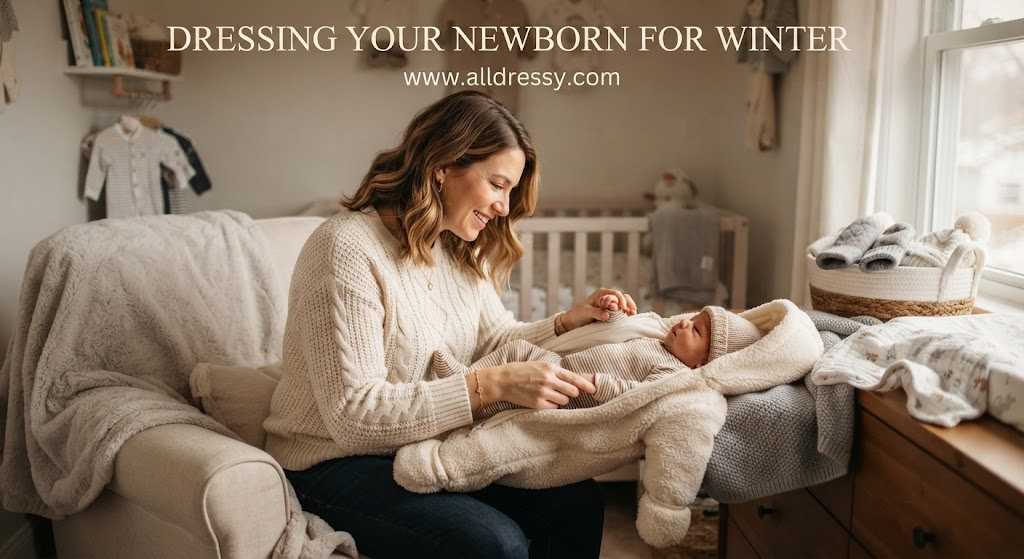
Newborn babies are more sensitive to temperature changes than adults. Their bodies are still developing the ability to regulate heat efficiently, and they have a relatively large surface area compared with their body size.
This means they can become cold more easily in some situations. At the same time, excessive clothing, thick blankets, and warm indoor environments can cause overheating.
Understanding how to dress a newborn for winter helps parents balance warmth and comfort.
1. Newborns Have Developing Temperature Regulation
During the first few months, babies are still developing their ability to maintain a stable body temperature. They depend partly on their clothing and surrounding environment to stay comfortable.
Parents should therefore pay attention to room temperature, clothing layers, and signs that the baby may be too warm or too cold.
2. Babies Cannot Easily Communicate Discomfort
Newborns cannot explain whether they feel cold or hot. Parents must observe their behavior and physical condition.
Signs that your baby may be uncomfortable include:
- Unusual fussiness.
- Restlessness.
- Sweating.
- Damp hair.
- Warm or flushed skin.
- A noticeably cool chest or back.
Remember that cool hands and feet do not necessarily mean your baby is cold. Check the chest, upper back, or back of the neck to get a better idea of their temperature.
3. Overheating Is Also a Concern
Winter clothing should provide warmth without making your newborn excessively hot. Too many layers, thick indoor clothing, and heavy bedding can increase the risk of overheating.
The goal is not to make your baby feel very warm. It is to maintain a comfortable temperature using appropriate clothing.
How to Dress a Newborn for Winter: The Basic Layering Method
Layering is one of the easiest ways to dress a newborn during winter. Instead of relying on one extremely thick outfit, use several comfortable layers that can be adjusted when the temperature changes.
A practical clothing combination may include:
- A soft cotton bodysuit as the base layer.
- A footed sleeper or comfortable one-piece outfit.
- An additional lightweight layer when needed.
- Appropriate outdoor clothing when leaving the house.
The number of layers depends on the indoor or outdoor temperature, the clothing material, and your baby’s comfort.
1. Start With a Soft Base Layer
The base layer is the clothing worn closest to your newborn’s skin. It should be soft, breathable, and comfortable.
Cotton bodysuits are a common choice because they are generally gentle on delicate skin and allow comfortable movement.
Useful base-layer options include:
- Short-sleeved cotton bodysuits.
- Long-sleeved cotton bodysuits.
- Soft cotton undershirts.
- Comfortable baby vests.
For colder conditions, a long-sleeved bodysuit may be suitable as the first layer.
Avoid clothing with rough seams, scratchy labels, tight elastic, or decorative elements that could irritate your baby’s skin.
2. Add a Footed Sleeper
A footed sleeper is a one-piece outfit that covers the baby’s arms, body, and feet. It is a practical option for winter because it reduces the need for separate socks and helps keep the baby’s clothing in place.
Look for sleepers made from soft cotton or suitable breathable materials.
Important features include:
- A comfortable fit.
- Easy front or leg openings.
- Soft fabric.
- Securely attached fasteners.
- No loose decorative pieces.
A footed sleeper can be worn over a bodysuit when additional warmth is needed.
3. Use an Additional Layer When Necessary
If the room is cool or you are going outdoors, you may need an additional layer.
Suitable options include:
- A lightweight cardigan.
- A soft cotton sweater.
- A comfortable baby jacket.
- A wearable blanket designed for the baby’s age and size.
Choose layers that are easy to remove. This is particularly useful when moving between cold outdoor air and heated indoor spaces.
4. Adjust Clothing According to Temperature
There is no single number of layers that is appropriate for every newborn in every winter environment.
For example, a baby in a comfortably heated bedroom may need fewer layers than a baby going outside in cold weather.
Rather than automatically adding multiple thick layers, check your baby’s chest or upper back and adjust their clothing as needed.
Best Winter Clothes for Newborn Babies
Choosing suitable winter clothing can make dressing your newborn easier. Each clothing item serves a different purpose, and parents should prioritize comfort, safety, and appropriate fit.
1. Cotton Bodysuits
Everyday essential
Cotton bodysuits are useful throughout the year, including winter. They can be worn underneath sleepers, sweaters, and other baby clothing.
Their practical design helps keep the baby’s clothing in place during movement.
When buying cotton bodysuits, consider:
- Soft and breathable material.
- Comfortable neck openings.
- Easy diaper access.
- Suitable sleeve length.
- Appropriate size.
Avoid bodysuits that are too tight around the neck, arms, or legs.
2. Footed Pajamas
Footed pajamas are another useful winter clothing option. They cover most of the baby’s body and feet in one piece.
They can be convenient for nighttime routines and daytime use, depending on the fabric and room temperature.
Choose a breathable design rather than automatically selecting the thickest available option.
3. Baby Cardigans
A cardigan provides an additional layer that can be removed easily.
It is useful when your baby moves between different temperatures, such as from a cool room into a warmer living area.
Choose cardigans with comfortable fastenings and avoid loose buttons or decorations that could become detached.
4. Baby Pants and Leggings
Baby pants and leggings can provide additional coverage when worn over a bodysuit.
Soft cotton pants are suitable for many indoor situations. However, make sure the waistband is comfortable and does not put pressure on the baby’s stomach.
5. Baby Socks
Socks can help keep your baby’s feet warm when wearing clothing that does not cover the feet.
Choose socks that fit properly without tight elastic around the ankles.
Check occasionally to make sure they have not become too tight or slipped off.
6. Baby Hats
A soft hat can help protect your newborn’s head during short outdoor trips in cold weather.
However, hats should not be worn during indoor sleep because they can contribute to overheating.
Remove the hat when returning indoors, especially if the room is warm.
How to Dress a Newborn for Winter at Home
Indoor clothing depends on the temperature of your home. Some homes remain comfortably warm during winter, while others become quite cold, especially during nighttime.
When learning how to dress a newborn for winter at home, consider the room temperature rather than the outdoor weather alone.
Clothing for a Warm Indoor Room
If your home is comfortably heated, your newborn may need only:
- A cotton bodysuit.
- A lightweight sleeper if needed.
- A suitable sleep sack for sleeping, when appropriate.
Avoid adding heavy sweaters, thick blankets, or several unnecessary layers in a warm room.
Clothing for a Cool Indoor Room
If the room feels cool, consider adding a comfortable layer.
For example:
- A long-sleeved cotton bodysuit.
- A breathable footed sleeper.
- A properly fitted wearable blanket for sleep, if appropriate.
Check the baby’s chest or back regularly and remove a layer if the baby becomes too warm.
Avoid Direct Heat Sources
Do not place a newborn directly beside a heater, fireplace, radiator, or other heat source.
Direct heat can create an unsafe environment and cause the baby to become too warm.
Keep the sleeping area away from heating equipment and follow the manufacturer’s safety instructions for any heating device used in the home.
How to Dress a Newborn for Winter Sleep
Sleep clothing requires special attention because newborn babies spend much of their time sleeping.
A safe sleep environment is just as important as choosing warm clothing.
1. Choose Comfortable Sleepwear
A breathable cotton sleeper is a useful option for many indoor sleeping environments.
The clothing should fit properly and allow the baby to move comfortably.
Avoid clothing with:
- Loose strings.
- Large decorative pieces.
- Tight neck openings.
- Loose fabric around the face.
- Uncomfortable fasteners.
2. Use an Appropriate Wearable Blanket
A wearable blanket, sometimes called a sleep sack, can provide warmth without requiring loose bedding.
Choose one that is specifically designed for infant sleep and suitable for your baby’s size and the room temperature.
Follow the manufacturer’s instructions for sizing, use, and layering.
Do not use weighted sleep sacks or weighted blankets for newborns.
3. Avoid Loose Blankets
Loose blankets, pillows, quilts, and other soft bedding should not be placed in a newborn’s sleeping space.
They can create a suffocation risk.
Instead, use appropriate sleep clothing and a correctly sized wearable blanket if needed.
4. Keep the Baby’s Head Uncovered
Do not put a hat on your newborn while sleeping indoors.
The baby’s head should remain uncovered during sleep to help regulate body temperature.
5. Check for Overheating
During sleep, occasionally check your baby’s chest or upper back.
Signs of overheating may include:
- Sweating.
- Damp hair.
- Flushed skin.
- A hot chest.
- Unusual discomfort.
If your baby feels too warm, remove an extra layer and check the room temperature.
How to Dress a Newborn for Winter Outdoors
Going outside with a newborn requires more preparation than dressing for indoor activities. Cold wind, low temperatures, and sudden weather changes can affect your baby’s comfort.
Before leaving home, check the weather and consider how long you will be outdoors.
1. Use Suitable Base Clothing
Start with a comfortable bodysuit and a suitable one-piece outfit.
The base clothing should be breathable and should not restrict your baby’s movement.
2. Add a Weather-Appropriate Outer Layer
Depending on the weather, you may need a baby jacket, warm outer layer, or appropriately designed bunting suit.
Choose clothing that provides warmth without making the baby excessively hot.
For very cold weather, ask your pediatrician about suitable clothing arrangements, especially if your newborn is premature or has a medical condition.
3. Protect the Head and Feet
A soft outdoor hat and suitable socks or foot coverings can help protect your baby from cold conditions.
Make sure the hat fits comfortably and does not cover the baby’s face.
Remove outdoor hats and extra layers when you return to a warm indoor environment.
4. Protect Your Baby From Wind
Cold wind can make outdoor conditions uncomfortable.
A stroller with an appropriate weather shield can provide some protection, but never cover the stroller completely with a thick blanket because this can restrict airflow and increase heat.
Keep your baby’s face visible and make sure air can circulate.
5. Limit Exposure During Very Cold Weather
Newborns are particularly sensitive to extreme weather.
If temperatures are very low, wind is strong, or weather conditions are severe, consider postponing unnecessary outdoor trips.
If your newborn must go outside, keep the trip short and monitor their comfort.
How to Dress a Newborn for Winter in a Car Seat
Car seat clothing requires special attention because thick winter jackets and bulky snowsuits can interfere with the proper fit of the harness.
A harness that appears tight over a bulky coat may become too loose if the coat compresses during a sudden stop or crash.
1. Avoid Bulky Coats Under the Harness
Do not place a thick winter jacket, padded snowsuit, or bulky clothing underneath the car seat harness.
Instead, dress your baby in thin, comfortable layers that allow the harness to fit correctly.
2. Check the Harness Fit
Follow the car seat manufacturer’s instructions for positioning and tightening the harness.
The harness should fit securely according to the manufacturer’s guidance.
Do not add aftermarket padding or accessories that have not been approved for your specific car seat.
3. Add Warmth After Buckling
Once your newborn is correctly secured, you can add a blanket over the harness if needed.
Keep the baby’s face uncovered and make sure the blanket does not interfere with the harness or create loose material around the face.
A car-seat-approved cover may be another option if permitted by the manufacturer. It should not go between the baby and the harness.
4. Remove Extra Layers When the Car Warms Up
Cars can become warm quickly, even during winter.
If the interior temperature increases, remove unnecessary layers to prevent overheating.
Never leave a newborn alone in a parked vehicle.
Best Fabrics for Dressing a Newborn in Winter
Fabric selection is important because newborn skin is delicate and can be sensitive to rough or irritating materials.
The best winter clothing materials should provide suitable warmth while remaining comfortable.
1. Cotton
Cotton is a popular choice for newborn clothing because it is generally soft and breathable.
It works well for bodysuits, sleepers, undershirts, and everyday outfits.
2. Cotton Fleece
Some baby garments use soft fleece made from cotton or synthetic fibers.
These fabrics can provide additional warmth, but parents should consider the garment’s thickness and breathability.
Avoid excessively thick clothing in warm indoor environments.
3. Merino Wool
Fine merino wool is used in some baby clothing because it can provide warmth without requiring very bulky garments.
Choose products specifically designed for babies and check the care instructions.
If your baby develops skin irritation, stop using the material and seek medical advice if needed.
4. Bamboo-Based Fabrics
Some baby garments are made from bamboo-derived fibers. They are often marketed as soft and comfortable.
Check the actual fabric composition and product information rather than assuming every bamboo garment has identical properties.
Fabrics and Details to Consider Carefully
Avoid clothing that feels rough, causes irritation, or has loose decorative parts.
Pay attention to:
- Scratchy seams.
- Loose buttons.
- Long strings.
- Sharp decorative pieces.
- Tight elastic.
- Poorly attached fasteners.
Comfort and safety should always be more important than appearance.
How to Dress a Newborn for Winter According to Temperature
Parents often wonder how many layers their newborn needs in different temperatures. There is no universal clothing chart that applies to every home, but the following general approach can help.
| Environment | General clothing approach |
|---|---|
| Warm indoor room | Breathable bodysuit or lightweight sleeper |
| Comfortably cool room | Bodysuit with a suitable sleeper |
| Cooler indoor environment | Bodysuit, sleeper, and an additional appropriate layer if needed |
| Cold outdoor weather | Indoor base clothing with weather-appropriate outerwear |
| Cold car journey | Thin layers, correctly fitted car seat harness, and a blanket over the secured harness if needed |
These are general examples, not strict prescriptions. The actual clothing required depends on the temperature, humidity, fabric, baby’s age, and health.
For sleep, follow safe-sleep recommendations and use an appropriate wearable blanket rather than loose bedding.
Signs Your Newborn Is Too Cold or Too Warm
Because newborns cannot communicate their temperature needs, parents should regularly observe their baby’s physical condition.
Signs Your Newborn May Be Too Cold
Possible signs include:
- A cool chest or upper back.
- Unusual fussiness.
- Reduced activity.
- Pale or unusually cool skin.
- Difficulty settling.
Cold hands and feet alone are not reliable indicators because newborn extremities may naturally feel cooler.
If your newborn seems unusually cold, gently warm them with appropriate clothing and contact a healthcare professional if you are concerned.
Signs Your Newborn May Be Too Warm
Signs of overheating can include:
- Sweating.
- Damp hair.
- Flushed skin.
- A hot chest or back.
- Rapid breathing.
- Unusual restlessness.
Remove unnecessary layers and move the baby to a comfortably cool environment.
If your newborn has difficulty breathing, is unusually difficult to wake, or appears seriously unwell, seek urgent medical attention.
Special Winter Clothing Considerations for Premature Newborns
Premature babies may have greater difficulty maintaining their body temperature than babies born at full term.
They may need more individualized temperature management, particularly during the early weeks after birth.
Parents of premature newborns should follow the care team’s specific instructions regarding:
- Indoor temperature.
- Clothing layers.
- Sleepwear.
- Outdoor exposure.
- Skin-to-skin care.
- Monitoring body temperature.
Do not rely on general winter clothing advice alone if your baby was born prematurely or has a medical condition.
Common Mistakes to Avoid When Dressing a Newborn for Winter
Even with good intentions, parents can sometimes choose clothing that is too warm, too bulky, or unsuitable for the activity.
Understanding these mistakes can help you create a safer winter clothing routine.
1. Dressing the Baby in Too Many Layers
Adding several thick layers does not automatically make a newborn more comfortable.
Too much clothing can cause overheating, especially indoors.
Use breathable layers and adjust them according to the baby’s temperature.
2. Keeping a Hat on Indoors
Outdoor hats can be useful in cold weather, but they should be removed when the baby comes indoors.
Do not put hats on newborns during indoor sleep.
3. Using Thick Coats in Car Seats
Bulky coats can prevent a car seat harness from fitting correctly.
Use thin layers under the harness and add a blanket over the secured harness when necessary.
4. Using Loose Blankets During Sleep
Loose bedding can create a serious sleep safety risk.
Use appropriate sleep clothing and a correctly sized wearable blanket instead.
5. Choosing the Wrong Clothing Size
Clothing that is too tight may restrict movement and cause discomfort. Extremely oversized clothing may bunch up around the baby.
Choose a comfortable size that suits your newborn’s current measurements.
6. Ignoring the Indoor Temperature
A cold outdoor temperature does not mean your baby needs heavy clothing inside a warm home.
Always consider the actual room temperature.
7. Leaving the Baby in Outdoor Clothing Indoors
Outdoor jackets, hats, and extra layers should generally be removed when returning to a warm indoor space.
This helps reduce the risk of overheating.
Practical Winter Wardrobe Checklist for a Newborn
Preparing a small winter wardrobe can make everyday dressing easier. The number of items you need depends on how frequently you do laundry and how quickly your baby grows.
Here are useful clothing essentials to consider:
| Clothing item | Purpose |
|---|---|
| Cotton bodysuits | Comfortable base layers |
| Long-sleeved bodysuits | Additional coverage |
| Footed sleepers | One-piece everyday clothing |
| Lightweight cardigans | Adjustable warmth |
| Soft baby pants | Additional leg coverage |
| Baby socks | Foot protection |
| Outdoor hat | Head protection outside |
| Weather-appropriate outerwear | Protection during cold trips |
| Wearable sleep blanket | Suitable sleep warmth |
| Lightweight blankets | Supervised use outside the sleep space |
You do not need to purchase every item in large quantities. Newborns grow quickly, so buying a practical selection in suitable sizes is often more useful than purchasing many expensive outfits.
Tips for Making Winter Dressing Easier for New Parents
A simple routine can make dressing a newborn less stressful.
Prepare Clothing Before Dressing
Keep the bodysuit, sleeper, and any additional layers ready before changing your baby.
This helps reduce the time your newborn spends undressed in a cool room.
Choose Easy Fastenings
Clothing with front openings, zippers, or convenient snaps can make diaper changes easier.
Check that zippers have protective fabric or suitable covers so they do not irritate the baby’s skin.
Keep Extra Clothing Available
Newborns may need clothing changes during the day.
Keep a spare bodysuit, sleeper, and pair of socks available when traveling.
Check Clothing Regularly
Look for damp clothing, uncomfortable seams, tight elastic, and loose fasteners.
Change wet clothing promptly because damp fabric can make your baby uncomfortable.
Prioritize Comfort Over Fashion
Attractive winter outfits can be enjoyable, but practical clothing should come first.
Choose soft, breathable materials and designs that allow your newborn to move naturally.
When Should You Contact a Doctor About Your Newborn’s Temperature?
Most newborn temperature concerns can be addressed by adjusting clothing and the surrounding environment. However, some situations require medical attention.
Contact a healthcare professional if your newborn:
- Has a temperature of 38°C (100.4°F) or higher.
- Feels unusually cold and does not improve with appropriate warming.
- Is feeding poorly.
- Is unusually sleepy or difficult to wake.
- Has unusual breathing.
- Appears unwell or behaves differently from normal.
A temperature of 38°C (100.4°F) or higher in a baby younger than three months requires prompt medical evaluation, even if the baby otherwise appears well.
Do not try to manage a newborn’s fever simply by adding or removing clothing. Follow medical advice and seek prompt care.
Final Winter Dressing Advice for Newborns
Learning how to dress a newborn for winter is mainly about finding the right balance between warmth, comfort, and safety. Soft cotton bodysuits, breathable sleepers, suitable additional layers, and weather-appropriate outdoor clothing can help your baby stay comfortable during colder months.
Pay attention to the actual indoor temperature instead of automatically dressing your newborn according to the outdoor weather. Check the baby’s chest or upper back to assess warmth, remove outdoor clothing when entering a warm room, and avoid excessive layers.
For sleeping, use appropriate sleepwear and a properly sized wearable blanket when needed. Keep the baby’s head uncovered and avoid loose blankets or bulky clothing. During car journeys, make sure the harness fits correctly and never place a thick coat underneath it.
Every newborn has individual needs, especially babies born prematurely or those with health concerns. Follow your pediatrician’s advice whenever you are unsure about clothing or temperature management. With suitable fabrics, practical layers, and regular temperature checks, you can help your newborn remain comfortable throughout the winter season.
10 Frequently Asked Questions About How to Dress a Newborn for Winter
1. How should I dress a newborn for winter?
Dress your newborn in comfortable, breathable layers. A cotton bodysuit with a footed sleeper is a common starting point. Add another lightweight layer when necessary, depending on the room temperature and your baby’s comfort.
2. How many layers should a newborn wear in winter?
There is no fixed number of layers for every situation. A newborn may need a bodysuit and sleeper indoors, with an additional layer in a cooler environment. Check your baby’s chest or upper back and adjust clothing to prevent overheating.
3. Should newborns wear hats indoors during winter?
No. Newborns generally do not need hats indoors, particularly during sleep. Remove outdoor hats when entering a warm room because covering the head can contribute to overheating.
4. What is the best fabric for newborn winter clothes?
Soft cotton is a popular choice because it is breathable and comfortable against delicate skin. Fine merino wool and suitable fleece garments can also provide warmth. Always check the fabric composition and care instructions.
5. How should I dress my newborn for winter sleep?
Choose comfortable sleepwear appropriate for the room temperature. You can use a properly sized, non-weighted wearable blanket designed for infant sleep. Keep your baby’s head uncovered and avoid loose blankets, pillows, and quilts in the sleeping space.
6. How do I know if my newborn is too cold?
Check your baby’s chest, upper back, or back of the neck. If these areas feel unusually cool, your baby may need another appropriate layer. Cold hands and feet alone do not necessarily mean your newborn is cold.
7. How do I know if my newborn is too warm?
Signs of overheating include sweating, damp hair, flushed skin, and a hot chest or back. Remove unnecessary layers and check the room temperature. Seek medical advice if your baby appears unwell.
8. Can newborns wear thick jackets in car seats?
No. Thick jackets and bulky snowsuits should not be worn underneath a car seat harness because they can interfere with a secure fit. Use thin layers and place a blanket over the properly secured harness if additional warmth is needed.
9. Should I cover my newborn’s feet during winter?
Yes, when needed. Baby socks or footed sleepers can help keep your newborn’s feet warm. Make sure socks fit comfortably and do not have tight elastic around the ankles.
10. What should a newborn wear outside in winter?
Start with a comfortable bodysuit and sleeper, then add weather-appropriate outerwear. A soft outdoor hat and suitable foot coverings can provide additional protection. Remove extra layers when returning to a warm indoor environment.
Conclusion
Knowing how to dress a newborn for winter helps parents keep their babies comfortable while reducing the risks associated with excessive cold or overheating. The best approach is to choose soft, breathable fabrics and use practical layers that can be adjusted according to the surrounding temperature.
Cotton bodysuits, footed sleepers, lightweight sweaters, and suitable outdoor clothing are useful winter wardrobe essentials. For indoor sleep, choose appropriate sleepwear and a properly fitted wearable blanket when necessary. Always keep your baby’s head uncovered and avoid loose blankets or bulky clothing in the sleeping area.
Remember that every newborn has individual needs. Check your baby’s chest or upper back regularly, remove unnecessary layers when entering warm spaces, and use special care when traveling in a car seat. If your baby was born prematurely or has a medical condition, follow your pediatrician’s recommendations.
With suitable clothing, careful temperature monitoring, and safe sleeping practices, you can help your newborn stay comfortable and protected throughout the winter months.