
If you are wondering how much is it to get a dress altered, the answer depends on the type of dress, the fabric, the alteration required, and how complicated the construction is. A simple hem on an everyday dress can be relatively inexpensive, while extensive resizing, reshaping, or work on delicate fabrics can cost considerably more.
For general dress alterations in the U.S., simple services can sometimes start at only a few tens of dollars, while more involved alterations can reach several hundred dollars. Current 2026 pricing guides show particularly wide variation because tailors charge differently depending on the garment and the amount of labor involved.
If you are altering a wedding dress, the budget is usually higher. Current 2026 guides commonly put standard wedding-dress alterations around $300–$800, with heavily embellished or structurally complicated gowns potentially exceeding $1,200. (
This guide explains how much is it to get a dress altered, what different alterations can cost, why prices vary, and how to budget before taking your dress to a tailor or seamstress.
How Much Is It to Get a Dress Altered?
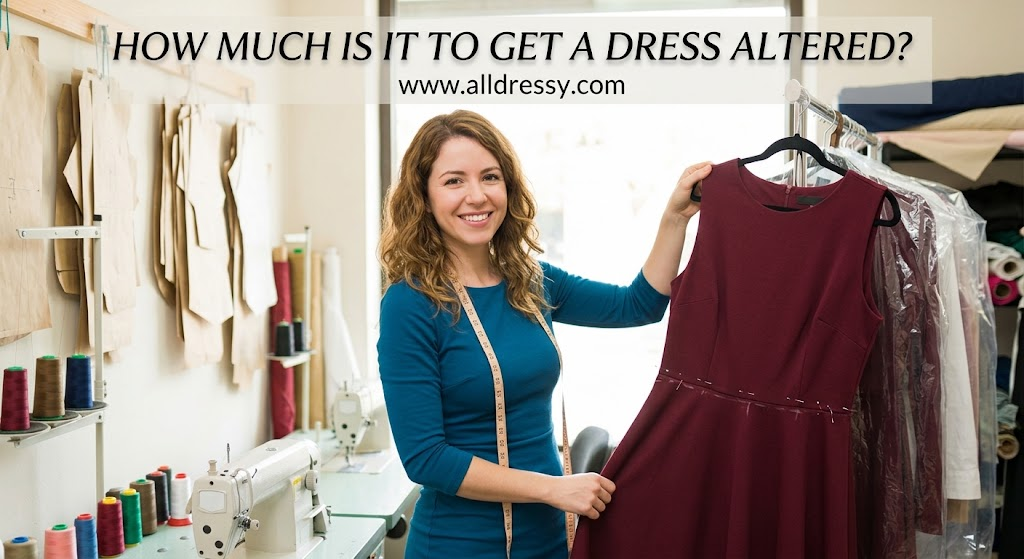
There is no universal alteration price because “dress alteration” can mean anything from shortening a hem to completely reshaping the garment.
As a broad planning guide:
| Type of alteration | Approximate cost range |
|---|---|
| Basic hemming | $20–$75+ |
| Strap adjustment | $15–$75+ |
| Taking in the sides | $20–$150+ |
| Sleeve adjustment | $15–$100+ |
| Neckline adjustment | $30–$150+ |
| Replacing a zipper | $15–$75+ |
| Reshaping a dress | $65–$200+ |
| Lining replacement | $65–$235+ |
| Major customization | $200+ |
These are general market ranges rather than fixed prices. Current pricing data shows that the garment’s construction and complexity can make a substantial difference.
A simple cotton dress may cost much less to alter than a formal gown made from lace, silk, chiffon, or heavily decorated fabric.
How Much Is It to Get a Dress Hemmed?
Hemming is one of the most common dress alterations.
A tailor may shorten:
- The bottom of a skirt
- A maxi dress
- A midi dress
- A formal gown
- A bridesmaid dress
- A casual dress
A straightforward single-layer hem can be relatively inexpensive. However, a dress with lining, multiple layers, lace edging, or decorative trim takes more time.
For ordinary dresses, current pricing references show basic hemming can sometimes fall around $18–$45, while more comprehensive hemming can cost considerably more.
What Makes Dress Hemming More Expensive?
Several things can increase the price:
- Multiple layers
- Lining
- Lace
- Pleats
- Decorative borders
- Beading
- Chiffon
- Unusual hem shapes
- Specialty stitching
A tailor may need to finish each layer individually rather than simply cutting and sewing once.
How Much Is It to Get a Dress Taken In?
Taking in a dress means making it smaller in one or more areas.
Common areas include:
- Bust
- Waist
- Hips
- Side seams
- Back
Current general dress-alteration pricing shows side adjustments can range from roughly $18 to $150+, depending on the amount of work.
A simple side-seam adjustment is usually easier than changing a dress with complicated construction.
When Taking In Costs More
The price can increase when:
- The dress has a lining
- The seams contain decorative details
- The fabric is delicate
- The dress has a structured bodice
- The alteration affects several seams
- The zipper must be moved
How Much Is It to Get a Dress Let Out?
Letting out a dress means making it larger.
This can be more complicated than taking a garment in because the tailor needs enough extra fabric or seam allowance.
If sufficient fabric exists inside the seams, the alteration may be relatively straightforward.
If there is not enough material, additional fabric panels may be required. Current alteration pricing data indicates that adding panels can cost $200 or more per panel for complicated work. (
Before paying for a major alteration, ask whether the dress actually has enough material available to achieve the desired size.
How Much Is It to Get Dress Straps Altered?
Strap adjustments are generally among the simpler alterations.
A tailor might:
- Shorten straps
- Lengthen straps
- Adjust strap placement
- Replace damaged straps
- Add new straps
Current general pricing references put simple strap adjustments in the neighborhood of $15–$55, although decorative or complicated straps can cost more. (
A plain fabric strap is generally easier to modify than one covered with lace, beads, or embellishments.
How Much Is It to Get a Dress Sleeve Altered?
Sleeve alterations can include:
- Shortening sleeves
- Narrowing sleeves
- Widening sleeves
- Changing sleeve openings
- Adjusting sleeve length
General alteration pricing can range from approximately $15–$65 for straightforward sleeve work, although complicated sleeves can cost more. (Airtasker)
Lace sleeves, puff sleeves, structured sleeves, and decorative cuffs may require additional work.
How Much Is It to Get a Dress Neckline Altered?
Changing a neckline can be more complicated than simply shortening a hem.
Possible changes include:
- Raising the neckline
- Lowering the neckline
- Changing the neckline shape
- Adjusting the back neckline
- Reshaping the armhole
Current alteration estimates place basic neckline or armhole adjustments around $30–$85, while more substantial reshaping can cost considerably more. (Airtasker)
If the neckline contains lace or embellishment, the price may increase.
How Much Is It to Get a Dress Zipper Replaced?
A damaged zipper does not necessarily mean you need a new dress.
A tailor may be able to replace the zipper while preserving the rest of the garment.
Basic zipper replacement can sometimes fall within approximately $15–$75, depending on the zipper and construction. (
A concealed zipper, decorative zipper, or zipper integrated into a heavily structured dress may require more labor.
How Much Is It to Get a Dress Reshaped?
Reshaping is more extensive than simply taking in a seam.
It can involve:
- Changing the silhouette
- Tapering the skirt
- Restructuring seams
- Altering the waistline
- Adjusting multiple sections
- Redesigning portions of the dress
Current general pricing information puts tapering and reshaping around $65–$100 for some projects, while major recutting can reach $200 or more. (
The more you want to change the original design, the more important it is to work with an experienced professional.
How Much Is It to Get a Formal Dress Altered?
Formal dresses often cost more to alter than everyday dresses because they may use delicate fabrics and detailed construction.
A formal dress might include:
- Satin
- Chiffon
- Organza
- Tulle
- Lace
- Beading
- Sequins
- Lining
- Multiple layers
A straightforward formal dress may require only a hem, while an elaborate evening gown might need several adjustments.
How Much Is It to Get a Bridesmaid Dress Altered?
Bridesmaid dresses commonly require:
- Hemming
- Strap adjustments
- Bust adjustments
- Waist adjustments
- Side-seam alterations
The cost depends primarily on the dress’s fabric and construction.
A simple chiffon bridesmaid dress may require more careful handling than a basic cotton dress because chiffon can be delicate and difficult to sew cleanly.
How Much Is It to Get a Wedding Dress Altered?
Wedding dress alterations are usually more expensive than ordinary dress alterations.
Current 2026 sources commonly estimate $300–$800 for many standard wedding-dress alterations, while more complicated gowns can cost $1,000–$1,500 or more. (Paperlust)
A standard alteration package may include:
- Hemming
- Bodice adjustment
- Bustle
- Minor strap adjustment
A highly detailed gown may require additional work.
How Much Is It to Get a Wedding Dress Hemmed?
Wedding-dress hems can be particularly expensive because the skirt may have several layers.
Current 2026 estimates put a simple wedding-gown hem around $70–$150, while multi-layer, lace, or chiffon hems can reach approximately $200–$450. (Bride Atlas)
The tailor may have to shorten each layer separately.
For example, a full gown might contain:
- Outer fabric
- Lace overlay
- Tulle
- Lining
- Additional underskirt
Each layer may require separate treatment.
How Much Is It to Get a Dress With Lace Altered?
Lace is one of the biggest factors that can increase alteration costs.
A tailor may need to:
- Remove lace
- Alter the underlying fabric
- Trim the lace
- Reposition the lace
- Sew it back into place
This is significantly more time-consuming than altering a plain fabric dress.
How Much Is It to Get a Beaded Dress Altered?
Beading can also increase the price.
Beads, sequins, and embroidery may need to be removed from the area being altered and then reapplied afterward.
Current 2026 pricing guides specifically identify embellishments as an important cost factor because they require careful disassembly and reassembly.
For heavily embellished garments, the alteration cost can sometimes approach a substantial percentage of the original dress price.
What Factors Affect How Much Is It to Get a Dress Altered?
1. Fabric
Some fabrics are much easier to alter than others.
Cotton and basic polyester may be relatively straightforward.
Silk, chiffon, organza, lace, and delicate fabrics generally require more careful handling.
2. Number of Layers
Every additional layer can add labor.
A single-layer dress is usually simpler than a multi-layer formal gown.
3. Embellishments
Beading, sequins, embroidery, crystals, and appliqués increase the amount of work.
4. Construction
A simple shift dress is easier to modify than a structured gown with boning and internal layers.
5. Number of Alterations
A single adjustment costs less than several modifications performed together.
6. Location
Tailoring prices vary by location and local labor costs. Current 2026 guides report higher typical rates in major metropolitan markets than in many smaller markets
How Much Is It to Get a Dress Altered by a Professional Tailor?
Professional tailoring prices depend on the tailor’s experience and the type of work.
Some tailors charge:
- Per alteration
- By the hour
- By garment
- By project
- As part of a package
A current general tailoring guide notes that prices vary according to the garment, fabric, construction, and complexity of the job.
For a simple dress, an independent tailor may be more affordable than a specialty boutique. For a highly structured formal gown, however, experience may be more important than finding the lowest quote.
Is It Cheaper to Alter a Dress or Buy a New One?
It depends on the dress and the alteration.
For a relatively inexpensive dress that needs extensive reconstruction, buying another dress may sometimes make more financial sense.
For a high-quality dress that you already love, alterations can be worthwhile.
Consider:
- Original dress price
- Alteration quote
- Replacement cost
- Quality of the garment
- Sentimental value
- Difficulty of finding another dress
A simple $30 adjustment can easily justify keeping a favorite garment, while a major redesign may require more careful consideration.
How to Save Money on Dress Alterations
Choose the Correct Size
Starting with a reasonably close fit can reduce the amount of work required.
Avoid Unnecessary Redesigns
Changing the neckline, sleeves, skirt shape, and other design elements can quickly increase the price.
Get a Quote First
Ask for an estimate before authorizing work.
Compare Professionals
If the garment is not extremely delicate, comparing quotes can help you understand the local market.
Schedule Early
Last-minute work may be subject to rush fees. Some current bridal alteration guides report rush surcharges of approximately 25%–50% for expedited work.
How Much Is It to Get a Dress Altered at a Dry Cleaner?
Some dry cleaners offer basic alteration services, particularly for straightforward garments.
Simple work such as hemming may be suitable for a general alterations service.
However, delicate formalwear or heavily embellished dresses may require a specialist.
A recent 2026 fashion article also highlights how local dry cleaners can sometimes provide affordable tailoring for simpler clothing, illustrating the difference between everyday tailoring and specialized garment work.
What to Bring to a Dress Alteration Appointment
Bring anything that affects how the dress will be worn.
Depending on the garment, this may include:
- Shoes
- Undergarments
- Belt
- Shapewear
- Accessories
- Matching garments
For a formal gown, bringing the intended shoes is particularly important because heel height can affect the correct hem length.
Questions to Ask Before Paying for Alterations
Before leaving your dress with a tailor, ask:
- What exactly needs to be altered?
- What is the estimated total?
- Is the price per alteration or a package?
- Are materials included?
- Will the lining be altered?
- Are decorative details included?
- How long will the work take?
- Is pressing included?
- Is there a rush fee?
- What happens if additional work is needed?
Clear communication can prevent unexpected charges.
How Long Do Dress Alterations Take?
The timeline depends on the complexity of the garment.
A simple hem may be completed relatively quickly, while extensive alterations can require multiple appointments.
Wedding-dress alterations commonly involve two or three fittings over several weeks or months, depending on the gown and schedule.
If you have a specific deadline, mention it before the work begins.
How Many Fittings Do You Need?
A simple dress may need only one fitting.
A more complicated dress can require multiple fittings.
The process may look like:
First Fitting
The tailor examines the garment and determines what needs to change.
Alteration Stage
The garment is adjusted according to the measurements and fitting.
Second Fitting
The tailor checks the changes and identifies anything that needs refinement.
Final Fitting
The completed dress is checked for length, fit, and comfort.
How Much Is It to Get a Dress Altered if It Is Too Big?
A dress that is too large may need:
- Side seams taken in
- Waist adjustment
- Bust adjustment
- Shoulder adjustment
- Strap shortening
The exact price depends on how much fabric needs to be removed and how the garment is constructed.
Taking in a simple dress may be relatively affordable, while altering a lined or structured gown can cost considerably more.
How Much Is It to Get a Dress Altered if It Is Too Small?
A dress that is too small can be more challenging.
The tailor first needs to determine whether there is enough seam allowance.
Possible solutions include:
- Letting out existing seams
- Adding fabric panels
- Changing closures
- Restructuring parts of the garment
If additional fabric must be added, matching the original fabric can be difficult and expensive.
How Much Is It to Get a Dress Altered With a Lining?
Lined dresses generally require additional work.
The outer fabric and lining need to remain properly aligned after the alteration.
If both layers need adjustment, the tailor effectively has two garments to modify instead of one.
How Much Is It to Get a Dress Altered With Sequins?
Sequins can make alteration work more time-consuming.
The tailor may need to:
- Remove sequins around a seam
- Make the alteration
- Reattach the sequins
- Check the finished surface
The more heavily decorated the garment, the more labor-intensive this process becomes.
Is Dress Alteration Worth the Cost?
In many cases, yes.
A properly fitted dress can:
- Look more polished
- Feel more comfortable
- Sit correctly
- Move more naturally
- Last longer
- Get more wear
Tailoring can also make secondhand clothing more useful because a garment that does not fit perfectly can sometimes be transformed into a better-fitting piece.
A Practical Budget for Dress Alterations
For everyday dresses, you might begin by budgeting $30–$100 for simple work and more for several alterations.
For formal dresses, setting aside $100–$300+ can provide a more realistic starting point.
For wedding gowns, current 2026 sources commonly recommend planning around $300–$800, with complex gowns potentially costing $1,000 or substantially more.
These figures are planning estimates, not guaranteed prices.
Final Tips Before Getting Your Dress Altered
When researching how much is it to get a dress altered, remember that the cheapest possible quote is not always the best choice.
Consider the value and complexity of the garment.
For an everyday cotton dress, a basic alteration service may be perfectly appropriate.
For an expensive formal gown, lace dress, silk garment, or heavily embellished piece, experience with that type of clothing is much more important.
Always ask for a clear estimate before work begins. Make sure the tailor understands exactly what you want changed and what you want to preserve.
The final price is determined by the combination of labor, fabric, construction, number of alterations, embellishments, and location. Current 2026 pricing information confirms that these factors can create a very wide range in alteration costs. (
Planning for alterations before buying a dress is one of the easiest ways to avoid an unexpected expense. If you know a garment will need significant changes, include that cost in your original clothing budget rather than treating it as an afterthought.
FAQs About How Much Is It to Get a Dress Altered?
1. How much is it to get a dress altered?
The cost depends on the type of alteration, fabric, construction, and location. A simple alteration such as hemming may cost around $20–$75+, while several alterations or complex formalwear can cost hundreds of dollars.
2. How much does it cost to hem a dress?
A basic dress hem can often cost approximately $20–$75+. Dresses with multiple layers, lining, lace, beading, or unusual hems can cost more because they require additional labor.
3. How much does it cost to take in a dress?
Taking in a dress can range from approximately $20 to $150 or more, depending on how much needs to be removed and whether the dress has lining, decorative details, or complicated seams.
4. Is it cheaper to alter a dress or buy a new one?
It depends on the dress. A minor alteration can be much cheaper than buying another dress, while extensive reconstruction of an inexpensive dress may not be financially worthwhile. Consider the original price, alteration quote, and quality of the garment.
5. How much do wedding dress alterations cost?
Wedding dress alterations are generally more expensive than alterations for everyday dresses. A reasonable planning range is approximately $300–$800, while elaborate gowns with lace, beading, multiple layers, or major structural changes can cost significantly more.
6. Why are dress alterations so expensive?
Alterations involve skilled labor, and complicated garments require more time. Delicate fabrics, multiple layers, lace, beading, lining, zippers, structured bodices, and major resizing can all increase the price.
7. Can a dress be altered if it is too small?
Sometimes. A tailor can check whether the dress has enough extra fabric in the seams to let it out. If there is insufficient fabric, additional panels or other modifications may be necessary, which can make the alteration more expensive.
8. How long do dress alterations take?
Simple alterations may be completed relatively quickly, while complicated dresses can take several weeks. Wedding dresses may require multiple fittings, so it is best to schedule alterations well before the event.
9. Should I bring my shoes to a dress alteration appointment?
Yes, especially for formal dresses and gowns. Your shoes affect the height of the dress from the floor, so bringing the shoes you plan to wear helps the tailor determine the appropriate hem length.
10. How can I save money on dress alterations?
Choose a dress that already fits reasonably well, avoid unnecessary design changes, compare estimates from qualified professionals, and schedule alterations early. A simpler garment with fewer layers and embellishments is generally easier and less expensive to alter.
Conclusion
Knowing how much is it to get a dress altered can help you make a more accurate clothing budget. The price can range from a relatively small amount for simple work to several hundred dollars for complicated formalwear or wedding gowns.
For everyday dresses, basic alterations such as hemming, strap adjustments, or taking in a side seam may be relatively affordable. More complicated work involving lace, beading, multiple layers, delicate fabrics, or structural changes can increase the total substantially.
Wedding dresses typically require a larger alteration budget because of their construction and detailing. Setting aside $300–$800 as a general planning range can be useful, although particularly elaborate gowns may require considerably more.
Before approving any work, ask for a clear estimate and make sure you understand what the price includes. Bring the shoes and undergarments you intend to wear when appropriate, and allow enough time for fittings and adjustments.
Ultimately, professional alterations can be a worthwhile investment because a properly fitted dress can be more comfortable, polished, and wearable. The best choice is not necessarily the cheapest tailor, but a qualified professional who understands the fabric and construction of your particular dress.