
Learning how to dress elegant is less about wearing expensive designer clothes and more about creating outfits that look intentional, comfortable, balanced, and polished. Elegant dressing can work for everyday outfits, school or professional settings, family gatherings, dinners, celebrations, and special occasions. The key is to understand how clothing fit, color, fabric, proportions, accessories, and grooming work together.
Modern elegant style also does not require following strict fashion rules. Current styling advice continues to emphasize versatile basics, thoughtful combinations, quality-looking fabrics, and clothing that feels comfortable while appearing refined.
Whether you are completely new to fashion or simply want to make your existing wardrobe look more sophisticated, this guide explains how to dress elegant step by step.
What Does It Mean to Dress Elegant?
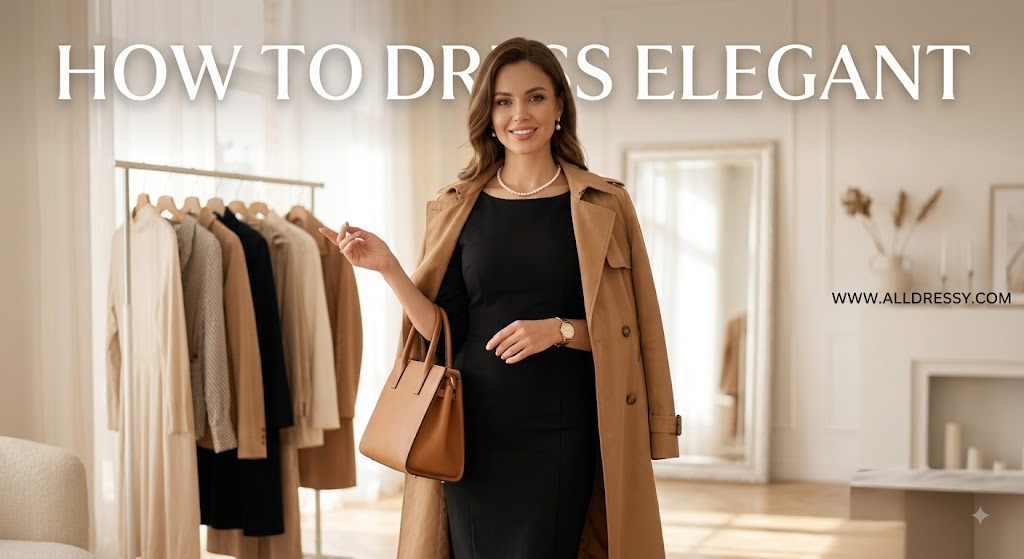
Before learning how to dress elegant, it helps to understand what elegance actually means in fashion.
Elegant dressing generally combines simplicity, neatness, appropriate proportions, coordinated colors, and well-maintained clothing. An elegant outfit does not necessarily need to be formal. A simple blouse with tailored trousers can look elegant, while a clean knit top with straight-leg jeans can create a polished casual appearance.
The biggest difference between an ordinary outfit and an elegant outfit is often intention. Each piece should have a purpose and work harmoniously with the rest of the look.
Elegant style commonly emphasizes:
- Clean and uncomplicated silhouettes
- Clothing that fits comfortably
- Coordinated colors
- Classic wardrobe staples
- Well-maintained fabrics
- Appropriate accessories
- Shoes that complement the outfit
- Simple, polished grooming
- Confidence and comfort
Elegance is therefore more of a styling approach than a particular fashion trend.
How to Dress Elegant by Choosing the Right Fit
One of the most important answers to how to dress elegant is to prioritize fit.
Even an expensive garment can look less polished when it is too loose, too tight, too long, or too short for the intended outfit. On the other hand, a reasonably priced garment can look sophisticated when it fits naturally and allows comfortable movement.
When choosing clothing, pay attention to:
Shoulder Fit
For shirts, blazers, jackets, and structured tops, the shoulder area should sit naturally rather than pulling or collapsing.
Sleeve Length
Sleeves should look intentional. A sleeve that is noticeably too long or too short can make an otherwise polished outfit appear unfinished.
Trouser Length
The appropriate trouser length depends on the cut and footwear. Straight-leg, wide-leg, tapered, and tailored trousers can all create elegant outfits when their proportions are balanced.
Waist Fit
Clothing should feel comfortable while maintaining its intended shape. Avoid choosing clothing simply because a particular size number is considered fashionable. The fit and comfort of the garment matter much more than the label.
Current style guidance similarly places fit above clothing size labels and emphasizes comfort as part of polished dressing.
How to Dress Elegant With Simple Clothes
You do not need an enormous wardrobe to learn how to dress elegant.
A small collection of versatile pieces can create numerous combinations. Building outfits around simple clothing also makes coordinating colors and proportions easier.
Useful wardrobe foundations can include:
- A simple button-down shirt
- A polished blouse
- Straight or tailored trousers
- A versatile skirt
- A simple midi dress
- A well-fitting cardigan
- A structured jacket or blazer
- Dark, clean jeans
- Neutral-colored knitwear
- Simple flats, loafers, or other polished shoes
- A versatile everyday bag
The goal is not to own every item on this list. Instead, choose pieces that work with your lifestyle.
For example, a simple shirt can be paired with trousers for a polished outfit, jeans for a relaxed look, or a skirt for a more dressed-up appearance.
How to Dress Elegant With Neutral Colors
Color coordination can immediately make an outfit look more refined.
Neutral shades such as black, white, cream, beige, navy, gray, and brown are particularly versatile because they can be combined in many different ways.
A monochromatic outfit is another effective approach. This means wearing different shades or textures within one general color family.
For example:
- Cream top + beige trousers
- Navy shirt + darker navy trousers
- Gray knitwear + charcoal pants
- White blouse + black trousers
- Brown cardigan + tan skirt
These combinations create visual harmony without requiring complicated styling.
However, elegant dressing does not mean avoiding color. A tasteful accent color can make a simple outfit more interesting. A muted red handbag, blue blouse, green scarf, or colorful shoes can become the focal point while the rest of the outfit remains understated.
How to Dress Elegant With Prints
Prints can absolutely be elegant when they are used thoughtfully.
Instead of combining several competing patterns, consider allowing one printed item to become the main feature.
For example, pair:
- A floral blouse with solid trousers
- A patterned skirt with a simple top
- A striped shirt with plain pants
- A printed dress with understated accessories
The principle is balance.
If one part of your outfit is visually busy, keep the surrounding pieces relatively simple. This prevents the overall appearance from becoming overwhelming.
How to Dress Elegant With the Right Fabrics
Fabric can strongly influence how polished clothing appears.
Certain materials naturally create structure or fluidity, while others have a more relaxed appearance. The best choice depends on the occasion, season, and garment.
Look for fabrics that:
- Hang naturally
- Maintain their shape
- Feel comfortable
- Suit the weather
- Are appropriate for the occasion
- Do not appear excessively wrinkled or worn
For warm weather, breathable cotton and linen can create a refined appearance while remaining practical. Recent stylist recommendations continue to highlight linen shirts and trousers as versatile warm-weather staples.
For cooler weather, knitwear, wool blends, structured jackets, and layered pieces can provide both warmth and sophistication.
How to Dress Elegant With Dresses
Dresses are one of the easiest ways to create a polished outfit because they provide a complete foundation.
A simple dress can become elegant through thoughtful styling rather than excessive decoration.
Consider:
Midi Dresses
Midi dresses often provide a balanced silhouette that can work for everyday occasions, dinners, gatherings, and semi-formal settings.
Shirt Dresses
A shirt dress can create a polished appearance while remaining comfortable and practical.
A-Line Dresses
An A-line silhouette provides a classic shape and can be styled with simple shoes and understated accessories.
Wrap-Style Dresses
Wrap-inspired designs can add visual structure and create a defined waistline without requiring elaborate embellishment.
Simple Slip Dresses
Slip dresses can be styled in sophisticated ways depending on the setting. Modern styling continues to show how versatile slip dresses can be when paired with carefully selected layers and accessories.
The key is to choose a dress appropriate for the occasion rather than automatically selecting the most formal option.
How to Dress Elegant With Trousers
Trousers can create a sophisticated foundation for countless outfits.
Tailored trousers, wide-leg trousers, straight-leg trousers, and other clean silhouettes can all work within an elegant wardrobe.
For a simple outfit formula, try:
Blouse + tailored trousers + simple shoes + understated accessories
For a more relaxed approach:
Fine-knit top + straight-leg jeans + loafers + structured bag
The important point is maintaining balance. If your trousers are particularly wide, a more streamlined top may create a balanced silhouette. If the top has substantial volume, a straighter bottom can provide contrast.
How to Dress Elegant With Jeans
Elegant dressing does not require abandoning jeans.
The trick is to select a clean, versatile pair and combine it with more polished pieces.
Try pairing jeans with:
- A crisp button-down shirt
- A fine-knit sweater
- A structured jacket
- A simple blouse
- Loafers or polished flats
- A neat handbag
Avoid allowing too many casual elements to dominate the same outfit if your goal is a refined appearance.
For example, jeans with a polished shirt and structured outer layer can look considerably more intentional than jeans combined with several oversized casual pieces.
How to Dress Elegant With Layering
Layering adds sophistication because it introduces structure and depth.
A basic combination might include:
Top + cardigan + trousers
Another option is:
Blouse + blazer + skirt
During cooler weather:
Knit top + tailored coat + trousers
Successful layering requires attention to proportions. Avoid combining too many bulky layers unless the overall silhouette is intentionally oversized.
Think about each layer as part of a visual hierarchy rather than simply adding clothing for warmth.
How to Dress Elegant With Accessories
Accessories can transform a simple outfit, but elegance often comes from restraint.
Instead of wearing many statement pieces at once, choose one or two accessories that complement the clothing.
Useful options include:
- Simple earrings
- A classic watch
- A delicate necklace
- A structured handbag
- A simple belt
- A scarf
- Understated hair accessories
For example, a simple black dress can look completely different depending on the shoes, bag, jewelry, and outer layer.
A useful rule is to ask whether an accessory enhances the outfit or competes with it.
How to Dress Elegant With Shoes
Shoes can significantly influence the overall impression of an outfit.
Elegant shoes do not have to mean high heels. Flats, loafers, simple sandals, boots, and other comfortable styles can look polished when they coordinate with the rest of the outfit.
Consider:
- The occasion
- Comfort
- Color
- Material
- Outfit proportions
- Weather
- Walking requirements
A polished shoe that you can comfortably walk in is often more useful than an uncomfortable shoe selected simply because it appears formal.
How to Dress Elegant for Casual Occasions
Casual elegance is about combining comfort with intentional styling.
A casual elegant outfit might include:
- A clean blouse and straight-leg jeans
- A knit top and tailored trousers
- A simple midi dress with flats
- A button-down shirt with dark jeans
- A cardigan with a skirt
Dressy-casual style similarly combines relaxed and refined garments rather than making the entire outfit formal. (MasterClass)
The most important part is making sure the outfit looks coordinated.
How to Dress Elegant for Work
For professional environments, elegance usually comes from structure, simplicity, and appropriateness.
Depending on the workplace, consider:
- Tailored trousers
- Blouses or button-down shirts
- Simple dresses
- Structured cardigans
- Blazers
- Polished shoes
- Minimal accessories
Avoid treating professional style as a competition to look as formal as possible. The correct level of formality depends on the workplace.
A polished outfit should allow you to focus on your responsibilities rather than constantly adjusting your clothing.
How to Dress Elegant for Special Occasions
Special events provide an opportunity to dress more formally, but the invitation or dress code should guide your choices.
For formal events, consider more refined fabrics, structured silhouettes, and carefully coordinated accessories.
For semi-formal events, a sophisticated midi dress, tailored separates, or an elevated jumpsuit may work depending on the occasion.
For celebrations, color and accessories can be more expressive while still maintaining balance.
Always consider the venue, time of day, weather, and expected dress code before selecting your outfit.
How to Dress Elegant on a Budget
Elegance is not determined by price.
One of the strongest principles in learning how to dress elegant is understanding that fit, coordination, condition, and styling can matter more than brand recognition. Recent style advice similarly emphasizes intention, fit, fabric, classic pieces, and restraint rather than simply relying on expensive labels. (AARP)
To build an elegant wardrobe on a budget:
Buy Versatile Pieces
Choose clothing that works with several existing items.
Prioritize Fit
A simple garment that fits well can look more polished than an expensive item that does not.
Pay Attention to Condition
Clean, pressed, well-maintained clothing naturally looks more intentional.
Avoid Unnecessary Trends
Not every trend needs to become part of your wardrobe.
Choose Colors That Coordinate
Neutral and complementary colors make mixing and matching easier.
Invest Gradually
Instead of replacing everything at once, improve your wardrobe piece by piece.
How to Dress Elegant Without Looking Overdressed
Elegance is not the same as maximum formality.
An outfit can become less sophisticated if every element is competing for attention.
For everyday settings, consider choosing one polished element and building around it.
For example:
Simple jeans + polished blouse + understated shoes
or
Basic trousers + knit top + structured bag
This creates a balanced appearance without making a casual setting feel unnecessarily formal.
How to Dress Elegant by Paying Attention to Proportions
Proportion is one of the most useful concepts for creating attractive outfits.
If your outfit has a voluminous piece on top, consider a more streamlined bottom. If you choose wide-leg trousers, a shorter or more fitted top can provide visual balance.
Similarly, oversized outerwear can work beautifully with simpler clothing underneath.
This does not mean there is only one correct silhouette. Fashion is flexible. The objective is to understand how different shapes interact so that your outfit looks intentional.
How to Dress Elegant With a Capsule Wardrobe
A capsule wardrobe focuses on a smaller selection of versatile clothing.
You can create many combinations from a relatively limited collection by selecting pieces that coordinate naturally.
A basic elegant capsule might include:
- Several neutral tops
- One or two polished shirts
- Tailored trousers
- Versatile jeans
- A skirt
- One or two dresses
- A cardigan
- A structured outer layer
- Everyday polished shoes
- A versatile bag
The exact number of pieces is not important. What matters is whether the clothing works together.
How to Dress Elegant in Different Seasons
Spring
Choose lightweight layers, shirts, skirts, trousers, cardigans, and soft colors.
Summer
Breathable fabrics such as cotton and linen can help create comfortable, polished outfits. Light dresses, tailored shorts, relaxed trousers, and simple sandals can work well.
Autumn
Layer sweaters, shirts, trousers, skirts, jackets, and lightweight coats.
Winter
Focus on warm but structured layers. A well-maintained coat can become the foundation of many winter outfits.
Seasonal elegance comes from adapting fabrics and layers rather than forcing one wardrobe formula throughout the year.
How to Dress Elegant Through Grooming and Clothing Care
Clothing alone does not create a polished appearance.
Simple maintenance makes a noticeable difference.
Before leaving home, check:
- Are the clothes clean?
- Are they excessively wrinkled?
- Are buttons secure?
- Are shoes reasonably clean?
- Are loose threads visible?
- Does the outfit feel comfortable?
- Do the colors work together?
Good grooming can complement an elegant outfit without requiring elaborate routines. Neat hair, clean nails, and fresh-looking clothing can help complete the overall appearance.
Common Mistakes to Avoid When Learning How to Dress Elegant
Wearing Too Many Trends at Once
Trendy pieces can be fun, but combining too many attention-grabbing elements may make an outfit feel visually crowded.
Ignoring Fit
Fit is one of the most important foundations of polished dressing.
Overusing Accessories
Accessories should support the outfit rather than overwhelm it.
Choosing Clothes Only for Their Price
A high price does not automatically create elegance.
Ignoring Comfort
If you constantly adjust your clothes or cannot move comfortably, it can affect how confidently you carry yourself.
Dressing Inappropriately for the Occasion
An elegant outfit should still be appropriate for where you are going.
Neglecting Clothing Maintenance
Wrinkles, stains, damaged fasteners, and worn-out shoes can undermine an otherwise thoughtful outfit.
How to Dress Elegant Every Day
The easiest way to make elegant dressing a habit is to create simple outfit formulas.
Try:
Formula 1: Blouse + tailored trousers + flats
Formula 2: Knit top + midi skirt + simple shoes
Formula 3: Button-down shirt + straight-leg jeans + loafers
Formula 4: Simple dress + cardigan + understated accessories
Formula 5: Fine-knit sweater + trousers + structured bag
These combinations are starting points rather than strict rules. Change the colors, fabrics, shoes, and accessories according to your personal style.
How to Make Elegant Style Feel Personal
The most successful approach to how to dress elegant is not copying someone else’s wardrobe exactly.
Instead, identify the elements of elegance that you genuinely enjoy.
You might prefer:
- Minimalist elegance
- Romantic elegance
- Classic elegance
- Modern elegance
- Relaxed elegance
- Professional elegance
- Feminine elegance
- Sporty elegance
Once you understand your preferred direction, shopping becomes easier because you have a clearer idea of what belongs in your wardrobe.
Elegant style should support your personality rather than erase it.
A Practical Elegant Outfit Formula
When you are unsure what to wear, use this five-step process:
Step 1: Start With the Occasion
Determine whether the event is casual, professional, semi-formal, or formal.
Step 2: Select One Main Piece
Choose a dress, trousers, skirt, blouse, or other item around which the outfit will be built.
Step 3: Add a Complementary Piece
Choose something that balances the silhouette and works with the main item.
Step 4: Coordinate Accessories
Add only the accessories that genuinely improve the outfit.
Step 5: Check the Overall Balance
Look at the outfit as a whole rather than evaluating every item separately.
Ask whether the colors, proportions, textures, and formality levels work together.
The Key Principles of How to Dress Elegant
If you remember only a few ideas from this guide, focus on these principles:
- Prioritize fit and comfort.
- Choose clothing appropriate for the occasion.
- Build outfits around versatile pieces.
- Use colors intentionally.
- Balance proportions.
- Choose quality-looking and well-maintained fabrics.
- Keep accessories coordinated rather than excessive.
- Pay attention to shoes and bags.
- Maintain your clothing carefully.
- Develop a personal style instead of copying trends.
The modern interpretation of elegance is increasingly practical: versatile clothing, comfort, thoughtful styling, and timeless pieces can create a polished wardrobe without requiring extravagance.
Ultimately, learning how to dress elegant is about making deliberate choices. You do not need an enormous wardrobe, expensive labels, or complicated fashion rules. Start with clothing that fits comfortably, choose colors and silhouettes that work together, keep your garments in good condition, and add accessories with intention. With these foundations, even simple everyday outfits can look polished, sophisticated, and distinctly your own.
If you’re a beginner, learning how to dress elegant is actually quite simple. You don’t need expensive clothes or a huge wardrobe. Start with a few basic principles:
1. Choose well-fitting clothes
Fit is more important than the brand or price. Choose clothes that let you move comfortably and look neat without being overly tight or excessively loose.
2. Start with simple colors
Build outfits around versatile colors such as:
- Black
- White
- Navy
- Beige
- Brown
- Gray
- Cream
Once you feel comfortable, add one brighter color as an accent.
3. Build outfits around basics
Begin with pieces such as:
- A simple blouse or button-down shirt
- Straight-leg or tailored trousers
- Clean, well-fitting jeans
- A simple skirt
- A classic dress
- A cardigan or structured jacket
These can be mixed and matched easily.
4. Keep accessories simple
You don’t need lots of jewelry. Try one or two understated accessories, such as a watch, simple earrings, scarf, belt, or neat bag.
5. Pay attention to shoes
Clean, simple shoes can make an outfit look much more polished. Flats, loafers, simple sneakers, boots, or other comfortable shoes can all work depending on the occasion.
6. Keep your clothes neat
Wrinkles, stains, loose threads, and worn-out shoes can make an outfit look less polished. Clean and well-maintained clothing goes a long way.
7. Learn basic outfit formulas
When you don’t know what to wear, try:
Blouse + trousers + simple shoes
Button-down shirt + jeans + cardigan
Simple dress + flats + small bag
Knit top + skirt + simple accessories
8. Don’t try to look “perfect”
Elegant style doesn’t mean following every fashion rule. Your clothes should feel comfortable and appropriate for the occasion. As a beginner, focus on clean, coordinated, comfortable, and intentional outfits.
A good beginner rule is: keep the outfit simple, make sure everything fits comfortably, and choose one element to stand out.