
Learning how to steam satin dress correctly is essential for anyone who owns delicate formalwear, bridal gowns, evening dresses, or luxury fabrics. Satin is one of the most elegant materials in fashion, known for its glossy finish and smooth drape, but it is also one of the most sensitive fabrics when exposed to heat, moisture, and improper handling. A single mistake while steaming can lead to water stains, dull patches, heat marks, or permanent fabric distortion.
Understanding how to steam satin dress properly ensures that wrinkles are removed safely while preserving the fabric’s shine, softness, and luxurious appearance. Whether you are preparing for a wedding, prom, red carpet event, photoshoot, or special occasion, mastering steaming techniques is a crucial skill that protects your investment and keeps your outfit looking flawless.
This comprehensive guide covers everything about how to steam satin dress, including fabric behavior, preparation methods, professional steaming techniques, alternative wrinkle-removal methods, storage practices, and advanced care strategies that go beyond basic tutorials.
How to Steam Satin Dress: Understanding What Satin Really Is
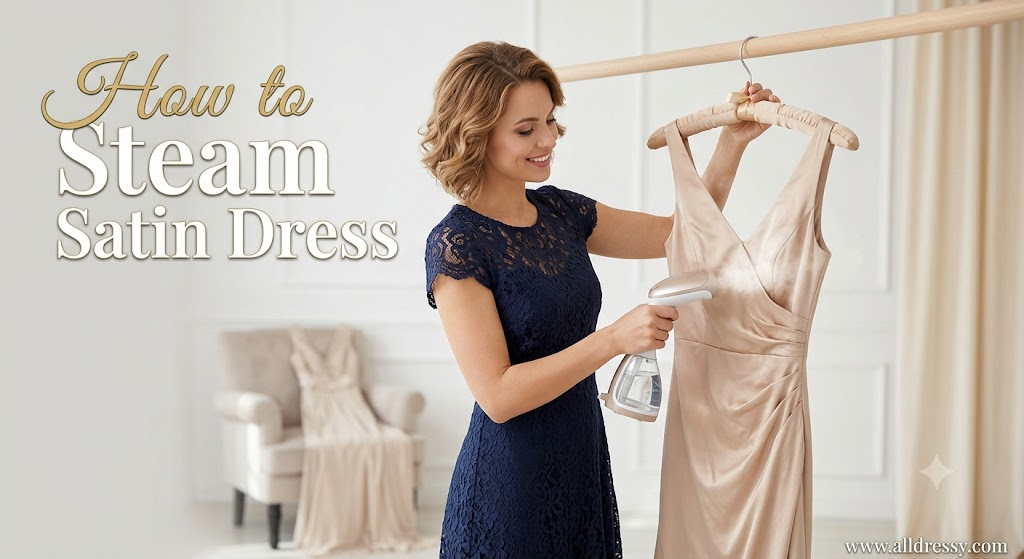
Before learning how to steam satin dress, it is important to understand the fabric itself. Satin is not a fiber but a weaving technique that creates a smooth, glossy surface.
Common Types of Satin Used in Dresses
- Silk satin (luxury, extremely delicate)
- Polyester satin (durable and widely used)
- Acetate satin (smooth but heat-sensitive)
- Blended satin fabrics (mixed durability levels)
Key Properties of Satin Fabric
- Reflective, shiny surface
- Soft and fluid drape
- Highly sensitive to heat
- Easily marked by water droplets
- Prone to creasing during storage or transport
Because of these characteristics, satin must always be treated with extra care during steaming.
How to Steam Satin Dress: Why Steaming Is Better Than Ironing
When learning how to steam satin dress, one of the most important rules is to avoid traditional ironing.
Why Steam Is Safer
- No direct contact with fabric
- Lower risk of burning or scorching
- Preserves natural shine
- Maintains fabric softness
- Reduces pressure marks
Ironing satin directly can flatten its glossy texture and permanently damage the weave structure. Steaming, on the other hand, relaxes fibers gently using heat and moisture.
How to Steam Satin Dress: Essential Tools You Need
To successfully master how to steam satin dress, you need the right equipment.
Clothing Steamer
A handheld or standing garment steamer is ideal for satin dresses.
Distilled Water
Prevents mineral deposits that can cause stains.
Padded or Wooden Hanger
Helps maintain dress shape during steaming.
Clean, Open Space
Ensures fabric hangs freely without touching surfaces.
Steam-Resistant Gloves (Optional)
Protects hands from hot steam during close work.
Garment Bag (Optional)
Used after steaming for storage protection.
Proper tools significantly improve results and reduce risks.
How to Steam Satin Dress: Preparing the Dress Before Steaming
Preparation is one of the most overlooked parts of how to steam satin dress.
Step 1: Hang the Dress Properly
Ensure the dress:
- Is fully supported on a hanger
- Does not touch the floor
- Has enough space to hang freely
Step 2: Inspect for Damage
Check for:
- Loose threads
- Stains
- Missing beads
- Weak seams
Steaming over damaged areas can worsen the issue.
Step 3: Shake Out Wrinkles
Gently shake the dress to loosen minor folds before steaming.
Step 4: Read Care Label
Some satin blends require low heat or special handling instructions.
How to Steam Satin Dress: Step-by-Step Safe Steaming Method
This is the core process for how to steam satin dress safely and effectively.
Step 1: Fill the Steamer
Use distilled water and allow the device to heat fully.
Step 2: Hang the Dress Vertically
The dress should hang straight for gravity-assisted wrinkle removal.
Step 3: Start from the Top
Begin steaming from:
- Bodice
- Waist
- Skirt
- Hem
This ensures even treatment.
Step 4: Maintain Safe Distance
Hold steamer 1–3 inches away from fabric.
Never touch the satin directly.
Step 5: Use Smooth Vertical Movements
Move the steamer downward slowly and evenly.
Step 6: Avoid Over-Saturating Fabric
Light steam is enough—too much moisture causes spotting.
Step 7: Let Dress Air Dry
Allow the dress to hang for 10–20 minutes after steaming.
This stabilizes the fabric.
How to Steam Satin Dress: Working With Different Satin Types
Different satin fabrics respond differently when applying how to steam satin dress techniques.
Silk Satin
- Extremely delicate
- Requires low steam intensity
- Keep extra distance from fabric
Polyester Satin
- More heat-resistant
- Easier to steam
- Responds quickly to wrinkles
Acetate Satin
- Very sensitive to heat
- Requires fast, light steaming passes
- Avoid prolonged exposure
Knowing fabric type prevents damage.
How to Steam Satin Dress: Removing Deep Wrinkles
Deep wrinkles require extra care.
Use Multiple Light Passes
Avoid focusing too long on one area.
Let Gravity Work
Allow the dress to hang longer between steaming rounds.
Steam Inside Layers First
Internal folds relax before outer layers.
Do Not Stretch Fabric
Pulling satin can distort its shape permanently.
Patience is key when dealing with stubborn wrinkles.
How to Steam Satin Dress: Avoiding Common Mistakes
Many people damage satin while trying how to steam satin dress.
Holding Steamer Too Close
Causes water spots and shine loss.
Using Tap Water
Mineral deposits can stain fabric.
Over-Steaming One Area
Creates uneven texture or dull patches.
Steaming While Fabric Is Folded
Always steam while the dress is hanging.
Direct Nozzle Contact
Can burn or mark delicate satin.
Avoiding these mistakes ensures safe results.
How to Steam Satin Dress: Professional Techniques Used by Stylists
Professionals use refined methods when handling how to steam satin dress.
Controlled Steam Bursts
Short bursts prevent over-wetting.
Layered Section Steaming
Work from inner folds outward.
Fabric Support Method
Lightly hold fabric edges without stretching.
Side-to-Side Relaxation
Helps release stubborn creases gently.
These methods create a polished, runway-ready finish.
How to Steam Satin Dress: Bridal and Formal Dress Care
Wedding and evening dresses often combine satin with lace, tulle, or embroidery.
Extra Precautions
- Avoid direct steam on embellishments
- Use indirect steam for beaded areas
- Work slowly on layered skirts
- Use low heat settings
Bridal satin requires the highest level of care.
How to Steam Satin Dress: Alternative Methods Without a Steamer
If you do not have a steamer, you can still apply how to steam satin dress techniques using alternatives.
Bathroom Steam Method
- Hang dress in bathroom
- Run hot shower
- Let steam fill room
- Allow wrinkles to relax naturally
Kettle Steam Method
- Boil water
- Hold dress at safe distance from steam
Dryer Steam Trick
- Place dress in dryer with damp cloth
- Use low heat cycle for a few minutes
These are emergency solutions, not replacements for a steamer.
How to Steam Satin Dress: Preventing Water Spots and Damage
Water spotting is one of the biggest risks in how to steam satin dress.
Use Distilled Water Only
Prevents mineral residue.
Keep Steamer Moving Constantly
Avoid focusing steam in one spot.
Do Not Over-Saturate Fabric
Light steam works best.
Dry Immediately After Steaming
Air drying prevents marks.
Prevention is always better than repair.
How to Steam Satin Dress: Proper Storage After Steaming
Correct storage reduces future wrinkles.
Use Padded Hangers
Prevents shoulder dents.
Store in Garment Bag
Protects from dust and moisture.
Avoid Overcrowded Closets
Prevents fabric compression.
Keep Away From Sunlight
Protects color and shine.
Good storage extends dress life significantly.
How to Steam Satin Dress: Travel and Packing Tips
Satin dresses often wrinkle during travel.
Roll Instead of Folding
Reduces deep crease formation.
Use Tissue Paper Layers
Prevents surface friction.
Steam Immediately After Arrival
Restores smooth appearance.
Hang Dress Right Away
Gravity helps remove light wrinkles.
Travel care is essential for satin maintenance.
How to Steam Satin Dress: Maintaining Shine and Fabric Quality
Satin’s luxury appeal comes from its shine.
Avoid Direct Heat Contact
Protects reflective surface.
Use Gentle Steam Only
Maintains natural gloss.
Handle With Clean Hands
Prevents oil stains.
Keep Fabric Clean
Dirt reduces shine quality.
Proper care preserves elegance.
How to Steam Satin Dress: Advanced Maintenance Techniques
Experienced garment caretakers use advanced methods.
Inside-Out Steaming
Helps relax internal creases first.
Section-by-Section Approach
Ensures even results.
Combination Drying Technique
Alternating steam and air drying improves finish.
Fabric Shielding Method
Using light cloth barriers for protection.
These techniques are used in professional garment care.
How to Steam Satin Dress: Long-Term Satin Care Strategy
Long-term maintenance reduces the need for frequent steaming.
Store Properly After Every Use
Prevents permanent creases.
Avoid Heavy Hanging on Embellished Dresses
Protects structure.
Clean Before Storage
Removes residues that damage fabric over time.
Refresh With Light Steam Occasionally
Keeps fabric smooth and ready to wear.
Consistent care keeps satin dresses in excellent condition.
FAQs
Can I use an iron instead of steaming a satin dress?
Using an iron directly on satin is not recommended because it can damage the fabric’s glossy finish, leave shine marks, or even burn the material. Steaming is safer since it removes wrinkles without direct contact.
What is the safest way to steam satin dress at home?
The safest method is to hang the dress on a padded hanger, use a garment steamer filled with distilled water, and gently steam from a distance of about 1–3 inches while moving continuously from top to bottom.
Why does satin sometimes get water spots after steaming?
Water spots usually occur when steam is applied too closely, too heavily, or when tap water with minerals is used. Always use distilled water and keep the steamer moving to prevent spotting.
How long does it take to steam a satin dress?
Most satin dresses take around 10–20 minutes depending on length, fabric thickness, and wrinkle severity. Larger or layered dresses may take slightly longer.
Can steaming damage satin fabric?
Steaming is safe when done correctly. Damage usually happens only if the steamer is held too close, too much steam is applied in one area, or the fabric becomes overly saturated.
Can I steam a satin dress without a steamer?
Yes, you can use a bathroom steam method or hanging the dress in a steamy shower room. However, these methods are less effective than a proper garment steamer for deep wrinkles.
Should I steam a satin dress before or after wearing it?
It is best to steam a satin dress before wearing it so it looks smooth and polished. Light steaming can also be done afterward if new wrinkles appear.
What type of water should I use in a steamer for satin?
Distilled water is best because it prevents mineral buildup and reduces the risk of water stains or residue on satin fabric.
How far should the steamer be from satin fabric?
Keep the steamer about 1–3 inches away from the fabric. Direct contact should always be avoided to prevent damage.
How do I store a satin dress after steaming?
Hang it on a padded hanger, place it inside a breathable garment bag, and store it in a cool, dry place away from direct sunlight and humidity.
Conclusion
Mastering how to steam satin dress is essential for maintaining the beauty, shine, and softness of this delicate fabric. Satin requires gentle handling, controlled steam, and proper preparation to avoid damage while effectively removing wrinkles. By using distilled water, maintaining a safe distance, and following slow, even steaming techniques, you can achieve professional-quality results at home. With correct storage and careful maintenance, your satin dress will remain smooth, elegant, and ready for any special occasion for a long time.