
Learning how to prepare for wedding dress shopping can make the difference between a stressful experience and a memorable, enjoyable journey toward finding your dream gown. For many brides, wedding dress shopping is one of the most exciting parts of wedding planning. However, without proper preparation, the process can quickly become overwhelming due to the countless styles, fabrics, designers, budgets, and opinions involved.
Understanding how to prepare for wedding dress shopping before stepping into a bridal boutique helps you save time, stay within budget, narrow down your preferences, and make confident decisions. Instead of feeling lost among hundreds of gowns, you’ll approach appointments with a clear vision and realistic expectations.
This complete guide covers every aspect of how to prepare for wedding dress shopping, including budgeting, research, appointment planning, body measurements, dress silhouettes, accessories, timelines, and professional bridal shopping tips that many competitors overlook.
Why Knowing How to Prepare for Wedding Dress Shopping Is Important
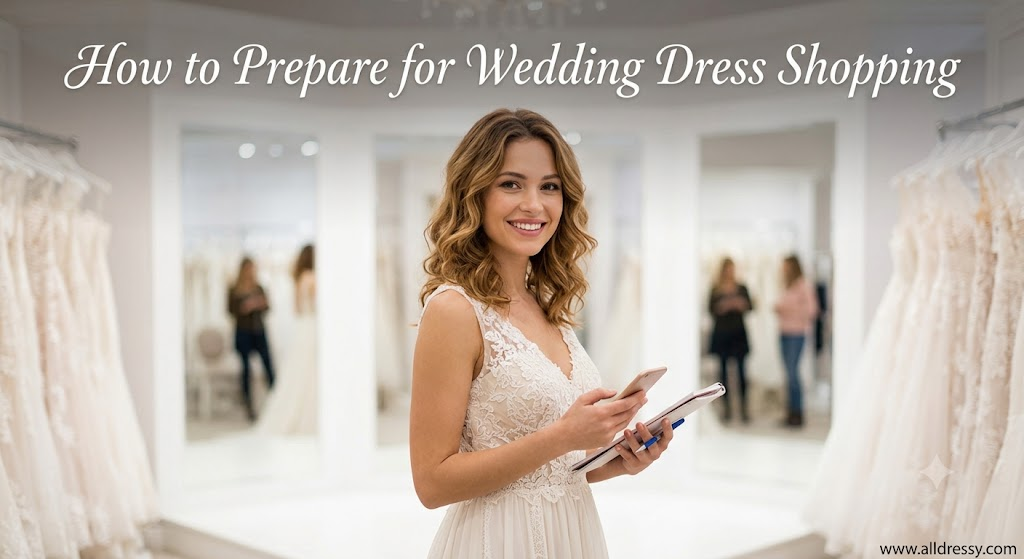
Wedding dress shopping is different from buying everyday clothing.
Benefits of proper preparation:
- Reduces stress
- Saves money
- Improves decision-making
- Prevents rushed purchases
- Helps identify preferred styles
- Creates a more enjoyable experience
Knowing how to prepare for wedding dress shopping allows you to focus on finding the right dress rather than managing avoidable problems.
Start Wedding Dress Shopping Early
One of the most important aspects of how to prepare for wedding dress shopping is timing.
Recommended timeline:
- Begin shopping 9 to 12 months before the wedding.
- Order the dress 6 to 9 months before the event.
- Schedule alterations 2 to 3 months before the wedding.
- Complete final fittings several weeks before the ceremony.
Many bridal gowns require months for production and customization.
Establish a Realistic Wedding Dress Budget
Before learning anything else about how to prepare for wedding dress shopping, determine your budget.
Consider expenses such as:
- Wedding gown
- Alterations
- Veil
- Shoes
- Jewelry
- Undergarments
- Preservation services
Many brides focus only on dress price and forget about additional costs.
Budget categories:
- Entry-level bridal gowns
- Mid-range gowns
- Luxury designer dresses
- Custom-made wedding dresses
Knowing your budget prevents disappointment during appointments.
Research Wedding Dress Styles Before Shopping
Preparation begins with understanding available styles.
Popular silhouettes include:
- Ball gown
- A-line
- Mermaid
- Trumpet
- Sheath
- Fit-and-flare
- Empire waist
Researching silhouettes helps you identify which shapes appeal to you most.
Create a Wedding Dress Inspiration Collection
A major step in how to prepare for wedding dress shopping is gathering inspiration.
Save examples of:
- Necklines
- Sleeves
- Fabrics
- Train lengths
- Embellishments
- Dress silhouettes
Look for recurring themes in your saved images. Patterns often reveal your true preferences.
Understand Your Wedding Theme
Your wedding dress should complement the event.
Consider:
- Venue type
- Formality level
- Season
- Wedding colors
- Ceremony style
For example, a grand ballroom wedding may inspire different dress choices than a beach ceremony.
Learn About Wedding Dress Fabrics
Fabric dramatically affects appearance and comfort.
Common bridal fabrics:
- Satin
- Tulle
- Lace
- Organza
- Chiffon
- Mikado
- Crepe
Each fabric creates a different look and feel.
Lightweight fabrics:
- Chiffon
- Organza
- Soft tulle
Structured fabrics:
- Satin
- Mikado
- Heavy lace
Understanding fabrics helps you make informed decisions.
How to Prepare for Wedding Dress Shopping by Knowing Your Measurements
Accurate measurements simplify the process.
Key measurements:
- Bust
- Waist
- Hips
- Height
Bridal sizing often differs from everyday clothing sizes, so focus on fit rather than numbers.
Choose the Right Shopping Companions
One overlooked aspect of how to prepare for wedding dress shopping is selecting who accompanies you.
Ideal companions:
- Supportive family members
- Trusted friends
- Honest advisors
Avoid:
- Large groups
- Highly critical individuals
- People with conflicting agendas
Too many opinions can create confusion.
Wear Appropriate Undergarments
The right undergarments improve dress evaluations.
Recommended items:
- Nude underwear
- Strapless bra if needed
- Shapewear if desired
These provide a clearer picture of how the dress will fit on your wedding day.
Wear Easy-to-Remove Clothing
Bridal appointments involve frequent changing.
Best options:
- Simple tops
- Comfortable pants
- Slip-on shoes
Practical clothing makes the experience smoother.
Keep an Open Mind During Appointments
Many brides discover unexpected favorites.
Why flexibility matters:
- Dresses look different on the hanger.
- Certain silhouettes surprise people.
- Consultants may suggest styles you hadn’t considered.
Remaining open-minded is a valuable part of how to prepare for wedding dress shopping.
Understand Bridal Boutique Policies
Every boutique operates differently.
Ask about:
- Appointment length
- Photography rules
- Deposit requirements
- Return policies
- Alteration services
Knowing these details avoids surprises later.
Schedule Appointments Strategically
Avoid rushing between stores.
Best practices:
- Limit appointments per day.
- Allow time for reflection.
- Take notes after each visit.
Too many gowns in one day can lead to decision fatigue.
Bring Inspiration Photos
Consultants can better understand your vision.
Helpful examples:
- Favorite necklines
- Desired silhouettes
- Preferred fabrics
- Overall wedding style
Visual references improve communication.
Learn About Neckline Options
Necklines influence overall appearance.
Common styles:
- Sweetheart
- V-neck
- Off-the-shoulder
- Strapless
- Square neck
- High neck
- Halter
Understanding necklines helps narrow your search.
Consider Seasonal Comfort
Weather plays a significant role.
Summer weddings:
- Lightweight fabrics
- Breathable designs
- Minimal layering
Winter weddings:
- Long sleeves
- Structured fabrics
- Additional coverage
Comfort is just as important as appearance.
Understand Alteration Requirements
Almost every wedding gown requires alterations.
Common adjustments:
- Hem length
- Bust fit
- Waist shaping
- Strap modifications
- Sleeve adjustments
Factor alteration costs into your budget.
Think About Mobility
You will spend hours wearing your gown.
Test:
- Walking
- Sitting
- Dancing
- Raising arms
Comfort and movement should never be overlooked.
Consider Your Wedding Shoes Early
Shoe selection affects dress length.
Benefits of early shoe decisions:
- Accurate alterations
- Better posture evaluation
- Improved fitting accuracy
Bring similar heel heights to appointments when possible.
Learn About Wedding Dress Trains
Train length affects formality.
Types include:
- Sweep train
- Chapel train
- Cathedral train
- Royal train
Each creates a different visual impact.
Think About Photography
Wedding photos last forever.
Consider:
- Back details
- Neckline appearance
- Train design
- Overall silhouette
A gown should look beautiful from multiple angles.
How to Prepare for Wedding Dress Shopping With Body Confidence
Confidence improves the experience.
Remember:
- Bridal sizes vary widely.
- Size numbers do not define beauty.
- The goal is finding the right fit.
- Alterations can improve appearance significantly.
Focus on how the dress feels rather than the size label.
Avoid Shopping Fatigue
Too many appointments can become overwhelming.
Signs of fatigue:
- Difficulty making decisions
- Confusion about preferences
- Increased stress
- Comparing every gown negatively
Take breaks when necessary.
Document Every Dress You Try
Photos and notes help later.
Record:
- Dress names
- Favorite features
- Concerns
- Pricing
- Alteration estimates
This information becomes valuable during decision-making.
Understand Bridal Sizing Differences
Bridal sizing often surprises first-time shoppers.
Important facts:
- Bridal sizes run differently than regular clothing.
- Larger numerical sizes are common.
- Alterations create the final fit.
Do not focus solely on labels.
How to Prepare for Wedding Dress Shopping Emotionally
Wedding dress shopping can be emotional.
Expectations to manage:
- You may not cry when finding the dress.
- Your favorite dress may not match your original vision.
- Decision-making may take time.
Trust your instincts throughout the process.
Questions to Ask Bridal Consultants
Prepare questions beforehand.
Useful topics:
- Alteration timelines
- Fabric care
- Customization options
- Delivery estimates
- Bustle options
Good communication leads to better outcomes.
Avoid Common Wedding Dress Shopping Mistakes
Frequent mistakes:
- Shopping too late
- Ignoring budget limits
- Bringing too many people
- Focusing only on trends
- Forgetting alteration costs
- Refusing to try different styles
Avoiding these mistakes improves your overall experience.
How to Prepare for Wedding Dress Shopping Like a Bridal Expert
Professional bridal consultants recommend:
- Research before appointments.
- Set a realistic budget.
- Know your wedding vision.
- Wear proper undergarments.
- Keep an open mind.
- Document every dress.
- Prioritize comfort.
- Allow sufficient time for alterations.
Here are the FAQs and conclusion sections for your article:
FAQs About How to Prepare for Wedding Dress Shopping
1. When should I start wedding dress shopping?
Most bridal experts recommend starting how to prepare for wedding dress shopping about 9 to 12 months before your wedding date. This allows enough time for ordering, shipping, fittings, and alterations.
2. How many people should I bring to a wedding dress appointment?
When considering how to prepare for wedding dress shopping, it’s best to bring two to four trusted people whose opinions you value. Too many guests can create conflicting feedback and make decision-making more difficult.
3. What should I wear to a wedding dress appointment?
A key part of how to prepare for wedding dress shopping is wearing nude undergarments, comfortable clothing, and easy-to-remove shoes. Some brides also choose light makeup to help visualize their wedding-day look.
4. How much should I budget for a wedding dress?
Your wedding dress budget should include the gown, alterations, accessories, veil, shoes, and undergarments. When learning how to prepare for wedding dress shopping, many brides find that alterations can add a significant amount to the total cost.
5. Should I buy the first wedding dress I love?
You can purchase the first dress if it truly meets your expectations and budget. However, understanding how to prepare for wedding dress shopping includes taking time to compare options and ensuring you feel completely confident in your choice.
6. What if I don’t know which dress style suits me?
Many brides begin how to prepare for wedding dress shopping without knowing their ideal silhouette. Bridal consultants can recommend styles based on your body shape, venue, and preferences. Keeping an open mind often leads to pleasant surprises.
7. Do wedding dresses always require alterations?
Yes, most gowns need some level of alteration. As part of how to prepare for wedding dress shopping, plan for adjustments such as hemming, bust fitting, waist shaping, or strap modifications.
8. How long does it take for a wedding dress to arrive?
Depending on the designer and customization options, dresses can take several months to arrive. That’s why how to prepare for wedding dress shopping early is essential for avoiding last-minute stress.
9. Should I bring wedding shoes to dress fittings?
Yes. A useful tip for how to prepare for wedding dress shopping is choosing your wedding shoes before alterations begin. Heel height affects the dress length and overall fit.
10. What should I do if I feel overwhelmed during dress shopping?
Take breaks, limit the number of appointments, and focus on your original vision. One of the most important parts of how to prepare for wedding dress shopping is avoiding decision fatigue and trusting your instincts.
Conclusion
Learning how to prepare for wedding dress shopping can turn what might feel like an overwhelming task into one of the most memorable experiences of your wedding journey. Proper preparation allows you to approach bridal appointments with confidence, realistic expectations, and a clear understanding of your style preferences and budget.
From researching silhouettes and fabrics to selecting supportive shopping companions and planning alterations, every step contributes to a smoother and more enjoyable process. Taking the time to prepare helps you make informed decisions while reducing stress and uncertainty.
Ultimately, how to prepare for wedding dress shopping is about finding a gown that reflects your personality, complements your wedding vision, and makes you feel beautiful on your special day. By staying organized, keeping an open mind, and trusting your instincts, you’ll be well-equipped to find the perfect dress and create lasting memories throughout the experience.