

When shopping for or tailoring a floor-skimming silhouette, many people ask the same critical question: how long should a maxi dress be? The answer is not as simple as “to the floor.” The ideal length depends on your height, shoe choice, body proportions, the occasion, fabric weight, and even seasonal styling trends. A perfectly sized maxi dress should feel effortless—never dragging awkwardly, never floating too high above the ankles unless intentionally styled that way.
This in-depth guide explores how long should a maxi dress be for different heights and body types, how footwear changes the equation, how designers define “maxi,” how to measure yourself properly, and what to consider when hemming or buying online. By the end, you’ll understand exactly what length works best for you and how to achieve a polished, flattering look every time.
What Is a Maxi Dress and Why Length Matters

A maxi dress is traditionally defined as a long, flowing garment that reaches near the ankles or floor. Unlike midi dresses, which hit mid-calf, or mini dresses that stop above the knee, a maxi dress is intended to create a vertical, elongated line.
The reason length matters so much is simple: even a difference of two inches can change the entire proportion of the outfit. A dress that is too long risks tripping, dragging, or fraying at the hem. A dress that is too short may lose the elegant, sweeping effect that defines the style.
When people search how long should a maxi dress be, they are usually trying to avoid three common problems:
- A hem that pools excessively on the floor
- A dress that awkwardly floats above the ankle
- A silhouette that shortens rather than lengthens the body
Understanding ideal placement along the leg solves all three.
How Long Should a Maxi Dress Be According to Standard Fashion Guidelines
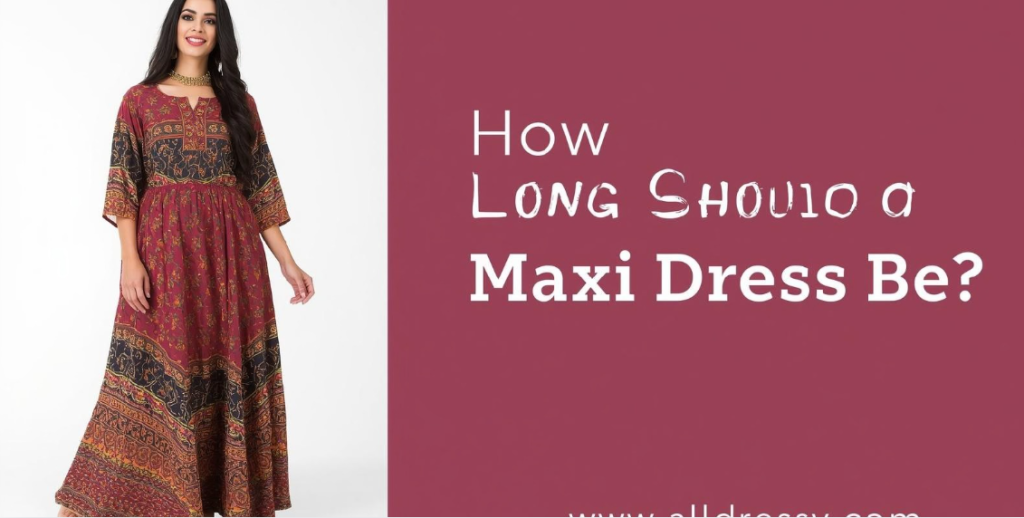
In classic fashion terminology, the proper maxi length falls somewhere between the top of the foot and the floor. Most stylists agree that:
- A casual maxi dress should graze the top of your foot.
- A formal or evening maxi gown may lightly skim the floor.
- A modern ankle-length maxi can stop one to two inches above the ground for movement and practicality.
In measurements, this usually translates to a hem that sits ½ to 1 inch above the floor when barefoot for everyday wear, or just touching the ground for formal gowns worn with heels.
Designers often draft maxi dresses for a model height of around 5’7″ to 5’9″, which means the same dress can appear very different on someone shorter or taller. That is why knowing your personal ideal is more useful than relying solely on sizing charts.
How Long Should a Maxi Dress Be for Different Heights
Petite Frames
For petite individuals (generally under 5’4″), maxi dresses often arrive too long straight off the rack. On a shorter frame, the most flattering maxi length typically falls right at the ankle or just above the top of the foot.
This avoids overwhelming your proportions while still delivering the long, flowing look. Excess fabric pooling at the hem can make a petite silhouette appear swallowed by the garment.
Petite-specific lines usually shorten the bodice-to-hem measurement and raise the waistline so the dress still flows correctly.
Average Height
For people between about 5’4″ and 5’7″, a classic maxi dress usually lands close to perfect without alterations. The ideal spot is:
- Barefoot: just brushing the floor
- With flats: hovering slightly above the ground
- With heels: still close to floor length without dragging
This group has the most flexibility, as both ankle-length and floor-skimming styles tend to work well.
Tall Frames
For taller individuals (5’8″ and above), finding a true maxi can be tricky. Many dresses marketed as “maxi” will hit mid-calf instead, turning unintentionally into midi dresses.
For tall figures, how long should a maxi dress be becomes a question of maintaining that dramatic vertical line. The hem should ideally reach:
- The top of the foot for casual wear
- The floor for formal settings
Looking for “tall” sizing or checking listed garment lengths before buying online is essential to avoid an awkwardly short effect.
How Long Should a Maxi Dress Be With Different Shoes
Footwear changes everything. The same dress can appear perfectly tailored with sandals and suddenly too short when paired with heels.
Flats and Sandals
When wearing flat shoes, a maxi dress should hover ½ to 1 inch above the floor. This prevents the hem from sweeping up dirt while still looking elongated.
Sneakers
With sneakers, a slightly shorter maxi can look intentional and modern. Allowing 1–2 inches of clearance keeps the look casual and practical.
Heels and Wedges
When styling with heels, the dress may need extra length so it still falls close to the floor. Many formal maxi gowns are hemmed while the wearer is in their event shoes to ensure precision.
Barefoot at the Beach
For resort or beach maxi dresses, ankle-grazing or mid-foot length is ideal. Fabric dragging in sand or water is inconvenient and shortens the garment’s life.
How Long Should a Maxi Dress Be for Casual vs Formal Occasions
Casual Maxi Dresses
Daytime maxi dresses made of cotton, jersey, or linen benefit from a slightly higher hem. Stopping at the ankle or top of the foot keeps movement easy and prevents wear at the edges.
Formal Maxi Dresses
Evening gowns, bridesmaid dresses, and special-occasion maxis often aim for a more dramatic look. These usually skim the floor or barely touch it when standing still, creating elegance and flow.
Office or Semi-Formal Settings
In professional or dressy-casual environments, an ankle-length maxi is safest. It avoids tripping hazards and maintains a polished appearance.
How Body Proportions Influence the Ideal Maxi Length
When deciding how long should a maxi dress be, height is only part of the equation. Leg length, torso length, and where the waistline sits also matter.
People with long legs and short torsos can often wear slightly longer hemlines without looking overwhelmed. Those with shorter legs benefit from keeping the hem a bit higher—closer to the ankle—to maintain visual balance.
High-waisted maxi dresses lengthen the leg line and can handle more fabric below the waist, while dropped-waist or empire-waist designs change where the eye focuses, subtly shifting what feels like the correct hemline.
How to Measure Yourself to Determine the Perfect Maxi Dress Length
Knowing how to measure properly removes guesswork.
- Stand straight on a hard floor.
- Wear the shoes you intend to pair with the dress most often.
- Use a soft measuring tape from the top of your shoulder (or the waist seam, depending on the garment) down to where you want the hem to fall.
- Mark whether you prefer ankle-length, foot-skimming, or floor-length.
When shopping online, compare your measurement to the “length” or “shoulder-to-hem” numbers listed in the size chart. This is one of the most effective ways to answer how long should a maxi dress be before clicking purchase.
Why Some Maxi Dresses Are Intentionally Shorter
Not every maxi is meant to hit the floor. Designers sometimes create “ankle maxis” or “tea-length maxis” for ease of wear, especially in warm climates or urban settings.
These versions often stop several inches above the ground and pair well with statement footwear. The key is that the length looks deliberate rather than accidental.
If the hem lands at the narrowest part of the ankle, it tends to look chic and flattering. If it cuts the calf at its widest point, it may visually shorten the leg.
Alterations and Hemming: Customizing the Length
Tailoring is one of the best investments you can make in a maxi dress. A simple hem adjustment can transform how the garment moves and flatters.
Professional alterations typically consider:
- Your height in chosen shoes
- Fabric drape and weight
- Whether the dress has multiple layers
- Any decorative trim or lace at the hem
When hemming yourself, always leave extra length at first, try the dress on again, and walk around to make sure it does not catch underfoot.
Seasonal Considerations for Maxi Dress Length
Climate plays a role in determining how long should a maxi dress be.
In summer, ankle-length styles are popular for airflow and practicality. In winter, longer hems that brush the top of boots or nearly reach the floor provide warmth and drama, especially when paired with coats and scarves.
Rainy environments may call for slightly higher hems to avoid soaking the fabric.
Common Mistakes People Make With Maxi Dress Length
Many shoppers assume a maxi dress should always touch the floor, but that is not universally true. The biggest errors include:
- Buying without checking garment length measurements
- Forgetting to factor in shoe height
- Letting fabric pool excessively
- Wearing a hem that cuts awkwardly at mid-calf
- Skipping alterations even when the fit is close
Avoiding these mistakes leads to a cleaner silhouette and longer garment life.
Styling Tricks to Adjust the Visual Length
Even if a maxi dress is not technically perfect in measurement, clever styling can help.
Belting at the waist can lift the hem slightly. Wearing platforms or wedges adds height and keeps fabric from dragging. Choosing vertical prints or monochrome colors enhances the elongated look that maxi dresses are known for.
Layering with cropped jackets or fitted cardigans also helps rebalance proportions when the hem feels borderline too long or too short.
Why the Question “How Long Should a Maxi Dress Be” Matters So Much
Maxi dresses are beloved because they are comfortable, versatile, and flattering across ages and body types. But their success hinges on length more than almost any other factor.
When the hem is right, the dress flows naturally, highlights your shape, and moves gracefully as you walk. When it is wrong, even the most beautiful fabric or pattern can feel awkward.
Frequently Asked Questions About How Long Should a Maxi Dress Be
How long should a maxi dress be on average?
A maxi dress should usually fall at the top of the foot or lightly skim the floor when standing still. For casual wear, many people prefer it to hover about half an inch to one inch above the ground, while formal styles may touch the floor for a dramatic effect.
Is a maxi dress supposed to touch the floor?
Not always. Some maxi dresses are designed to brush the floor, especially for evening wear, but everyday styles often stop at the ankle or just above the foot to make walking easier and prevent wear on the hem.
How long should a maxi dress be for petite women?
For petite frames, the most flattering length is typically ankle-grazing or just above the top of the foot. Floor-length hems can overwhelm a shorter silhouette unless the dress is tailored.
How long should a maxi dress be for tall women?
Tall individuals usually look best when the hem reaches the top of the foot or the floor. Many standard “maxi” dresses may hit mid-calf, so checking garment measurements or choosing tall sizing is important.
Does shoe height change how long a maxi dress should be?
Yes. Flats call for a hem slightly above the floor, while heels usually require extra length so the dress still falls close to the ground. Always measure while wearing the shoes you plan to pair with the dress most often.
Can a maxi dress be ankle length and still count as a maxi?
Yes. Many modern designs intentionally stop at the ankle and are still considered maxi dresses, especially for casual or daytime settings.
How do I know if my maxi dress is too long?
If you step on the hem, the fabric pools excessively on the floor, or the edges start to fray quickly, the dress is likely too long and should be hemmed.
How do I know if my maxi dress is too short?
If the dress cuts across the widest part of your calf or looks unintentionally cropped—especially when the style is meant to be floor-length—it may be too short for the intended look.
Should I hem a maxi dress before wearing it?
If the dress drags on the floor or feels awkward when you walk, hemming is recommended. Even a small adjustment can dramatically improve comfort and appearance.
Does fabric weight affect ideal maxi dress length?
Yes. Lightweight fabrics like chiffon or jersey can float and look fine slightly longer, while heavier fabrics such as velvet or denim benefit from a hem that sits higher to avoid dragging and creasing.
Conclusion
Knowing how long should a maxi dress be makes a major difference in how polished and flattering the final look appears. While general guidelines suggest a hem that grazes the top of the foot or lightly skims the floor, the perfect length depends on height, body proportions, footwear, fabric choice, and the occasion. Petite wearers often benefit from ankle-length styles, tall individuals may need extended hems, and casual dresses usually sit higher than formal gowns.
Measuring yourself carefully, checking garment length before purchasing, and investing in professional alterations when needed all ensure that a maxi dress works with your body rather than against it. When the length is right, a maxi dress delivers exactly what it promises—effortless elegance, comfort, and timeless style for any setting.