
Attending a Renaissance fair is an exciting opportunity to experience historical-inspired fashion, live entertainment, traditional crafts, music, and themed activities. Whether you are visiting for the first time or returning for another festival, choosing the right outfit can make the experience even more enjoyable. If you are wondering how to dress for a Renaissance fair, the good news is that you do not need an expensive costume or professional historical clothing to create a memorable look.
Renaissance fairs celebrate the clothing, culture, and atmosphere of the European Renaissance period, generally associated with the 14th through 17th centuries. Visitors often dress as nobles, peasants, merchants, knights, pirates, fairies, travelers, and other fantasy-inspired characters. Some prefer historically inspired outfits, while others enjoy creative interpretations that combine medieval fashion with modern comfort.
The most important thing is to choose an outfit that matches your personal style, suits the weather, and allows you to walk around comfortably. From flowing dresses and tunics to waistcoats, boots, cloaks, and accessories, there are many ways to create a Renaissance fair outfit.
This complete guide explains how to dress for a Renaissance fair, explores popular outfit ideas for different styles, and shares practical tips for selecting clothing, footwear, accessories, and fabrics.
What Is a Renaissance Fair?
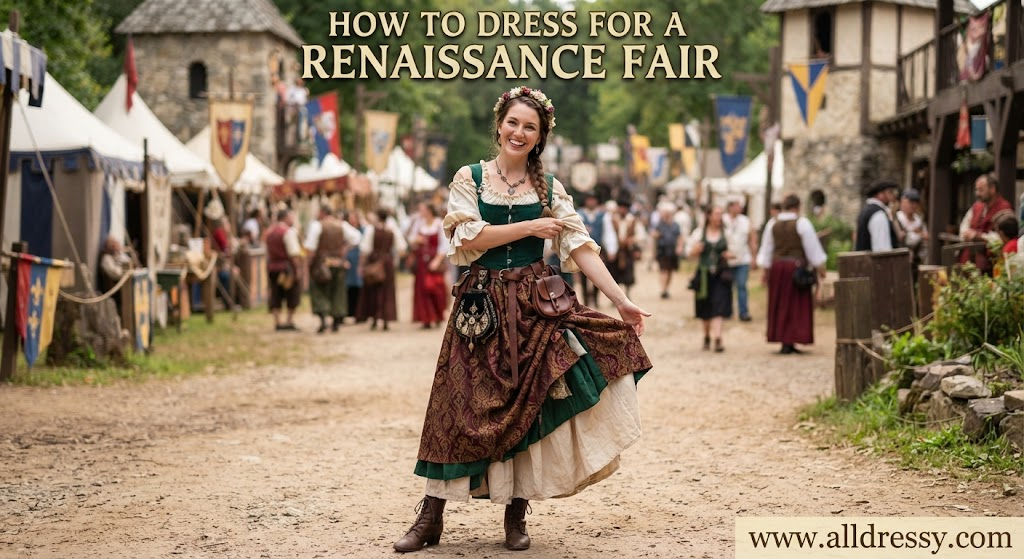
A Renaissance fair is a themed festival that recreates aspects of the Renaissance period through entertainment, performances, crafts, food, music, and historical-inspired activities.
These events often feature performers dressed as historical characters, musicians, merchants, royalty, knights, and fantasy creatures. Visitors are usually encouraged to wear costumes, although ordinary comfortable clothing is generally acceptable.
Renaissance fairs are inspired by historical fashion, but they are not always strict historical reenactments. Many events combine medieval, Renaissance, fantasy, and theatrical styles.
This means you can create an outfit based on a historical character, a fictional personality, or your own creative interpretation.
How to Dress for a Renaissance Fair: Understanding the Main Clothing Styles
Before choosing an outfit, it helps to understand the different fashion styles commonly seen at Renaissance fairs.
1. Traditional Renaissance Clothing
Traditional Renaissance-inspired clothing includes long dresses, fitted bodices, flowing sleeves, doublets, tunics, waistcoats, and decorative cloaks.
Common fabrics include cotton, linen, wool, and velvet. Clothing often features earthy colors, rich jewel tones, embroidery, decorative trim, and layered details.
You can create a traditional appearance with a simple long skirt, a fitted top, and a belt. A more elaborate outfit might include a full-length gown, decorative sleeves, and a matching headpiece.
2. Medieval-Inspired Clothing
Medieval-inspired outfits often feature simple tunics, long skirts, cloaks, belts, and practical boots.
Compared with elaborate Renaissance clothing, many medieval-inspired looks are more relaxed and functional.
Popular outfit elements include:
- Long tunics.
- Simple dresses.
- Leather-style belts.
- Cloaks and capes.
- Lace-up boots.
- Fabric head coverings.
This style is suitable for visitors who prefer a comfortable, understated historical appearance.
3. Fantasy-Inspired Renaissance Clothing
Fantasy-inspired outfits combine historical-looking garments with imaginative details.
You might dress as a forest fairy, traveling wizard, royal character, fantasy merchant, or mythical adventurer.
These outfits can include flowing skirts, decorative capes, layered fabrics, embroidered details, and themed accessories.
Fantasy clothing does not need to follow a specific historical period. You can experiment with colors, textures, and accessories to create a distinctive look.
4. Peasant and Village Clothing
Peasant-inspired clothing is one of the easiest Renaissance fair styles to recreate.
A typical outfit might include a simple blouse, long skirt, apron, waist belt, and comfortable boots. Another option is a plain tunic with trousers and a fabric belt.
Natural colors such as brown, beige, cream, olive, and muted red work particularly well.
This style is practical, affordable, and easy to customize.
How to Dress for a Renaissance Fair: Outfit Ideas for Different Styles
There is no single correct way to dress for a Renaissance fair. The best outfit depends on the character or aesthetic you want to create.
1. Classic Renaissance Fair Dress
A classic Renaissance dress is one of the most recognizable outfit choices.
These dresses often feature long skirts, decorative sleeves, fitted bodices, square necklines, and rich colors. Some styles include lace-up details or embroidered trim.
Popular colors include burgundy, forest green, navy blue, cream, and deep purple.
How to style a classic Renaissance dress:
- Choose a long dress with a historical-inspired silhouette.
- Add a decorative belt or sash.
- Wear comfortable boots underneath.
- Include a simple necklace or pendant.
- Add a headband or other suitable hair accessory.
You can choose a simple dress for a relaxed appearance or a more elaborate gown for a royal-inspired outfit.
2. Renaissance Peasant Outfit
A peasant outfit is an excellent choice for beginners because it does not require complicated clothing.
A simple blouse paired with a long skirt creates a traditional village-inspired appearance. You can also add an apron, belt, and practical footwear.
For a more detailed outfit, consider:
- A loose cotton blouse.
- A full-length or ankle-length skirt.
- A simple apron.
- A fabric or leather-style belt.
- A headscarf or bonnet.
- Comfortable ankle boots.
Choose natural-looking materials and earthy colors for an authentic-inspired result.
3. Renaissance Fair Outfit With a Corset-Inspired Bodice
A lace-up bodice can add a traditional Renaissance-inspired detail to an outfit.
You can wear a decorative bodice over a blouse or choose a dress that already includes lace-up detailing.
Look for comfortable clothing that fits properly and allows easy movement. A costume does not need to be tightly fitted to create a historical appearance.
Pair the bodice with a long skirt, suitable footwear, and a simple pendant.
4. Renaissance Merchant Outfit
Merchant-inspired clothing is a practical option for visitors who prefer a simple, layered look.
A typical outfit may include a tunic, waistcoat, trousers, belt, and boots.
For a more detailed appearance, add a small pouch, scarf, or decorative vest.
Choose brown, dark green, cream, or burgundy to create a traditional market-inspired outfit.
This style works well for anyone who wants a historical appearance without wearing a full costume.
5. Royal Renaissance Outfit
Renaissance Style Burgundy Velvet Gown with Gold Embroidery and Pearl Accents swap face
A royal Renaissance outfit is inspired by the clothing of kings, queens, nobles, and members of wealthy households.
These outfits often feature rich colors, decorative fabrics, embroidered details, structured garments, and elaborate accessories.
For a royal-inspired appearance, consider:
- A velvet-style dress or tunic.
- Gold-colored decorative trim.
- A jeweled-looking necklace.
- A decorative headpiece.
- A long cape or cloak.
- Elegant but comfortable footwear.
You do not need a historically exact royal costume. A few carefully selected details can create the desired atmosphere.
6. Renaissance Pirate Outfit
Pirates Wardrobe Insider – Learn What Do Pirates Wear | Panaprium
Pirate-inspired clothing is another popular choice at Renaissance fairs.
A typical pirate outfit may include a loose shirt, vest, trousers, belt, boots, and a wide-brimmed or tricorn-style hat.
You can create a simple look using:
- A loose white or cream shirt.
- A dark vest.
- Comfortable trousers.
- A wide belt.
- An appropriate hat.
- Leather-style boots.
A scarf, decorative pouch, or sash can add more character.
7. Renaissance Fairy Outfit
Renaissance Women’s Costume – Fantasy – Fairy Dress Cosplay – Pink Bro
Fairy-inspired clothing combines Renaissance-style garments with fantasy details.
Popular elements include flowing skirts, layered fabrics, floral accessories, decorative wings, and nature-inspired jewelry.
Soft colors such as lavender, pale green, dusty pink, cream, and light blue can create a gentle fantasy appearance.
For comfort, choose lightweight materials and secure accessories properly so they do not interfere with walking.
8. Medieval Knight-Inspired Outfit
A knight-inspired outfit can be created with a tunic, cape, belt, boots, and decorative emblem.
Some visitors choose costume armor or padded clothing, while others prefer a simpler outfit inspired by medieval uniforms.
For a comfortable festival outfit, lightweight costume materials are generally easier to wear than heavy decorative pieces.
Make sure any costume accessories follow the fair’s safety rules.
How to Dress for a Renaissance Fair on a Budget
You do not need to spend a lot of money to create an attractive Renaissance fair outfit.
Many pieces can be made from clothing you already own or purchased from affordable clothing stores.
Start With Basic Clothing
Look through your wardrobe for simple items that can work with a historical-inspired outfit.
Useful basics include:
- Plain white or cream shirts.
- Long skirts.
- Simple dresses.
- Loose trousers.
- Vests.
- Neutral-colored belts.
- Comfortable boots.
These pieces can be combined in different ways to create several Renaissance-inspired looks.
Choose Versatile Accessories
Accessories can make a simple outfit look more like a themed costume.
Consider adding a decorative belt, pendant, scarf, headband, or small pouch.
You do not need to purchase every accessory at once. Start with a few items that complement your clothing.
Use Simple Layering
Layering is an easy way to make an outfit look more detailed.
For example, you can wear a plain blouse under a vest or add a short cape over a simple dress.
Choose lightweight layers if the event takes place in warm weather.
Try Simple DIY Details
You can personalize basic clothing with suitable decorative trim, fabric ties, ribbons, or simple embroidery.
Before modifying valuable clothing, test your decorating method on an inexpensive fabric sample.
Avoid adding decorations that may scratch, fall off, or interfere with movement.
How to Choose the Right Renaissance Fair Shoes
Footwear is one of the most important parts of a Renaissance fair outfit.
Many fairs take place outdoors, and visitors often spend several hours walking on grass, dirt paths, gravel, or uneven surfaces.
A beautiful costume may look impressive, but uncomfortable shoes can make the day difficult.
Choose Comfortable Boots
Ankle boots and mid-calf boots are popular choices because they can complement historical-inspired clothing while providing practical support.
Choose footwear that you have already worn comfortably.
Consider Flat Shoes
Flat shoes can be suitable for visitors who prefer a simpler outfit.
Look for secure closures and comfortable soles, particularly if the event involves walking over uneven ground.
Avoid Uncomfortable New Shoes
Do not assume that new costume shoes will be comfortable throughout the day.
Try them before the event and make sure they fit properly.
Match Shoes With Your Outfit
Brown, black, and dark neutral footwear can complement many Renaissance-inspired styles.
If your outfit includes a long skirt or trousers, choose shoes that coordinate with the overall appearance.
Best Fabrics for a Renaissance Fair Outfit
Fabric choice affects how comfortable, practical, and attractive your outfit will be.
Some materials are more suitable for warm outdoor events, while others are better for cooler weather.
Cotton
Cotton is a popular choice because it is comfortable and breathable.
It works well for shirts, blouses, skirts, and simple dresses.
Linen
Linen has a natural texture that suits many historical-inspired outfits.
It is breathable and often comfortable in warm weather, although it can wrinkle easily.
Wool
Wool is useful for cooler conditions and can be suitable for cloaks, outer layers, and certain costume pieces.
However, heavier wool garments may feel too warm during summer events.
Velvet
Velvet can create a rich appearance for royal or noble-inspired outfits.
It is often better suited to cooler weather or decorative pieces rather than full outfits worn in hot conditions.
Polyester Blends
Polyester blends are available in many affordable costume garments.
Their comfort and breathability depend on the fabric construction, so check the material before purchasing.
How to Dress for a Renaissance Fair in Different Weather Conditions
Renaissance fairs often take place outdoors, so checking the weather is important before choosing an outfit.
How to Dress for a Renaissance Fair in Hot Weather
Warm weather calls for breathable materials and lightweight layers.
Choose cotton or linen clothing, comfortable footwear, and accessories that do not create unnecessary heat.
Useful choices include:
- Lightweight long dresses.
- Loose cotton shirts.
- Breathable skirts.
- Light tunics.
- Wide-brimmed hats.
- Comfortable walking shoes.
Carry water and take breaks in shaded areas. If the fair allows it, consider bringing a small fan.
How to Dress for a Renaissance Fair in Cold Weathe
Cool weather allows you to add more layers and heavier materials.
Consider wearing a long-sleeved shirt, tunic, vest, cloak, or wool-style outer layer.
You can also wear warm socks and suitable boots.
Make sure the layers allow comfortable movement and do not become too heavy.
How to Dress for a Renaissance Fair in Rainy Weather
Rainy weather requires practical planning.
Choose footwear with suitable grip and clothing that can handle damp conditions.
Consider bringing:
- A lightweight raincoat.
- A water-resistant outer layer.
- Extra socks.
- A small towel.
- A protective bag for personal belongings.
Check the fair’s rules before bringing umbrellas or other large items that may obstruct other visitors.
How to Choose Renaissance Fair Accessories
Accessories help complete your outfit and create a more recognizable character.
However, you do not need to wear many accessories. A few well-chosen pieces can make a simple outfit look more detailed.
1. Belts and Pouches
Belts are useful decorative accessories for tunics, dresses, and trousers.
A small pouch can also provide a convenient place to carry lightweight personal items.
2. Hats and Headpieces
Hats and headpieces can help create a traditional or fantasy-inspired appearance.
Popular options include:
- Simple fabric headbands.
- Decorative circlets.
- Wide-brimmed hats.
- Bonnet-style head coverings.
- Tricorn-style hats.
- Flower crowns.
Choose an accessory that stays securely in place.
3. Jewelry
Simple pendants, bracelets, rings, and decorative necklaces can complement Renaissance-inspired clothing.
Antique-style finishes and nature-inspired designs often work well with historical and fantasy aesthetics.
4. Cloaks and Capes
Cloaks and capes are recognizable elements of many historical and fantasy-inspired outfits.
They can add movement and visual interest, particularly when paired with simple clothing.
Choose a suitable length and make sure the garment does not drag on the ground or interfere with walking.
5. Hair Accessories
Hair accessories can complete your outfit without requiring complicated styling.
Consider ribbons, decorative clips, braided details, or floral accessories.
Choose comfortable pieces that will remain secure throughout the event.
Renaissance Fair Outfit Ideas for Beginners
If this is your first Renaissance fair, you may not know where to begin. Fortunately, you can create a themed outfit without purchasing a complete costume.
Here are five beginner-friendly combinations.
| Outfit style | Clothing combination | Suggested accessories |
|---|---|---|
| Simple peasant | Blouse and long skirt | Belt and headscarf |
| Village traveler | Tunic and trousers | Pouch and boots |
| Merchant | Shirt and waistcoat | Belt and pendant |
| Fantasy fairy | Flowing dress | Floral accessory |
| Royal-inspired | Decorative dress or tunic | Cape and headpiece |
Start with one outfit that feels comfortable and easy to wear. You can add more details over time.
How to Dress for a Renaissance Fair Without Buying a Costume
If you do not want to purchase a special costume, you can still participate in the festival’s atmosphere.
The key is to use clothing that has a historical-inspired appearance.
Combine a Plain Shirt With a Long Skirt
A simple blouse and long skirt can create an easy village-inspired outfit.
Choose natural-looking colors such as cream, brown, olive, or burgundy.
Wear a Tunic With Comfortable Trousers
A loose tunic and trousers can create a simple medieval-inspired look.
Add a belt and suitable boots to complete the outfit.
Use a Vest as a Decorative Layer
A plain shirt can look more historical when paired with a waistcoat or vest.
Choose a color that complements your trousers or skirt.
Add a Cape or Shawl
A cape or decorative shawl can make everyday clothing look more themed.
Choose a lightweight option for warm weather and a warmer material for cooler conditions.
Use Accessories to Complete the Look
A belt, pendant, scarf, pouch, or headpiece can help transform basic clothing into a Renaissance-inspired outfit.
Common Renaissance Fair Outfit Mistakes to Avoid
Choosing an outfit is about balancing appearance and comfort. Avoid these common mistakes when planning your clothing.
Wearing Uncomfortable Footwear
Renaissance fairs often involve extended walking and standing.
Choose footwear that fits well and has comfortable support. Test it before the event rather than wearing it for the first time on festival day.
Choosing Heavy Clothing in Hot Weather
Velvet, heavy cloaks, and thick layered garments can become uncomfortable in warm temperatures.
Select breathable fabrics and lightweight layers when attending a summer event.
Adding Too Many Accessories
A large number of accessories can make your outfit feel crowded and may become inconvenient during activities.
Choose a few pieces that work together.
Ignoring the Fair’s Costume Rules
Some fairs have restrictions on certain accessories, props, or costume elements.
Check the event’s rules before bringing items that may be considered unsafe or unsuitable.
Choosing Clothing That Restricts Movement
Avoid garments that are difficult to walk in or that drag on the ground.
Your outfit should allow you to sit, walk, eat, and participate in activities comfortably.
Forgetting Weather Protection
Outdoor festivals can involve strong sunlight, wind, or rain.
Check the forecast and plan your clothing accordingly.
How to Plan Your Renaissance Fair Outfit Step by Step
Planning your outfit in advance can make the experience easier and more enjoyable.
Step 1: Choose a character or style. Decide whether you want a peasant, merchant, noble, pirate, fairy, traveler, or knight-inspired look.
Step 2: Select your main clothing. Start with a dress, skirt, tunic, shirt, or trousers that suit your chosen style.
Step 3: Choose suitable fabrics. Consider the weather and how long you will be wearing the outfit.
Step 4: Select footwear. Choose comfortable shoes or boots that can handle the event’s walking conditions.
Step 5: Add accessories. Include a belt, pouch, headpiece, pendant, or cloak if it complements your outfit.
Step 6: Check the fit and movement. Walk, sit, and move around in your outfit before the event.
Step 7: Review the event rules. Check costume guidelines and restrictions on accessories or props.
Step 8: Prepare practical essentials. Bring water, sun protection, and any other permitted items you may need during the day.
What to Bring to a Renaissance Fair
Your outfit is important, but a little preparation can make the day more comfortable.
Consider bringing:
- A reusable water bottle, if permitted.
- Sunscreen.
- A small bag or pouch.
- Comfortable footwear.
- Extra socks.
- A light outer layer.
- Weather-appropriate protection.
- Cash or a suitable payment method.
- Any necessary personal items.
Keep your belongings organized so you can enjoy the performances, shops, and activities without carrying unnecessary items.
Final Styling Tips for a Memorable Renaissance Fair Outfit
When planning how to dress for a Renaissance fair, remember that there is no single outfit that everyone must wear. Some visitors prefer traditional Renaissance clothing, while others enjoy medieval, pirate, peasant, royal, or fantasy-inspired fashion.
Start with comfortable clothing and build your outfit with suitable fabrics, practical footwear, and a few decorative accessories. Choose colors that work together, consider the weather, and make sure your clothing allows you to move freely.
You can create a memorable outfit with a full historical-inspired gown, a simple tunic and belt, or everyday clothing combined with themed accessories. The most important thing is to enjoy the experience and choose a style that makes you feel comfortable and confident throughout the festival.
10 Frequently Asked Questions About How to Dress for a Renaissance Fair
1. What should I wear to a Renaissance fair?
You can wear a Renaissance-inspired dress, a peasant blouse with a long skirt, a tunic with trousers, or a merchant-style outfit. Popular choices include medieval clothing, pirate costumes, royal-inspired dresses, and fantasy outfits. Choose comfortable clothing that suits the weather and allows you to move easily.
2. Do I have to wear a costume to a Renaissance fair?
No, wearing a costume is usually optional. You can attend in regular clothing if you prefer. However, many visitors enjoy dressing in historical-inspired outfits to participate in the festival atmosphere.
3. What is the easiest Renaissance fair outfit for beginners?
A simple blouse with a long skirt, a tunic with trousers, or a shirt with a vest can create an easy Renaissance-inspired outfit. Add a belt, comfortable boots, and a decorative accessory to complete the look.
4. What shoes should I wear to a Renaissance fair?
Comfortable ankle boots, flat shoes, and supportive walking footwear are good choices. Renaissance fairs often involve walking on grass, gravel, and uneven paths, so choose shoes that fit properly and have comfortable soles.
5. What colors are best for Renaissance fair outfits?
Popular Renaissance-inspired colors include burgundy, forest green, navy blue, brown, cream, mustard, and deep purple. You can also choose lighter colors such as lavender, pale green, and dusty pink for fantasy-inspired outfits.
6. How should I dress for a Renaissance fair in hot weather?
Choose breathable materials such as cotton and linen. Lightweight dresses, loose shirts, long skirts, and comfortable footwear are practical options. Consider wearing a suitable hat and carrying water to stay comfortable outdoors.
7. How should I dress for a Renaissance fair in cold weather?
Wear comfortable layers such as long-sleeved shirts, tunics, vests, cloaks, and warm outerwear. Choose suitable boots and socks to help keep comfortable during outdoor activities.
8. Can I wear regular clothes to a Renaissance fair?
Yes. You can use everyday clothing to create a simple historical-inspired outfit. For example, pair a plain blouse with a long skirt or wear a loose shirt with trousers and a vest. Accessories such as belts, scarves, and pendants can complete the look.
9. What accessories should I wear to a Renaissance fair?
Popular accessories include decorative belts, small pouches, pendants, bracelets, headbands, flower crowns, hats, and cloaks. Choose a few pieces that complement your outfit without making it uncomfortable or difficult to move.
10. How much should I spend on a Renaissance fair outfit?
There is no fixed budget. You can create an attractive outfit using clothing you already own, affordable accessories, or a complete costume. Start with basic clothing and add decorative details gradually rather than purchasing everything at once.
Conclusion
Learning how to dress for a Renaissance fair is a fun way to prepare for an event filled with historical-inspired fashion, entertainment, and creative experiences. Whether you prefer a traditional Renaissance gown, a simple peasant outfit, a merchant-style costume, or a fantasy-inspired look, there are plenty of ways to express your personal style.
Start by choosing an outfit that matches the character or theme you enjoy. Then consider comfortable fabrics, suitable footwear, decorative accessories, and weather conditions. You do not need an expensive costume to create a memorable appearance. Even simple clothing can look appropriate with the right combination of colors and accessories.
Most importantly, choose an outfit that allows you to walk, explore, and enjoy the festival comfortably. With a little planning and creativity, you can create a stylish Renaissance fair outfit that makes your experience even more enjoyable.