
Windows are an important part of home design. They bring natural light into a room, create a connection with the outdoors, and influence the overall appearance of your interior. However, traditional curtains are not the only way to decorate a window. If you want a fresh, modern, or minimalist look, learning how to dress a window without curtains can help you create a beautiful space without using conventional window coverings.
There are many creative alternatives to curtains, including window films, blinds, shutters, decorative screens, plants, and stylish window treatments. Some options provide privacy, while others help control sunlight, improve the appearance of your room, or create a cozy atmosphere.
Whether you are decorating a bedroom, living room, kitchen, bathroom, or home office, the right window treatment can make a significant difference. The best choice depends on your decorating style, privacy requirements, natural lighting preferences, and budget.
In this guide, you will discover practical and attractive ways to dress a window without curtains, along with tips for choosing the right materials, colors, and decorative features for your home.
Why Dress a Window Without Curtains?
Curtains are popular because they provide privacy and help control sunlight. However, they can sometimes make a room feel smaller, darker, or more traditional than desired. In certain interiors, leaving the window free of fabric can create a cleaner and more spacious appearance.
Here are several reasons to consider dressing a window without curtains.
1. Create a Modern Interior
Modern interior design often focuses on clean lines, uncluttered spaces, and simple decorative elements. Heavy curtains may not match this style.
Alternatives such as roller blinds, wooden shutters, or frosted window films can provide a neat appearance while maintaining functionality.
2. Allow More Natural Light
Some thick curtains block a considerable amount of daylight. If you prefer a bright interior, you may want a window treatment that allows sunlight to enter while offering the privacy you need.
Light-filtering blinds and translucent window films are useful options.
3. Make Small Rooms Feel More Spacious
In a small room, bulky curtains can occupy visual space around the window. A simple alternative can make the wall appear less crowded.
For example, slim blinds or minimal window film can create a streamlined appearance without adding extra fabric.
4. Reduce Dust and Fabric Maintenance
Curtains can collect dust, pet hair, and other particles. They may also require regular washing or professional cleaning.
Some curtain-free window treatments are easier to maintain. Window films, shutters, and certain blinds can be cleaned with a simple cloth or suitable cleaning product.
5. Try a Different Decorating Style
A window does not need to be covered with fabric to look complete. Decorative plants, window frames, stained glass, and architectural details can turn an ordinary window into an attractive design feature.
15 Stylish Ways to Dress a Window Without Curtains
There are several ways to decorate a window without installing traditional curtains. The following ideas combine appearance and practicality, helping you choose an option that suits your room.
1. Install Roller Blinds
Roller blinds are one of the simplest alternatives to traditional curtains. They consist of a single piece of material that rolls up or down using a chain, spring, or motorized mechanism.
Roller blinds are available in different colors, textures, and levels of light control. You can choose blackout material for bedrooms, light-filtering fabric for living rooms, or moisture-resistant options for suitable kitchen and bathroom windows.
Why roller blinds work:
- They have a simple and modern appearance.
- They do not require large amounts of space.
- They are available in different light-control options.
- They can be customized to fit many window sizes.
- They are generally easy to operate and maintain.
For a minimalist interior, consider white, beige, light gray, or another neutral shade. If you want a stronger decorative feature, choose a subtle pattern or textured finish.
2. Use Roman Shades
Roman shades offer a softer appearance than many standard blinds without using full-length curtains. They are made from fabric that folds into horizontal sections as the shade is raise
Roman shades are suitable for bedrooms, dining rooms, and living spaces. They combine the warmth of fabric with the structured appearance of a window blind.
You can choose from flat, relaxed, or softly folded designs. Flat Roman shades create a neat appearance, while relaxed styles add a softer decorative effect.
Styling tips:
- Choose neutral fabric for a timeless look.
- Match the shade with nearby furniture or wall colors.
- Use light-filtering fabric where you want natural daylight.
- Select suitable lining when additional light control is necessary.
Roman shades are especially useful when you want a decorative window treatment that looks more substantial than a basic roller blind.
3. Apply Frosted Window Film
Frosted window film is a practical solution when privacy is important but you do not want curtains or bulky blinds
This adhesive or static-cling material is applied directly to the glass. It creates a translucent finish that softens the view through the window.
Frosted film is particularly useful for bathrooms, ground-floor windows, and rooms that face neighboring buildings.
Benefits of frosted window film:
- Provides daytime privacy in many situations.
- Allows diffused natural light to enter.
- Creates a clean, uncluttered appearance.
- Comes in different patterns and finishes.
- Does not require curtain rods or fabric.
You can choose plain frosted film, decorative geometric designs, or patterned versions that resemble textured glass.
Remember that ordinary frosted film may not provide complete privacy at night when interior lights are switched on. Check the product’s privacy specifications before choosing it.
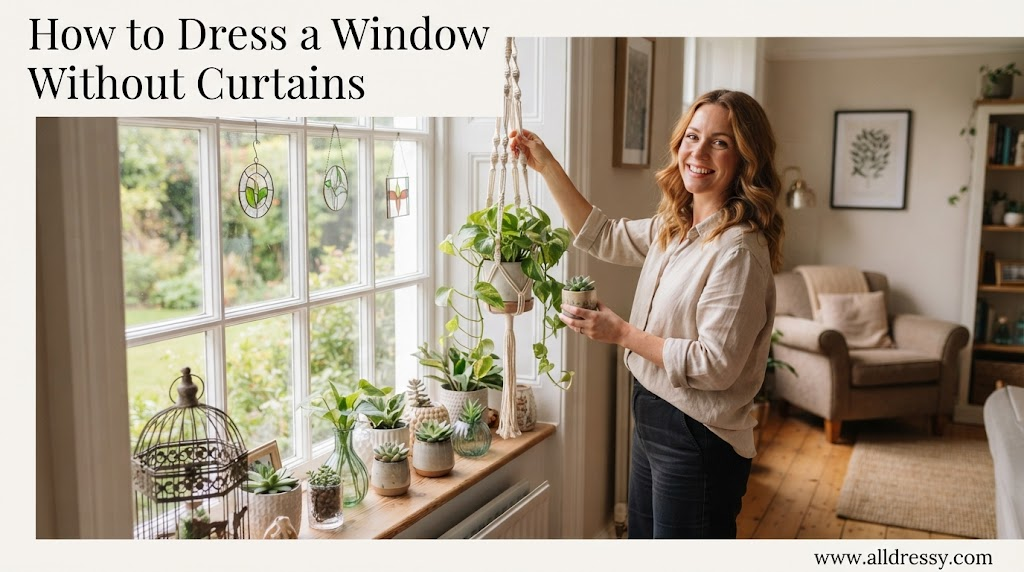
4. Decorate the Window With Indoor Plants
Plants can turn a plain window into a beautiful natural feature. They add color, texture, and a relaxed atmosphere without covering the glass completelys
You can arrange small plants along a windowsill, place taller plants beside the window, or use hanging planters near the frame.
Choose plants according to the amount of sunlight the window receives. Some plants prefer bright indirect light, while others can tolerate lower-light conditions.
Ideas for decorating with plants:
- Place small pots in a row along the windowsill.
- Use one taller plant beside a large window.
- Combine plants with different leaf shapes.
- Choose simple ceramic or terracotta pots.
- Use hanging planters where suitable and securely installed.
Avoid overcrowding the window. Leave enough open glass to maintain natural light and a clear view.
5. Install Plantation Shutters
Plantation shutters are an elegant and long-lasting alternative to curtains. They consist of panels with adjustable horizontal slats that can be opened, closed, or tilted.
Shutters work well in traditional, contemporary, coastal, and farmhouse-inspired interiors.
They provide adjustable control over light and visibility. You can tilt the slats to let daylight enter while reducing direct views into the room.
Advantages of plantation shutters:
- They create a structured architectural appearance.
- They offer adjustable light control.
- They can provide privacy when properly closed.
- They are available in different finishes.
- They can become a permanent part of the room’s design.
White shutters are popular for bright, classic interiors, while natural wood finishes create a warmer appearance.
Before installing shutters, measure the window carefully and consider whether the panels will have enough room to open.
6. Add Decorative Window Screens
Decorative screens are another creative way to dress a window without curtains. They can add privacy, texture, and visual interest while creating a distinctive focal point.
Screens are available in wood, metal, bamboo, and other materials. Some feature geometric patterns, while others have traditional or nature-inspired designs.
A decorative screen can be especially useful when you want partial privacy without completely blocking the window.
How to style decorative screens:
- Choose a pattern that matches your interior.
- Use natural materials for a warm appearance.
- Keep the design simple in smaller rooms.
- Make sure the screen is securely installed.
- Avoid blocking emergency exits or important ventilation areas.
Consider how much light the screen allows through before choosing a design.
7. Use Stained Glass or Decorative Glass Panels
Stained glass can make a window look artistic and distinctive. Its colors and patterns create visual interest while allowing light to enter
If replacing the existing glass is too expensive, decorative window inserts or suitable stained-glass-style films may provide a similar visual effect.
This option works particularly well in entryways, staircases, dining rooms, and spaces with vintage or artistic decorating styles.
You can choose floral patterns, geometric shapes, or subtle colored designs. For a modern look, consider a simple pattern rather than a highly detailed design.
8. Install Cellular Shades
Cellular shades, also known as honeycomb shades, are designed with small air pockets that form a honeycomb structure.
These shades are popular because they combine a neat appearance with practical light-control features. Depending on the product, their structure can also help reduce heat transfer through the window.
Cellular shades are available in different levels of transparency, including light-filtering and blackout options.
Why choose cellular shades?
- They have a clean and simple design.
- They are available in different colors.
- They can help improve indoor comfort.
- They offer different privacy levels.
- They suit bedrooms, living rooms, and home offices.
For a balanced look, choose a shade that blends with the window frame or surrounding wall.
9. Create a Window Seat
If you have a deep windowsill or enough space beneath a window, a window seat can transform the area into a comfortable and decorative feature
A window seat can serve as a reading corner, relaxation space, or additional seating area.
Add a fitted cushion, a few decorative pillows, and a small side table if space allows. Choose materials that coordinate with the room’s existing furniture.
A window seat does not provide privacy by itself, so you may need another solution if the window faces a public area or neighboring property.
10. Hang a Decorative Valance Alternative
A traditional valance is a short fabric treatment placed across the top of a window. However, you can create a similar decorative effect with nontraditional materialk
Consider a simple wooden cornice, decorative trim, or a slim architectural panel above the window.
This approach draws attention to the window frame without covering most of the glass.
Choose a finish that matches nearby furniture, flooring, or other architectural details. A simple design is often more versatile than an elaborate decorative feature.
11. Use Bamboo or Natural Woven Shades
Natural woven shades are a good option if you enjoy organic textures and warm interior colors
They are commonly made from bamboo, reeds, grasses, or other woven materials. Their natural texture adds warmth to a room and works particularly well with wooden furniture and neutral decor.
Depending on the weave, they may allow some light to pass through. If you need greater privacy or darkness, look for a lined version.
Best decorating combinations:
- Bamboo shades with wooden furniture.
- Woven shades with cream-colored walls.
- Natural shades with green indoor plants.
- Textured shades with simple neutral upholstery.
Because natural materials can vary in color and texture, check a sample before purchasing if you want a close match with existing furniture.
12. Add Window Boxes
Window boxes are a charming way to decorate the outside of a window. They are especially attractive in homes with balconies, gardens, or suitable exterior walls
You can fill a window box with seasonal flowers, leafy plants, or a combination of different varieties.
For a balanced appearance, choose plants that suit the available sunlight and climate. Make sure the box has suitable drainage and is securely installed.
Window boxes do not provide indoor privacy, but they add color and improve the view from inside the room.
13. Use Privacy Glass
Privacy glass is a more permanent alternative to curtains and can be particularly useful in bathrooms, bedrooms, and other private areas
There are different types of privacy glass, including frosted, textured, and patterned glass.
Some specialized glass products can change their transparency through an electrical control system. These options are more expensive and generally require professional installation.
When choosing privacy glass, consider:
- How much daylight it allows into the room.
- Whether it provides privacy during both day and night.
- Whether it suits the room’s architectural style.
- The cost of installation and replacement.
- Whether professional measurement is required.
For a permanent solution, consult a qualified glass installer to determine the most appropriate option.
14. Install Top-Down Bottom-Up Shades
Top-down bottom-up shades provide flexible control over privacy and natural light
Unlike standard shades that only move from the bottom upward, these can also open from the top downward.
This allows daylight to enter through the upper part of the window while keeping the lower section covered.
They are especially useful for rooms where you want natural light without making the entire interior visible from outside.
Suitable rooms include:
- Ground-floor bedrooms.
- Living rooms facing the street.
- Home offices.
- Rooms with neighboring buildings nearby.
Choose a color and material that coordinate with your interior design.
15. Highlight the Window With Decorative Trim
Sometimes the best way to dress a window without curtains is to make the window frame itself more attractive
Decorative trim can create a finished appearance without adding blinds, screens, or fabric.
You can paint the frame in a contrasting color, add simple molding, or choose a natural wood finish.
For example, white trim against a soft gray wall creates a clean appearance. Dark trim can create a stronger visual feature in a modern interior.
If you are painting an existing frame, use a product suitable for its material and follow the manufacturer’s preparation and application instructions.
How to Dress a Window Without Curtains in Different Rooms
The best curtain-free window treatment depends on the room’s purpose. A bedroom may need more privacy and light control than a kitchen, while a living room may benefit from a decorative treatment that preserves the view.
How to Dress a Living Room Window Without Curtains
Living rooms often benefit from natural light and an open appearance. Choose a treatment that complements your furniture without making the space feel crowded
Good options include:
- Roller blinds.
- Roman shades.
- Plantation shutters.
- Decorative window screens.
- Indoor plants.
- Natural woven shades.
If your living room has a beautiful outdoor view, consider a minimal treatment that does not cover the glass when open.
For a contemporary interior, neutral shades and simple window frames work particularly well.
How to Dress a Bedroom Window Without Curtains
Bedrooms usually require a combination of privacy, comfort, and light control
Consider blackout roller blinds, lined Roman shades, cellular shades, or suitable shutters.
If you prefer a bright bedroom during the day but need darkness at night, choose an adjustable treatment that can meet both requirements.
For a relaxing appearance, consider soft neutral colors such as cream, beige, pale gray, or muted green.
How to Dress a Kitchen Window Without Curtains
Kitchen windows can be exposed to cooking moisture, grease, and temperature changes. For this reason, practical and easy-to-clean materials are often better than delicate fabric treatments.
Useful options include:
- Moisture-resistant roller blinds.
- Suitable shutters.
- Window film.
- Simple decorative trim.
- Small herb plants on the windowsill.
Avoid placing flammable materials close to cooking equipment. Also, choose window treatments that do not interfere with ventilation or access to the window.
How to Dress a Bathroom Window Without Curtains
Bathrooms need privacy and materials that can handle moisture.
Frosted window film, privacy glass, and moisture-resistant blinds are practical options.
Frosted film is particularly useful because it provides daytime privacy while allowing natural light to enter.
If you choose blinds, check that their material is suitable for humid conditions. Make sure the window treatment can dry properly and does not encourage mold growth.
How to Dress a Home Office Window Without Curtains
A home office needs comfortable lighting and a pleasant environment for working.com
Light-filtering roller blinds, cellular shades, and adjustable shutters can help reduce direct sunlight and glare.
If you frequently use a computer, consider how sunlight reaches the screen throughout the day. Adjustable treatments allow you to change the amount of light without making the room unnecessarily dark.
Plants and simple decorative trim can also make a home office feel more inviting.
How to Choose the Best Window Treatment Without Curtains
Choosing a window treatment involves more than selecting a design you like. You should consider privacy, light, materials, maintenance, and the size of your room.
1. Consider Your Privacy Needs
Privacy is one of the most important factors when choosing a curtain-free window treatment.
A living room facing a private garden may not need the same treatment as a bedroom facing a busy street.
For greater privacy, consider:
- Frosted window film.
- Privacy glass.
- Properly fitted shutters.
- Blackout or privacy roller blinds.
- Top-down bottom-up shades.
Remember that some window films provide different levels of privacy during daylight and nighttime.
2. Decide How Much Natural Light You Want
Different window treatments allow different amounts of light into a room.
Sheer or light-filtering options soften incoming daylight, while blackout materials block much more light when properly installed.
Before purchasing, decide whether you want to:
- Keep the room bright throughout the day.
- Reduce direct sunlight.
- Improve privacy while preserving daylight.
- Make the bedroom darker for sleeping.
- Reduce screen glare in a home office.
Your lighting preference will help narrow down the best option.
3. Match the Window Treatment With Your Interior Style
A window treatment should look like part of the room rather than an unrelated addition.
For example, wooden shutters may complement traditional or farmhouse interiors, while roller blinds often suit minimalist and contemporary rooms.
Consider your wall colors, furniture, flooring, and window-frame material before selecting a finish.
4. Choose Materials According to the Room
The environment around the window affects how long a material may last.
Bathrooms and kitchens often require moisture-resistant options. Living rooms and bedrooms offer more flexibility.
Common material choices include:
| Material | Best suited for | Main feature |
|---|---|---|
| Wood | Living rooms and bedrooms | Warm, natural appearance |
| Aluminum | Modern interiors | Lightweight and practical |
| PVC | Suitable humid areas | Easy-care surface |
| Fabric | Bedrooms and living rooms | Soft decorative finish |
| Bamboo | Natural-style interiors | Organic texture |
| Window film | Privacy-focused spaces | Applied directly to glass |
Always check the manufacturer’s cleaning and maintenance instructions.
5. Measure Your Windows Correctly
Accurate measurements help ensure that blinds, shades, and shutters fit properly.
Before ordering, measure the width and height of the window in several places because some windows are not perfectly square.
For inside-mounted blinds, check the available depth and follow the manufacturer’s measuring instructions.
For outside-mounted treatments, consider how far the covering should extend beyond the frame to achieve the desired appearance and coverage.
If you are ordering custom shutters or specialty glass, professional measurement is a sensible choice.
Budget-Friendly Ways to Dress a Window Without Curtains
You do not need a large budget to create an attractive window design. Several alternatives are available at different price levels.
Use Affordable Window Film
Basic frosted window film can be a cost-effective option for improving privacy. It is available in simple designs and may be suitable for DIY installation.
Carefully clean the glass and follow the product instructions to reduce bubbles and uneven application.
Decorate With Existing Plants
If you already have indoor plants, rearranging them around a windowsill can create a fresh decorative feature without purchasing a new window covering.
Choose suitable pots and avoid blocking too much natural light.
Paint the Window Frame
A fresh coat of suitable paint can make an ordinary window look more attractive.
You could choose a color that matches the wall for a subtle effect or a contrasting shade to make the frame stand out.
Prepare the surface properly and use paint designed for the specific frame material.
Choose Simple Roller Blinds
Basic roller blinds are often available in affordable styles and neutral colors.
They offer a practical balance between appearance, privacy, and light control.
Compare dimensions and material specifications before purchasing.
Add Decorative Trim
Simple trim can give a window a more finished appearance. Depending on the existing frame, this may be a relatively inexpensive decorating project.
Choose a design that complements the architecture of your home.
Common Mistakes to Avoid When Dressing a Window Without Curtains
A curtain-free window can look beautiful, but the wrong treatment may reduce privacy, create glare, or make the room feel unfinished.
Avoid these common mistakes.
Ignoring Nighttime Privacy
Some window treatments work differently depending on outdoor lighting conditions.
For example, certain translucent films provide privacy during the day but may allow people to see inside at night when the room is illuminated.
Check the privacy level under both daytime and nighttime conditions.
Blocking Too Much Natural Light
Large decorative screens or dark coverings can make a room feel unnecessarily dim.
Choose a treatment that balances privacy with the amount of daylight you want.
Selecting Materials Unsuitable for Moisture
Wood, fabric, and some decorative materials may not be appropriate for every bathroom or kitchen.
Choose materials that can handle the conditions around the window.
Choosing the Wrong Size
Poorly fitted blinds and shades may leave unwanted gaps or look uneven.
Measure carefully and follow the fitting instructions. Consider professional installation for complicated windows.
Overdecorating the Windowsill
Plants, ornaments, and decorative objects can make a windowsill attractive, but too many items may create clutter.
Use a small number of carefully selected pieces and leave enough space for cleaning and ventilation.
Forgetting Safety and Accessibility
Make sure window treatments do not block emergency exits, restrict ventilation, or interfere with window operation.
Keep cords and chains safely arranged, especially in homes with young children or pets. Cordless designs are worth considering where available.
Modern Window Dressing Trends Without Curtains
Curtain-free window design can work with several popular interior decorating styles.
Minimalist Window Design
Minimalist interiors focus on simplicity and useful design. Roller blinds, slim frames, and neutral-colored shades are common choices.
Keep the surrounding area uncluttered so the window remains an important source of natural light.
Scandinavian-Inspired Window Design
Scandinavian interiors often use light colors, natural materials, and practical furniture.
White blinds, pale wood shutters, and indoor plants can create a bright and welcoming appearance.
Industrial Window Design
Industrial-style interiors often feature dark metal frames, exposed materials, and simple architectural details.
Black roller blinds, metal screens, or a clean, uncovered window frame can complement this style.
Natural and Organic Window Design
Natural interior styles use materials such as wood, bamboo, stone, and plants.
Woven shades, wooden shutters, and greenery can create a warm appearance without traditional curtains.
Contemporary Window Design
Contemporary interiors often combine practical window treatments with decorative details.
Motorized blinds, cellular shades, privacy glass, and simple architectural trim can all work well in this style.
Final Tips for a Beautiful Window Without Curtains
When deciding how to dress a window without curtains, begin with the purpose of the room. Think about whether you need privacy, light control, decoration, or a combination of all three.
For a modern and simple appearance, roller blinds or cellular shades are practical choices. If you want a softer decorative effect, Roman shades may be more suitable. Frosted window film and privacy glass are useful when you want to maintain daylight while reducing visibility from outside.
You can also make a window more attractive with indoor plants, decorative screens, bamboo shades, stained glass, or carefully selected architectural trim.
The most successful window design is not necessarily the most expensive or elaborate. It is the one that complements your interior, meets your everyday needs, and makes the room feel comfortable and welcoming. By choosing the right curtain-free window treatment, you can create a stylish and functional space while enjoying a fresh alternative to traditional curtains.
10 Frequently Asked Questions About How to Dress a Window Without Curtains
1. How can I dress a window without curtains?
You can dress a window without curtains by using roller blinds, Roman shades, plantation shutters, frosted window film, decorative screens, or indoor plants. These alternatives can improve privacy, control sunlight, and enhance your interior design.
2. What is the best alternative to curtains?
Roller blinds are one of the most practical alternatives because they are simple, space-saving, and available in different colors and light-control options. However, the best choice depends on your privacy requirements and decorating style.
3. How can I make my windows look attractive without curtains?
You can make windows look attractive by adding decorative trim, indoor plants, stained glass, wooden shutters, or stylish blinds. Keeping the windowsill organized and choosing colors that complement your room can also improve the overall appearance.
4. How can I get privacy without curtains?
Frosted window film, privacy glass, shutters, and privacy roller blinds are useful options. For windows facing neighboring properties or busy streets, choose a treatment that provides privacy during both daytime and nighttime.
5. How can I dress a small window without curtains?
For a small window, consider slim roller blinds, frosted window film, or simple Roman shades. Avoid bulky decorations that make the window appear crowded. Light colors can also help maintain an open and bright appearance.
6. Are blinds better than curtains?
Blinds can be better than curtains when you want a streamlined appearance, adjustable light control, and less fabric around the window. Curtains may be preferable when you want a softer decorative effect. Both options have different advantages.
7. How can I dress a bedroom window without curtains?
Blackout roller blinds, cellular shades, lined Roman shades, and plantation shutters are suitable bedroom options. Choose a treatment that provides enough privacy and helps control the amount of light entering the room.
8. Can I use plants to decorate a window without curtains?
Yes. Indoor plants can make a window look fresh and attractive. Arrange small plants along the windowsill or place taller plants beside the window. Choose varieties that suit the available sunlight and avoid overcrowding the glass.
9. What is the cheapest way to cover a window without curtains?
Affordable options include basic roller blinds, frosted window film, and simple DIY window decorations. The best budget-friendly choice depends on whether you need privacy, sunlight control, or decoration.
10. How can I dress a bathroom window without curtains?
Frosted window film, privacy glass, and moisture-resistant blinds are practical bathroom options. They can provide privacy while allowing natural light into the space. Always choose materials suitable for humid environments.
Conclusion
Learning how to dress a window without curtains opens up many creative possibilities for making your home look stylish, comfortable, and modern. From roller blinds and Roman shades to frosted window film, plantation shutters, and decorative plants, there are plenty of alternatives to traditional curtains.
The best option depends on your room’s size, privacy requirements, natural lighting, and interior design style. For bedrooms, consider blackout blinds or shutters. For bathrooms, frosted window film can provide useful privacy. For living rooms, decorative screens, plants, and natural woven shades can create an attractive focal point.
You do not need expensive decorations to create a beautiful window. Choose practical materials, coordinate colors with your existing interior, and keep the design balanced. With the right approach, you can enjoy an attractive window that complements your home without using traditional curtains.